Multi-Agent Orchestration for E-commerce & DTC Brands
Multi-Agent Orchestration for DTC Ecommerce Brands
Individual AI agents handle specific tasks well, but the most impactful DTC operations require multiple agents working together across functional boundaries. A customer reports a defective product.
4.9/5Verified rating
300+Clients served
23Products shipped
100+Case studies
Since 2015In production
<90s
Subscription swap processing time reduced from 45 minutes
82%
Swap requests processed end-to-end without human intervention
280 hrs
Monthly operational time saved across three team members
99.3%
Swap fulfillment accuracy improved from 94 percent
A customer service agent processes the return, a quality control agent logs the defect pattern, an inventory agent adjusts stock and triggers a replacement shipment, a marketing agent adds the customer to a recovery campaign, and an analytics agent updates product quality metrics. In manual operations, this cross-functional coordination requires five different team members and hours of handoffs. Multi-agent orchestration enables these interconnected workflows to execute autonomously in seconds, with each specialized agent handling its domain while an orchestration layer coordinates the overall process.
Multi-agent orchestration for DTC ecommerce represents the next evolution beyond individual AI agents. Where single agents handle tasks within a specific function, orchestrated multi-agent systems handle end-to-end workflows that span multiple functions and require coordinated action across systems. This orchestration capability addresses the reality that DTC commerce operations are deeply interconnected: customer service decisions affect inventory, inventory decisions affect marketing, marketing decisions affect customer experience, and customer experience affects revenue. Optimizing one function in isolation produces limited results compared to orchestrating intelligent action across all functions simultaneously.
The orchestration challenge is both technical and operational. Technically, multiple agents must share context, coordinate timing, handle dependencies between their actions, and manage conflicts when their individual objectives disagree. Operationally, the orchestrated system must respect business rules, maintain audit trails, escalate appropriately when situations exceed agent capability, and produce outcomes that align with your brand standards and business policies.
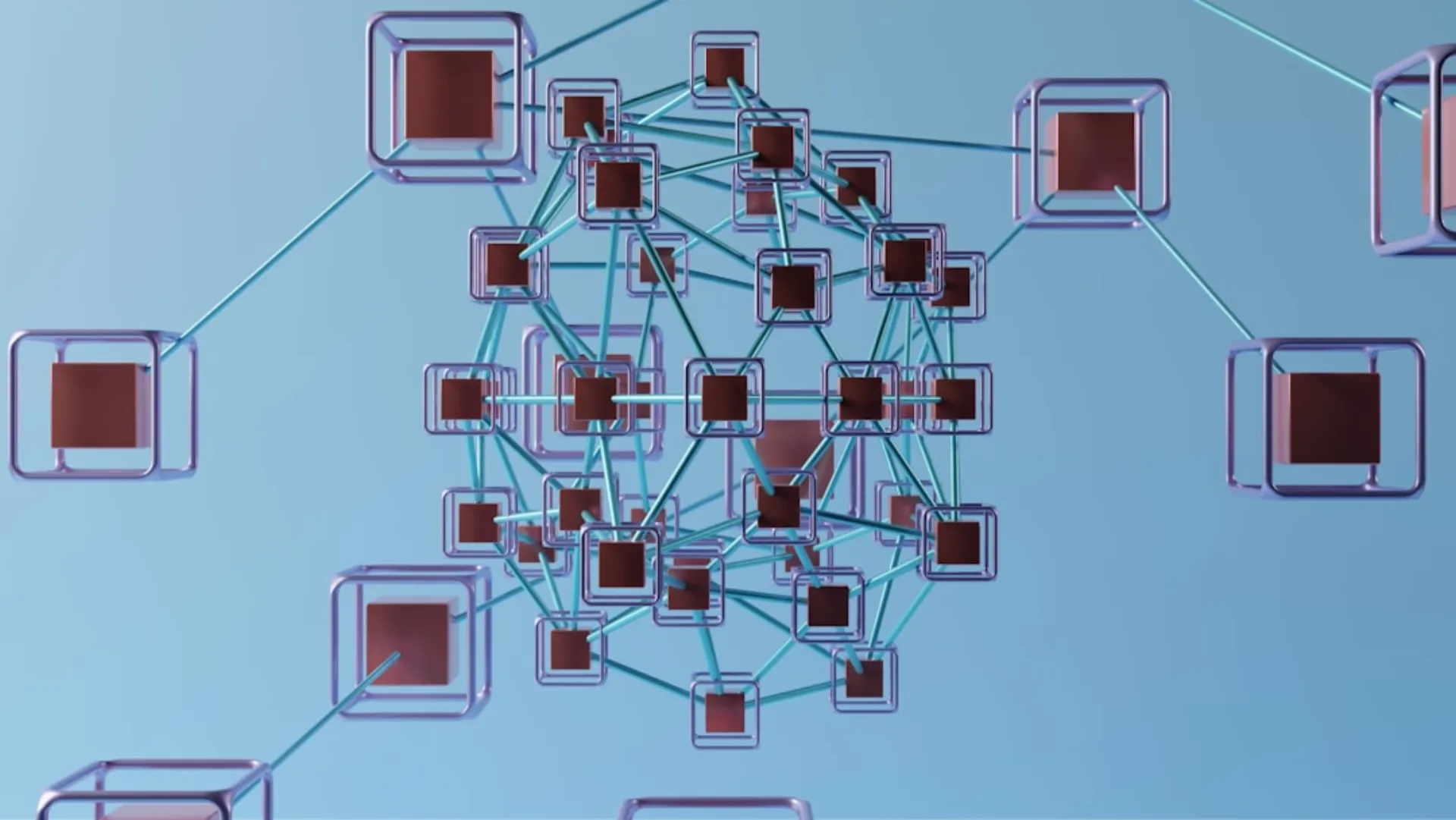
Our multi-agent orchestration practice designs and implements systems where specialized DTC commerce agents collaborate under coordinated control. Each agent brings deep capability in its functional domain while the orchestration layer manages workflow coordination, context sharing, conflict resolution, and human escalation. The result is autonomous handling of complex, cross-functional commerce operations that previously required manual coordination across multiple team members.
The E-commerce & DTC Brands Market
Multi-agent AI systems have emerged as the practical approach for complex business process automation because single agents attempting to handle broad, multi-function workflows perform poorly. A single agent tasked with handling a customer complaint end-to-end must reason about customer service policy, inventory management, shipping logistics, financial refund processing, and marketing communication. No single model can maintain deep expertise across all these domains simultaneously. Specialized agents, each with focused capability and appropriate tool access, produce better outcomes when orchestrated effectively.
DTC ecommerce is particularly well-suited for multi-agent orchestration because commerce workflows naturally cross functional boundaries and the Shopify API ecosystem provides the action interfaces that agents need. Order lifecycle workflows span customer service, fulfillment, and finance. Product lifecycle workflows span merchandising, marketing, and inventory. Customer lifecycle workflows span acquisition, service, retention, and analytics. Each lifecycle involves multiple specialized actions that benefit from dedicated agent expertise.
The economic case for multi-agent orchestration in DTC operations is compelling. A mid-size DTC brand employing fifteen people across customer service, operations, marketing, and merchandising spends approximately $900,000 annually on team compensation. Multi-agent orchestration does not eliminate this team but reduces the manual coordination work that consumes 30 to 50 percent of their time, enabling the same team to manage higher volume or the business to operate with a leaner team focused on strategic rather than operational work.
Agent-to-agent communication protocols and orchestration frameworks have matured to the point where production deployment of multi-agent systems is practical. Frameworks for agent communication, task delegation, state management, and error handling provide the infrastructure needed to coordinate multiple agents reliably. These frameworks handle the technical complexity of agent coordination, allowing development to focus on the specific commerce logic each agent executes.
How We Deliver Multi-Agent Orchestration for E-commerce & DTC Brands
Our multi-agent orchestration methodology for DTC ecommerce designs coordinated agent systems that handle complex commerce workflows across functional boundaries.
Workflow analysis and agent architecture maps the cross-functional workflows in your DTC operations and designs the agent team structure to handle them. We identify the workflows that currently require coordination across multiple team members or departments, document the decision points, handoffs, and information flows within each workflow, and design the agent team with appropriate specialization boundaries. Each agent is defined by its functional domain, the data it accesses, the actions it can take, and the conditions under which it communicates with other agents or escalates to humans.
Specialized agent development builds agents with deep capability in specific commerce functions. Customer service agents handle customer inquiries with order data access, subscription management, and return processing capability. Inventory agents monitor stock levels, process adjustments, and manage replenishment recommendations. Merchandising agents manage product data, collection organization, and pricing adjustments. Marketing agents trigger campaigns, manage audience segmentation, and generate content. Finance agents process refunds, reconcile transactions, and flag financial anomalies. Each agent is designed with the specific Shopify API access, tool integrations, and business rule knowledge its function requires.
Orchestration layer development builds the coordination infrastructure that enables agents to collaborate effectively. Workflow definitions specify the sequences, dependencies, and conditions under which agents are activated for each cross-functional process. Context sharing protocols enable agents to pass relevant information to downstream agents without exposing unnecessary data. Conflict resolution logic handles situations where agent objectives conflict, such as when a customer service agent wants to issue a full refund but a finance agent flags the request as exceeding policy thresholds. Priority management ensures that high-urgency workflows like active customer conversations receive agent attention before background processes.
Human-in-the-loop integration provides appropriate oversight and escalation within orchestrated workflows. Escalation triggers are defined for each agent based on the complexity, risk, and sensitivity of actions being considered. Approval gates require human confirmation for high-impact actions including large refunds, bulk inventory adjustments, and customer communication outside standard templates. Dashboard visibility enables your team to monitor orchestrated workflows in real-time and intervene when needed. Override capability allows human operators to redirect or modify agent actions at any point in a workflow.
Testing and validation ensures orchestrated workflows produce correct outcomes across the full range of scenarios they will encounter. Scenario testing exercises complete workflows with representative inputs including normal operations, edge cases, and error conditions. Integration testing verifies that agent-to-agent communication, context passing, and action coordination work correctly. Load testing validates that the orchestrated system handles the concurrent workflow volume your operations generate during peak periods. Regression testing catches issues introduced by agent updates or configuration changes.
Monitoring and optimization provides continuous visibility into orchestrated workflow performance. Workflow completion tracking measures end-to-end resolution rates and processing times for each workflow type. Agent performance metrics track individual agent accuracy, resolution quality, and escalation rates. Coordination efficiency metrics identify bottlenecks and communication failures in agent-to-agent handoffs. These analytics drive ongoing optimization of agent behavior and orchestration logic.
Ready to discuss your multi-agent orchestration project?
Free consultation — no commitment required.
Case StudyDTC Subscription Box
DTC Subscription Brand Automates Cross-Functional Operations with Five Coordinated Agents
The Challenge
A DTC subscription box brand processing 8,000 monthly subscription renewals was struggling with the cross-functional coordination required by subscription operations. When a customer requested a product swap, the process involved customer service confirming the request, inventory checking availability of the requested product, fulfillment updating the upcoming box composition, billing adjusting charges if the swap affected pricing, and marketing updating the customer's preference profile for future curation. This five-step process required three different team members and took an average of 45 minutes per swap request. With 400 swap requests monthly, the manual coordination consumed significant operational capacity.
Our Solution
We deployed five orchestrated AI agents covering customer service, inventory, fulfillment, billing, and customer intelligence. When a customer requests a product swap through chat, email, or the subscription portal, the customer service agent confirms the request and initiates the swap workflow. The orchestration layer coordinates the remaining steps: the inventory agent verifies product availability and reserves the replacement item, the fulfillment agent updates the upcoming box composition in the fulfillment system, the billing agent adjusts the subscription charge if the swap involves a price difference, and the customer intelligence agent updates the customer's product preference profile to improve future box curation. All five agents complete their actions within the same orchestrated workflow, with the customer receiving a confirmation message once all steps are complete.
The Results
Product swap processing time decreased from an average of 45 minutes to under 90 seconds for fully automated swaps. Eighty-two percent of swap requests were processed end-to-end without human intervention. The remaining 18 percent that required human involvement were primarily requests for out-of-stock products or swaps involving special pricing conditions. Monthly operational time saved was approximately 280 hours across the three team members previously handling swap coordination. Swap request fulfillment accuracy improved from 94 percent to 99.3 percent as automated coordination eliminated the handoff errors that occurred in manual processing. Customer satisfaction with the swap experience increased from 3.8 to 4.6 out of 5 as instant processing replaced multi-hour manual turnaround. The orchestration framework was subsequently extended to handle subscription pause, frequency change, and cancellation-with-retention workflows using the same agent team.
Multi-Agent Orchestration Capabilities for E-commerce & DTC Brands
- ✓Agent Team Architecture
Design teams of specialized agents with defined roles, tools, and communication protocols.
- ✓Workflow Orchestration
Sequential, parallel, and conditional agent execution with dependency management and state passing.
- ✓Agent Communication Protocols
Structured message passing, shared memory, and context management between agents in the system.
- ✓Supervisor & Consensus Patterns
Supervisor agents that monitor quality, resolve conflicts, and ensure output meets requirements.
- ✓Observability & Cost Tracking
Real-time dashboards showing agent activity, step latency, token usage, and cost per workflow.
- ✓Fault Tolerance & Recovery
Automatic retries, fallback agents, graceful degradation, and human escalation for production reliability.
Multi-Agent Orchestration Landscape for E-commerce & DTC Brands
Multi-agent orchestration for DTC brands is an emerging capability served by AI platform companies, automation consultancies, and custom AI development firms. AI platform companies offering agent frameworks provide infrastructure but require significant customization for DTC-specific workflows and Shopify integration. Their platforms are general-purpose tools rather than commerce-specific solutions.
Automation consultancies design workflow automation but may implement rule-based systems rather than the AI-powered agents that handle complex, variable situations. Their orchestration may be rigid rather than adaptive to the nuanced commerce scenarios that DTC operations generate.
Custom AI development firms can build sophisticated agent systems but may lack the DTC commerce domain expertise to design appropriate agent specializations, workflow definitions, and business rule implementations.
Our multi-agent practice differentiates through DTC commerce workflow expertise that designs agent teams and orchestration specifically for subscription, order, and customer lifecycle processes, Shopify ecosystem integration that connects agents to the commerce data and action surfaces they need, and production reliability engineering that ensures orchestrated systems operate dependably at commerce scale.
Multi-Agent Orchestration Pricing for E-commerce & DTC Brands
Multi-agent orchestration for DTC ecommerce is priced based on agent count, workflow complexity, and integration scope. Two-agent orchestration handling a single cross-functional workflow ranges from $40,000 to $90,000. Three-to-five agent systems handling multiple workflows range from $90,000 to $220,000. Comprehensive agent platforms with extensive specialization and workflow coverage range from $220,000 to $450,000.
Ongoing management including agent optimization, workflow refinement, and orchestration tuning ranges from $3,000 to $12,000 per month. AI inference costs range from $800 to $4,000 per month depending on workflow volume and agent count.
Every engagement begins with a paid workflow analysis ranging from $4,000 to $10,000 that maps cross-functional workflows, identifies orchestration opportunities, designs the agent team architecture, and produces an implementation plan with expected operational efficiency improvements.
Frequently Asked Questions
Common questions about multi-agent orchestration for e-commerce & dtc brands
Traditional workflow automation follows fixed rules: if condition A then action B. Multi-agent orchestration uses AI agents that reason about situations, handle variability, and make contextual decisions within their domain. When a customer asks to swap a product but the requested product is out of stock, a workflow automation stops or follows a predetermined fallback. An orchestrated agent system has the inventory agent suggest alternatives based on the customer's preferences, the customer service agent present those options conversationally, and the fulfillment agent prepare whichever option the customer selects.
Ready for Multi-Agent Orchestration Built for
E-commerce & DTC Brands?
Our team has deep expertise in e-commerce & dtc brands technology. Get a free consultation.
500+
Projects Delivered
4.9/5
Client Rating
90%
Repeat Clients