Multi-Agent Orchestration for Legal
Multi-Agent Orchestration for Legal With Coordinated Research Agents, Document Review Systems, Contract Analysis Pipelines, Compliance Monitoring Networks, and Case Preparation Intelligence
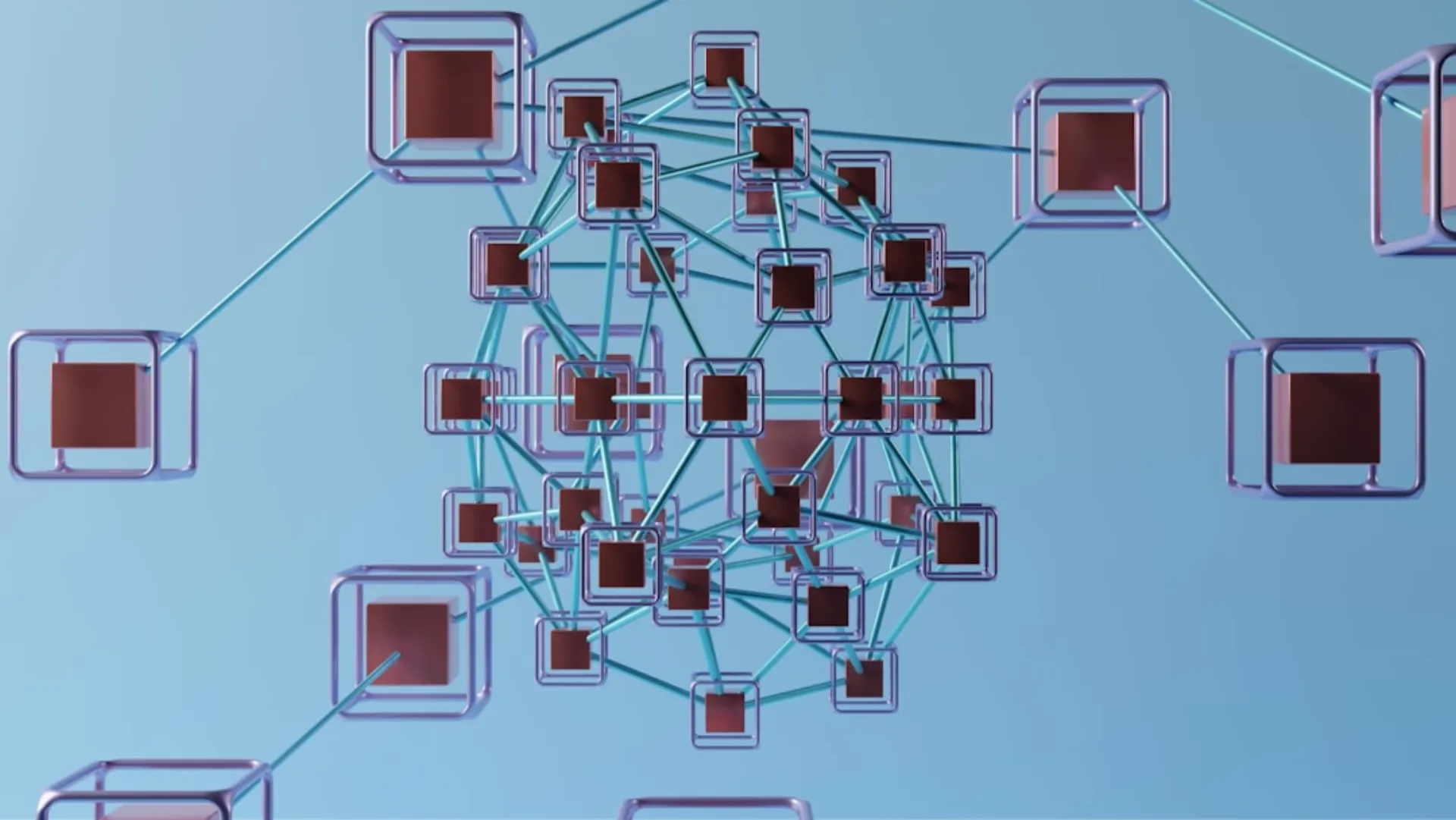
We build multi-agent orchestration for legal — creating coordinated AI agent systems where specialized agents handle distinct legal tasks in parallel so that a research agent investigates case law and statutory authorities while simultaneously a document review agent processes relevant filings and a contract analysis agent examines related agreements and a compliance monitoring agent checks for regulatory developments and a case preparation agent synthesizes all findings into a coherent work product with all agents sharing context and coordinating their work through an orchestration layer that ensures consistency and prevents conflicting analysis and manages privilege boundaries across all agent activities so that complex legal work that would take a single attorney or a single AI days to complete is accomplished in hours through the parallel specialized intelligence of multiple coordinated agents.
4.9/5Verified rating
300+Clients served
23Products shipped
100+Case studies
Since 2015In production
62%
Reduction in due diligence review time
23
Cross-workstream issues identified in 5 reviews
$1.2M
Additional annual revenue from freed capacity
94%
Document classification accuracy
Multi-agent orchestration for legal coordinates multiple specialized AI agents to handle complex legal work — where different aspects of a matter (research, document review, contract analysis, compliance checking, and: preparation of deliverables) proceed in parallel rather than sequentially.
Legal work is naturally parallel but traditionally performed sequentially. When a corporate acquisition requires: due diligence — the work involves: reviewing contracts, researching regulatory requirements, analyzing intellectual property, examining litigation history, and: assessing compliance posture. These workstreams are: largely independent but ultimately need to be synthesized into: a unified assessment. With human attorneys: these workstreams are performed either sequentially (one attorney doing everything) or: coordinated across multiple attorneys (requiring: significant management overhead to keep workstreams aligned). Multi-agent orchestration applies: the same parallel approach — but with AI agents as the parallel workers, coordinated by an orchestration layer that ensures: consistency, completeness, and privilege compliance.
Each agent in a multi-agent legal system specializes in: a specific type of legal task. A research agent excels at: finding and analyzing case law, statutes, and regulatory materials. A document review agent is optimized for: processing large document sets — identifying key provisions, flagging issues, and: classifying content. A contract analysis agent specializes in: parsing agreement terms, comparing against standards, and: identifying risk. A compliance agent monitors: regulatory requirements and checks facts against: applicable rules. By specializing agents: each performs its task with: greater accuracy and efficiency than a general-purpose AI attempting: all tasks with a single model.
The orchestration layer is the critical differentiator. Without orchestration: multiple agents working independently might: produce contradictory analyses, miss connections between workstreams, or: violate privilege boundaries by sharing information inappropriately. The orchestration layer ensures: agents share relevant context (the research agent's finding about a regulatory requirement informs: the compliance agent's analysis), agents do not contradict each other (if the contract agent identifies an indemnification provision: the risk agent accounts for it in: the risk assessment), and: privilege boundaries are maintained (agents working on one client's matter do not: access or share information from: another client's matter).
At ZTABS, we build multi-agent legal systems that coordinate: specialized AI agents for complex legal work — delivering: the thoroughness of comprehensive analysis with: the speed of parallel processing.
The Legal Market
Multi-agent systems represent the next evolution of legal AI — moving from single-purpose tools to coordinated intelligence that handles complex, multi-faceted legal tasks.
Current legal AI is single-purpose. Most legal AI tools do: one thing — research, or document review, or contract analysis. Each tool operates: independently, in its own interface, with its own data. An attorney using: three AI tools for a complex matter must: switch between applications, manually transfer context, and: synthesize results from multiple sources. This creates: the same coordination overhead that exists with: human teams — except the coordination falls: entirely on the attorney.
Multi-agent systems integrate what single-purpose tools separate. Instead of: three independent AI tools that an attorney must coordinate — a multi-agent system provides: three (or more) specialized agents coordinated by an orchestration layer. The attorney interacts with: the system as a whole — assigning work and receiving synthesized results — rather than: managing individual tools. The coordination burden shifts: from the attorney to the orchestration layer.
Litigation preparation is the strongest initial use case. A complex litigation matter might require: reviewing 50,000 documents for relevance and privilege, researching legal standards for 12 motion issues, analyzing 25 contracts related to the dispute, checking compliance with 3 different regulatory frameworks, and: preparing a comprehensive case assessment. With: sequential AI processing — this work takes weeks. With: coordinated multi-agent processing — the document review agent processes documents, the research agent investigates legal issues, the contract agent analyzes agreements, and the compliance agent checks regulatory positions — all simultaneously, with: the orchestration layer synthesizing findings as they emerge. Work that takes: 3 to 4 weeks sequentially can be: substantially completed in 3 to 5 days.
Due diligence is the second major use case. M&A due diligence involves: parallel workstreams (corporate, regulatory, IP, litigation, employment, environmental) that are: naturally suited to parallel agent processing. Each workstream gets: a specialized agent, with: the orchestration layer identifying cross-workstream issues (the IP agent's finding about a patent dispute informs: the litigation agent's assessment of pending claims).
How We Deliver Multi-Agent Orchestration for Legal
Our multi-agent orchestration for legal covers system architecture, agent specialization, orchestration design, integration, and operational management.
System architecture designs the multi-agent framework. We define: agent topology (which specialized agents the system needs based on: the firm's practice areas and workflow requirements — research agents, document review agents, contract analysis agents, compliance agents, drafting agents, and: synthesis agents — with the number and specialization determined by: actual workload patterns), communication protocol (how agents share context, findings, and requests — designed for: legal-appropriate information sharing that respects: privilege boundaries and matter isolation), orchestration layer (the coordination intelligence that assigns tasks to agents, manages dependencies between agent outputs, synthesizes agent findings into coherent work products, and: handles conflicts between agent analyses), and: privilege architecture (the data isolation framework ensuring: agents only access information they are authorized to process — with matter-level, client-level, and: team-level access controls embedded in: the agent communication protocol).
Agent specialization builds each agent's capability. We develop: research agents (specialized in: legal research — querying case law databases, analyzing statutory frameworks, identifying relevant authorities, and: synthesizing research findings — with: jurisdiction awareness, citation verification, and: authority ranking built into the agent's reasoning), document review agents (specialized in: high-volume document processing — relevance classification, privilege identification, key provision extraction, timeline construction, and: issue tagging — with: configurable review protocols that match the firm's document review standards), contract analysis agents (specialized in: agreement parsing — provision identification, standard-deviation flagging, risk assessment, and: clause comparison against the firm's preferred positions — with: jurisdiction-specific compliance checking), compliance agents (specialized in: regulatory analysis — monitoring applicable regulations, checking factual patterns against regulatory requirements, and: flagging compliance issues — with: real-time awareness of regulatory changes), and: synthesis agents (specialized in: combining outputs from other agents into: coherent legal work products — memos, due diligence reports, case assessments, and: executive summaries — with: quality controls ensuring: consistency across synthesized content).
Orchestration design builds the coordination intelligence. We implement: task decomposition (breaking complex legal tasks into: subtasks appropriate for each specialized agent — the orchestrator receives a high-level assignment like "conduct due diligence review" and: decomposes it into: contract review tasks, research tasks, compliance tasks, and: document review tasks assigned to: the appropriate agents), dependency management (understanding: which agent outputs depend on other agent outputs — the compliance agent needs the contract agent's findings before: completing its regulatory analysis — and: scheduling agent work to: maximize parallel processing while respecting dependencies), conflict resolution (detecting: when two agents produce contradictory findings and: escalating conflicts for attorney review or: applying resolution rules — such as: preferring the analysis grounded in more recent authorities), and: synthesis orchestration (combining: agent outputs into deliverables — ensuring: cross-references between sections are consistent, key findings are surfaced in executive summaries, and: the synthesized work product reads as: a coherent analysis rather than: a collection of independent outputs).
Integration connects the multi-agent system to the firm's environment. We build: document management integration (agents access and store documents through: the firm's DMS — iManage, NetDocuments, or SharePoint), practice management integration (tasks, deadlines, and matter information flow between: the practice management system and the agent orchestrator), legal research integration (research agents connect to: Westlaw, Lexis, or other legal databases for: verified legal content), and: attorney interface (the dashboard through which: attorneys assign work, monitor progress, review findings, and: provide feedback — designed for: the attorney's workflow rather than requiring: AI system administration skills).
Operational management maintains the multi-agent system. We provide: performance monitoring (tracking: each agent's accuracy, throughput, and: contribution to overall system output), continuous improvement (refining agent specializations based on: attorney feedback and accuracy metrics), scaling (adding agents or compute resources as: the firm's usage grows), and: update management (deploying: improved models and capabilities as: the AI landscape evolves).
Ready to discuss your multi-agent orchestration project?
Free consultation — no commitment required.
Case StudyM&A / 30-attorney firm deploying multi-agent AI for acquisition due diligence workstreams
Multi-Agent Due Diligence System for Mergers and Acquisitions Practice
The Challenge
A 30-attorney M&A practice group at an AmLaw 200 firm conducted: 15 to 20 acquisition due diligence reviews annually. Each review required: analysis across 6 workstreams (corporate, contracts, regulatory, IP, litigation, and employment), processing: 3,000 to 15,000 documents per deal. Due diligence was: the practice group's biggest operational bottleneck — each review required: 4 to 6 attorneys working 3 to 5 weeks. The sequential nature of the work meant: findings from one workstream that affected another workstream were often discovered: late in the process — requiring: rework. The practice group was: turning away smaller acquisition mandates because: due diligence capacity was fully consumed by larger deals.
Our Solution
We built a 6-agent due diligence system over 12 weeks with: workstream-specialized agents coordinated by an orchestration layer.
Agent specialization: corporate agent (analyzing: organizational documents, capitalization, governance, and: entity structure), contracts agent (reviewing: material agreements — identifying: change of control provisions, consent requirements, non-compete restrictions, and: unusual provisions), regulatory agent (checking: applicable regulatory requirements — industry-specific regulations, foreign investment restrictions, antitrust considerations, and: required approvals), IP agent (cataloging: patents, trademarks, copyrights, and trade secrets — assessing: ownership, scope, and potential issues), litigation agent (reviewing: pending and threatened litigation, investigating: litigation history, and: assessing: exposure from disclosed claims), and: employment agent (analyzing: employment agreements, benefit plans, compensation structures, and: key employee retention risks).
Orchestration: when a new due diligence assignment was initiated, the orchestrator: ingested the document set, classified documents by workstream (corporate, contracts, regulatory, IP, litigation, employment, or: cross-workstream), assigned documents to the appropriate agents, identified: cross-workstream dependencies (the contracts agent's finding that a key contract had: a change of control termination right was automatically flagged to: the corporate agent and the risk synthesis agent), and: generated a running synthesis of findings as agents completed their reviews.
Cross-workstream intelligence: the orchestrator's key capability was: connecting findings across workstreams. When the litigation agent identified: a pending patent infringement claim — the IP agent was: automatically notified to assess the patent's validity and the target company's defensive positions. When the contracts agent found: an agreement with a regulatory approval requirement — the regulatory agent was: alerted to include: that specific approval in its regulatory requirements analysis. These cross-workstream connections were: the findings that human teams often missed until: late in the review process.
Attorney interface: a dashboard showed: real-time progress across all 6 workstreams — with findings organized by: severity (critical issues requiring immediate partner attention, material issues requiring attorney analysis, and: informational items for completeness). Attorneys could: drill into any finding, see the source documents, and: add notes or escalate issues. The synthesis agent produced: a draft due diligence memo that attorneys reviewed and refined rather than: writing from scratch.
The Results
Results after 5 completed due diligence reviews: average review time decreased from: 4.2 weeks to 1.6 weeks — a 62 percent reduction. The parallel processing of 6 workstreams (versus sequential processing by attorneys) and: the automated document classification and analysis produced: dramatic time compression.
Cross-workstream discovery improved substantially. In the first 5 reviews: the orchestrator identified: 23 cross-workstream issues that connected: findings from one workstream to implications in another. Attorneys estimated that: 15 of these 23 connections would have been: discovered eventually in the traditional process but: typically 1 to 2 weeks later. 8 connections were: subtle enough that they might have been: missed entirely without the automated cross-referencing.
Quality: the document classification accuracy was: 94 percent (6 percent required reclassification by attorneys). Agent findings were: reviewed by attorneys for accuracy — with: 88 percent accuracy on substantive analysis (12 percent of findings required: correction or nuancing). Critical issue identification was: 97 percent accurate — meaning: the system rarely missed a major issue, though it sometimes: flagged items as critical that attorneys downgraded to material.
Capacity impact: the practice group completed: its standard due diligence workload in approximately 40 percent of the previous time. This freed: attorney capacity equivalent to approximately 2 full-time attorneys — which the group used to: accept 6 additional M&A mandates that it would have previously: turned away due to capacity constraints. The additional mandates generated: approximately $1.2 million in annual revenue.
Total investment: $195,000 for system development and deployment plus $7,500 monthly for AI compute and maintenance. Annual ROI: approximately 5:1 on direct additional revenue alone — excluding: the value of faster turnaround times on existing mandates (which: improved client satisfaction and competitive positioning for future mandates).
Multi-Agent Orchestration Capabilities for Legal
- ✓Agent Team Architecture
Design teams of specialized agents with defined roles, tools, and communication protocols.
- ✓Workflow Orchestration
Sequential, parallel, and conditional agent execution with dependency management and state passing.
- ✓Agent Communication Protocols
Structured message passing, shared memory, and context management between agents in the system.
- ✓Supervisor & Consensus Patterns
Supervisor agents that monitor quality, resolve conflicts, and ensure output meets requirements.
- ✓Observability & Cost Tracking
Real-time dashboards showing agent activity, step latency, token usage, and cost per workflow.
- ✓Fault Tolerance & Recovery
Automatic retries, fallback agents, graceful degradation, and human escalation for production reliability.
Multi-Agent Orchestration Landscape for Legal
Multi-agent orchestration for legal can be sourced from: large AI platform vendors (offering general multi-agent frameworks that require: significant customization for legal workstreams), legal AI vendors (developing single-purpose tools but: not offering multi-agent coordination), AI consultancies (capable of building agent systems but: lacking legal domain expertise for workstream design and privilege architecture), and: legal technology consultants (advising on workflow but: lacking AI engineering for agent development). ZTABS builds multi-agent legal systems with both: orchestration engineering and legal practice area expertise.
Multi-Agent Orchestration Pricing for Legal
Multi-agent orchestration for legal ranges from $100,000 to $300,000 for initial deployment. Dual-agent system (2 specialized agents with orchestration for a single use case like due diligence) costs $100,000 to $160,000 across 8 to 12 weeks. Multi-agent platform (4 to 6 agents covering: major practice area workflows) costs $160,000 to $240,000 across 10 to 16 weeks. Enterprise orchestration (comprehensive multi-agent system with: cross-practice coordination and firm-wide deployment) costs $200,000 to $300,000 across 12 to 20 weeks. Monthly: $5,000 to $12,000 for AI compute, orchestration infrastructure, and: continuous improvement.
Frequently Asked Questions
Common questions about multi-agent orchestration for legal
Each agent operates within strict matter-level isolation. The orchestration layer enforces: access controls that prevent agents from sharing information across client matters. Cross-workstream sharing only occurs within the same matter. Audit trails document every inter-agent communication for privilege verification. The architecture mirrors the information barriers that firms already maintain between conflicting matters.
Ready for Multi-Agent Orchestration Built for
Legal?
Our team has deep expertise in legal technology. Get a free consultation.
500+
Projects Delivered
4.9/5
Client Rating
90%
Repeat Clients