Self-Hosted AI & Private LLM Deployment for Agriculture & AgTech
Self-Hosted AI Deployment for Agriculture & Agribusiness
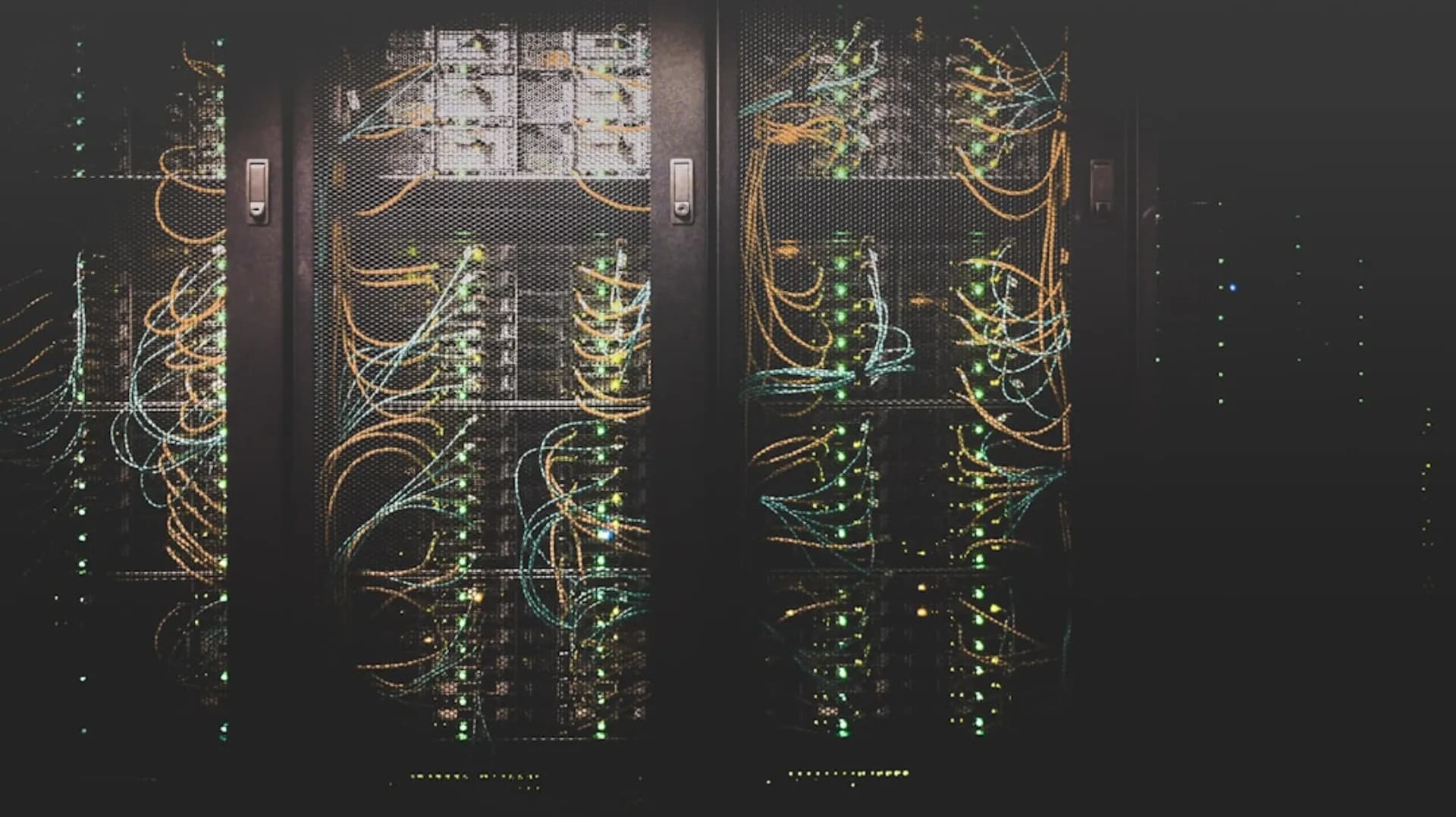
Agricultural businesses handle competitively sensitive data—yield performance, input strategies, marketing positions, and proprietary agronomic practices—that many operations are unwilling to send to third-party cloud AI services where data ownership, usage, and confidentiality cannot be fully guaranteed. Our self-hosted AI deployment services for agriculture install AI capabilities on infrastructure you own and control—running crop analytics, yield prediction, natural language processing, and machine learning models on your own servers or private cloud environments, ensuring your agricultural data never leaves your custody while delivering the same AI capabilities that cloud-hosted solutions provide.
4.9/5Verified rating
300+Clients served
23Products shipped
100+Case studies
Since 2015In production
94%
Yield prediction accuracy with proprietary models
65K acres
Imagery processed locally overnight
0
Data exposure to third-party services
30 mo
Infrastructure payback period vs cloud costs
Self-hosted AI for agriculture addresses the data sovereignty concerns that are increasingly important to agricultural businesses. Farm operational data—which fields produce highest yields, which input strategies are most effective, what marketing positions are held—has significant competitive and financial value. Agricultural businesses that send this data to cloud AI services effectively share their most sensitive operational intelligence with third-party infrastructure where data handling practices may not align with the business's confidentiality requirements.
On-premises AI deployment runs AI models on servers located at the agricultural business's facilities—in the office, at a data center, or at edge locations near field operations. On-premises deployment provides complete data custody with no agricultural data leaving the organization's physical control. This approach satisfies the strictest data sovereignty requirements and eliminates any dependency on external AI service availability.
Private cloud AI deployment runs AI capabilities on dedicated cloud infrastructure that the agricultural business controls—single-tenant environments with defined data residency, access controls, and security configurations. Private cloud provides the scalability benefits of cloud computing with the data isolation and control that agricultural data sensitivity demands.
Edge AI deployment positions AI processing capability at the operational locations where agricultural data is generated—on equipment, at elevator locations, or at field-level compute stations. Edge deployment enables real-time AI processing without sending data to centralized infrastructure—essential for time-sensitive agricultural applications like harvest quality grading, real-time irrigation control, and equipment-mounted crop analysis.
Hybrid AI deployment combines on-premises, private cloud, and edge processing based on data sensitivity and processing requirements. Non-sensitive workloads may use cost-effective cloud resources while the most sensitive agricultural data processes exclusively on controlled infrastructure. Hybrid architectures optimize cost and performance while maintaining data sovereignty for the information that matters most.
Offline-capable AI ensures agricultural AI functions continue during connectivity interruptions. Rural agricultural locations frequently experience unreliable internet connectivity—during the critical moments when AI-driven decisions are most needed, cloud connectivity may be unavailable. Self-hosted AI continues operating regardless of external connectivity, providing the reliability that agricultural operations require.
Model customization on proprietary data enables agricultural businesses to train and fine-tune AI models using their own operational data without exposing that data to external model training pipelines. Self-hosted models trained on the organization's specific field conditions, crop responses, and management outcomes deliver more accurate predictions than generic models trained on broad agricultural datasets.
The Agriculture & AgTech Market
Data ownership and privacy in agriculture has become a prominent industry concern. High-profile debates about who owns farm data, how agricultural technology companies use the data they collect, and whether farm operational data could be used against the farmers who generate it have heightened awareness of data sovereignty issues. Agricultural industry organizations have established data principles advocating for farmer control over their operational data.
Competitive intelligence sensitivity varies across agricultural segments but is significant in grain marketing, precision agriculture consulting, and large-scale farming operations. Grain merchandising positions, input cost structures, and yield performance data all have competitive value that businesses protect carefully. Self-hosted AI eliminates the risk of this data exposure through cloud AI services.
Regulatory developments are moving toward greater data protection requirements in agriculture. As food traceability regulations expand and agricultural data grows in economic importance, regulatory frameworks may impose data handling requirements that cloud-hosted AI services cannot satisfy. Self-hosted AI provides the data control foundation that evolving regulations may require.
Connectivity limitations in rural agricultural areas make self-hosted and edge AI architectures more practical than purely cloud-based AI for many agricultural applications. Agricultural operations that cannot rely on consistent high-bandwidth internet connectivity need AI capabilities that function without constant cloud access. Self-hosted deployment eliminates the connectivity dependency that makes cloud AI unreliable in many agricultural locations.
AI model performance benefits from operation-specific training data. Generic agricultural AI models trained on broad datasets perform adequately for general recommendations but cannot match the accuracy of models trained on a specific operation's soil types, microclimate patterns, management history, and crop response characteristics. Self-hosted AI enables this proprietary model training without sharing the underlying data with external services.
How We Deliver Self-Hosted AI & Private LLM Deployment for Agriculture & AgTech
Our self-hosted AI deployment for agriculture begins with requirements analysis—evaluating the agricultural organization's AI use cases, data sensitivity levels, connectivity constraints, and infrastructure capabilities. We assess which AI workloads require self-hosted deployment for data sovereignty, which could use cloud resources for cost efficiency, and which need edge deployment for latency-sensitive field operations.
Infrastructure design creates the hardware and networking architecture that supports agricultural AI workloads. Server specifications are selected based on AI model requirements—GPU-equipped servers for computer vision and large language model workloads, standard servers for lighter analytics and data processing. Storage architecture handles the large datasets that agricultural AI generates—imagery libraries, sensor archives, and historical records. Network design ensures adequate bandwidth between edge locations, central infrastructure, and any cloud components.
AI model selection and optimization identifies the appropriate models for each agricultural use case and optimizes them for self-hosted deployment constraints. Large language models may be quantized for efficient operation on available hardware. Computer vision models are optimized for the inference speed that real-time agricultural applications require. Model selection balances capability against the computational resources available in the self-hosted environment.
Deployment and orchestration installs AI models and supporting infrastructure on the agricultural organization's systems. Container-based deployment enables consistent operation across different infrastructure environments. Orchestration tooling manages model serving, load distribution, and failover. Monitoring systems track model performance, resource utilization, and prediction quality.
Data pipeline development builds the infrastructure that feeds agricultural data to self-hosted AI models—ingesting sensor data, processing imagery, integrating weather feeds, and preparing operational data for model consumption. Pipelines handle the volume and variety of agricultural data while maintaining the data isolation that self-hosted deployment is designed to provide.
Security configuration implements the access controls, encryption, and audit logging that protect the AI infrastructure and the agricultural data it processes. Role-based access ensures only authorized users and systems interact with AI models and data. Encryption protects data at rest and in transit within the self-hosted environment. Audit logs document all system access and model interactions for governance review.
Training and operations handoff prepares the agricultural organization's technology team to manage and maintain the self-hosted AI infrastructure. Documentation covers system architecture, operational procedures, troubleshooting guides, and model update processes. Ongoing support agreements provide expert assistance for complex issues while building internal capability.
Ready to discuss your self-hosted AI & private LLM deployment project?
Free consultation — no commitment required.
Case StudyLarge-Scale Farming and Grain Marketing
Self-Hosted AI Platform for Large Agricultural Operation
The Challenge
A 65,000-acre farming and grain marketing operation wanted AI-powered yield prediction, satellite imagery analysis, and grain marketing intelligence but refused to use cloud AI services due to the competitive sensitivity of their operational data. Their yield data, input strategies, and grain marketing positions constituted significant competitive advantages that they would not expose to any third-party service. Previous AI vendor evaluations had ended when the operation discovered that cloud-based services retained rights to aggregate and learn from customer data. Additionally, the operation's headquarters had limited internet bandwidth—a 50 Mbps connection shared with office operations—making cloud-based imagery processing impractical for their 65,000 acres of satellite data.
Our Solution
We deployed a self-hosted AI platform at the operation's headquarters, installing GPU-equipped servers for imagery processing and model inference alongside storage infrastructure for their agricultural data archive. The platform included satellite imagery analysis models that processed field imagery locally—detecting crop health anomalies, estimating biomass, and tracking growth stage progression across all 65,000 acres without any imagery data leaving the premises. Yield prediction models were trained on the operation's 12 years of proprietary yield data, soil characteristics, and management records—producing field-specific predictions that reflected their unique conditions. A self-hosted language model powered a grain marketing intelligence assistant that analyzed market data, tracked their position, and generated marketing scenario analyses—all processing locally without exposing their marketing positions to external services. Edge compute nodes at 3 remote farm locations processed equipment-mounted sensor data locally for real-time field decisions.
The Results
The operation achieved AI capabilities equivalent to cloud-based alternatives while maintaining complete data sovereignty—no agricultural data left their controlled infrastructure. Yield prediction models trained on proprietary data achieved 94 percent accuracy within 5 percent of actual yields, compared to 86 percent accuracy from the generic cloud-based model they had evaluated. Satellite imagery processing completed overnight for all 65,000 acres without impacting daytime internet bandwidth. The grain marketing assistant analyzed market scenarios and position implications without any external visibility into the operation's marketing positions or strategy. Total infrastructure investment of $180,000 replaced what would have been $72,000 in annual cloud AI subscription costs—achieving payback within 30 months while providing permanent data sovereignty protection. The operation reported that self-hosted AI enabled them to use AI capabilities they would have otherwise forgone entirely due to data sensitivity concerns.
Self-Hosted AI & Private LLM Deployment Capabilities for Agriculture & AgTech
- ✓Private LLM Deployment
Deploy Llama, Mistral, Gemma, and other open-source models on your infrastructure with optimized inference.
- ✓OpenClaw Setup & Management
Full OpenClaw deployment with persistent memory, security hardening, skill development, and multi-channel integrations.
- ✓GPU Infrastructure Provisioning
NVIDIA A100/H100 and AMD MI300 provisioning, configuration, and optimization for AI workloads.
- ✓Private Vector Databases
Self-hosted Qdrant, Weaviate, or pgvector for RAG systems that never leave your network.
- ✓Model Optimization & Quantization
Model quantization (GPTQ, AWQ, GGUF) and inference optimization to maximize performance on your hardware.
- ✓Monitoring & Maintenance
24/7 monitoring, model updates, performance tuning, and scaling support for your private AI infrastructure.
View all self-hosted AI & private LLM deployment capabilities →
Self-Hosted AI & Private LLM Deployment Landscape for Agriculture & AgTech
Self-hosted AI deployment for agriculture is served by IT infrastructure companies, agricultural technology vendors with on-premises options, AI infrastructure specialists, and custom deployment firms. IT infrastructure companies provide hardware and hosting but may lack AI-specific deployment expertise and agricultural application knowledge. Agricultural technology vendors may offer on-premises deployment options for their specific platforms but not the flexibility to deploy custom or third-party AI models.
AI infrastructure specialists bring deep expertise in model deployment, optimization, and operations but may not understand the agricultural use cases and data patterns that drive deployment decisions.
The differentiator is combining AI infrastructure engineering with agricultural domain understanding. Partners who know how to deploy and optimize AI models and understand which agricultural applications benefit most from self-hosted deployment deliver solutions that serve real agricultural needs rather than generic AI infrastructure.
Edge deployment capability for agricultural environments is a significant differentiator because many agricultural AI applications require processing at field locations—in equipment cabs, at elevator scales, and at remote farm sites. Partners who can deploy and manage AI at agricultural edge locations extend self-hosted capability where it is needed most.
Self-Hosted AI & Private LLM Deployment Pricing for Agriculture & AgTech
Self-hosted AI deployment for agriculture typically ranges from $100,000 to $300,000+ depending on AI workload requirements, infrastructure scope, and edge deployment needs. Infrastructure hardware investment (servers, GPUs, storage, networking) typically costs $40,000 to $120,000 depending on processing requirements. AI model deployment, optimization, and integration development ranges from $60,000 to $150,000. Edge deployment at agricultural locations adds $15,000 to $40,000 per location.
Ongoing maintenance and operations typically cost $4,000 to $15,000 monthly for system administration, model updates, monitoring, and support.
The ROI of self-hosted agricultural AI is measured against two baselines: the cost of equivalent cloud AI services (typically $40,000 to $100,000+ annually) and the risk cost of data exposure that self-hosting eliminates. For agricultural operations with significant competitive data sensitivity, the risk mitigation value alone may justify self-hosted deployment. Infrastructure investment typically achieves payback within 24 to 36 months compared to cloud subscription costs, with the permanent benefit of complete data sovereignty.
Frequently Asked Questions
Common questions about self-hosted AI & private LLM deployment for agriculture & agtech
Requirements depend on your AI workloads. Imagery analysis and large language models require GPU-equipped servers. Lighter analytics and data processing run on standard server hardware. We specify the exact infrastructure based on your use cases and scale.
Ready for Self-Hosted AI & Private LLM Deployment Built for
Agriculture & AgTech?
Our team has deep expertise in agriculture & agtech technology. Get a free consultation.
500+
Projects Delivered
4.9/5
Client Rating
90%
Repeat Clients