Self-Hosted AI & Private LLM Deployment for Education
Self-Hosted AI for Education That Keeps Student Data On-Campus, Ensures FERPA Compliance, and Gives Institutions Full Control Over AI Systems
We deploy self-hosted AI systems for educational institutions — on-premises large language models for student advising and tutoring without sending data to third-party clouds, FERPA-compliant AI infrastructure that keeps student education records under institutional control, private AI systems for institutional research and predictive analytics, locally-hosted assessment and feedback AI, and sovereign campus AI deployments that eliminate vendor data dependencies.
4.9/5Verified rating
300+Clients served
23Products shipped
100+Case studies
Since 2015In production
380K+
Tutoring interactions in first academic year
67%
Undergraduate adoption rate
<2.8s
Average response latency during peak usage
55%
Cost savings vs. estimated cloud AI costs
The surge of AI adoption in education has created a fundamental tension between capability and compliance. Cloud-based AI services like ChatGPT, Claude, and Gemini offer remarkable capabilities for tutoring, assessment feedback, writing assistance, and administrative automation — but using them with student data raises serious FERPA compliance concerns. When a university sends student writing samples to OpenAI for AI-powered feedback, those student education records are transmitted to a third-party processor without the data governance controls that FERPA requires. When a K-12 district uses a cloud AI service to analyze student performance data for early intervention, student personally identifiable information crosses institutional boundaries in ways that may violate state student privacy laws. When an institutional research office uses cloud AI to analyze enrollment patterns, sensitive institutional data resides on infrastructure controlled by a commercial vendor with its own data retention and training policies.
The compliance risk is not theoretical. The Department of Education has issued guidance clarifying that AI-generated analysis of student education records constitutes use of education records subject to FERPA protections. Several states have enacted specific student data privacy laws that restrict the use of cloud-based AI services with student information. And the contractual protections that cloud AI vendors offer — their data processing agreements and privacy commitments — are often insufficient to meet institutional compliance obligations because they do not provide the level of control, auditability, and data sovereignty that educational regulations require.
Self-hosted AI deployment resolves this tension by running AI models on infrastructure that the institution controls — either on-premises in campus data centers or in dedicated cloud tenants where the institution maintains exclusive control over the computing environment and data. Self-hosted deployment means that student data never leaves institutional custody, AI model behavior is fully auditable, data retention policies are enforced by the institution rather than a vendor, and the institution is not dependent on a vendor's continued service or pricing decisions.
At ZTABS, we deploy self-hosted AI systems for educational institutions that deliver the capabilities of modern AI — natural language tutoring, assessment feedback, predictive analytics, document processing, and administrative automation — while keeping student data under complete institutional control. We handle the infrastructure architecture, model selection and optimization, deployment engineering, and operational monitoring that make self-hosted AI reliable and performant in educational environments.
The Education Market
The demand for self-hosted AI in education is being driven by a convergence of regulatory pressure, institutional risk awareness, and the practical limitations of cloud AI services for educational use cases. FERPA compliance is the primary driver. Under FERPA, educational institutions are responsible for protecting student education records and must ensure that any third-party service provider that accesses those records has appropriate contractual safeguards in place. Cloud AI services present challenges because their data handling practices are not fully transparent, their terms of service may include broad data usage rights, and their security practices — while generally robust — are not under institutional control or audit.
State student privacy laws add additional complexity. Illinois SOPPA (Student Online Personal Protection Act), California SOPIPA, New York Education Law 2-d, and similar laws in over 40 states impose specific requirements on the collection, use, and protection of student data by technology providers. Many of these laws require that student data not be used for purposes beyond the educational function, that it be deleted upon request, and that specific security measures be in place. Cloud AI services that use input data for model training — even in anonymized form — may violate these requirements.
Institutional research and strategic analytics represent a use case where self-hosted AI is particularly valuable. Universities use AI to analyze enrollment trends, predict retention, model financial scenarios, and evaluate program outcomes. This analysis involves sensitive institutional data that institutions are reluctant to send to cloud services — not only because of privacy concerns but because the analytical insights themselves are competitively sensitive. A university's retention prediction model is a strategic asset; sharing the underlying data with a cloud AI provider creates risk that the data could be used to train models that benefit competitors.
The maturation of open-source AI models has made self-hosted deployment increasingly practical. Models like Llama, Mistral, Phi, and their fine-tuned variants can run on institutional hardware and deliver performance that is competitive with cloud services for many educational use cases. A 70B parameter model running on a modest GPU cluster can power tutoring conversations, generate assessment feedback, summarize research papers, and process administrative documents with quality that meets educational standards. The hardware costs — while significant — are predictable and amortizable, unlike cloud AI usage costs that scale unpredictably with adoption.
K-12 districts face even more stringent requirements because they serve minors. COPPA (Children's Online Privacy Protection Act) restricts the collection of personal information from children under 13, and many districts interpret this as prohibiting the use of cloud AI services with student data unless explicit parental consent is obtained. Self-hosted AI eliminates the third-party data transfer that triggers COPPA concerns, enabling districts to deploy AI tools for younger students without the consent burden that makes cloud adoption impractical.
How We Deliver Self-Hosted AI & Private LLM Deployment for Education
Our self-hosted AI deployment methodology for education addresses the specific requirements of educational institutions — FERPA compliance, student data sovereignty, academic calendar alignment, and integration with institutional systems.
Requirements analysis and model selection identifies the AI capabilities the institution needs and selects the appropriate models and infrastructure to deliver them. We work with institutional stakeholders to define use cases — tutoring and student support, assessment feedback, administrative document processing, institutional research analytics, advising assistance, or other applications. For each use case, we evaluate the required capabilities (language understanding, domain knowledge, reasoning, code generation), performance requirements (response latency, concurrent users, throughput), and accuracy requirements (how critical is factual accuracy, what are the consequences of errors). We then evaluate open-source models against these requirements — testing candidates on education-specific benchmarks and with sample data that represents the institution's actual use cases. Model selection considers not just performance but also inference cost (GPU requirements per concurrent user), licensing terms (some open-source models have restrictions on commercial or institutional use), and fine-tuning potential (can the model be adapted to the institution's specific needs).
Infrastructure architecture designs the computing environment for self-hosted AI based on the institution's existing infrastructure, use case requirements, and budget. On-premises deployment uses GPU servers installed in the campus data center, providing maximum data sovereignty and predictable costs. We design configurations ranging from single GPU servers for departmental use cases to multi-node GPU clusters for institution-wide deployment. Dedicated cloud deployment uses cloud GPU instances (AWS, Azure, GCP) in a dedicated tenant or VPC that the institution controls, providing cloud scalability while maintaining data isolation. Hybrid architectures use on-premises GPU for sensitive workloads (student data analysis, advising) and cloud GPU for less sensitive workloads (general-purpose writing assistance, research summarization) where data privacy requirements are lower. Infrastructure design includes redundancy and failover planning, network architecture (ensuring AI services are accessible from campus systems while maintaining security), and capacity planning (ensuring the infrastructure can handle peak usage during finals, registration, and other high-demand academic periods).
Deployment engineering installs, configures, and optimizes the AI system for production use. We deploy model serving infrastructure (vLLM, TGI, or similar) optimized for the selected models and hardware. We implement quantization and optimization techniques that reduce GPU memory requirements and improve inference throughput without meaningful quality degradation. We configure batching and scheduling to maximize GPU utilization during peak periods and minimize power consumption during off-hours. We implement API interfaces that institutional applications can consume — RESTful APIs, WebSocket connections for streaming responses, and batch processing endpoints for high-volume document analysis. We deploy monitoring infrastructure that tracks GPU utilization, inference latency, error rates, and queue depths, providing operational visibility into system performance.
Education-specific customization adapts the AI system to the institution's specific educational context. We implement retrieval-augmented generation (RAG) systems that ground AI responses in institutional knowledge — course catalogs, academic policies, degree requirements, financial aid rules, and other institutional information. This ensures that AI tutoring and advising responses reference the institution's actual programs and policies rather than generating generic or inaccurate information. We implement content filtering and guardrails appropriate for educational contexts — preventing AI from generating inappropriate content, providing answers to assessment questions when used in tutoring mode, or giving advice outside its competency (e.g., mental health counseling). For K-12 deployments, we implement age-appropriate content controls. We also implement prompt engineering and system instructions that shape AI behavior for educational interactions — encouraging Socratic questioning in tutoring, providing constructive feedback in assessment contexts, and maintaining appropriate professional tone in all interactions.
Integration with institutional systems connects the self-hosted AI with the institution's existing technology ecosystem. We build LTI integrations that embed AI capabilities within the LMS — providing AI tutoring, writing feedback, and study assistance within the environment where students already do their academic work. We integrate with SIS data to personalize AI responses based on student enrollment, academic history, and program requirements. We connect with advising systems to provide AI-assisted degree planning and course recommendations. We integrate with administrative systems to power document processing, enrollment verification, and other operational automation. All integrations include FERPA-compliant access controls that ensure AI access to student data follows the same authorization rules as human access.
Operational support and model management establishes processes for ongoing operation, maintenance, and improvement of the self-hosted AI system. We implement automated health monitoring with alerting for performance degradation, hardware issues, and capacity limits. We establish model update procedures — evaluating new model releases, testing them against the institution's benchmarks, and deploying updates with minimal downtime. We build usage analytics that track adoption patterns, user satisfaction, and educational impact metrics. And we provide operational documentation and training for institutional IT staff, enabling them to manage day-to-day operations while having access to our team for complex issues and strategic guidance.
Ready to discuss your self-hosted AI & private LLM deployment project?
Free consultation — no commitment required.
Case StudyResearch university
Self-Hosted AI Tutoring and Research Platform for a University
The Challenge
A research university with 28,000 students wanted to provide AI-powered tutoring and writing assistance to all students but had been advised by university counsel that using cloud AI services with student academic work created unacceptable FERPA risk. The university's IRB had also expressed concerns about using cloud AI for institutional research analytics, as the data included student identifiers that could not be fully de-identified without losing analytical value. Previous attempts to use cloud AI services with anonymized data had produced poor results because the anonymization removed the contextual information that made the AI responses useful. The university needed a solution that provided high-quality AI capabilities while keeping all student data under institutional control.
Our Solution
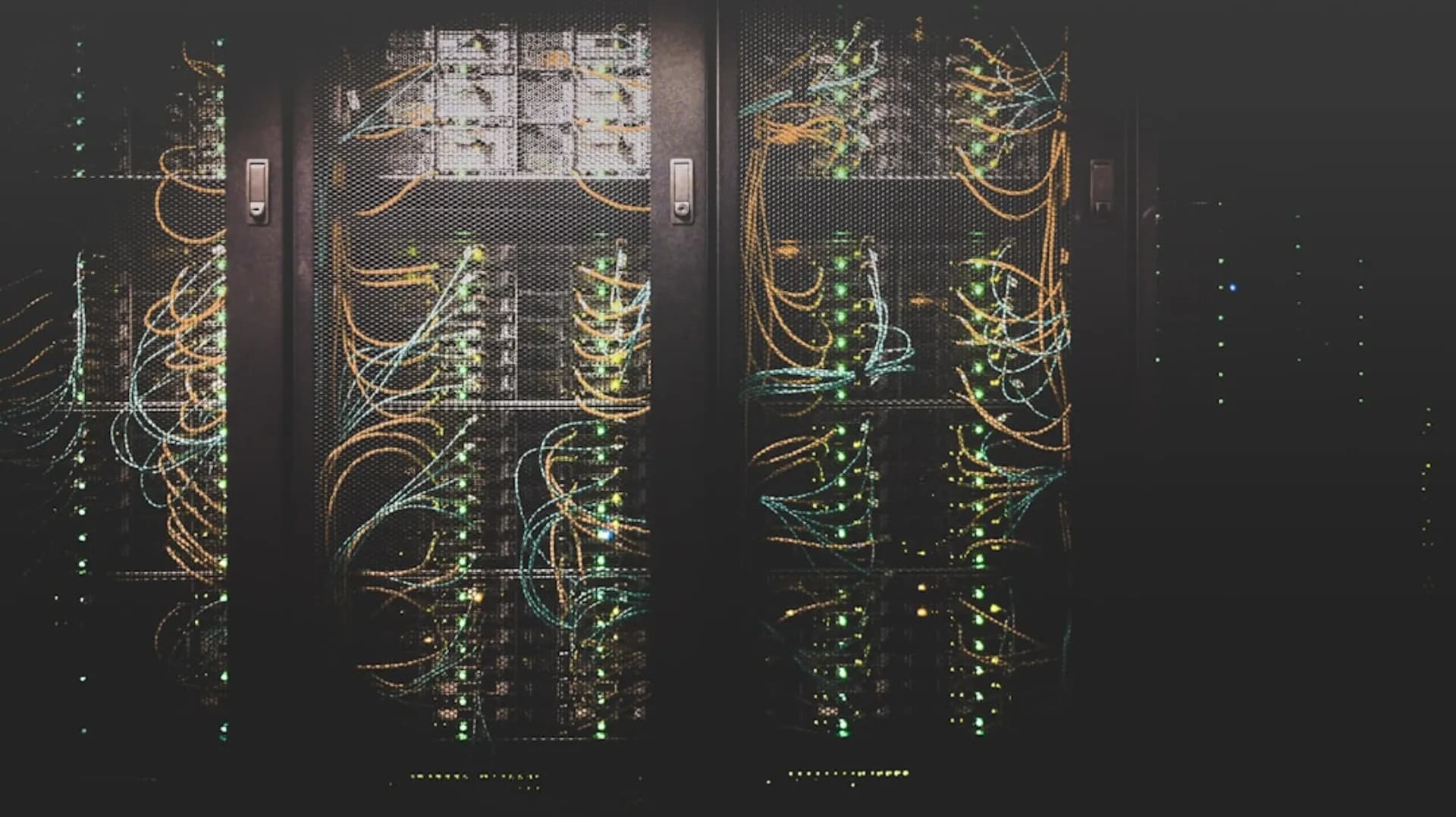
We deployed a self-hosted AI platform on a GPU cluster in the university's data center — 8 NVIDIA A100 GPUs in a 4-node configuration. The platform ran a fine-tuned Llama 3 70B model optimized for educational interactions, with a RAG system connected to the university's course catalog, academic policies, writing center resources, and tutoring best practices. For institutional research, we deployed a separate model instance with access to the institutional data warehouse, configured for analytical queries about enrollment, retention, and student success metrics. The tutoring system was integrated with Canvas via LTI, providing AI tutoring within the LMS interface. Students could get writing feedback, ask questions about course material, get help with problem sets (with Socratic prompting that guided toward answers rather than providing them directly), and access study assistance.
Content filtering prevented the AI from completing assignments, generating academic dishonesty content, or providing mental health counseling (redirecting to campus counseling services). Usage analytics tracked adoption, session patterns, and student satisfaction.
The Results
The platform processed over 380,000 tutoring interactions in the first academic year, with 67% of undergraduates using the system at least once and 34% using it weekly. Student satisfaction with AI tutoring was 4.2/5.0. The system maintained average response latency under 2.8 seconds during peak usage (finals week, with 1,200+ concurrent sessions). University counsel confirmed that the self-hosted deployment satisfied FERPA requirements because no student data left institutional infrastructure. The institutional research team reported that having unrestricted AI access to student data (within the institutional data warehouse, with full FERPA-compliant access controls) enabled analyses that were impossible with anonymized cloud AI — including student journey mapping, course sequence optimization, and retention intervention modeling. GPU infrastructure costs were approximately $180,000 for hardware plus $36,000 annually for power, cooling, and maintenance — compared to estimated cloud AI costs of $400,000+ annually at the observed usage levels.
Self-Hosted AI & Private LLM Deployment Capabilities for Education
- ✓Private LLM Deployment
Deploy Llama, Mistral, Gemma, and other open-source models on your infrastructure with optimized inference.
- ✓OpenClaw Setup & Management
Full OpenClaw deployment with persistent memory, security hardening, skill development, and multi-channel integrations.
- ✓GPU Infrastructure Provisioning
NVIDIA A100/H100 and AMD MI300 provisioning, configuration, and optimization for AI workloads.
- ✓Private Vector Databases
Self-hosted Qdrant, Weaviate, or pgvector for RAG systems that never leave your network.
- ✓Model Optimization & Quantization
Model quantization (GPTQ, AWQ, GGUF) and inference optimization to maximize performance on your hardware.
- ✓Monitoring & Maintenance
24/7 monitoring, model updates, performance tuning, and scaling support for your private AI infrastructure.
View all self-hosted AI & private LLM deployment capabilities →
Self-Hosted AI & Private LLM Deployment Landscape for Education
Self-hosted AI options for education include cloud AI vendor "private" offerings (Azure OpenAI Service, AWS Bedrock), EdTech companies with on-premises AI (few exist), institutional IT self-deployment of open-source models, and consulting firms offering managed self-hosted AI. Cloud vendor private offerings keep data in the institution's cloud tenant but still involve sending data to vendor-managed inference endpoints, which may not satisfy strict FERPA interpretations. EdTech companies rarely offer true self-hosted AI — most are cloud-based with privacy controls. Institutional IT self-deployment is possible but requires ML engineering expertise that most campus IT teams lack. ZTABS provides end-to-end self-hosted AI deployment for education — from model selection and infrastructure design through deployment, customization, integration, and ongoing management — with the educational domain expertise to build systems that are genuinely useful for tutoring, advising, and institutional research.
Self-Hosted AI & Private LLM Deployment Pricing for Education
Self-hosted AI deployment for education typically ranges from $120,000 to $400,000 for initial deployment depending on infrastructure scope, model customization, and integration requirements. Single-use-case deployments (e.g., AI tutoring only) typically run $120,000-$200,000 over 10-16 weeks (excluding hardware costs). Multi-use-case platforms (tutoring + advising + research analytics) run $200,000-$350,000 over 14-24 weeks. Enterprise-scale deployments with extensive integrations and custom fine-tuning run $300,000-$400,000 over 18-30 weeks. GPU hardware costs range from $50,000 for departmental deployments to $300,000+ for institution-wide platforms. Ongoing managed operations (monitoring, model updates, optimization) are available starting at $5,000/month.
Frequently Asked Questions
Common questions about self-hosted AI & private LLM deployment for education
Hardware requirements depend on the model size, concurrent user capacity, and response latency targets. A single NVIDIA A100 or H100 GPU can serve a 13B parameter model for departmental use (50-100 concurrent users). Institution-wide deployments serving thousands of students typically require 4-8 GPUs running 70B+ parameter models. We design infrastructure specifications based on your specific usage projections and performance requirements.
Ready for Self-Hosted AI & Private LLM Deployment Built for
Education?
Our team has deep expertise in education technology. Get a free consultation.
500+
Projects Delivered
4.9/5
Client Rating
90%
Repeat Clients