AI-First Mobile App Development for Media & Entertainment
AI Mobile App Development for Media & Entertainment
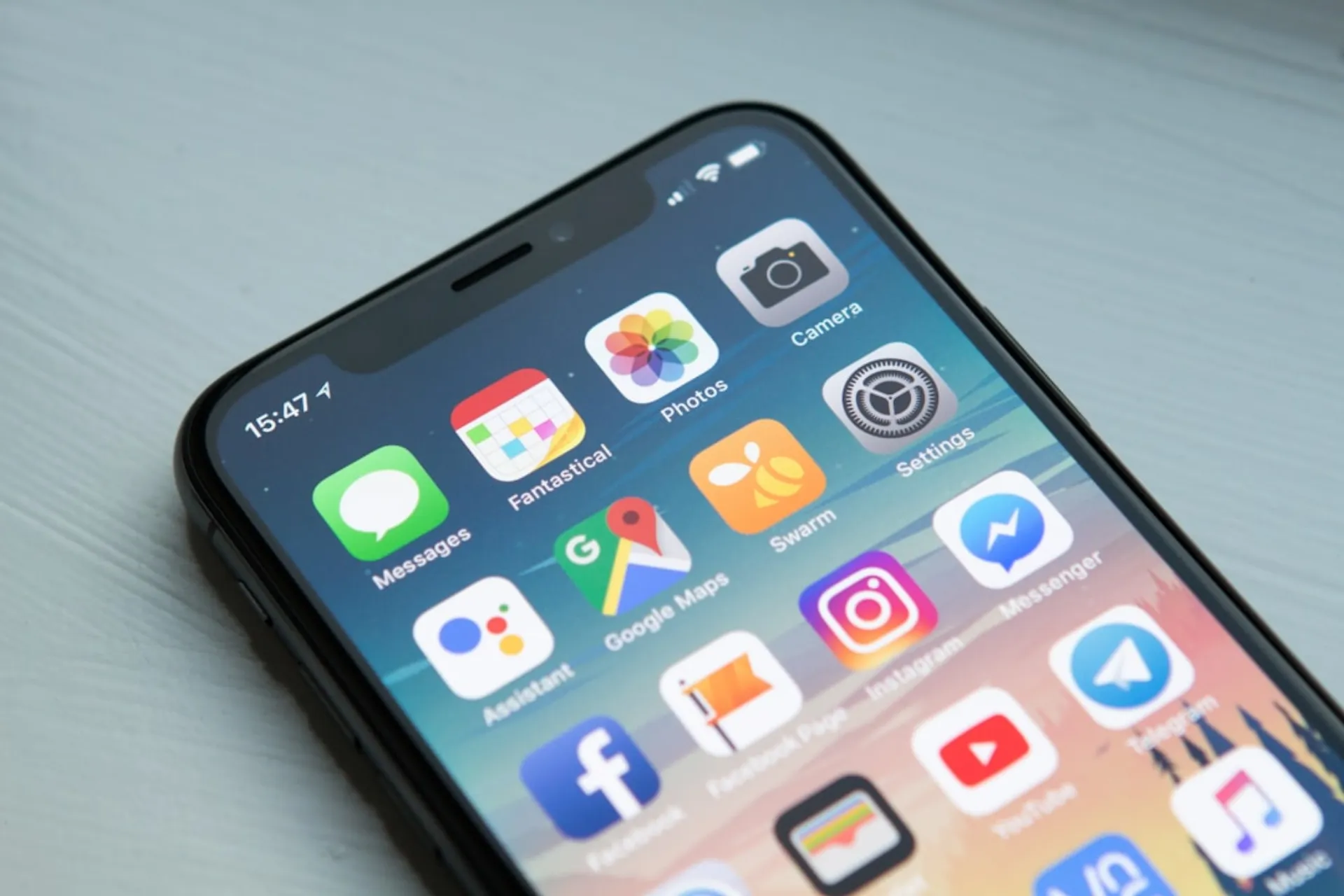
Mobile devices are the primary entertainment screen for most audiences, and AI transforms mobile entertainment apps from passive content viewers into intelligent, personalized entertainment platforms. Our AI mobile app development services build media applications where artificial intelligence powers content recommendations, personalizes user experiences, automates content curation, enhances creative tools, and creates interactive features that increase engagement, retention, and the time audiences spend with your entertainment content.
4.9/5Verified rating
300+Clients served
23Products shipped
100+Case studies
Since 2015In production
23 min
Average session length up from 8 minutes
41%
Day-30 retention (up from 22%)
14%
Catalog engagement breadth (up from 3%)
#12
App store ranking (up from #45)
AI integration in mobile entertainment apps creates experiences that passive content delivery cannot match. When a user opens an AI-powered media app, the content they see is arranged to match their specific preferences, viewing history, and current context. Recommendations surface content they are likely to enjoy but would not have discovered through browsing. Notification timing is optimized based on when each individual user is most likely to engage. Content formats adapt to the user's current context—shorter content during commute times, longer content during evening hours. These AI-driven personalizations create the feeling that the app understands the user, driving engagement and loyalty metrics that non-personalized apps cannot achieve.
Content discovery is the fundamental challenge that AI solves for mobile entertainment apps. Media companies with large content libraries face the paradox of choice—more content should mean more value, but without effective discovery, more content means more overwhelming browsing experiences that lead to abandonment rather than engagement. AI recommendation engines analyze user behavior, content attributes, social signals, and contextual data to surface the right content for each user at each moment—transforming overwhelming catalogs into curated personal entertainment streams.
AI-enhanced content creation tools within mobile apps enable user-generated content that expands the entertainment experience. Smart editing tools powered by computer vision automatically enhance photos and videos. AI-generated filters and effects create shareable content tied to entertainment properties. Voice and text AI enable interactive storytelling experiences where users co-create narratives. These creative AI features transform audiences from passive consumers into active participants, deepening their engagement with the entertainment brand.
Predictive engagement features use AI to anticipate and respond to user behavior patterns. Pre-loading content that the user is likely to watch next eliminates buffering delays. Proactive notifications about new content matching user preferences drive return visits at optimal times. Churn prediction models identify users showing disengagement patterns and trigger retention interventions before they leave. These predictive capabilities enable the app to take proactive actions that improve user experience rather than waiting for user-initiated interactions.
Contextual awareness through on-device AI enables mobile entertainment apps to adapt to the user's real-world context. Location awareness suggests relevant content when users are near entertainment venues or events. Time-of-day awareness adjusts content recommendations and notification frequency. Device state awareness (headphones connected, TV casting available) adapts content format suggestions. This contextual intelligence makes the app feel responsive to the user's life rather than operating in isolation from their physical reality.
Accessibility enhancement through AI makes mobile entertainment apps more inclusive. Automatic caption generation for video content, audio description synthesis for visual content, real-time language translation for international content, and adaptive interfaces for users with motor or visual impairments leverage AI to serve audiences that static app designs exclude.
The Media & Entertainment Market
Mobile entertainment consumption continues growing as a share of total entertainment time. Audiences increasingly choose mobile devices over traditional screens for content consumption—not just short-form content but feature-length films, live events, and interactive entertainment. This mobile-first behavior pattern means mobile app quality directly affects how audiences perceive and engage with entertainment brands.
On-device AI capabilities in modern smartphones enable sophisticated AI features without cloud dependency. Apple's Neural Engine, Qualcomm's AI Engine, and Google's Tensor chips provide the processing power for real-time AI features—image processing, voice recognition, natural language understanding, and recommendation computation—that previously required cloud infrastructure. On-device AI reduces latency, improves privacy, and enables AI features that work offline.
App Store optimization and discovery algorithms increasingly favor apps with strong engagement metrics—session length, return frequency, and retention rates. AI-powered personalization directly improves these metrics, creating a virtuous cycle where AI drives better engagement, better engagement improves app store visibility, and improved visibility drives user acquisition. Media apps without AI personalization are at a measurable disadvantage in app store discovery.
Short-form video and interactive content formats are reshaping mobile entertainment expectations. Audiences accustomed to TikTok's AI-curated feed expect similar personalization from every entertainment app. Swipe-based interfaces, auto-playing content, and algorithmic content sequencing have become baseline expectations rather than premium features. Media apps that rely on manual browse-and-select content discovery feel antiquated to audiences habituated to AI-curated feeds.
Subscription fatigue among mobile entertainment consumers means retention is more important than ever. Users regularly evaluate which subscriptions to maintain, and the apps with the best personalized experiences—where every session feels valuable because AI surfaces relevant content—retain subscribers more effectively than apps where users must work to find content worth watching.
How We Deliver AI-First Mobile App Development for Media & Entertainment
Our AI mobile app development for media companies begins with engagement strategy—defining how AI will improve the specific user experience patterns that drive the media company's business metrics. We identify the engagement challenges (content discovery, return frequency, session length, conversion) and design AI features that address each challenge with measurable impact.
Recommendation engine development builds the AI system that matches content to users. We implement collaborative filtering (users who watched X also watched Y), content-based filtering (recommending content with similar attributes to what the user enjoys), and contextual recommendation (adjusting suggestions based on time, location, and session context). Hybrid approaches that combine multiple recommendation strategies outperform single-method systems because they capture different dimensions of user preference.
Personalization infrastructure enables the app to adapt to individual users across every touchpoint. Home screen layouts, content ordering, category emphasis, notification content, and even UI element positioning adapt based on user behavior models. Personalization operates within brand guidelines—maintaining consistent brand identity while customizing the experience for each user's preferences and behavior patterns.
AI feature development builds the intelligent capabilities that differentiate the app—smart search that understands natural language queries, content summarization that helps users decide what to watch, mood-based recommendation that matches content to emotional state, social recommendation that suggests content based on friends' activity, and creative AI tools that enable fan content creation. Each feature is developed with user experience design that makes AI capabilities intuitive rather than technically impressive but confusing.
Performance optimization ensures AI features run smoothly on the range of devices in the target audience. Model compression, on-device inference optimization, and intelligent caching enable AI features to perform well on mid-range devices—not just flagship smartphones. Battery consumption optimization ensures AI processing does not drain device batteries, which would cause users to avoid the app despite its feature quality.
Analytics and experimentation infrastructure enables continuous AI improvement through A/B testing of recommendation algorithms, feature variations, and personalization strategies. Real-time analytics dashboards track engagement metrics for AI-powered features, enabling rapid iteration based on actual user behavior rather than assumptions. Model retraining pipelines ensure recommendation quality improves as user data accumulates.
Ready to discuss your AI-first mobile app development project?
Free consultation — no commitment required.
Case StudyStreaming Entertainment and Content Discovery
AI-Powered Mobile Entertainment App for Streaming Media Brand
The Challenge
A streaming media brand's mobile app had a content library of 15,000 titles but users were only discovering and watching content from a narrow range—the average user interacted with fewer than 3 percent of available titles. Session lengths averaged 8 minutes on mobile (compared to 45 minutes on connected TV), indicating that mobile users were not finding content worth committing to. Day-30 retention was 22 percent—meaning 78 percent of new users abandoned the app within a month. The browse-based discovery interface required an average of 6 screen interactions before a user started watching content, creating friction that mobile users would not tolerate.
Our Solution
We rebuilt the mobile app with AI at its core. A personalized home feed replaced the static browse interface—showing each user a uniquely curated content stream based on their viewing history, stated preferences, and real-time behavioral signals. The recommendation engine combined collaborative filtering, content attribute analysis, and contextual signals (time of day, viewing history recency, device context) to surface relevant content. Quick-start recommendations reduced the path from app open to content playback to a single tap for returning users. An AI-powered smart search understood natural language queries like "something funny but not too long" and returned contextually appropriate results. Notification intelligence optimized send timing per user based on historical engagement patterns and sent only notifications about content the user was likely to watch. A "For You" highlights feature used AI to generate personalized preview clips that showcased relevant content in a swipeable format.
The Results
Content catalog engagement breadth increased from 3 percent to 14 percent of titles as AI recommendations exposed users to content outside their typical browsing patterns. Average mobile session length increased from 8 minutes to 23 minutes as users found engaging content faster and AI-driven auto-play kept them engaged. Day-30 retention improved from 22 percent to 41 percent—an 86 percent improvement attributed to personalized experiences that delivered immediate value to each user. Time-to-first-play decreased from 6 screen interactions to 1.3 average taps for returning users. Smart search usage grew to 35 percent of content discovery sessions with a 78 percent search-to-play conversion rate. Personalized notification open rates averaged 28 percent compared to 6 percent for previous batch notifications. The app climbed from position 45 to position 12 in the Entertainment category app store rankings, driven by improved engagement metrics.
AI-First Mobile App Development Capabilities for Media & Entertainment
- ✓On-Device ML
CoreML (iOS) and TensorFlow Lite (Android) integration for real-time inference — image recognition, object detection, pose estimation, and text recognition without network latency.
- ✓Voice AI Integration
Voice commands, speech-to-text, text-to-speech, and conversational interfaces powered by on-device models or cloud APIs like Whisper.
- ✓Camera AI Features
Real-time camera processing — object detection, barcode scanning, document capture, face recognition, and augmented reality overlays.
- ✓Personalization Engine
User behavior analysis, content recommendations, adaptive UI, and personalized experiences that improve with usage — powered by on-device and cloud ML.
- ✓Edge-Cloud Hybrid
Intelligent architecture that processes simple tasks on-device for speed and privacy, while routing complex requests to cloud models for accuracy.
- ✓Cross-Platform AI
React Native and Flutter apps with shared AI logic across iOS and Android, reducing development time while maintaining platform-native ML capabilities.
AI-First Mobile App Development Landscape for Media & Entertainment
AI mobile app development for media is served by mobile app development agencies, AI/ML development firms, media technology specialists, and platform-specific development studios. Mobile agencies bring strong app design and development capability but may lack the AI/ML expertise for sophisticated recommendation engines and personalization systems. AI firms bring technical depth in machine learning but may lack mobile app development experience and media industry understanding.
Media technology specialists understand entertainment audience behavior and content domain requirements but may lack the combined mobile and AI engineering capability. Platform-specific studios (iOS or Android specialists) deliver excellent native experiences but may not have cross-platform or AI integration expertise.
The differentiator for AI mobile entertainment app partners is the integration of three disciplines: mobile engineering excellence (smooth, fast, battery-efficient apps), AI/ML capability (recommendation systems, personalization, intelligent features), and media domain understanding (content discovery patterns, entertainment engagement psychology, monetization optimization). Partners who excel across all three deliver apps that are technically sound, intelligently personalized, and tuned to entertainment audience behavior.
Cross-platform development strategy is an important evaluation criterion. Media companies need to reach both iOS and Android audiences. Partners who can evaluate React Native, Flutter, and native development options against the specific requirements of AI-powered media apps help companies make platform decisions that balance development efficiency with feature capability and performance.
AI-First Mobile App Development Pricing for Media & Entertainment
AI mobile app development for media companies typically ranges from $120,000 to $450,000+ depending on AI feature scope, platform targets, and content integration complexity. AI-enhanced mobile apps with recommendation engine and personalized content feeds typically cost $120,000 to $220,000. Full-featured AI entertainment apps with smart search, contextual recommendations, creative tools, and comprehensive personalization range from $220,000 to $350,000. Premium AI mobile platforms with on-device AI, advanced engagement prediction, multi-modal content features, and cross-platform development cost $350,000 to $450,000 or more.
Ongoing AI operations typically cost $5,000 to $18,000 monthly for model hosting, recommendation engine maintenance, A/B testing infrastructure, and continuous optimization. AI model retraining and algorithm updates are ongoing requirements as user behavior evolves and content libraries change.
App store fees (15 to 30 percent commission on in-app purchases and subscriptions) represent a significant ongoing cost that affects monetization strategy and should be factored into business model planning alongside development investment.
The ROI of AI mobile app investment is measured through engagement improvements (typically 50 to 150 percent increases in session length and content discovery), retention gains (typically 30 to 80 percent improvement in day-30 retention), subscription conversion improvement from better content discovery, and app store ranking improvements that reduce user acquisition costs.
Frequently Asked Questions
Common questions about AI-first mobile app development for media & entertainment
AI recommendations start providing value immediately using content-based filtering and popular content signals. Personalization accuracy improves with user interaction data—meaningful personalization typically emerges after 5 to 10 sessions. Cold-start strategies for new users use preference surveys, trending content, and demographic signals to provide relevant recommendations from the first session.
Ready for AI-First Mobile App Development Built for
Media & Entertainment?
Our team has deep expertise in media & entertainment technology. Get a free consultation.
500+
Projects Delivered
4.9/5
Client Rating
90%
Repeat Clients