AR/VR Development Services for Media & Entertainment
AR/VR Development for Media & Entertainment
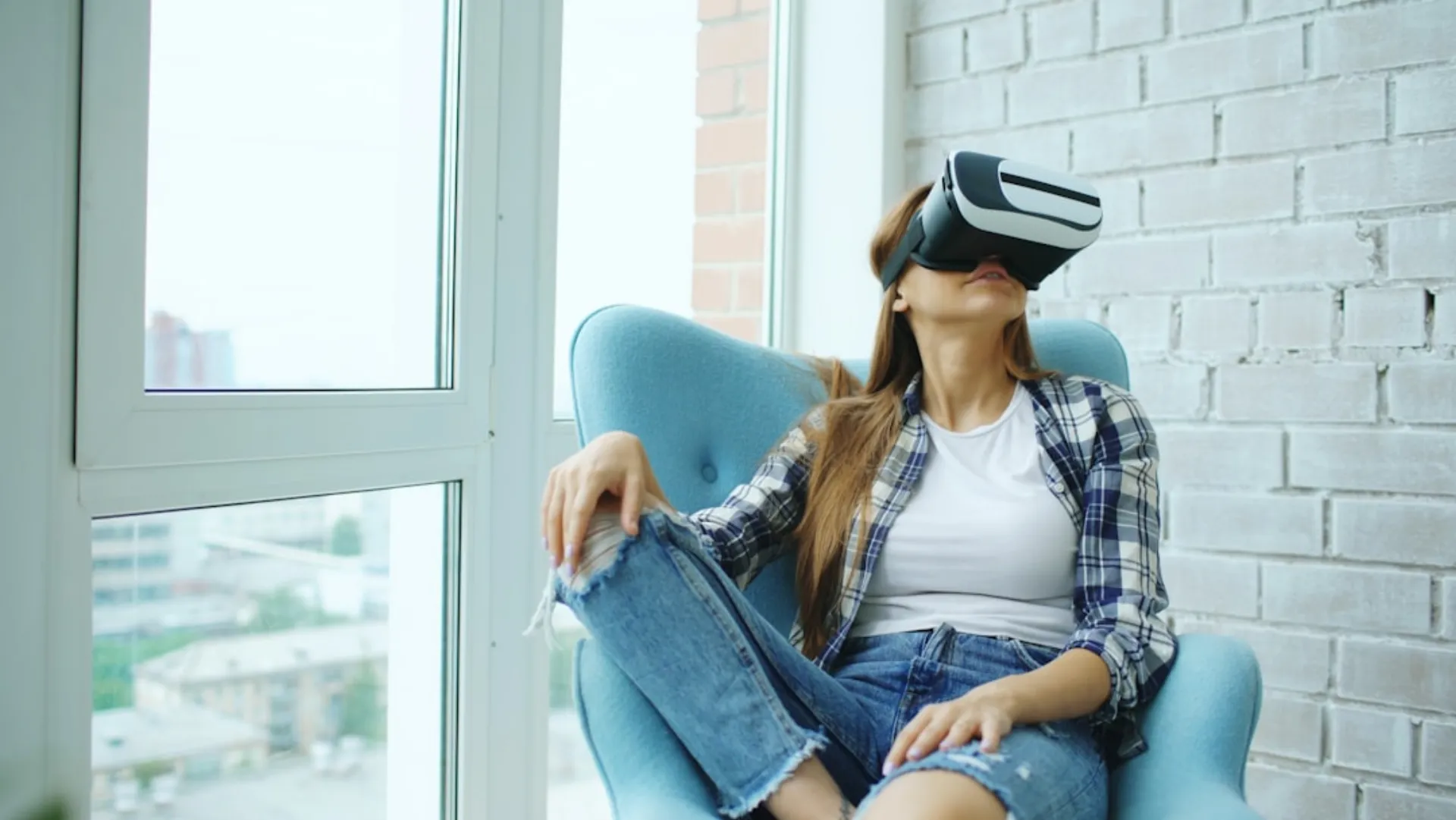
Augmented and virtual reality are transforming how audiences experience entertainment—from immersive film and concert experiences to interactive storytelling and virtual production environments. Our AR/VR development services build spatial computing experiences for media and entertainment companies that go beyond novelty to create genuinely compelling content formats, production tools, and audience engagement platforms that leverage the unique capabilities of extended reality technology.
4.9/5Verified rating
300+Clients served
23Products shipped
100+Case studies
Since 2015In production
2.4M
Downloads within first 4 months
34%
Monthly active user retention rate
2.3x
Merchandise conversion versus non-AR fans
$4.2M
Earned media value from social sharing
Extended reality technologies create entertainment experiences that traditional screens cannot deliver. Virtual reality places audiences inside narrative environments where they experience stories from within rather than observing from outside. Augmented reality overlays digital entertainment content onto the physical world—bringing characters into living rooms, transforming public spaces into game environments, and adding interactive layers to physical media products. Mixed reality blends physical and digital elements seamlessly, enabling entertainment experiences that react to and incorporate the real-world environment.
Immersive storytelling represents the most creatively ambitious application of AR/VR in entertainment. Interactive narratives where audiences make choices that affect story progression, spatial audio experiences where sound design creates emotional impact through three-dimensional placement, and environmental storytelling where the virtual space itself communicates narrative information create engagement depth that flat-screen entertainment cannot match. These experiences require new creative and technical approaches—narrative design must account for audience agency, visual design must work in 360 degrees, and technical architecture must support real-time rendering of complex environments.
Virtual production has revolutionized how film, television, and advertising content is created. LED volume stages using real-time rendering engines display photorealistic virtual environments behind actors, replacing green screen with visible, interactive environments that improve actor performance and reduce post-production costs. Virtual camera systems enable directors to compose shots within virtual environments before physical production begins. Digital twin technology creates virtual replicas of physical locations that can be modified, extended, and reused without location costs.
Live entertainment augmentation through AR/VR creates enhanced concert, theater, and event experiences. AR overlays at live events add visual effects, information layers, and interactive elements that enhance the physical experience without replacing it. VR broadcasting enables remote audiences to experience live events from virtual seats with spatial audio and multi-angle viewing. Hybrid experiences that combine physical attendance with digital augmentation create premium entertainment tiers that generate additional revenue.
Location-based entertainment using AR/VR creates destination experiences in theme parks, entertainment centers, and public venues. VR attractions provide experiences impossible in physical reality—space exploration, underwater adventures, historical time travel—within compact physical spaces. AR experiences transform physical venues into interactive entertainment environments where digital characters, challenges, and stories overlay the physical space.
Training and simulation for entertainment industry professionals uses VR to create safe, repeatable environments for practicing complex skills. Stunt performers rehearse dangerous sequences in virtual environments. Camera operators practice complex shots with virtual equipment and sets. Production managers simulate set logistics and scheduling scenarios. These training applications reduce production risk and cost while accelerating skill development.
The Media & Entertainment Market
The AR/VR market for media and entertainment is experiencing sustained growth driven by improving hardware, declining device costs, and expanding consumer adoption. Meta Quest, Apple Vision Pro, PlayStation VR2, and other consumer headsets have established a meaningful installed base of VR-capable devices. AR capabilities in smartphones and tablets reach billions of users through ARKit and ARCore frameworks. This growing device ecosystem creates the audience base that justifies entertainment content investment.
Spatial computing platforms are evolving from isolated experiences to interconnected ecosystems. Shared virtual spaces where multiple users experience entertainment together—watching virtual screenings, attending virtual concerts, exploring interactive worlds with friends—create social entertainment experiences that single-user VR cannot provide. These multi-user platforms require networking, synchronization, and social feature development beyond individual experience design.
Content distribution for immersive experiences has matured with dedicated platforms and storefronts. Meta Horizon Store, Steam VR, PlayStation Store, and Apple Vision Pro App Store provide established distribution channels for VR content. WebXR enables browser-based AR/VR experiences without app installation. These distribution options reduce the friction of reaching audiences with immersive entertainment content.
Real-time rendering technology—particularly Unreal Engine and Unity—has reached quality levels that support photorealistic virtual environments at interactive frame rates. Nanite geometry, Lumen lighting, and MetaHuman digital characters create visual fidelity that meets entertainment quality standards. These rendering capabilities enable immersive experiences that satisfy audience expectations formed by decades of high-production-value entertainment.
Enterprise adoption of virtual production technologies is expanding beyond major studios to mid-size production companies, advertising agencies, and corporate content creators. Democratization of LED volume technology, cloud-based virtual production tools, and real-time engine accessibility are making virtual production techniques available to a broader range of media producers.
How We Deliver AR/VR Development for Media & Entertainment
Our AR/VR development for media companies begins with experience design—defining what the immersive experience should feel like, what audience behaviors it should enable, and what emotions it should evoke. Immersive experience design differs fundamentally from screen-based design because the audience exists within the experience rather than observing it. We develop experience concepts through rapid prototyping and user testing that validate the creative direction before committing to full production.
Technical architecture design determines the platform strategy, rendering pipeline, interaction systems, and performance targets for each experience. We evaluate whether the experience should target standalone VR headsets, PC-tethered VR, AR on mobile devices, or mixed reality on spatial computing platforms—each with different performance envelopes, interaction capabilities, and audience reach characteristics. Architecture decisions balance visual quality, interactive complexity, and platform compatibility to deliver the best possible experience on the target devices.
Environment and asset development creates the visual elements that define the immersive experience. 3D environments must be optimized for real-time rendering while maintaining the visual quality that entertainment audiences expect. Character models, props, and environmental details require level-of-detail optimization that maintains quality in the foreground while efficiently managing rendering resources in the periphery. Spatial audio design creates three-dimensional soundscapes that enhance immersion and communicate spatial information.
Interaction design defines how audiences engage with the immersive environment—hand tracking, controller input, gaze interaction, voice commands, and body movement. Interaction systems must feel natural and responsive while accommodating the range of physical abilities and comfort levels in the target audience. Comfort design addresses motion sickness, physical fatigue, and cognitive load to ensure experiences are enjoyable rather than exhausting.
Performance optimization ensures experiences run at the frame rates required for comfortable immersion—typically 72 to 120 frames per second depending on the platform. Frame drops in VR cause discomfort and nausea, making performance optimization more critical than in traditional screen-based development. We employ rendering optimization techniques including occlusion culling, dynamic resolution scaling, foveated rendering, and asset streaming to maintain consistent performance within the target hardware specifications.
Quality assurance for immersive experiences includes traditional software testing plus comfort testing, spatial interaction testing, and multi-device compatibility verification. Comfort testing evaluates whether the experience causes motion sickness, eye strain, or physical discomfort across extended usage sessions. Spatial interaction testing verifies that all interactive elements are accessible and responsive across the range of user heights, reach distances, and physical positions.
Ready to discuss your AR/VR development project?
Free consultation — no commitment required.
Case StudyEntertainment Franchise Engagement
Immersive AR Fan Experience for Major Entertainment Franchise
The Challenge
A major entertainment franchise wanted to extend fan engagement beyond traditional screens and merchandise into immersive experiences that deepened the audience relationship with the franchise universe. Previous AR experiments had been simple photo filters that generated brief engagement but no lasting audience behavior change. The franchise needed an AR experience substantial enough to justify ongoing engagement—one that fans would return to repeatedly, share with others, and associate with the premium quality the franchise represented. The experience needed to work on standard smartphones without requiring dedicated VR hardware to maximize audience reach.
Our Solution
We developed a persistent AR world experience that overlaid franchise content onto the physical environment through smartphone cameras. Fans could discover and collect virtual characters and objects in their real-world surroundings—finding franchise characters at landmarks, unlocking story content at specific locations, and building personal collections that reflected their engagement depth. Social features enabled fans to share discoveries, collaborate on challenges, and compete in location-based events. The experience connected to the franchise content calendar—new characters, story chapters, and collectibles were released alongside film premieres, streaming season launches, and merchandise drops. AR storytelling presented exclusive narrative content that expanded the franchise universe—bridging story gaps between major releases and providing character backstories unavailable in other media. Technical implementation used ARKit and ARCore for device-native AR rendering, cloud-based content delivery for real-time content updates, and server-based multiplayer for social features.
The Results
The AR experience achieved 2.4 million downloads within the first 4 months and maintained a 34 percent monthly active user rate—dramatically exceeding the typical 5 to 10 percent retention rate for mobile AR applications. Average session length was 18 minutes, with users averaging 3.2 sessions per week. The persistent collection mechanic created ongoing engagement motivation—86 percent of monthly active users reported returning specifically to discover new content releases. Social sharing generated 1.8 million organic social media posts featuring AR content, providing earned media value estimated at $4.2 million. Merchandise conversion among AR users was 2.3 times higher than non-AR franchise fans, attributed to the deeper brand engagement and product discovery features within the AR experience. The franchise reported that the AR platform became their second-most-important digital engagement channel after their streaming presence.
AR/VR Development Capabilities for Media & Entertainment
- ✓Augmented Reality
AR apps for product visualization, try-before-you-buy, and interactive marketing.
- ✓Virtual Reality
VR experiences for training, virtual tours, and immersive storytelling.
- ✓WebXR & Mobile
AR/VR that runs in browsers or on mobile devices — no app store required.
- ✓3D Content & Assets
3D models, animations, and interactive environments for AR/VR.
- ✓Backend & Analytics
APIs, user tracking, and analytics for immersive experiences.
AR/VR Development Landscape for Media & Entertainment
AR/VR development for media entertainment is served by specialized immersive studios, game development companies expanding into XR, advertising agencies with XR departments, and technology companies building platform experiences. Specialized immersive studios bring deep spatial design expertise but may have limited capacity for enterprise-scale projects. Game studios bring real-time rendering and interaction design expertise that translates well to entertainment XR but may lack media industry integration experience.
Advertising agencies with XR capabilities often focus on short-form promotional experiences rather than sustained entertainment applications. Technology companies building platform experiences prioritize platform growth over individual brand experiences. Media entertainment companies need partners who understand both the creative demands of entertainment-quality experiences and the operational demands of media industry integration.
The evaluation criteria for AR/VR partners include creative portfolio quality (is their work genuinely compelling?), technical platform expertise (do they know the target hardware deeply?), performance optimization capability (can they hit frame rate targets on consumer hardware?), and content pipeline efficiency (can they produce the volume of content entertainment applications require?). Partners who excel across all four dimensions are rare because the disciplines require different skills.
AR/VR Development Pricing for Media & Entertainment
AR/VR development for media entertainment typically ranges from $100,000 to $600,000+ depending on experience scope, visual quality, platform targets, and interactive complexity. AR mobile experiences with location features and collectible mechanics typically cost $100,000 to $200,000. VR narrative experiences with environmental storytelling and interactive elements range from $200,000 to $400,000. Multi-platform immersive entertainment applications with social features, persistent content, and enterprise integration cost $400,000 to $600,000 or more.
Virtual production stage setup and integration adds $150,000 to $500,000+ depending on LED volume size, real-time engine configuration, and camera tracking system complexity. Ongoing virtual production support typically costs $10,000 to $30,000 per production week.
Content creation for immersive platforms typically costs $30,000 to $150,000 per experience module depending on environmental complexity, character quality, and interactive sophistication. Entertainment-quality immersive content requires investment comparable to game development per minute of experience.
The ROI of AR/VR investment for media companies is measured through audience engagement metrics (session length, return frequency, sharing behavior), incremental revenue from immersive experiences and the merchandise and content consumption they drive, production cost savings from virtual production technologies, and brand value enhancement from innovative audience experiences that differentiate the brand.
Frequently Asked Questions
Common questions about AR/VR development for media & entertainment
It depends on your goals. AR on smartphones maximizes audience reach since billions of devices are AR-capable. VR headsets deliver deeper immersion but limit audience to headset owners. Many media companies start with smartphone AR for reach and develop VR experiences for premium engagement.
Ready for AR/VR Development Built for
Media & Entertainment?
Our team has deep expertise in media & entertainment technology. Get a free consultation.
500+
Projects Delivered
4.9/5
Client Rating
90%
Repeat Clients