We build augmented reality and virtual reality applications — product configurators, training simulations, virtual showrooms, and immersive marketing experiences for web, mobile, and headsets.

ZTABS AR/VR Development Services: We build augmented reality and virtual reality applications — product configurators, training simulations, virtual showr 300+ clients, 500+ projects. Houston, TX.
AR/VR Development Services: AR/VR dev runs $25K–$80K for a WebAR product viewer or mobile try-on (8–14 wks), $80K–$300K for Unity/Unreal VR training on Quest/Vision Pro, and $400K–$1.5M+ for industrial AR. Quest for Business $14.99/device/mo.
ZTABS provides ar/vr development services — We build augmented reality and virtual reality applications — product configurators, training simulations, virtual showrooms, and immersive marketing experiences for web, mobile, and headsets. Our capabilities include augmented reality, virtual reality, webxr & mobile, and more.
Augmented and virtual reality are transforming how businesses sell products, train employees, and engage customers. ZTABS builds AR/VR applications for web browsers (WebXR, Three.js, 8th Wall), mobile devices (ARKit, ARCore), and headsets (Meta Quest, Apple Vision Pro). We focus on use cases with clear business ROI rather than novelty.
For e-commerce and retail, we build AR product configurators that let customers visualize furniture in their room, try on eyewear or accessories, and customize products in 3D before purchasing — reducing return rates by 25-40% for clients who implement them. For training and education, we develop VR simulations for high-risk environments (manufacturing safety, medical procedures, equipment operation), interactive 3D product demos, and virtual campus tours. For real estate and architecture, we create virtual property tours, 3D model walkthroughs, and interactive floor plan visualizations.
Our tech stack includes Three.js and React Three Fiber for web-based 3D, Unity and Unreal Engine for headset-native experiences, and 8th Wall for marker-based and markerless AR on mobile web. We handle 3D asset creation and optimization, spatial audio, hand tracking, and controller interactions. AR/VR projects range from $15K for web-based AR product viewers to $100K+ for full VR training simulations with custom 3D environments and multiplayer support.
Most web AR projects deliver in 6-10 weeks.
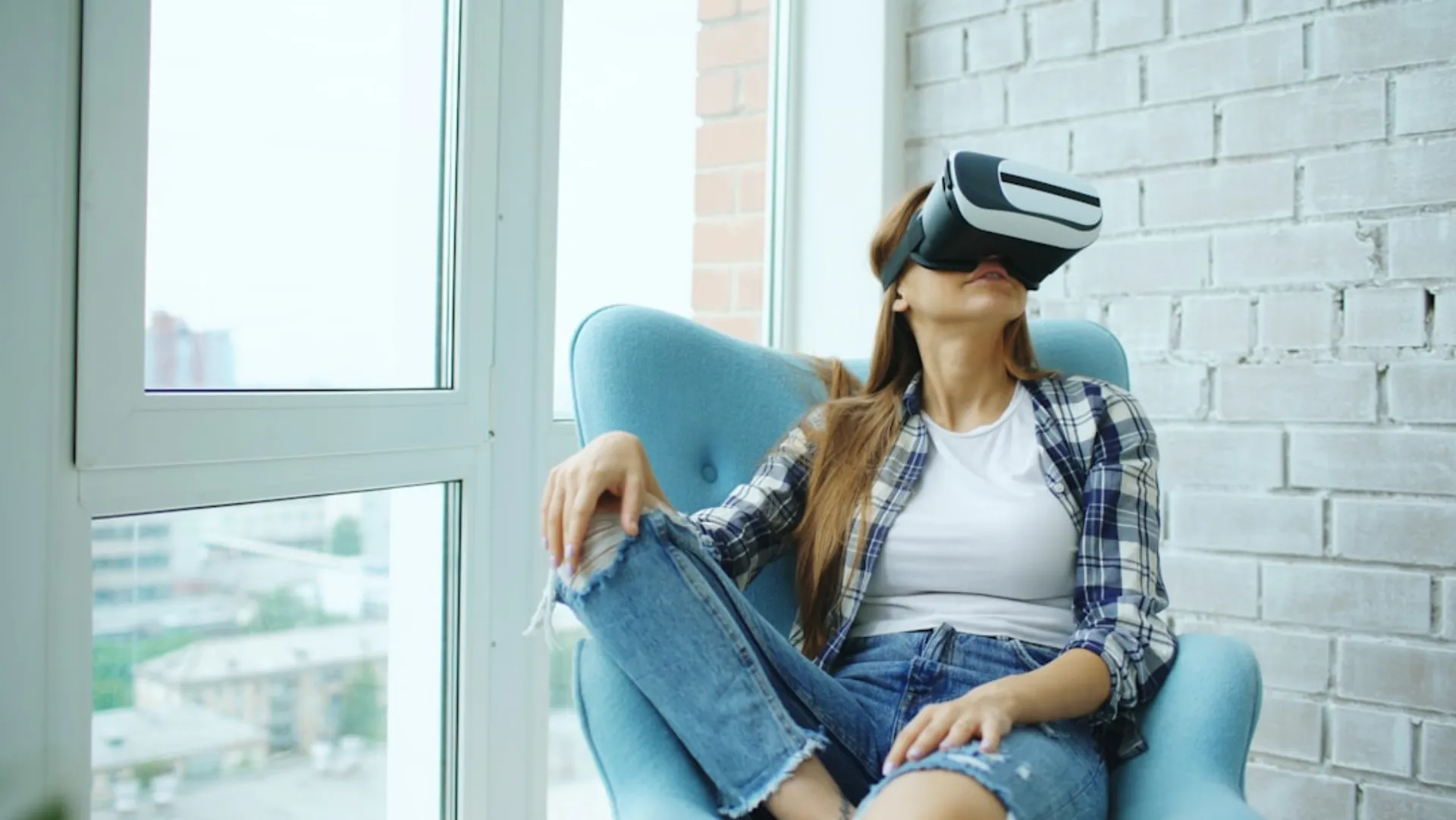
Core capabilities we deliver as part of our ar/vr development services.
AR apps for product visualization, try-before-you-buy, and interactive marketing.
VR experiences for training, virtual tours, and immersive storytelling.
AR/VR that runs in browsers or on mobile devices — no app store required.
3D models, animations, and interactive environments for AR/VR.
APIs, user tracking, and analytics for immersive experiences.
Our team picks the right tools for each project — not trends.
Harness the power of React to accelerate your development process, enhance user experiences, and drive ROI. With its component-based architecture, React allows businesses to build dynamic applications that are both scalable and maintainable, ensuring long-term success in a competitive landscape.
Node.js empowers businesses to build scalable applications with unparalleled speed and efficiency. By leveraging its non-blocking architecture, organizations can deliver seamless user experiences and accelerate time-to-market, driving innovation and growth.
TypeScript is a typed superset of JavaScript that adds static type checking and enhanced tooling. Catch errors at compile time, improve code maintainability, and accelerate development with world-class IDE support.
Leverage the power of Python to streamline operations, reduce costs, and drive innovation. Our Python solutions enable businesses to enhance productivity and deliver results faster than ever.
Flutter empowers businesses to develop high-performance applications rapidly across multiple platforms, reducing time-to-market and development costs. Leverage its robust features to enhance customer engagement and drive revenue growth seamlessly.
Every ar/vr development services project follows a proven delivery process with clear milestones.
Define use case, target devices (web, mobile, headset), and success metrics.
Design user flows, interactions, and 3D content requirements.
Build AR/VR app with WebXR, Unity, Unreal, or React Three Fiber — depending on platform.
Test across devices, optimize performance, and refine interactions.
Deploy to web, app stores, or enterprise distribution — with ongoing updates.
What sets us apart for ar/vr development services.
Web AR, mobile AR (ARKit, ARCore), and VR headsets — we pick the right platform for your audience.
Optimized 3D and interactions for smooth experiences on target devices.
AR/VR that drives conversions, training effectiveness, or engagement — not just tech for tech's sake.
WebXR, React Three Fiber, and industry tools — future-proof and maintainable.
Projects typically start from $10,000 for MVPs and range to $250,000+ for enterprise platforms. Every engagement begins with a free consultation to scope your requirements and provide a detailed estimate.
Across our portfolio, we track delivery patterns to improve outcomes. Our internal data from 2023-2026 shows:
| Alternative | Best For | Cost Signal | Biggest Gotcha |
|---|---|---|---|
| Specialized XR studios (Magnopus, Triptych, Rapture XR) | High-polish consumer or brand experiences for Apple Vision Pro, Quest, HoloLens — installations, expos, flagship product launches. | $250–$450/hour blended; $300K–$3M engagements (indicative). | Fewer than 50 studios do premium XR well worldwide; waitlists run 3–6 months. Pure XR studios rarely handle the backend (CMS, analytics, device fleet) — pair with a full-stack team or inherit operational debt. |
| Boutique full-stack XR (ZTABS tier) | B2B training, product configurators, AR commerce, and internal tooling with 3D assets needing pragmatic delivery + CMS/analytics. | $120–$200/hour; $40K–$300K per engagement (indicative). | We'll push back on 'VR for the sake of VR' — many requests are better-served by 3D WebGL on a phone (no headset barrier). If the business case requires a headset, we build; if it's a novelty, we suggest WebAR. |
| Unity/Unreal freelancers (Upwork, Toptal) | A single-scene demo or a known-scope port (existing Unity game to Quest) under $30K. | $40–$150/hour (indicative). | Solo freelancers rarely handle 3D art pipelines + backend + analytics. Expect a polished scene with no deploy pipeline, no asset CMS, and no fleet management. |
| WebAR platforms (8th Wall, Zappar, 8i) | Marketing campaigns and product try-ons needing no-install AR via mobile browser. | $99–$3K/month SaaS + $15K–$60K build (indicative). | Platform lock-in — proprietary SDK + cloud rendering. Migration to a new platform = full rebuild. For ongoing campaigns, a thin A-Frame or Three.js build avoids recurring SaaS. |
| In-house XR engineer | Hardware OEMs and training companies with 3+ years of sustained XR product roadmap. | $180K–$320K/year loaded (US senior); $90K–$170K remote (indicative). | XR talent is scarce AND narrow (Unity vs. Unreal, Quest vs. Vision Pro). A single XR hire limits which platforms/stacks you can pursue. Plan for pair + agency overflow. |
**VR training ROI vs. in-person.** A safety training course for 400 employees in-person: $800/person × 400 = $320K/year + travel + instructor time. VR training module: $180K build + $30/learner/year (Quest for Business) × 400 = $192K year 1, $12K/year thereafter. **Payback: year 1** on the software alone; VR wins dramatically past year 2 AND allows re-takes at marginal cost zero. **WebAR vs. native AR app.** WebAR at 8th Wall $1.2K/month + $40K build = $54K year 1. Native iOS/Android AR app at $120K build + $0/month + $25K/year app store maintenance. WebAR wins for marketing campaigns <12 months; native wins for sustained products with >20K MAU where SaaS subscription fees exceed maintenance costs. Crossover: **~18 months OR cold traffic >50K uniques**. **Unity runtime fee impact.** Unity charges $0.20/install past 200K installs/year on Personal tier. A free mobile game with 2M installs = $360K in runtime fees. Fix: (a) Unity Pro at $2,040/year/seat + 1M install threshold, OR (b) evaluate Godot/Unreal. For B2B apps with <10K installs, impact is zero — rule doesn't apply.
A client shipped a VR training at Quest's 72Hz default; 30% of testers reported nausea within 5 min. Root cause: framerate drops under load. Fix: profile GPU load with OVRMetrics/RenderDoc, lock framerate to 90Hz (Quest 2/3/Pro) or 120Hz (Quest Pro), use Application SpaceWarp (ASW), and NEVER ship fixed-camera movement — always teleport locomotion or 'comfort modes' for vestibular-sensitive users.
A 1.2GB scene with uncompressed textures exceeded Quest 2's 4GB RAM; session crashed at module 3 of 5. Fix: use Unity Addressables with on-demand texture streaming, compress all textures to ASTC 6×6 (mobile), and enforce a 2GB budget on all VR builds. Test every asset in 'Build Report' before merge.
A campaign with `model-viewer` + AR Quick Look worked on Safari, failed silently on TikTok's in-app browser (which blocks the AR intent). Fix: detect in-app browsers with User-Agent sniffing, show 'Open in Safari' prompt with a deep link, and fall back to a video preview if device/browser can't AR. Test on TikTok, Instagram, LinkedIn in-app browsers explicitly.
A dev was iterating on a scene; Unity crashed without auto-save. Fix: Unity 2021+ supports auto-save (Window → General → Scene view → Auto-save settings) — enable it. Also use git with Git LFS (tracked.unity/.asset), commit every 2 hours, and use Unity Version Control (Plastic SCM) for larger asset trees.
ARKit/ARCore anchors drift by ~2–5 cm/minute in long sessions (30+ min); a product-placement app showed items moving off the table. Fix: re-anchor every ~60 seconds against a plane or image target; for industrial use cases, consider WebXR + WiFi RTT or UWB for sub-cm accuracy. Never promise mm-accurate placement on consumer hardware.
Find answers to common questions about our ar/vr development services.
AR overlays digital content on the real world (e.g., try furniture in your room). VR immerses users in a virtual environment. We build both for web, mobile, and headsets.
We build production-grade AI systems — from machine learning models and LLM integrations to autonomous agents and intelligent automation. 23 AI-powered products shipped, 300+ clients served.
We build modern web applications using Next.js, React, and Node.js — from marketing sites and dashboards to full-stack SaaS platforms. Every project ships with responsive design, SEO optimization, and performance scores above 90 on Core Web Vitals.
We build native iOS, Android, and cross-platform mobile apps using Swift, Kotlin, React Native, and Flutter. From consumer apps with social features to enterprise tools with offline sync — we deliver polished, high-performance applications from concept to App Store and Play Store.
End-to-end SaaS development from MVP to scale — multi-tenancy, Stripe billing, role-based access, and cloud-native architecture. We have built and shipped 23 SaaS products of our own, serving 50,000+ users. Next.js, Node.js, PostgreSQL, AWS and Vercel.
Get a free consultation and project estimate for your ar/vr development project. No commitment required.