Multi-Agent Orchestration for Construction
Multi-Agent Orchestration for Construction That Deploys Specialized AI Agents Across Every Phase of the Project Lifecycle
We build multi-agent AI systems for the construction industry — networks of specialized agents that coordinate autonomously across estimating, scheduling, procurement, safety monitoring, quality control, and project documentation. Each agent masters a single construction domain while the orchestration layer manages handoffs, resolves conflicts, and ensures that the combined intelligence exceeds what any single AI system could deliver for complex construction operations.
4.9/5Verified rating
300+Clients served
23Products shipped
100+Case studies
Since 2015In production
49%
Reduction in project team coordination time
11 days
Earlier detection of critical path risks vs manual monitoring
100%
On-time ICRA inspection compliance (up from 87%)
340 hrs
Monthly capacity freed across the project portfolio
Construction project management is inherently a multi-agent problem — dozens of specialized professionals (superintendents, project managers, estimators, safety officers, quality inspectors, schedulers, procurement managers) each applying domain expertise to their piece of the project while coordinating with others to keep the whole effort moving forward. The coordination overhead is enormous: a superintendent's morning involves checking the schedule, reviewing yesterday's daily logs, assessing weather impact, coordinating with subcontractors, verifying material deliveries, conducting safety walks, and communicating status to the project manager — all before 9 AM. This cognitive coordination load is exactly what multi-agent AI systems are designed to handle.
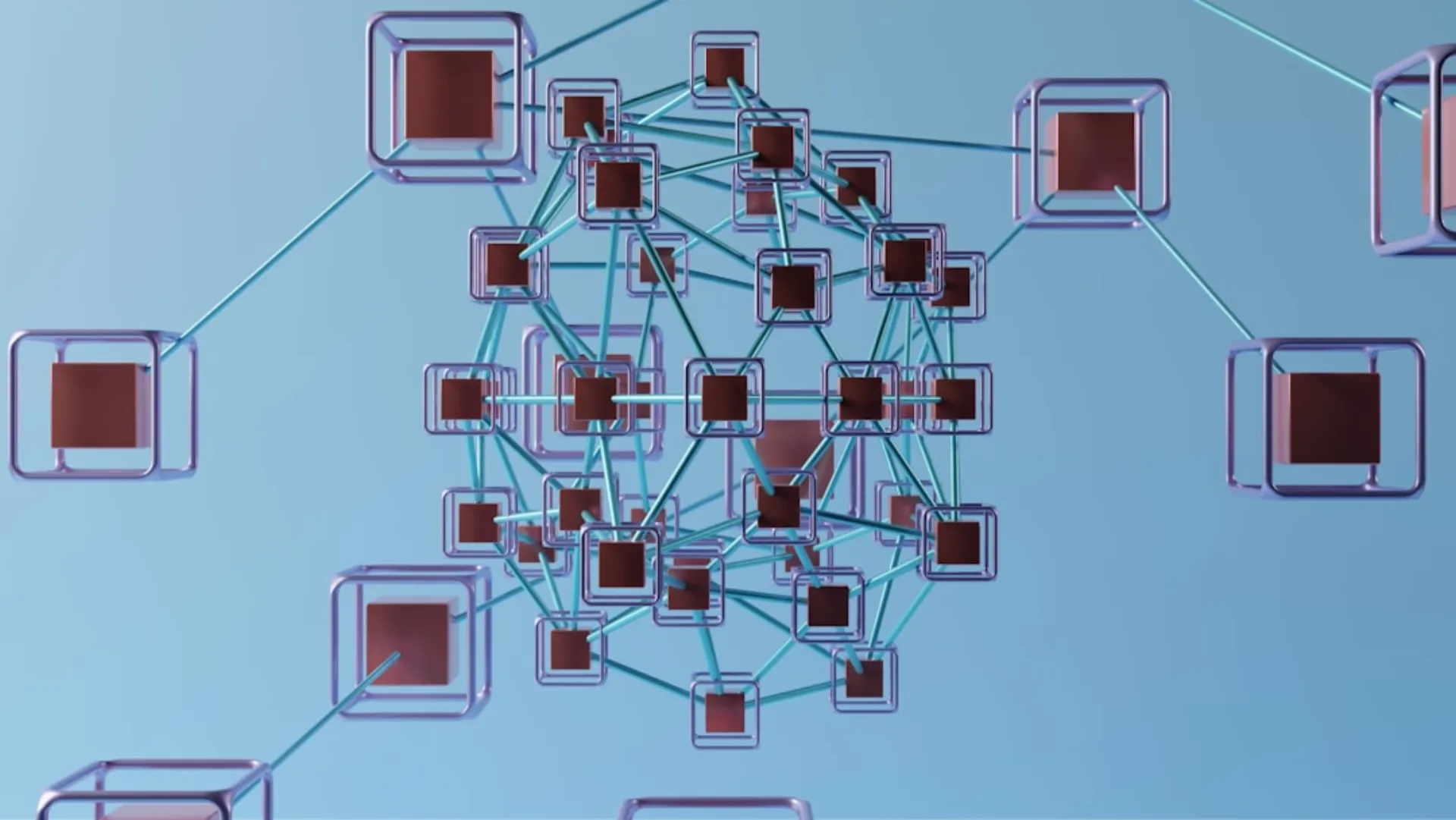
Multi-agent orchestration deploys specialized AI agents — each trained on a specific construction domain — that work together the way a well-run project team works together. An estimating agent analyzes cost data and flags pricing anomalies. A scheduling agent monitors critical path activities and predicts delays. A procurement agent tracks material lead times and identifies supply chain risks. A safety agent monitors compliance patterns and recommends interventions. A documentation agent processes RFIs, submittals, and change orders. And an orchestration layer coordinates these agents, routing information between them, resolving conflicting priorities, and presenting a unified intelligence layer to the construction professionals who make decisions.
At ZTABS, we build multi-agent construction systems that mirror the organizational structure of construction project teams. We design agent specializations around actual construction roles and workflows, train each agent on domain-specific construction data, and build orchestration logic that manages the complex interdependencies between construction domains — because in construction, everything affects everything. A scheduling delay affects procurement timing, which affects cost projections, which affects change order negotiations, which affects client relationships. Multi-agent orchestration captures these cascading relationships in a way that single-purpose AI tools cannot.
The Construction Market
The multi-agent paradigm is emerging as the next evolution of construction AI. First-generation construction AI tools were single-purpose — a safety monitoring camera, a document extraction tool, an estimating assistant — each operating independently without awareness of the broader project context. This mirrors the early days of construction software, when project management, accounting, and scheduling were separate tools with no integration. Just as the industry evolved toward integrated platforms (Procore connecting project management with cost tracking and field operations), construction AI is evolving toward integrated multi-agent systems where specialized AI capabilities share context and coordinate actions.
The construction use cases for multi-agent orchestration span the project lifecycle. During preconstruction, agents coordinate across estimating (cost analysis), scheduling (construction sequencing), and procurement (material pricing and lead times) to produce integrated project plans where cost, schedule, and procurement assumptions are consistent. During construction, agents coordinate across safety monitoring (visual compliance checking), quality inspection (defect detection), schedule tracking (progress measurement), and documentation (daily log analysis and RFI processing) to provide superintendents and project managers with comprehensive project intelligence. During closeout, agents coordinate document compilation, punch list management, and warranty tracking.
The technical architecture for construction multi-agent systems requires careful design around the specific coordination patterns of construction projects. Construction coordination is not purely hierarchical (top-down from PM to superintendent to foreman) or purely peer-to-peer (all roles equal) — it is a complex network of authority relationships, information flows, and decision hierarchies that vary by project phase, issue type, and organizational structure. The orchestration layer must model these relationships to route information and decisions appropriately — a safety critical finding should bypass normal channels and reach the superintendent immediately, while a routine procurement update follows standard reporting cadence.
Data sharing between construction agents requires context-aware information filtering. The scheduling agent needs to know about procurement delays (they affect the schedule) but does not need the detailed vendor negotiation history. The safety agent needs to know about schedule changes (they affect which work areas are active) but does not need the cost implications. The estimating agent needs safety incident data (it affects insurance costs on future bids) but does not need real-time safety alerts. The orchestration layer manages this information filtering, ensuring each agent has the context it needs without being overwhelmed by irrelevant data from other domains.
How We Deliver Multi-Agent Orchestration for Construction
Our multi-agent construction orchestration addresses agent specialization, coordination architecture, and integration with construction platforms.
Agent specialization design defines the capabilities, data needs, and decision authority of each construction AI agent. We map agent specializations to actual construction roles and workflows rather than abstract technical categories. A scheduling agent is designed around how schedulers think — monitoring critical path activities, calculating float consumption rates, predicting weather impacts on outdoor activities, and assessing subcontractor mobilization readiness. A procurement agent thinks like a procurement manager — tracking lead times against schedule need dates, monitoring price volatility for key materials, identifying alternative sources when primary suppliers signal delays, and flagging long-lead items that need early commitment. Each agent's design reflects deep understanding of the construction domain it serves.
Orchestration architecture manages the coordination between agents, handling information routing, conflict resolution, and priority management. The architecture uses an event-driven model — when one agent produces a finding (scheduling agent detects a two-day delay on the critical path), the orchestration layer determines which other agents need this information (procurement agent to check if accelerated material delivery is possible, cost agent to estimate the financial impact of the delay, documentation agent to prepare an owner notification) and routes the finding with appropriate context. Conflict resolution handles situations where agents produce contradictory recommendations — the scheduling agent wants to accelerate work this weekend while the safety agent flags that the weather forecast makes weekend outdoor work high-risk.
Construction context modeling builds the shared understanding that enables meaningful agent coordination. The context model maintains awareness of the current project state — schedule status, cost position, active subcontractors, weather conditions, open RFIs, pending submittals, upcoming inspections — that all agents reference when processing information and generating recommendations. This shared context ensures that agent outputs are consistent with the current project reality rather than operating in isolation. The context model is updated continuously as agents process new information, creating a living digital representation of the project that improves as more data flows through the system.
Platform integration connects agents to the construction data sources where project information lives. The scheduling agent pulls data from P6 or Microsoft Project. The cost agent connects to Sage, Viewpoint, or the project's accounting system. The documentation agent processes data from Procore (RFIs, submittals, daily logs, observations). The safety agent receives feeds from job site cameras and safety management platforms. The procurement agent connects to material supplier portals and delivery tracking systems. Each integration is bidirectional — agents both read project data and write back recommendations, findings, and automated actions to the platforms where construction teams work.
Human-in-the-loop design ensures that construction professionals maintain decision authority while benefiting from multi-agent intelligence. The system presents coordinated recommendations rather than autonomous actions for significant decisions. A superintendent sees a morning briefing that synthesizes findings from scheduling, safety, procurement, and documentation agents into a prioritized action list — but the superintendent decides which actions to take. Autonomous actions are limited to low-risk, high-frequency tasks: generating draft daily log entries, routing routine submittal reviews, and flagging documents for attention.
Ready to discuss your multi-agent orchestration project?
Free consultation — no commitment required.
Case StudyHealthcare Construction
Multi-Agent Project Intelligence Platform for a Healthcare Construction Specialist
The Challenge
A general contractor specializing in healthcare construction (hospitals, medical office buildings, ambulatory surgery centers) was managing 8 concurrent projects totaling $340 million. Healthcare construction is uniquely complex — infection control requirements, ICRA classifications, utility system constraints in occupied facilities, and regulatory compliance create coordination demands that exceed general commercial construction. The contractor's project teams were spending an estimated 35% of their time on coordination activities rather than productive management — checking status across systems, reconciling schedule and cost data, chasing submittal approvals, and manually connecting information that lived in separate platforms. The company wanted to deploy AI that could handle the coordination burden and surface actionable intelligence from the data their teams were already generating.
Our Solution
We built a multi-agent project intelligence platform with five specialized agents deployed over 22 weeks. The scheduling agent monitors each project's P6 schedule, tracking critical path activities, calculating float consumption trends, and predicting delay risks based on historical performance patterns from the contractor's completed healthcare projects. The compliance agent tracks ICRA barrier integrity inspection schedules, infection control protocol adherence, and regulatory documentation completeness — the healthcare-specific compliance requirements that distinguish healthcare construction from general commercial work. The procurement agent monitors long-lead medical equipment and specialized HVAC component deliveries against schedule need dates, flagging items where lead time trends threaten the installation schedule. The documentation agent processes Procore data — RFI aging (healthcare projects average 3.2x the RFI volume of comparable commercial projects), submittal tracking, and daily log analysis — generating alerts for items requiring attention.
The coordination orchestrator synthesizes findings from all agents into role-specific briefings: superintendents receive daily operational intelligence, project managers receive weekly portfolio summaries, and executives receive monthly program dashboards. The orchestrator manages cross-agent coordination — when the procurement agent detects a medical gas equipment delay, it automatically triggers the scheduling agent to assess impact and the documentation agent to draft an owner notification.
The Results
After 6 months of deployment across all 8 healthcare projects, coordination time decreased from 35% to 18% of project team time — a 49% reduction that freed approximately 340 hours per month of PM and superintendent capacity across the portfolio. The scheduling agent identified 23 critical path risks an average of 11 days earlier than manual monitoring detected similar risks on historical projects — enabling proactive intervention that avoided 14 potential schedule delays. The compliance agent maintained a 100% on-time inspection record for ICRA barrier integrity across all projects, compared to 87% on-time rates before the system (missed inspections on healthcare projects carry regulatory consequences). The procurement agent flagged 8 long-lead equipment delivery risks that enabled early intervention and alternative sourcing, preventing schedule delays that the PM teams estimated would have cost 34 combined project days. The documentation agent reduced RFI response time from an average of 8.
4 days to 5.1 days by routing RFIs to the right reviewer immediately and escalating aging items before they became critical.
Multi-Agent Orchestration Capabilities for Construction
- ✓Agent Team Architecture
Design teams of specialized agents with defined roles, tools, and communication protocols.
- ✓Workflow Orchestration
Sequential, parallel, and conditional agent execution with dependency management and state passing.
- ✓Agent Communication Protocols
Structured message passing, shared memory, and context management between agents in the system.
- ✓Supervisor & Consensus Patterns
Supervisor agents that monitor quality, resolve conflicts, and ensure output meets requirements.
- ✓Observability & Cost Tracking
Real-time dashboards showing agent activity, step latency, token usage, and cost per workflow.
- ✓Fault Tolerance & Recovery
Automatic retries, fallback agents, graceful degradation, and human escalation for production reliability.
Multi-Agent Orchestration Landscape for Construction
Multi-agent orchestration for construction is an early-stage market. Single-purpose construction AI companies (Smartvid.io for safety, ALICE for scheduling, Togal for estimating) provide deep capability in individual domains but do not offer cross-domain coordination. Construction platform vendors (Procore, ACC) are beginning to add AI features within their platforms but focus on their own data rather than cross-platform orchestration. General AI orchestration frameworks (LangChain, CrewAI) provide technical infrastructure but require extensive construction domain customization. ZTABS builds construction-specific multi-agent systems with agents designed around actual construction roles, orchestration logic that models construction coordination patterns, and integration with the construction platform ecosystem — enabling cross-domain intelligence that single-purpose AI tools cannot deliver.
Multi-Agent Orchestration Pricing for Construction
Multi-agent orchestration projects for construction range from $150,000 to $400,000 depending on agent count, coordination complexity, and platform integration scope. Two-agent deployments (scheduling plus documentation, or safety plus compliance — two coordinated domains) with basic orchestration and single-platform integration typically run $150,000-$220,000 across 16-22 weeks. Three-to-four-agent deployments with comprehensive orchestration, multi-platform integration, and role-specific dashboards run $220,000-$320,000 across 20-28 weeks. Enterprise deployments with five or more specialized agents, portfolio-level orchestration, advanced conflict resolution, and comprehensive platform integration run $320,000-$400,000 across 24-36 weeks. All projects include agent specialization design, construction context modeling, orchestration architecture, platform integration, and 90 days of post-launch optimization.
Frequently Asked Questions
Common questions about multi-agent orchestration for construction
Separate AI tools operate independently — a scheduling AI does not know what the safety AI detected, and neither knows what the procurement AI is tracking. Multi-agent orchestration creates shared context and coordination between agents. When the procurement agent detects a material delay, the scheduling agent automatically assesses schedule impact, the cost agent estimates financial consequences, and the documentation agent prepares notifications. This coordinated response mirrors how a well-functioning project team operates — but at machine speed with comprehensive data awareness.
Ready for Multi-Agent Orchestration Built for
Construction?
Our team has deep expertise in construction technology. Get a free consultation.
500+
Projects Delivered
4.9/5
Client Rating
90%
Repeat Clients