Multi-Agent Orchestration for Energy & Utilities
Multi-Agent Orchestration That Coordinates AI Systems Across Utility Operations
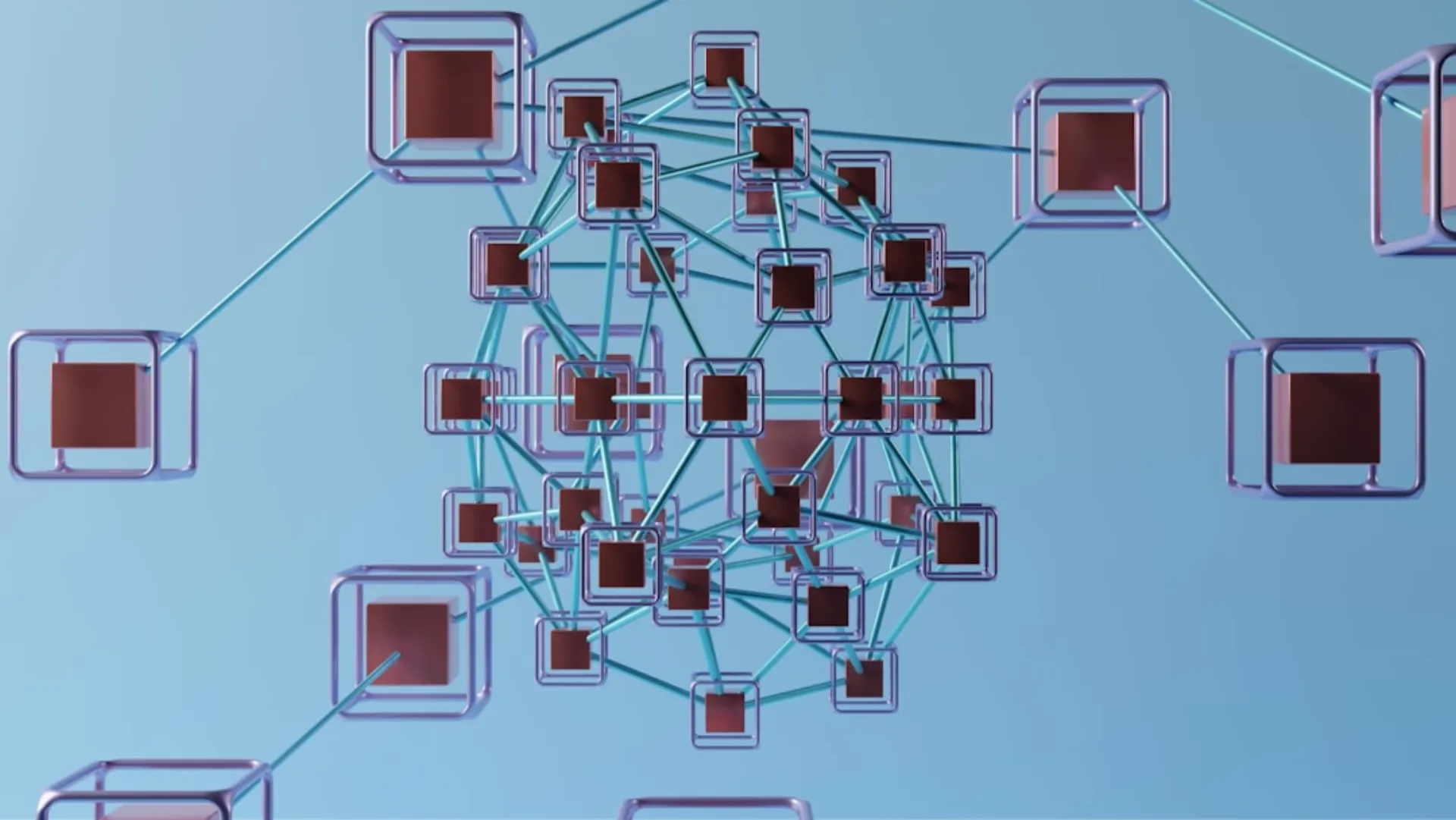
Energy and utility operations involve interconnected processes where decisions in one domain affect outcomes in others—grid operations affect customer experience, demand management affects procurement costs, asset condition affects reliability, and weather affects everything simultaneously. Multi-agent orchestration coordinates multiple specialized AI agents into a unified system where agents share information, coordinate actions, and collectively optimize across operational boundaries that siloed AI applications cannot bridge.
4.9/5Verified rating
300+Clients served
23Products shipped
100+Case studies
Since 2015In production
22%
Storm restoration time improvement with coordinated AI agents
45→78%
Customer restoration estimate accuracy improvement
67%
Material stockout reduction through predictive logistics
18%
Crew utilization improvement with optimized assignment
We build multi-agent systems specifically designed for the coordinated intelligence that modern utility operations demand.
Multi-agent orchestration for energy and utilities creates coordinated AI systems where specialized agents collaborate to achieve operational outcomes that individual AI applications working in isolation cannot deliver. A demand forecasting agent shares predictions with an energy procurement agent that optimizes purchasing. A weather analysis agent alerts both grid operations and customer communication agents about approaching storms. An asset health agent informs maintenance scheduling that coordinates with outage planning to minimize customer impact.
The orchestration challenge in utilities is significant because energy systems are deeply interconnected—decisions propagate across operational, financial, and customer domains. Single-purpose AI agents optimize within their specific domain but may create suboptimal outcomes at the system level. A demand response agent that curtails load improves grid stability but may degrade customer experience if not coordinated with the customer communication agent. Multi-agent orchestration manages these cross-domain interactions to optimize overall utility performance rather than individual metrics.
Our energy multi-agent orchestration creates coordinated AI systems that reflect the interconnected nature of utility operations. We design agent architectures with clear responsibilities, communication protocols, coordination logic, and conflict resolution mechanisms that enable multiple AI agents to work together effectively within the safety and reliability constraints that critical infrastructure operations impose.
The Energy & Utilities Market
Grid operations increasingly require coordinated decision-making across multiple analytical domains. Managing a modern distribution grid involves simultaneous optimization of voltage levels, reactive power, switching configurations, distributed energy resource output, demand response dispatch, and outage restoration priorities. Each optimization domain can be addressed by a specialized AI agent, but the interactions between domains require orchestration that ensures individual agent actions contribute to overall grid performance rather than conflicting with each other.
The convergence of operational technology and information technology creates integration opportunities that multi-agent systems are uniquely positioned to exploit. Grid sensor data, customer behavior data, weather data, market data, and asset condition data collectively provide comprehensive operational context that no single analytical system can fully leverage. Multi-agent architectures that enable specialized agents to consume and share relevant data across these domains create intelligence capabilities that exceed the sum of individual agent contributions.
Storm response exemplifies the coordination challenge that multi-agent orchestration addresses. During a major storm, the utility must simultaneously manage outage detection and restoration, customer communication across multiple channels, mutual aid crew deployment, material logistics, public safety coordination, and executive communication. Each function can be supported by specialized AI agents, but effective storm response requires these agents to coordinate—restoration priorities inform customer communication timing, crew deployment depends on damage assessment, and material logistics must anticipate restoration needs across the service territory.
Demand-side management coordination involves multiple interacting systems—demand forecasting, demand response dispatch, price signal publication, customer notification, and settlement calculation. Multi-agent orchestration ensures these systems operate coherently, dispatching demand response based on accurate forecasts, notifying customers before curtailment, and settling payments accurately after events conclude.
Regulatory compliance monitoring benefits from multi-agent orchestration because compliance metrics span multiple operational domains. Reliability metrics depend on outage management performance. Customer service metrics depend on contact center operations. Safety metrics depend on field operations practices. A compliance monitoring agent that aggregates performance data from multiple domain-specific agents provides comprehensive compliance visibility that siloed monitoring cannot achieve.
The energy transition creates new coordination requirements as utilities manage the integration of distributed energy resources, storage, and electric vehicle charging alongside traditional grid operations. Coordinating DER dispatch, storage optimization, EV charging management, and grid operations requires multi-agent systems that optimize across these interconnected domains.
How We Deliver Multi-Agent Orchestration for Energy & Utilities
Our energy multi-agent orchestration development begins with operational domain mapping—identifying the specific AI agent domains, the data flows between domains, the coordination requirements, and the conflict resolution rules that orchestration must implement. We work with utility operations, planning, and customer service teams to understand the cross-domain interactions that currently require human coordination and would benefit from automated orchestration.
Agent architecture design defines the responsibilities, capabilities, interfaces, and autonomy levels of each agent in the orchestrated system. Each agent has a clearly defined domain of responsibility, specified inputs and outputs, and defined authority boundaries. The orchestration layer manages inter-agent communication, coordinates actions that span multiple domains, resolves conflicts when agent recommendations are incompatible, and maintains the operational constraints that all agents must respect.
Communication protocol design establishes how agents share information and coordinate actions. We implement event-driven messaging for time-sensitive operational data, shared state stores for common reference data, and request-response patterns for coordinated decision-making. Communication protocols include priority levels that ensure critical operational messages receive immediate processing while analytical updates flow at appropriate intervals.
Conflict resolution logic handles situations where different agents recommend incompatible actions. A demand response agent may want to curtail load while a customer experience agent may want to minimize customer disruption. Resolution rules encode the utility's operational priorities—safety first, then reliability, then customer experience, then economic optimization—ensuring that conflicts are resolved consistently according to the utility's values hierarchy.
Safety and constraint enforcement operates at the orchestration level, ensuring that no combination of agent actions violates operational safety constraints. The orchestrator validates that collective agent actions maintain voltage within acceptable ranges, do not overload equipment, respect customer participation limits, and comply with regulatory requirements. This system-level safety enforcement provides protection beyond what individual agent constraints can guarantee.
Testing and simulation validate multi-agent system behavior under diverse operational scenarios. We build simulation environments that model grid conditions, weather events, customer behavior, and market dynamics to test how orchestrated agents respond to realistic utility scenarios. Storm simulations, demand response events, and equipment failure scenarios verify that agent coordination produces appropriate collective responses. Simulation testing identifies coordination gaps and conflict resolution issues before production deployment.
Ready to discuss your multi-agent orchestration project?
Free consultation — no commitment required.
Case StudyElectric Distribution Storm Operations
Multi-Agent Storm Response Coordination for Distribution Utility
The Challenge
A distribution utility serving 420,000 customers in a hurricane-prone region managed storm response through separate operational systems—outage management, customer communication, crew deployment, material logistics, and mutual aid coordination—each operated by different teams with limited real-time coordination. During a recent Category 2 hurricane, coordination gaps resulted in customer communications that provided inaccurate restoration estimates, crews dispatched to areas without necessary materials, and mutual aid resources assigned inefficiently due to delayed damage assessment. Post-storm analysis identified that better coordination between operational functions could have reduced restoration time by an estimated 15 to 20 percent.
Our Solution
We built a multi-agent storm response system with five coordinated AI agents: a damage assessment agent that analyzed AMI outage data, drone imagery, and weather impact models to estimate damage severity by area; a restoration optimization agent that prioritized repairs based on customer count, critical facility impact, and repair complexity; a resource coordination agent that matched crew skills and equipment to restoration assignments considering travel time and material availability; a customer communication agent that generated accurate restoration estimates based on damage assessment and resource allocation data; and a logistics agent that pre-positioned materials based on predicted damage patterns and tracked inventory against restoration needs. An orchestration layer coordinated these agents, ensuring restoration priorities drove resource allocation, resource allocation informed customer communication, and logistics supported the restoration plan.
The Results
During the next major storm event affecting 180,000 customers, restoration time improved by 22 percent compared to similar historical storms. Customer communication accuracy for restoration estimates improved from 45 to 78 percent—significantly reducing the frustration of repeatedly missed estimates. Crew utilization improved by 18 percent through optimized assignment that reduced travel time and matched crew capabilities to repair requirements. Material stockout incidents decreased by 67 percent through predictive logistics positioning. The utility's storm response received positive recognition from the state regulatory commission, contrasting with the criticism following the previous major storm.
Multi-Agent Orchestration Capabilities for Energy & Utilities
- ✓Agent Team Architecture
Design teams of specialized agents with defined roles, tools, and communication protocols.
- ✓Workflow Orchestration
Sequential, parallel, and conditional agent execution with dependency management and state passing.
- ✓Agent Communication Protocols
Structured message passing, shared memory, and context management between agents in the system.
- ✓Supervisor & Consensus Patterns
Supervisor agents that monitor quality, resolve conflicts, and ensure output meets requirements.
- ✓Observability & Cost Tracking
Real-time dashboards showing agent activity, step latency, token usage, and cost per workflow.
- ✓Fault Tolerance & Recovery
Automatic retries, fallback agents, graceful degradation, and human escalation for production reliability.
Multi-Agent Orchestration Landscape for Energy & Utilities
Multi-agent orchestration for energy and utilities is an emerging capability served by AI platform companies, utility technology vendors with AI features, academic research groups commercializing multi-agent systems, and custom AI development firms. The market is less mature than single-agent AI, meaning fewer established solutions exist and more custom development is required.
AI platform companies like LangChain, CrewAI, and AutoGen provide multi-agent frameworks that offer foundational orchestration capability but require significant utility-specific customization to address the domain requirements, safety constraints, and system integrations that energy multi-agent systems demand. These frameworks accelerate development but do not provide turnkey utility solutions.
Utility technology vendors are beginning to integrate AI agents into their platforms but typically within single-domain applications rather than cross-domain orchestration. Vendor roadmaps include multi-agent capability, but production implementations remain limited.
The differentiator in utility multi-agent orchestration is combining multi-agent AI engineering with genuine understanding of the cross-domain operational interactions that orchestration must coordinate. Partners who understand how grid operations, customer service, asset management, and energy procurement interact in real utility operations design orchestration systems that coordinate meaningfully rather than simply connecting agents without understanding their operational interdependencies.
Safety engineering capability for multi-agent systems distinguishes responsible partners from those who deploy interconnected autonomous systems without adequate safety analysis. Multi-agent systems create emergent behaviors—interactions between agents that produce outcomes not predicted from individual agent behavior—that require systematic safety analysis before deployment in critical infrastructure environments.
Multi-Agent Orchestration Pricing for Energy & Utilities
Multi-agent orchestration for energy and utility companies typically ranges from $175,000 to $500,000+ depending on agent count, coordination complexity, and integration scope. Focused multi-agent systems coordinating 2 to 3 agents within a single operational domain typically cost $175,000 to $275,000. Cross-domain orchestration systems coordinating 4 to 6 agents across multiple operational functions range from $275,000 to $400,000. Enterprise multi-agent platforms with comprehensive operational coverage, advanced coordination logic, and simulation testing capability cost $400,000 to $500,000 or more.
Ongoing multi-agent operations—agent hosting, orchestration platform maintenance, model updates, and coordination tuning—typically cost $12,000 to $30,000 monthly.
The ROI of multi-agent orchestration comes from the coordination improvements that individual AI agents cannot achieve. The storm response case study demonstrated 22 percent restoration time improvement through coordinated operations—translating to reduced outage costs, improved customer satisfaction, and favorable regulatory outcomes. Demand management coordination that optimizes across forecasting, dispatch, and settlement improves program economics. Asset management coordination that aligns maintenance scheduling with outage planning minimizes customer impact while maintaining infrastructure condition.
Frequently Asked Questions
Common questions about multi-agent orchestration for energy & utilities
The orchestration layer implements conflict detection and resolution logic that evaluates agent recommendations for compatibility before authorizing actions. When agents propose conflicting actions, resolution rules based on the utility's operational priority hierarchy determine which action proceeds. Safety constraints at the orchestration level prevent any combination of agent actions from violating operational boundaries regardless of individual agent recommendations.
Ready for Multi-Agent Orchestration Built for
Energy & Utilities?
Our team has deep expertise in energy & utilities technology. Get a free consultation.
500+
Projects Delivered
4.9/5
Client Rating
90%
Repeat Clients