IoT Development Services for Energy & Utilities
IoT Development That Extends Intelligence to Every Point of the Energy Grid
The modern energy grid is becoming a network of millions of intelligent devices—smart meters, grid sensors, substation monitors, distributed energy resource controllers, and environmental compliance instruments—all generating data that enables real-time operational intelligence and automated grid management. We build IoT solutions specifically designed for energy infrastructure, implementing the industrial-grade reliability, cybersecurity, and real-time performance that critical infrastructure IoT demands while delivering the operational intelligence that grid modernization and regulatory compliance require.
4.9/5Verified rating
300+Clients served
23Products shipped
100+Case studies
Since 2015In production
31%
SAIDI improvement with IoT-enabled distribution automation
<3 min
Automated fault location time vs 45 min manual patrol
62%
Reduction in customers affected per fault through FLISR
$2.8M
Annual regulatory penalty avoidance from reliability improvement
IoT development for energy and utilities creates the sensor networks, communication infrastructure, edge computing platforms, and analytics systems that transform grid operations from periodic manual inspection to continuous automated monitoring. Traditional grid management relied on SCADA systems monitoring a limited number of strategic points in the transmission and distribution network. Modern grid IoT extends monitoring to thousands of additional points—distribution line sensors, transformer monitors, capacitor bank controllers, fault indicators, and environmental sensors—creating visibility into grid conditions that SCADA alone cannot provide.
The IoT requirements for energy infrastructure differ fundamentally from commercial and consumer IoT. Energy IoT devices must operate reliably for 15 to 20 years in harsh outdoor environments. Communication networks must function during the storm conditions when grid monitoring is most critical. Edge computing must handle real-time control decisions with latency measured in milliseconds for protection and automation functions. And cybersecurity must protect devices that are physically accessible in the field and connected to critical infrastructure networks.
Our energy IoT development encompasses the complete technology stack from sensor selection through analytics: device specification and deployment architecture, communication network design spanning cellular, RF mesh, and LoRaWAN technologies, edge computing for time-critical processing, cloud platform development for analytics and fleet management, and the cybersecurity architecture that protects IoT devices and the grid infrastructure they connect to.
The Energy & Utilities Market
Grid modernization programs are the primary driver of energy IoT investment. Distribution automation—automatically detecting, isolating, and restoring faults—requires sensors and intelligent switches distributed throughout the distribution network. Volt-VAR optimization requires real-time voltage and reactive power measurements from sensors placed at strategic points. Conservation voltage reduction uses IoT sensor data to optimize voltage levels across the distribution network, reducing energy consumption and line losses.
Distributed energy resource integration creates IoT requirements as utilities must monitor and coordinate millions of customer-owned devices—solar inverters, battery storage systems, electric vehicle chargers, and smart thermostats. IEEE 2030.5 and OpenADR communication standards define how DER devices interact with utility systems, and IoT platforms must implement these standards to enable the DER coordination that high-renewable grids require.
Environmental compliance monitoring uses IoT sensors for continuous emissions monitoring at generation facilities, water quality monitoring at hydroelectric and thermal plants, and noise monitoring at substations and wind installations. Regulatory agencies increasingly require continuous monitoring data rather than periodic manual measurements, driving IoT deployment for compliance applications.
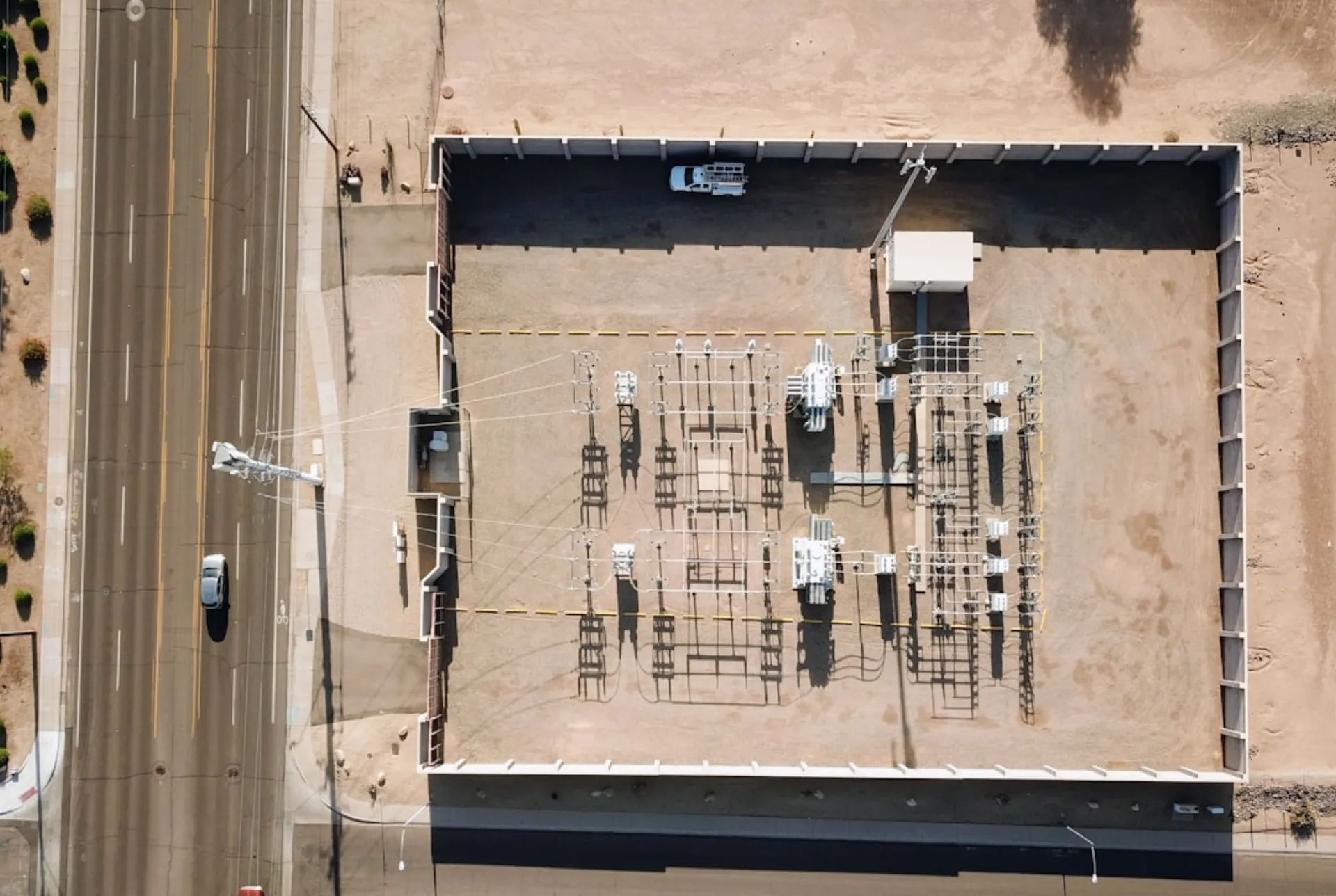
Substation monitoring and diagnostics use IoT sensors to continuously assess transformer health, circuit breaker condition, battery status, and environmental conditions. These sensors detect degradation trends that predict failures weeks or months before they occur, enabling condition-based maintenance that improves reliability while reducing maintenance costs.
Wildfire risk management is driving IoT investment in western utilities where power lines are potential ignition sources. Weather stations, vegetation moisture sensors, line tension monitors, and thermal cameras deployed along high-risk circuits provide real-time fire risk data that informs Public Safety Power Shutoff decisions and enables targeted de-energization of specific circuit segments rather than broad-area shutoffs.
Asset monitoring for aging infrastructure helps utilities prioritize replacement investment. IoT sensors measuring vibration, temperature, dissolved gas content, and loading patterns on critical assets like transformers and underground cables provide the condition data that asset management programs need to make risk-informed replacement decisions rather than age-based replacement schedules that may not reflect actual equipment condition.
How We Deliver IoT Development for Energy & Utilities
Our energy IoT development begins with operational requirements analysis—understanding the specific grid monitoring, automation, and analytics objectives that IoT infrastructure must support. We work with grid operations, engineering, and asset management teams to identify the measurements, update frequencies, latency requirements, and analytical outputs each operational use case demands. This requirements-driven approach ensures IoT investments deliver operational value rather than deploying technology without clear operational purpose.
Sensor and device specification evaluates industrial-grade IoT devices against energy-specific requirements: measurement accuracy, environmental rating for outdoor installation, power options including solar and line-parasitic harvesting, communication interfaces compatible with utility network standards, and cybersecurity capabilities appropriate for critical infrastructure deployment. We evaluate products from established grid equipment vendors alongside specialized IoT sensor manufacturers to identify devices that meet operational requirements at appropriate cost points.
Communication network architecture designs reliable connectivity for devices deployed across vast utility service territories. We evaluate cellular technologies including LTE-M and NB-IoT for wide-area coverage, RF mesh networks for dense deployment areas, LoRaWAN for cost-effective wide-area sensor networks, and satellite for remote locations. Network design accounts for the redundancy requirements of critical grid applications—protection and automation functions cannot tolerate communication failures during the storm conditions when they are most needed.
Edge computing architecture distributes processing intelligence to locations where real-time decision-making is required. Substation edge platforms aggregate sensor data, run analytical models, and execute automation logic locally without depending on cloud connectivity. Edge devices handle fault detection, voltage regulation, and DER coordination with the sub-second response times that grid operations demand. Edge platforms sync processed results and raw data to cloud platforms when connectivity is available for historical analytics and fleet-wide pattern analysis.
Cloud platform development provides the analytical backbone for energy IoT. We build platforms that ingest high-volume sensor data streams, apply analytical models for asset health scoring and anomaly detection, present operational dashboards for grid operations centers, and generate reports for engineering and asset management. Platform architecture handles the data volumes that energy IoT generates—thousands of sensors reporting at intervals from sub-second to hourly create data streams measured in gigabytes daily.
Cybersecurity architecture protects IoT devices and the grid infrastructure they connect to. We implement device authentication, encrypted communication, secure firmware update mechanisms, and network segmentation that isolates IoT traffic from critical grid control networks. Security monitoring detects compromised devices and anomalous communication patterns that indicate potential attacks on IoT infrastructure.
Ready to discuss your IoT development project?
Free consultation — no commitment required.
Case StudyElectric Distribution Grid Monitoring
Distribution Grid IoT Sensor Network for Utility Reliability Improvement
The Challenge
A utility serving 450,000 customers experienced reliability metrics that fell below regulatory benchmarks—SAIDI exceeded the commission's threshold by 18 percent and CAIDI exceeded it by 12 percent. The utility lacked real-time visibility into distribution circuit conditions between substations and customer meters. Fault location required manual patrol of affected circuits, averaging 45 minutes per fault. Distribution automation was limited to 3 of 28 distribution circuits. The regulatory commission mandated reliability improvement within 24 months or face financial penalties.
Our Solution
We deployed a comprehensive IoT sensor network across 28 distribution circuits including 340 fault current indicators with communication capability, 180 line-mounted voltage and current sensors, 56 intelligent reclosers with FLISR capability, and 28 substation monitoring packages. A cellular LTE-M communication network provided connectivity with 99.8 percent availability. Edge computing at each substation ran fault location algorithms and FLISR logic. A cloud-based analytics platform provided real-time grid visibility, automated fault location and isolation, and predictive analytics for proactive maintenance. The deployment was completed in 14 months to meet the regulatory timeline.
The Results
SAIDI improved by 31 percent—from 18 percent above the regulatory threshold to 13 percent below it. CAIDI improved by 27 percent. Fault location time decreased from 45 minutes average to under 3 minutes through automated sensor-based fault location. FLISR capability on 28 circuits enabled automatic fault isolation and service restoration, reducing the number of customers affected by each fault event by an average of 62 percent. The utility avoided regulatory financial penalties estimated at $2.8 million annually. The sensor network identified 14 deteriorating equipment conditions that were repaired before causing failures, preventing an estimated 23,000 customer interruption hours.
IoT Development Capabilities for Energy & Utilities
- ✓Device Management
Provisioning, monitoring, and OTA updates for fleets of connected devices.
- ✓Real-Time Dashboards
Live data visualization and alerts for sensors, assets, and operational metrics.
- ✓Edge & Cloud Integration
Data pipelines from edge devices to cloud storage, analytics, and APIs.
- ✓Custom Firmware & Gateways
Embedded software and gateway solutions for industrial and consumer IoT.
- ✓IoT Security
Secure device identity, encrypted communication, and access controls.
IoT Development Landscape for Energy & Utilities
IoT development for energy and utilities is served by grid equipment manufacturers with IoT capabilities, industrial IoT platform providers, utility system integrators, and specialized energy IoT firms. Grid equipment manufacturers like Schweitzer Engineering Laboratories, Eaton, and S&C Electric provide grid-specific sensors and controllers with deep domain expertise but may offer limited analytics and cloud platform capability beyond their device ecosystems.
Industrial IoT platform providers like PTC ThingWorx, Siemens MindSphere, and GE Predix offer comprehensive IoT platforms but may not address the specific requirements of energy grid applications—the protection coordination logic, FLISR algorithms, and grid-specific analytics that transform sensor data into operational intelligence.
Utility system integrators connect grid IoT into broader utility technology ecosystems but may lack the IoT-specific engineering expertise—RF network design, edge computing architecture, device fleet management—that energy IoT deployments require.
The differentiator in energy IoT development is combining IoT engineering expertise with genuine understanding of grid operations, protection engineering, and distribution automation. Partners who can design sensor networks that deliver operationally relevant measurements, build edge computing that runs grid-specific algorithms, and develop analytics that grid operators trust for decision-making deliver IoT solutions that improve grid performance rather than merely generating data.
Deployment and lifecycle management capability distinguishes partners who deliver sustained IoT value from those who install devices without operational sustainability. Energy IoT devices must be maintained for 15 to 20 years in harsh outdoor environments. Partners who design for field serviceability, build device health monitoring, and provide lifecycle management tools ensure IoT investments continue to deliver value across their intended operational life.
IoT Development Pricing for Energy & Utilities
IoT development for energy and utility companies typically ranges from $150,000 to $500,000+ for platform and analytics development, with device hardware and deployment costs additional. IoT platform development for focused monitoring applications typically costs $150,000 to $250,000. Comprehensive grid IoT platforms with edge computing, distribution automation, and analytics range from $250,000 to $400,000. Enterprise IoT platforms with multi-use-case support, advanced analytics, and fleet management cost $400,000 to $500,000 or more.
Device hardware costs vary significantly: line-mounted sensors range from $500 to $3,000 per unit. Intelligent reclosers cost $15,000 to $40,000 per unit. Substation monitoring packages range from $20,000 to $75,000 depending on sensor complement. Communication infrastructure costs depend on technology choice and coverage requirements.
Ongoing platform operations—device monitoring, data processing, analytics hosting, and system maintenance—typically cost $10,000 to $35,000 monthly depending on fleet size and computational requirements.
The ROI of energy IoT is typically strong. The case study demonstrated regulatory penalty avoidance of $2.8 million annually plus reliability improvements that directly benefit customer service. Distribution automation through IoT typically reduces outage duration by 30 to 60 percent. Condition-based maintenance enabled by asset monitoring sensors reduces maintenance costs by 15 to 25 percent while improving reliability outcomes.
Frequently Asked Questions
Common questions about IoT development for energy & utilities
We specify industrial-grade and utility-grade devices rated for outdoor deployment in the utility's service territory conditions. Devices are rated IP67 or higher for weather resistance, operate across extreme temperature ranges, and withstand the electromagnetic environment near power lines. Mounting systems are designed for the specific infrastructure—poles, conductors, and equipment—where sensors are deployed. We validate device specifications against the utility's environmental conditions before deployment.
Ready for IoT Development Built for
Energy & Utilities?
Our team has deep expertise in energy & utilities technology. Get a free consultation.
500+
Projects Delivered
4.9/5
Client Rating
90%
Repeat Clients