No-Code / Low-Code Development for Fitness & Wellness
No-Code Development for Fitness & Wellness Build Custom Tools Fast Without Writing a Single Line of Code
Fitness businesses need custom tools—member portals, class booking interfaces, trainer scheduling dashboards, inventory trackers, lead management systems, and operational workflows—but traditional software development timelines and budgets often exceed what growing fitness businesses can justify. No-code development platforms enable fitness businesses to build functional, professional custom tools in weeks rather than months, at a fraction of traditional development cost, and with the flexibility to iterate quickly as operational needs evolve.
4.9/5Verified rating
300+Clients served
23Products shipped
100+Case studies
Since 2015In production
75%
Reduction in manual operational time
6 weeks
Complete platform build time
80%
Cost savings vs custom development
$450/mo
Ongoing platform subscription cost
No-code development for fitness and wellness businesses uses visual development platforms—Bubble, Webflow, Airtable, Retool, Glide, and others—to create custom applications, websites, internal tools, and automated workflows without traditional programming. No-code tools use drag-and-drop interfaces, visual logic builders, and pre-built components that enable non-technical fitness professionals to build and modify tools themselves, or work with no-code specialists to create sophisticated applications at accelerated timelines.
Member-facing portals built with no-code platforms provide custom digital experiences—class schedules, booking interfaces, progress tracking dashboards, and community features—branded to the fitness business without the cost of custom app development. No-code member portals integrate with existing gym management platforms through APIs, extending the member experience beyond what the management platform's native interface provides.
Internal operational tools solve the specific workflow problems that off-the-shelf software does not address. A custom trainer scheduling tool built in Retool or Airtable accommodates the specific scheduling rules, compensation calculations, and availability management that the business requires. A custom lead management dashboard tracks prospects through the business's specific sales process rather than forcing the process into a generic CRM structure.
Automated workflows connect tools and trigger actions without manual intervention. When a new member signs up in Mindbody, an automated workflow creates their profile in Airtable, sends a welcome sequence through an email platform, assigns them to an onboarding coordinator, and creates a follow-up task for day 7. No-code automation platforms like Make, Zapier, and n8n build these cross-system workflows through visual interfaces.
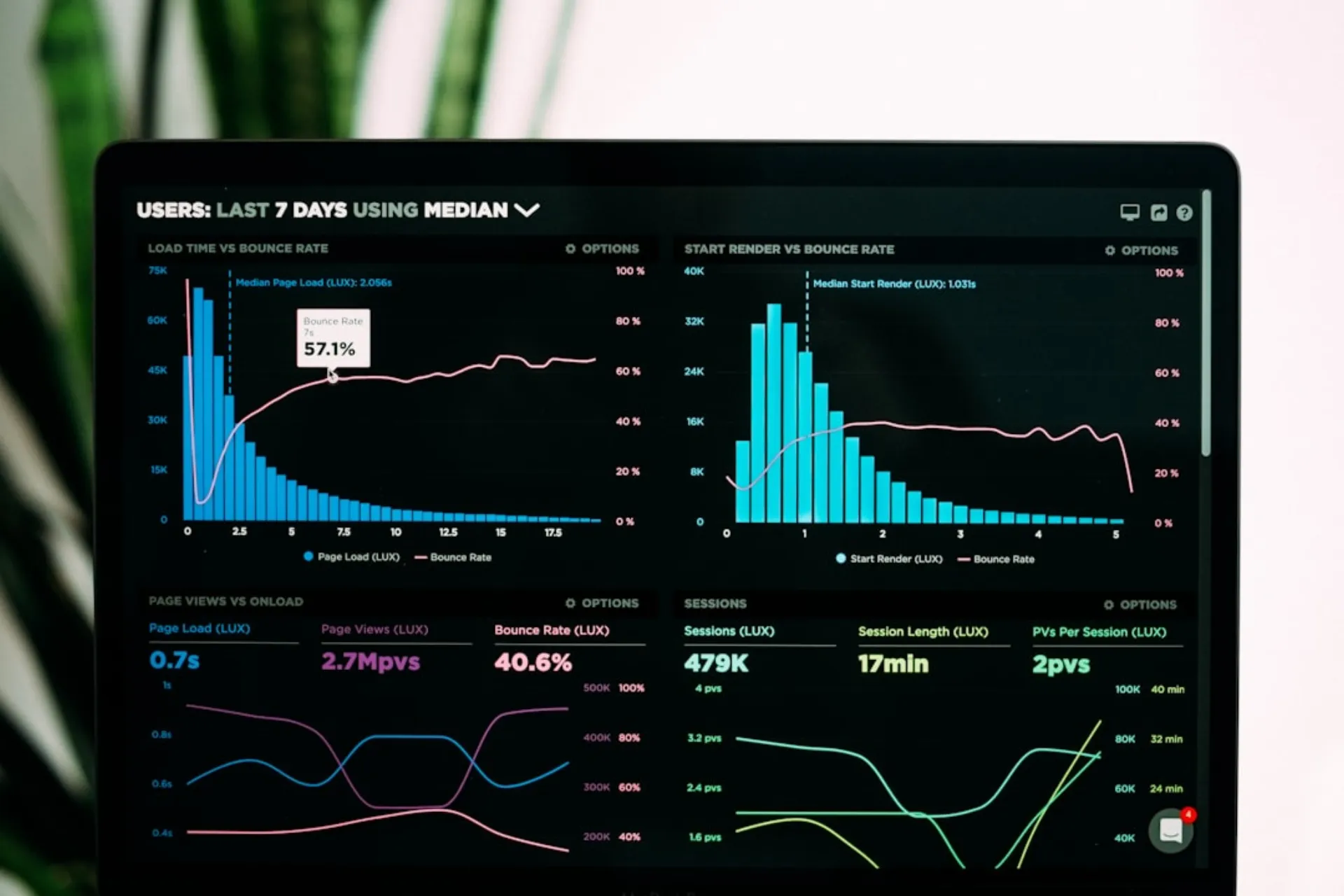
Custom reporting dashboards aggregate data from multiple sources—gym management platforms, payment processors, marketing tools, and spreadsheets—into unified visualizations that provide the specific metrics each stakeholder needs. A studio owner sees revenue, retention, and utilization metrics. A marketing manager sees acquisition costs and campaign performance. A head trainer sees client progress and scheduling efficiency.
Mobile apps built with no-code platforms like Glide, Adalo, or FlutterFlow create branded mobile experiences that integrate with the business's data systems. These apps provide member-facing features—workout logging, community engagement, class discovery—or staff-facing tools—attendance tracking, facility checklists, and communication management.
Landing pages and marketing websites built with no-code platforms like Webflow or Framer provide conversion-optimized digital presence without developer dependency. Fitness businesses can launch new program pages, seasonal promotions, and location-specific landing pages without waiting for developer availability or paying custom development fees.
Prototype and MVP development uses no-code to validate business ideas before committing to full development investment. A fitness entrepreneur can build a functioning prototype of a marketplace concept, a new app feature, or a service delivery platform to test market response before investing in scalable custom development.
The Fitness & Wellness Market
The fitness industry's technology needs are diverse and business-specific, yet most fitness businesses operate with limited technology budgets and no internal development teams. This gap between need and capability makes no-code development particularly relevant—it enables fitness businesses to build custom solutions that address their specific operational challenges without the cost and complexity of traditional software development.
Gym management platforms serve as the operational backbone for most fitness businesses but leave functionality gaps that each business fills differently—with spreadsheets, manual processes, or workaround tools. No-code development bridges these gaps with purpose-built solutions that integrate with the management platform through APIs and webhooks.
The speed advantage of no-code development is especially valuable in the fast-moving fitness industry. Seasonal programs, challenge launches, new service offerings, and promotional campaigns all benefit from rapid digital tool creation. A no-code landing page for a New Year fitness challenge can be built and launched in days rather than weeks, capturing the time-sensitive marketing opportunity.
Staff empowerment through no-code tools reduces technology dependency. When a studio manager can modify their operational dashboard, adjust automated workflow rules, or create a new data collection form without requesting developer assistance, the business operates more responsively and staff feel more capable and autonomous in solving their own operational challenges.
The total cost of ownership for no-code solutions is favorable for fitness businesses because it includes platform subscription costs rather than developer salaries or contractor fees. A suite of no-code tools—Airtable for data management, Zapier for automation, Webflow for website—costs $200 to $800 monthly, far less than custom development for equivalent functionality.
Scalability limitations of no-code platforms are an important consideration. No-code tools work well for small to mid-sized fitness businesses but may encounter performance, complexity, or customization limits as the business scales significantly. Understanding these limits helps fitness businesses plan technology transitions—starting with no-code for speed and budget efficiency, then migrating to custom development for specific capabilities when scale demands it.
The no-code ecosystem maturity has reached a point where professional-grade applications are achievable. Early no-code tools produced basic, limited applications. Current platforms support complex logic, API integrations, responsive design, user authentication, and database management that rival custom-coded applications for many fitness business use cases.
The hybrid development model combines no-code for rapid business tool creation with traditional development for performance-critical or complex features. This approach gives fitness businesses the speed advantage of no-code for operational tools while reserving custom development investment for the member-facing applications and integrations that require maximum performance, customization, and scalability beyond no-code platform capabilities.
The educational value of no-code development extends beyond the immediate tools built. Staff who learn to create solutions with no-code platforms develop problem-solving and systems-thinking skills that improve their approach to operational challenges broadly, even for processes that don't involve technology.
How We Deliver No-Code / Low-Code Development for Fitness & Wellness
Our no-code development for fitness businesses begins with requirements analysis—understanding the specific tool, workflow, or application the business needs, evaluating whether no-code platforms can meet those requirements, and selecting the optimal platform for each use case.
Platform selection matches the right no-code tool to each project—Bubble for complex web applications, Webflow for marketing websites, Airtable for data management and internal tools, Retool for admin dashboards, Glide or FlutterFlow for mobile apps, and Make or Zapier for workflow automation. Each platform has specific strengths that align with different project types.
Application design creates the user experience, data structure, and logic flow for each no-code application. Design follows the same UX principles as traditional development—user research, information architecture, interaction design, and visual design—implemented through no-code platform capabilities rather than code.
Build and integration develops the application using the selected no-code platform, connecting it with existing business systems through APIs and integrations. Integration ensures that no-code tools work within the existing technology ecosystem rather than creating additional data silos.
Testing and launch validates that the application works correctly across devices, handles edge cases appropriately, and integrates reliably with connected systems. No-code applications benefit from rapid iteration—issues identified during testing can be fixed and redeployed within hours rather than the days or weeks that coded deployments require.
Training and handoff empowers business staff to manage, modify, and extend no-code applications independently. No-code platforms are designed for non-technical users, but effective training ensures staff understand the application structure, modification capabilities, and maintenance requirements.
Ready to discuss your no-code / low-code development project?
Free consultation — no commitment required.
Case StudyYoga Studio Chain
Building a Custom Operations Platform for a Yoga Studio Chain
The Challenge
A yoga studio chain with 4 locations managed operations through a combination of Mindbody for scheduling, Google Sheets for trainer coordination and compensation tracking, email for internal communication, and manual processes for inventory management and maintenance tracking. Staff spent 12 hours weekly on spreadsheet data entry, cross-referencing systems, and manual coordination. The business needed custom operational tools but could not justify the $80,000 to $120,000 cost of traditional custom development.
Our Solution
We built a comprehensive operations platform using no-code tools—Airtable as the central data hub for trainer management, inventory tracking, and maintenance scheduling; Retool for manager dashboards showing real-time operational metrics across all locations; Make for workflow automation connecting Mindbody events with Airtable records and communication triggers; and Webflow for a branded member community page. The total platform was built in 6 weeks at approximately one-fifth the cost of equivalent custom development.
The Results
Manual data entry and coordination time decreased from 12 hours to 3 hours weekly—a 75 percent reduction. Trainer compensation calculations that previously required 4 hours of manual spreadsheet work were automated through Airtable formulas and Make workflows. Inventory management prevented 3 to 4 supply stockout incidents monthly through automated reorder alerts. The operations platform cost $15,000 to build and $450 monthly in platform subscriptions—compared to $80,000+ for equivalent custom development. Staff could modify dashboards and workflows independently after training.
No-Code / Low-Code Development Capabilities for Fitness & Wellness
- ✓Bubble Web Apps
Full-featured web applications with user auth, databases, payments, APIs, and responsive design — built visually on Bubble with production-grade architecture.
- ✓Retool Internal Tools
Admin panels, dashboards, CRUD tools, and workflow apps that connect to your databases and APIs — built in days instead of months.
- ✓Webflow Marketing Sites
High-converting marketing websites and landing pages with CMS, animations, and SEO optimization — designer-quality without custom code.
- ✓Airtable Workflows
Data management, project tracking, CRM, and automation workflows built on Airtable with custom views, automations, and integrations.
- ✓Custom Integrations
Connect no-code platforms to your existing tools — APIs, databases, payment systems, CRMs, and marketing tools via native plugins or custom connectors.
- ✓Migration Path
We design no-code solutions with a clear migration path to custom development when you outgrow the platform — no vendor lock-in.
No-Code / Low-Code Development Landscape for Fitness & Wellness
The no-code development landscape for fitness includes general no-code platforms, fitness-specific software extending customization capabilities, no-code agencies specializing in business applications, and traditional development alternatives.
General no-code platforms—Bubble, Webflow, Airtable, Retool—provide flexible tools applicable to fitness business needs. These platforms offer the broadest capability range but require fitness-specific knowledge to design effective solutions for industry-specific workflows.
Fitness-specific software platforms—Mindbody, Wodify, ClubReady—are adding customization features that approach no-code functionality within their ecosystems. These embedded customization tools offer convenience but are limited to the platform's specific ecosystem and capability boundaries.
No-code agencies specialize in building applications on no-code platforms for businesses across industries. Agencies with fitness experience deliver faster because they understand common fitness operational patterns, but general no-code agencies can also serve fitness clients effectively with proper requirements guidance.
Traditional custom development remains the alternative for fitness businesses requiring capabilities that exceed no-code platform limitations—complex algorithms, heavy real-time processing, or deeply customized user interfaces. The decision between no-code and custom development depends on complexity requirements, budget, timeline, and long-term scalability needs.
The competitive advantage of no-code in fitness comes from speed-to-value and iteration flexibility. A fitness business that can launch a new member feature, operational tool, or marketing page in days rather than months adapts faster to market opportunities and operational challenges than competitors constrained by traditional development timelines.
No-Code / Low-Code Development Pricing for Fitness & Wellness
No-code development for fitness and wellness businesses ranges from $5,000 to $40,000 depending on application complexity and scope. Simple internal tools—dashboards, data collection forms, basic automations—range from $5,000 to $12,000. Multi-tool operational platforms connecting several no-code applications with existing systems range from $12,000 to $25,000. Complex no-code applications with member-facing features, mobile apps, and comprehensive automation range from $25,000 to $40,000. Ongoing platform subscription costs typically range from $200 to $800 per month depending on the platforms used and usage volumes.
Frequently Asked Questions
Common questions about no-code / low-code development for fitness & wellness
Yes. Modern no-code platforms power thousands of production business applications with reliability comparable to custom software. Platform uptime exceeds 99.9 percent for major providers. For mission-critical processes, we design redundancy and fallback mechanisms within the no-code architecture.
Ready for No-Code / Low-Code Development Built for
Fitness & Wellness?
Our team has deep expertise in fitness & wellness technology. Get a free consultation.
500+
Projects Delivered
4.9/5
Client Rating
90%
Repeat Clients