No-Code / Low-Code Development for Startups & Early-Stage
No-Code Development for Startups & Early-Stage Companies
We build sophisticated business applications using no-code and low-code platforms that deliver production-quality results in weeks instead of months—enabling your startup to validate ideas, launch products, and iterate on user feedback with dramatically reduced development time and cost.
4.9/5Verified rating
300+Clients served
23Products shipped
100+Case studies
Since 2015In production
7wks
Complete platform launch vs 6+ months custom
80%
Development cost reduction vs custom code
42
Properties onboarded in first 3 months
54%
Faster maintenance resolution with automation
Startups and early-stage companies operate under intense time and budget constraints that make traditional custom software development timelines and costs prohibitive for many business applications, particularly internal tools, customer portals, workflow applications, and MVP products that need rapid market validation. No-code development leverages visual application builders, pre-built component libraries, and platform-managed infrastructure to create functional business applications without writing traditional code, dramatically reducing the time, cost, and technical expertise required to go from concept to working application. The no-code landscape has matured beyond simple form builders into platforms capable of creating complex applications with database management, user authentication, API integrations, workflow automation, and responsive interfaces that serve both internal team needs and customer-facing product requirements.
Early-stage companies that strategically use no-code development for appropriate use cases accelerate time-to-market, preserve capital for core product development, and enable non-technical team members to build and iterate on business applications independently without competing for scarce engineering resources. The rapid prototyping capability of no-code platforms enables startups to test business hypotheses with functional applications in days rather than months, creating a validation velocity that allows early-stage companies to iterate through multiple product concepts within the timeline and budget that traditional development would consume on a single attempt. Citizen development programs empower domain experts to build the specialized tools their work requires using their deep understanding of workflow requirements that external developers would need extensive discovery sessions to comprehend.
The Startups & Early-Stage Market
The no-code platform ecosystem has expanded dramatically with specialized tools for different application types including Bubble for web applications, Webflow for marketing websites, Airtable for data management, Retool for internal tools, and Glide for mobile applications, each offering distinct capabilities optimized for specific use cases. Platform capability maturity has advanced to support production workloads with user authentication, role-based access control, API integration, payment processing, and database management features that previously required custom development, enabling no-code applications that handle real business operations rather than just prototypes. The low-code complement to no-code has emerged as a pragmatic middle ground where platforms like Xano, Supabase, and WeWeb provide backend flexibility with visual frontend builders, enabling applications that combine the speed of no-code development with the customization of code-based systems for complex business logic requirements.
Scalability concerns have been partially addressed by modern no-code platforms that leverage cloud infrastructure for automatic scaling, though performance limitations and vendor-imposed usage limits remain important considerations for applications with high traffic or data processing requirements. Integration ecosystem expansion has connected no-code platforms with thousands of business tools through native connectors, API management, and webhook support, enabling no-code applications that participate in broader technology stacks rather than operating as isolated tools. The build-versus-buy decision for startups has shifted as no-code capabilities enable building custom applications that precisely fit business requirements at costs comparable to subscribing to generic SaaS tools that require workflow compromises to accommodate software limitations. Data portability and vendor lock-in remain significant concerns as no-code platforms store application logic and data within proprietary systems, creating migration challenges if platform pricing increases, capabilities prove insufficient, or the platform itself discontinues service.
The composable development approach has emerged where no-code handles frontend and workflow components while custom code manages complex backend logic, creating hybrid applications that balance development speed with technical sophistication. Plugin and extension ecosystems have expanded no-code platform capabilities with pre-built functionality modules for common requirements like appointment scheduling, file management, email marketing, and social media integration that further accelerate development timelines for standard business application features. Version control and staging environments in mature no-code platforms enable professional development workflows with testing and review before production deployment, bringing software development best practices to citizen developer workflows. Application performance monitoring for no-code platforms tracks page load times, database query performance, and workflow execution speeds, identifying optimization opportunities that maintain responsive user experiences as application complexity and data volume grow.
Custom API development within no-code applications enables integration with proprietary systems and custom data sources that native platform connectors do not support, extending no-code application connectivity beyond the standard integration ecosystem. User analytics implementation tracks feature adoption, workflow completion rates, and user satisfaction metrics within no-code applications, providing the usage data that informs iterative application improvement and feature prioritization decisions. Automated backup systems protect no-code application data and configuration against accidental deletion or corruption, providing recovery capabilities that ensure business continuity for operations that depend on no-code application availability. Multi-tenant architecture enables no-code applications that serve multiple organizations or client groups with data isolation, customized branding, and role-based access that maintains appropriate separation between tenant environments. Conditional logic implementation enables sophisticated business rule processing within no-code applications, handling the branching workflows and decision trees that complex operational processes require.
Email notification integration enables automated communication triggered by application events, keeping stakeholders informed of relevant changes without manual notification effort.
How We Deliver No-Code / Low-Code Development for Startups & Early-Stage
Our no-code development begins with application scoping that evaluates whether no-code, low-code, or traditional development best serves each application requirement, recommending no-code where it delivers genuine advantages while identifying requirements that exceed no-code platform capabilities and require alternative approaches. We select platforms based on application type, required features, integration needs, scalability requirements, and total cost of ownership including platform subscription fees, development effort, and ongoing maintenance, ensuring the chosen platform aligns with both current needs and anticipated growth requirements. Application architecture design structures data models, user flows, and integration points within the selected platform's paradigm, creating organized application structures that remain maintainable as complexity grows rather than the tangled configurations that ad-hoc no-code development often produces.
We implement responsive user interfaces using platform design systems with customization that creates polished, branded experiences rather than the generic template appearances that basic no-code implementations often present, ensuring your application meets the professional quality standards that user trust requires. Database design creates efficient data structures within platform constraints, implementing relationships, validation rules, and computed fields that maintain data integrity while working within the data model limitations that no-code platforms impose compared to traditional databases. Workflow automation configures the business logic that drives application behavior including conditional routing, scheduled tasks, notification triggers, and multi-step processes that execute the operational rules your business requirements define. Integration development connects no-code applications with existing business systems through API connections, webhook handlers, and middleware that enable data flow between your no-code application and CRM, payment, communication, and analytics platforms.
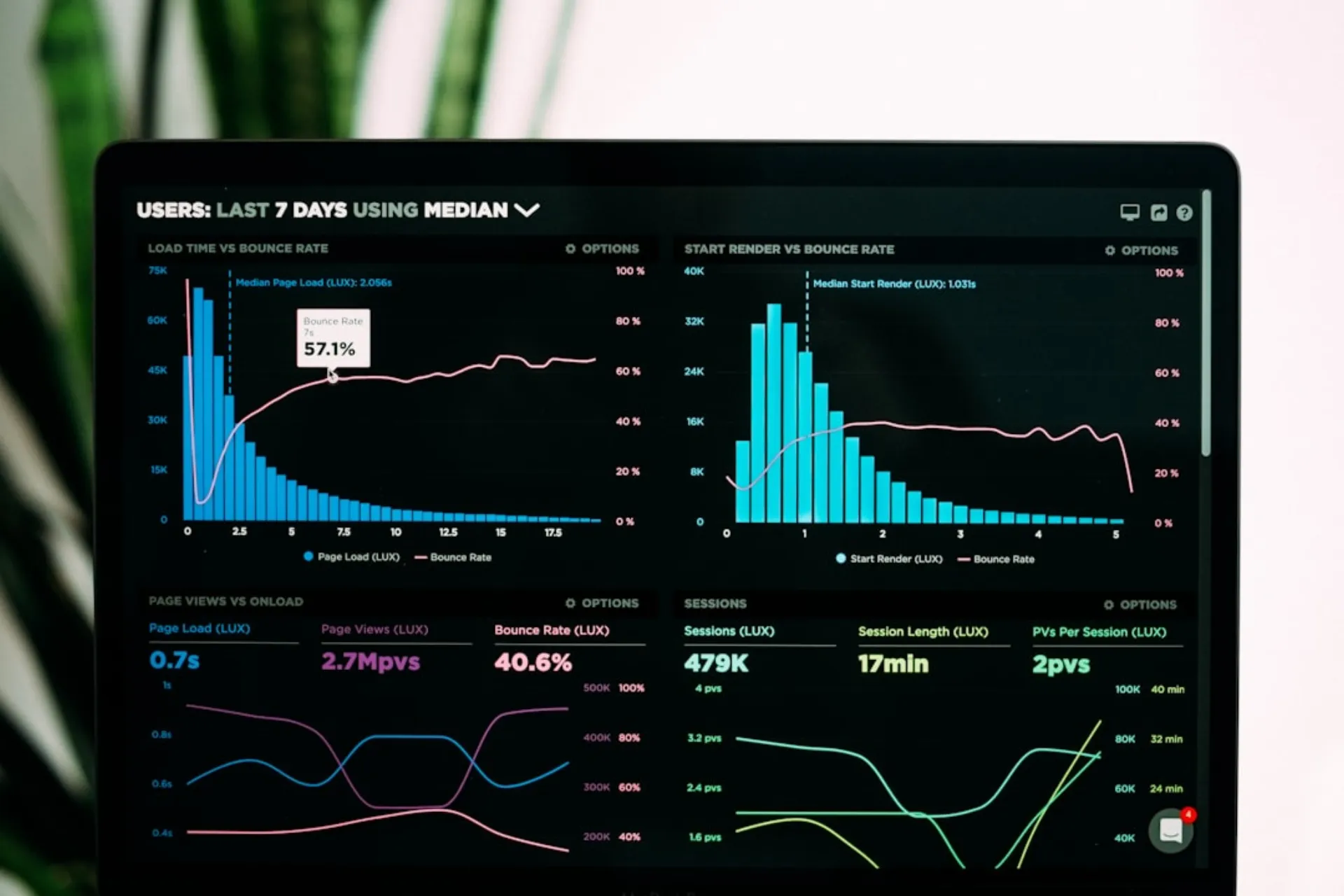
We build administrative interfaces and analytics dashboards that provide operational visibility into application usage, performance metrics, and business KPIs, giving your team the monitoring capabilities needed to manage and optimize no-code applications in production. Security implementation configures authentication, authorization, and data protection features within platform capabilities, ensuring no-code applications meet the security standards that business and customer data require.
Ready to discuss your no-code / low-code development project?
Free consultation — no commitment required.
Case StudyPropTech Startup
Customer Portal and Operations Platform for Pre-Seed Startup
The Challenge
A pre-seed PropTech startup needed a customer-facing portal for property management requests, a tenant communication system, an internal operations dashboard for managing maintenance workflows, and a financial tracking system for rental payments, all within a twenty thousand dollar total budget that could not support traditional custom development for any single component. The founding team had no technical co-founder and needed to launch within eight weeks to begin revenue generation before seed fundraising.
Our Solution
We built the complete platform using Bubble for the customer portal, Retool for internal operations dashboards, and Airtable as the central database connecting both applications. The customer portal enabled tenants to submit maintenance requests, communicate with property managers, view payment history, and access lease documents. Internal operations automated maintenance workflow routing, contractor assignment, and completion tracking. Financial integration connected Stripe for payment processing with automated recording in the Airtable financial database. Automated notifications kept tenants and property managers informed of request status changes through email and SMS.
The Results
The complete platform launched in seven weeks at a total development cost of sixteen thousand dollars, approximately one-fifth the estimated cost of traditional custom development for equivalent functionality. The startup onboarded forty-two properties within three months of launch, generating sufficient revenue to demonstrate traction for their seed round. Tenant satisfaction scores averaged four point six out of five for the digital experience, and maintenance request resolution time decreased by fifty-four percent compared to the phone-and-email workflows the platform replaced. The platform handled all operations with zero dedicated technical staff through the first year of growth.
No-Code / Low-Code Development Capabilities for Startups & Early-Stage
- ✓Bubble Web Apps
Full-featured web applications with user auth, databases, payments, APIs, and responsive design — built visually on Bubble with production-grade architecture.
- ✓Retool Internal Tools
Admin panels, dashboards, CRUD tools, and workflow apps that connect to your databases and APIs — built in days instead of months.
- ✓Webflow Marketing Sites
High-converting marketing websites and landing pages with CMS, animations, and SEO optimization — designer-quality without custom code.
- ✓Airtable Workflows
Data management, project tracking, CRM, and automation workflows built on Airtable with custom views, automations, and integrations.
- ✓Custom Integrations
Connect no-code platforms to your existing tools — APIs, databases, payment systems, CRMs, and marketing tools via native plugins or custom connectors.
- ✓Migration Path
We design no-code solutions with a clear migration path to custom development when you outgrow the platform — no vendor lock-in.
No-Code / Low-Code Development Landscape for Startups & Early-Stage
No-code development services for startups include platform-specific agencies, freelance no-code developers, traditional development agencies offering no-code options, and full-service firms with multi-platform expertise. Platform-specific agencies provide deep expertise in one platform but may recommend their platform even when alternatives better fit requirements. Freelancers offer lower costs but may lack the application architecture experience needed for maintainable production applications.
Our no-code practice combines multi-platform expertise with honest assessment of no-code appropriateness for each use case, recommending traditional development when no-code limitations would compromise application quality or long-term viability. We build no-code applications with the architectural rigor that ensures maintainability and scalability rather than the quick-build approaches that create technical debt within no-code platforms. Migration path planning designs no-code applications with data structures and API patterns that simplify future transition to custom code if application complexity eventually exceeds platform capabilities.
No-Code / Low-Code Development Pricing for Startups & Early-Stage
No-code development for startups and early-stage companies typically ranges from five thousand to twenty-five thousand dollars depending on application complexity, platform requirements, and integration scope. Focused no-code applications with standard features, single-platform implementation, and basic integrations typically range from five thousand to twelve thousand dollars with two to five week timelines. Comprehensive no-code platforms with multi-application architectures, complex workflows, extensive integrations, and custom design require six to twelve weeks and investments of fourteen thousand to twenty-five thousand dollars.
Monthly no-code maintenance retainers starting at eight hundred dollars cover platform updates, workflow adjustments, user support, and feature additions. Startups investing in no-code development typically see returns through dramatically reduced time-to-market that enables faster revenue generation and user validation, lower development costs that preserve capital for growth investment, and operational independence that enables business teams to iterate on applications without engineering dependency. No-code platform subscription costs typically range from fifty to five hundred dollars monthly depending on usage, representing a fraction of equivalent custom application hosting and maintenance costs. Template library development creates reusable application patterns and component configurations that accelerate future no-code projects by providing pre-built solutions for common startup application requirements.
Frequently Asked Questions
Common questions about no-code / low-code development for startups & early-stage
No-code excels for internal tools, MVPs, customer portals, workflow applications, and data management systems where speed and cost matter more than unlimited customization. Traditional development is better for applications requiring complex algorithms, high-performance processing, unique user interfaces, or capabilities that exceed platform limitations. We evaluate each application independently and recommend the approach that delivers the best outcome for your specific requirements.
Ready for No-Code / Low-Code Development Built for
Startups & Early-Stage?
Our team has deep expertise in startups & early-stage technology. Get a free consultation.
500+
Projects Delivered
4.9/5
Client Rating
90%
Repeat Clients