No-Code / Low-Code Development for Warehousing & Fulfillment
No-Code Development for Warehousing & Fulfillment
We build no-code solutions for warehousing and fulfillment operations — custom inventory management tools that fill the gaps between what the WMS provides and what operations actually need, operations dashboards that aggregate data from multiple warehouse systems into unified visibility for managers and clients, quality control and inspection applications that standardize procedures and capture data digitally, process automation workflows that eliminate manual handoffs, email chains, and spreadsheet tracking for operational processes, and client reporting portals that provide real-time visibility into inventory levels, order status, and service metrics.
4.9/5Verified rating
300+Clients served
23Products shipped
100+Case studies
Since 2015In production
91%
Reduction in client reporting staff time from 45 to 4 hours weekly
$124K
Annual revenue leakage eliminated through billing automation
68%
Decrease in client inquiry volume through self-service portal
$68K
Platform cost versus $280K-$420K custom development estimates
No-code development for warehousing and fulfillment addresses the persistent gap between standard warehouse management system capabilities and the operational tools that warehouse teams actually need for daily management. Every WMS provides core inventory management, order processing, and shipping functionality — but every warehouse operation also relies on dozens of supplementary tools, trackers, and processes that live in spreadsheets, email, paper forms, and informal communication channels because the WMS does not address them and custom software development is too expensive to justify for operational tooling.
Warehouse operations managers track dozens of operational metrics in spreadsheets — labor productivity by zone and shift, dock door utilization, receiving backlog, cycle count accuracy, and SLA compliance by client. Quality control inspectors fill out paper forms for receiving inspection, damage documentation, and return processing. Client service teams manually compile inventory reports, order status updates, and billing summaries from multiple systems for client communications. Maintenance teams manage equipment work orders through email and paper logs. These supplementary processes consume significant staff time, introduce error through manual data handling, and lack the real-time visibility that effective operations management requires.
No-code platforms enable warehouse operations teams to build custom applications for these supplementary needs without programming skills and without the cost and timeline of custom software development. An operations manager who understands what information they need can build a real-time KPI dashboard in days. A quality control supervisor who knows the inspection procedure can build a digital inspection application with photo capture and automatic routing in a week. A client service coordinator who manages client reporting can build an automated reporting portal that eliminates hours of weekly manual report compilation.
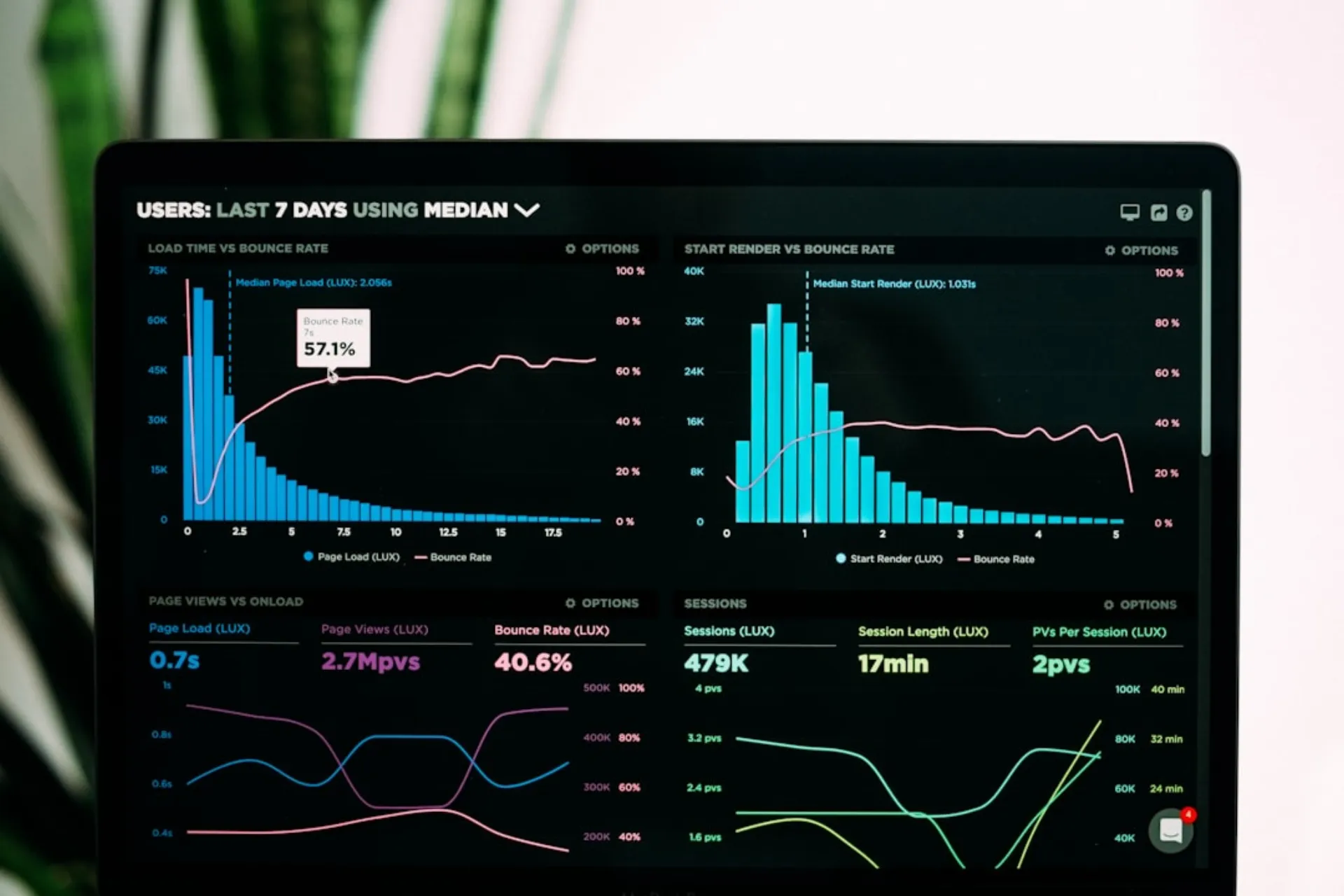
Operations dashboard development creates unified visibility across the multiple systems that warehouse operations rely on. A typical fulfillment operation runs a WMS, a transportation management system, a labor management system, a yard management system, and various departmental tools — each with its own reporting interface and data format. No-code dashboards aggregate data from these systems through API connections and scheduled data imports, presenting the complete operational picture that managers need for real-time decision-making — current order backlog, labor utilization, dock status, and client SLA performance on a single screen.
Client reporting and visibility portals provide 3PL and fulfillment clients with self-service access to their operational data — current inventory, order status, receiving history, and service metrics — without requiring warehouse staff to compile and send reports manually. These portals reduce client inquiry volume, improve client satisfaction through transparency, and free client service staff for higher-value activities.
At ZTABS, we develop no-code solutions for warehousing that are designed for the fast-paced, data-intensive environment of logistics operations — connecting with WMS and TMS systems through APIs, providing mobile-optimized interfaces for floor-level data capture, and delivering operational dashboards that update in real time.
The Warehousing & Fulfillment Market
No-code adoption in warehousing is driven by the growing complexity of logistics operations, the proliferation of systems that lack integration, and the difficulty of justifying custom software development for operational tooling needs.
Operational complexity has grown as fulfillment operations serve more clients, handle more SKUs, and manage more channels with distinct requirements. A 3PL facility might serve 50 clients with different receiving procedures, storage requirements, picking methods, packaging specifications, and reporting expectations. The WMS handles standard warehouse operations, but client-specific processes, compliance requirements, and reporting needs create an operational management layer that the WMS was not designed to address. No-code applications fill this layer — providing the client-specific tooling and reporting that operations need without custom development for each client.
System proliferation in warehouse operations has created data silos that no-code platforms can bridge. A modern warehouse operation may use 5 to 10 distinct systems — WMS, TMS, labor management, yard management, dock scheduling, maintenance management, quality management, and billing — each containing operational data that managers need to correlate for effective decision-making. No-code platforms with API integration capabilities can connect to multiple systems and present unified views that would otherwise require expensive custom integration development.
Labor management challenges make operational tooling more important. With high turnover and variable labor quality, warehouse operations need tools that standardize procedures, capture performance data, and provide visual guidance that reduces the skill threshold for consistent execution. No-code applications can provide step-by-step procedure guidance, digital checklists, and performance tracking that maintain operational consistency regardless of worker experience level.
Client expectations for visibility and responsiveness have increased as supply chain transparency becomes standard. 3PL clients expect real-time inventory visibility, order status tracking, and performance reporting — capabilities that require either expensive client portal development or manual report compilation. No-code client portals provide professional-quality visibility at a fraction of custom development cost.
Rapid operational change in fulfillment requires tools that can be modified quickly. Seasonal volume fluctuations, new client onboarding, process improvements, and service level changes require operational tools to adapt continuously. Custom software with its development cycles and change request processes cannot keep pace with operational change velocity. No-code tools can be modified by the operations team members who understand the requirements — often within hours of identifying the need.
How We Deliver No-Code / Low-Code Development for Warehousing & Fulfillment
Our no-code development for warehousing covers operations dashboards, quality control applications, client portals, process automation, and WMS gap-filling tools — each designed for warehouse operational workflows and system integration.
Operations dashboard development builds unified monitoring tools for warehouse management. We develop executive dashboards that present facility-level KPIs including throughput, accuracy, labor productivity, and SLA compliance with drill-down to zone, shift, and client detail. Shift management dashboards provide real-time visibility for shift supervisors including current order backlog by priority, labor deployment by zone, dock status, and emerging issues requiring attention. Client-specific operations views show performance metrics, inventory levels, and order status filtered to individual client accounts — enabling account managers to monitor client service levels proactively. Historical trend analysis provides period-over-period comparison of operational metrics — enabling managers to identify improvement or degradation trends across weeks, months, and seasons.
Quality control application development builds digital inspection and documentation tools. We develop receiving inspection apps with structured checklists, photo capture, and automatic discrepancy routing — replacing paper forms with digital records that are immediately searchable and reportable. Damage documentation tools capture damage evidence with photos, damage descriptions, location codes, and responsible party identification — creating the documentation needed for carrier claims and client notification. Return processing applications guide workers through return inspection procedures with condition grading, disposition determination, and inventory reintegration workflows. Quality metrics dashboards aggregate inspection data to show defect rates by supplier, carrier, product category, and time period — enabling data-driven quality improvement initiatives.
Client portal development builds self-service visibility for 3PL and fulfillment clients. We develop inventory visibility portals where clients view current inventory by SKU, lot, location, and status — with filters and export capability for integration with their own systems. Order tracking portals show real-time order status from receipt through fulfillment and shipping with carrier tracking integration. Receiving and shipping history provides searchable records of all inbound and outbound activity with document access including bills of lading, packing slips, and proof of delivery. Service level reporting displays SLA performance metrics including order accuracy, fulfillment speed, and inventory accuracy with trend visualization.
Process automation development eliminates manual workflow management. We build receiving workflow automation that routes receiving exceptions — damaged product, quantity discrepancies, unexpected shipments — to the appropriate handler with automatic escalation for unresolved exceptions. Return authorization and processing workflows coordinate between the client service team, warehouse operations, and inventory management to handle return receipt, inspection, disposition, and inventory update. Billing workflow automation compiles billable activities from the WMS and other operational systems, applies client-specific rate structures, and generates billing summaries for review before invoice creation. Maintenance request workflows enable warehouse staff to submit equipment issues with photos and location from mobile devices, with automatic routing to maintenance based on equipment type and priority.
WMS gap-filling tool development addresses operational needs that the WMS does not cover. We build lot tracking and management tools for operations that need lot-level visibility beyond what the WMS provides — including lot hold management, expiration tracking with disposition alerts, and lot-specific client allocation. Value-added service tracking captures the time, materials, and labor for VAS activities including kitting, labeling, repackaging, and quality inspection — providing both operational tracking and billing data. Yard management tools track trailer location, status, and dock assignment in the yard — providing visibility that many WMS platforms handle poorly or not at all.
Ready to discuss your no-code / low-code development project?
Free consultation — no commitment required.
Case StudyThird-Party Logistics
3PL Builds Operations Platform Serving 45 Clients with No-Code Tools
The Challenge
A 3PL operating 2 fulfillment centers serving 45 ecommerce and retail clients needed custom operational tooling that their WMS did not provide. Client reporting consumed 3 client service staff members each spending approximately 15 hours per week compiling manual inventory and performance reports from WMS data exports — 45 hours weekly of staff time dedicated to report compilation. Quality control inspections used paper forms that were filed in boxes and could not be searched or analyzed — when clients requested damage claim documentation, finding the relevant inspection record required manual search through physical files. Receiving exception handling relied on email communication between receiving supervisors and client account managers — exceptions averaged 3 days to resolve because emails were missed, forwarded without context, or delayed by staff availability.
Billing calculation was performed in spreadsheets by a billing specialist who spent 20 hours per week extracting activity data from the WMS, applying client-specific rate structures, and generating billing summaries — with a 4 percent error rate that created client disputes and revenue leakage. The 3PL had evaluated custom software development for these needs and received estimates of $280,000 to $420,000 with 6 to 9 month development timelines — beyond what the company could justify or wait for.
Our Solution
We developed a comprehensive operations platform using no-code tools integrated with the company WMS through API connections. A client reporting portal gave each of the 45 clients login access to a customized dashboard showing real-time inventory levels by SKU with lot, expiration, and status filters; order status with fulfillment and shipping tracking; receiving history with document access; and monthly performance reports showing order accuracy, fulfillment speed, and inventory accuracy against SLA targets. Data refreshed automatically from the WMS API at 15-minute intervals. Each client portal was generated from a template with client-specific configuration for metrics, branding, and data scope — enabling rapid deployment for new client onboarding.
A quality control application replaced paper inspection forms with a mobile-optimized digital application. Receiving inspectors used tablets to complete structured inspections with quantity verification, condition assessment with photo capture, and exception documentation with automatic classification. The application automatically routed exceptions to the appropriate client account manager through the receiving exception workflow — with automatic escalation if the exception was not addressed within 4 hours. All inspection records were searchable by date, client, shipment, carrier, and exception type — with instant retrieval for damage claim documentation.
A receiving exception workflow automated the communication and resolution process. When an inspector documented a receiving exception — quantity discrepancy, damage, or unexpected product — the workflow created a case record, notified the client account manager with complete documentation including photos, tracked resolution steps and communication, and closed the case when disposition was determined. The workflow maintained a complete audit trail of every exception from identification through resolution.
A billing automation tool replaced the spreadsheet-based billing process. The tool extracted activity data from the WMS API — storage quantities and duration, receiving units, shipping orders, and value-added service records — applied client-specific rate structures configured in a rate management interface, and generated billing summaries for review. The billing specialist reviewed generated bills rather than creating them from scratch — spending time on verification and exception handling rather than data extraction and calculation.
An operations dashboard aggregated data from the WMS, the quality control application, the receiving exception workflow, and the billing tool into a unified management view. Facility managers could see current throughput, exception rates, quality metrics, and client SLA performance across both facilities on a single screen — with drill-down capability to any client, zone, or time period.
The Results
Client reporting staff time decreased from 45 hours per week to 4 hours per week — a 91 percent reduction. The 4 remaining hours were spent on custom analysis requests and data interpretation that the portal did not address. The client service team was redeployed from report compilation to proactive client relationship management — resulting in client satisfaction survey scores increasing from 7.2 to 8.9 on a 10-point scale. Client inquiry volume decreased by 68 percent as clients accessed their data through the portal rather than contacting the service team.
Quality control documentation retrieval time decreased from an average of 45 minutes of physical file searching to under 30 seconds of digital search. Damage claim documentation was available instantly for carrier filing — reducing the average claim filing time from 5 days to same-day. Damage claim recovery increased by $78,000 annually because timely filing with complete documentation improved claim approval rates from 62 percent to 89 percent.
Receiving exception resolution time decreased from an average of 3 days to 6 hours. The automated workflow eliminated the email communication delays, lost context, and missed escalations that had extended resolution. Faster exception resolution meant that product was available for sale sooner — reducing the impact of receiving exceptions on order fulfillment timelines.
Billing error rate decreased from 4 percent to 0.3 percent through automated calculation from WMS activity data rather than manual spreadsheet extraction. Revenue leakage from billing errors was reduced by approximately $124,000 annually. Billing preparation time decreased from 20 hours per week to 5 hours per week — with the billing specialist time redeployed to rate analysis and profitability review.
The complete no-code platform development cost was $68,000 — compared to the $280,000 to $420,000 estimates for custom development. Development timeline was 8 weeks from assessment through deployment — compared to 6 to 9 months for custom development. Annual platform subscription costs of $14,400 were offset many times over by the staff time savings, claim recovery improvement, and billing error reduction.
No-Code / Low-Code Development Capabilities for Warehousing & Fulfillment
- ✓Bubble Web Apps
Full-featured web applications with user auth, databases, payments, APIs, and responsive design — built visually on Bubble with production-grade architecture.
- ✓Retool Internal Tools
Admin panels, dashboards, CRUD tools, and workflow apps that connect to your databases and APIs — built in days instead of months.
- ✓Webflow Marketing Sites
High-converting marketing websites and landing pages with CMS, animations, and SEO optimization — designer-quality without custom code.
- ✓Airtable Workflows
Data management, project tracking, CRM, and automation workflows built on Airtable with custom views, automations, and integrations.
- ✓Custom Integrations
Connect no-code platforms to your existing tools — APIs, databases, payment systems, CRMs, and marketing tools via native plugins or custom connectors.
- ✓Migration Path
We design no-code solutions with a clear migration path to custom development when you outgrow the platform — no vendor lock-in.
No-Code / Low-Code Development Landscape for Warehousing & Fulfillment
No-code solutions for warehousing are served by WMS vendors with extensibility features, logistics SaaS platforms, general no-code platform providers, and custom development agencies. WMS vendors offer some customization within their platforms but are constrained to their own data model and user interface paradigms. Logistics SaaS platforms provide pre-built solutions for specific functions but may not accommodate the unique processes of each operation. General no-code platforms provide powerful building tools but lack logistics domain expertise including WMS integration patterns and warehouse workflow understanding. Custom development agencies build exactly what operations need but at costs that most mid-market logistics companies cannot justify for operational tooling.
Our warehousing no-code practice differentiates through deep understanding of warehouse operational workflows and supplementary tooling needs, WMS API integration expertise connecting no-code applications with operational data in real time, logistics-specific template libraries that accelerate development of common warehouse applications, and operations team training that enables warehouse staff to maintain and extend applications independently.
No-Code / Low-Code Development Pricing for Warehousing & Fulfillment
No-code development for warehousing is priced based on application scope, integration complexity, and user count. Operations dashboards range from $10,000 to $35,000. Client portal development ranges from $15,000 to $45,000. Quality control applications range from $8,000 to $25,000. Process automation workflows range from $5,000 to $20,000 per workflow. Billing automation ranges from $15,000 to $40,000.
Comprehensive operations platforms covering dashboards, client portals, quality, and process automation range from $40,000 to $120,000. Platform subscription costs range from $500 to $2,000 per month depending on platform and user count.
Every engagement begins with an operations assessment ranging from $2,000 to $6,000 that evaluates current operational tooling, identifies automation opportunities, assesses system integration requirements, and produces a development plan with prioritized applications and expected operational impact.
Frequently Asked Questions
Common questions about no-code / low-code development for warehousing & fulfillment
Yes. Modern no-code platforms support API integration with major WMS platforms. We connect through WMS REST APIs to read inventory data, order status, activity records, and operational metrics in real time or at configurable refresh intervals. Write-back integrations for specific use cases — such as updating custom fields or triggering WMS actions from no-code workflows — are configured where the WMS API supports them.
Ready for No-Code / Low-Code Development Built for
Warehousing & Fulfillment?
Our team has deep expertise in warehousing & fulfillment technology. Get a free consultation.
500+
Projects Delivered
4.9/5
Client Rating
90%
Repeat Clients