ZTABS builds e-commerce platforms for brick-and-mortar retailers expanding their online sales. We integrate with existing store operations, support omnichannel fulfillment (BOPIS, ship-from-store, home delivery), and deliver performance that handles peak retail traffic.
Global retail e-commerce sales reached $6.419 trillion in 2025, representing 20.5% of total worldwide retail sales (EMARKETER). The market is expected to total nearly $7 trillion by 2026, with e-commerce's share of retail projected to reach 22.5% by 2028 (Shopify Enterprise). The B2C e-commerce market reached $5.2 trillion in 2024 and is expected to grow to $9.8 trillion by 2033. For retailers with physical stores, the opportunity is clear: the shift online is accelerating, and omnichannel capabilities are no longer optional.
E-commerce for retailers with physical stores is different from e-commerce for online-only brands. A retailer with five, fifty or five hundred locations has distributed inventory that must serve both walk-in and online customers simultaneously. The e-commerce platform must sync with the POS, route orders to the optimal fulfillment location, and set accurate delivery expectations across different fulfillment methods. Our broader capabilities are on the e-commerce development services page.
Retail e-commerce at a glance
| Capability | What it involves | Why it matters |
|---|
| Inventory sync | Real-time stock levels across all locations and the warehouse | Prevents overselling and enables accurate BOPIS availability |
| Order routing | Rules engine determining which location fulfills each order | Optimizes shipping cost, speed and inventory utilization |
| BOPIS | Buy online, pick up in store | Customers expect it; drives foot traffic and add-on purchases |
| Ship-from-store | Orders shipped from the nearest store with stock | Faster delivery, lower shipping costs, better inventory turns |
| Unified customer profile | Same account across online, in-store and mobile | Loyalty programs, purchase history, personalized recommendations |
Why retailer e-commerce is harder than pure-play
Inventory is distributed, not centralized
An online-only brand has one warehouse and one inventory pool. A retailer has inventory spread across store locations, a distribution center, and possibly a third-party warehouse. The e-commerce platform must aggregate available inventory for product display, reserve inventory at the fulfillment location when an order is placed, and release it if the order is cancelled. All of this must happen in near-real-time to avoid selling products that are not actually available.
Fulfillment has multiple paths
A single order might be fulfilled by the warehouse (for non-local customers), shipped from the nearest store (for speed), held for in-store pickup (BOPIS), or split across locations when no single location has all items in stock. The order routing engine must weigh inventory availability, proximity to customer, shipping cost, and store fulfillment capacity to make the right choice.
Peak traffic is extreme and concentrated
Black Friday and Cyber Monday can generate 15 to 30 percent of a retailer's annual e-commerce revenue in a compressed 4-day window. Traffic can spike 10 to 50 times above normal. A platform that slows down or errors during this window loses revenue that cannot be recovered. Performance engineering for retail must account for these ratios.
Product presentation must replace the in-store experience
Retail customers shopping online cannot touch, try on or physically examine products. The product page must compensate: multiple images from different angles, zoom capability, size guides with measurement charts, color swatches that accurately represent the physical product, customer reviews and ratings, and "frequently bought together" recommendations.
What we build for retailers
Shopify Plus storefronts with POS integration
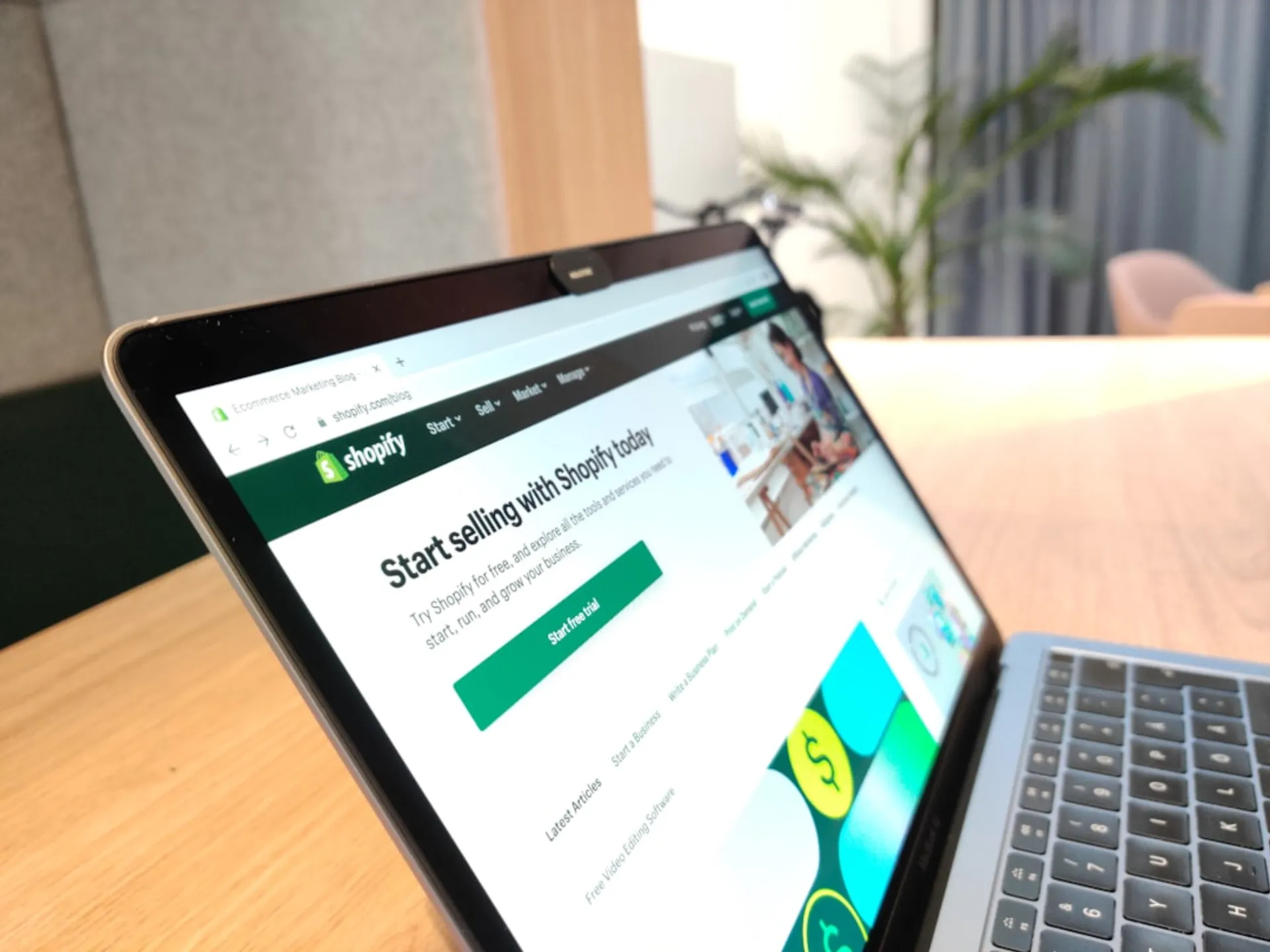
For most retailers, Shopify Plus is the strongest platform choice. Shopify POS provides native integration between the online store and physical locations. We build custom themes, configure multi-location inventory, set up BOPIS workflows, and implement the checkout optimizations that improve conversion. Shopify Plus handles the infrastructure scaling for peak traffic.
Headless commerce for custom experiences
Retailers with strong brand identities or complex content-commerce needs (lookbooks, editorial shopping, interactive product configurators) benefit from headless architecture: Next.js on the front end with Shopify as the commerce backend. This gives full design freedom while keeping Shopify's checkout, payments and inventory management.
Multi-location order management
We build order routing engines that determine the optimal fulfillment path for each order. Rules consider inventory availability, customer proximity, shipping cost, store fulfillment capacity, and business priorities (e.g., prioritizing stores with excess inventory). The system handles split fulfillment and provides customers with accurate delivery estimates per fulfillment method.
BOPIS and curbside pickup
The full BOPIS flow: availability display by store location on the product page, store selection at checkout, order confirmation and preparation notification to store staff, ready-for-pickup notification to the customer, pickup confirmation and completion. We build both the customer-facing flow and the staff-facing fulfillment interface.
Taking your retail stores online?
Tell us about your stores, your POS system, your product catalog and the fulfillment options you want to offer. We will recommend a platform and provide a cost estimate.
How delivery works
- Discovery, 2 to 3 weeks. Audit current POS system, inventory management, fulfillment processes and integration capabilities.
- Platform selection and architecture. Recommend platform (Shopify Plus, headless, custom) based on your requirements, current tech stack and budget.
- Design, 2 to 4 weeks. Storefront design with mobile-first approach, product page layouts, collection pages and checkout optimization.
- Build, 4 to 12 weeks. Storefront development, POS integration, inventory sync, order routing, fulfillment workflows.
- Load testing and launch. Performance testing at peak traffic levels before go-live. Staged rollout by location if multi-store.
Illustrative Example
An omnichannel platform for a 12-location fashion retailer
Situation. A fashion retailer with 12 stores and a central warehouse sells apparel and accessories. Annual revenue is $18 million, with $1.4 million from a basic Shopify store that has no inventory integration with the in-store POS (Lightspeed). Online orders ship only from the warehouse, which holds 40% of total inventory. The remaining 60% sits in store locations and is invisible to online customers. BOPIS is not available, and customers frequently see "out of stock" online for products that are sitting on store shelves. The retailer estimates they lose $600K+ annually in missed online sales because store inventory is not surfaced.
How we would approach it. We would upgrade to Shopify Plus with Lightspeed POS integration via the Lightspeed API, syncing inventory from all 12 stores and the warehouse every 5 minutes. The online catalog would show aggregated availability ("available in 8 locations" or "only 2 left"). We would implement BOPIS with store-level availability display on product pages, store selection at checkout, order routing to the nearest store with stock when the warehouse is out, and a staff-facing fulfillment app (pick list, pack confirmation, ready-for-pickup notification to customer). Ship-from-store would enable the nearest location to fulfill home delivery orders, reducing shipping time and cost. Product pages would be redesigned with size guides, fit recommendations, multiple images per colorway, and a "check store availability" widget showing stock at nearby locations.
What we would measure. Online revenue growth (targeting 40 to 60% increase by surfacing store inventory), BOPIS adoption rate (targeting 20%+ of online orders), ship-from-store percentage (targeting 30%+ of home delivery orders), average shipping cost per order (should decrease with ship-from-store), inventory turn improvement across locations, and fulfillment speed. Development budget would be in the $40K to $70K range over 8 to 14 weeks.
This is a hypothetical scenario for illustration. Actual scope, timeline and cost depend on your requirements.
See how this applies to your stores?
Share your store count, POS system, and fulfillment goals. We will map an omnichannel architecture to your inventory setup.
Cost and timeline
Costs depend on the platform, the number of store locations, and the complexity of fulfillment logic. These ranges come from our e-commerce development cost guide.
| Build | Typical cost | Typical timeline |
|---|
| Shopify template store (single location, basic online) | $5K to $25K | 3 to 6 weeks |
| Custom Shopify with POS and BOPIS | $25K to $60K | 6 to 12 weeks |
| Headless commerce with multi-location fulfillment | $60K to $120K | 12 to 20 weeks |
| Custom omnichannel platform (50+ locations, complex routing) | $120K to $200K+ | 18 to 30 weeks |
POS integration complexity varies significantly. Shopify POS is natively integrated. Square and Lightspeed have well-documented APIs. Legacy POS systems may require middleware or manual sync processes that add cost and timeline.
Budget looks right for your project?
Tell us your store count, POS system, and the fulfillment options you need. We will provide a platform recommendation and cost estimate within 48 hours.
Choosing an e-commerce partner for retail
| Option | Good for | Tradeoff |
|---|
| ZTABS (remote-first) | Custom retail e-commerce with POS integration and omnichannel fulfillment | Remote-first by design, not a Shopify Plus certified partner |
| Shopify agency (Shopify Plus partner) | Standard Shopify builds with theme customization | May lack deep POS integration and order routing expertise |
| Enterprise platform vendor (Salesforce Commerce, SAP) | Large retailers with 100+ locations and complex ERP | High licensing cost, 6 to 12 month implementation |
| General web agency | Building a basic online store | May not understand multi-location inventory and fulfillment |
| Freelance Shopify developer | Simple store setup and theme tweaks | No capacity for complex integration work |
Ask each vendor how they handle inventory sync between the online store and your POS, how they implement order routing across multiple locations, and whether they have built BOPIS workflows before.
When ZTABS is not the right fit
- You just need a Shopify theme installed. A freelance Shopify Expert can do that for less.
- You have 200+ locations and need enterprise-grade order management. At that scale, a dedicated OMS (Manhattan, Kibo, Fluent Commerce) may be more appropriate than a custom build.
- You need in-store technology (self-checkout, digital signage, RFID). We build online commerce, not in-store hardware and software.
- Your budget is under $5K. A pre-built Shopify theme with basic configuration is more practical.
- You need ongoing merchandising and marketing management. We build the platform, but day-to-day merchandising should be handled by your team or a retail marketing agency.
Risks that delay retail e-commerce projects
The same problems recur across multi-location retail builds. Each is avoidable if planned for early.
- Inventory sync lag causes overselling. If the POS and the online store sync inventory on a 15-minute interval, a fast-selling item can sell out in-store but still show as available online. BOPIS orders placed for out-of-stock items create customer service headaches and erode trust. We target 5-minute sync intervals at minimum and implement safety stock buffers for high-velocity SKUs to absorb the gap between syncs.
- Legacy POS has no API. Shopify POS, Square and Lightspeed all have well-documented APIs. Older POS systems (Revel, NCR, custom systems) may have limited or no API access, requiring middleware, file-based exports or manual processes. We audit the POS API capabilities during discovery and budget accordingly. If the POS cannot support real-time integration, we recommend a POS upgrade as part of the project scope.
- BOPIS operational readiness overlooked. The technology for BOPIS is the easier part. The harder part is store operations: who receives the pick notification, where is the staging area, how long until the order is ready, what happens if an item is damaged or missing from the shelf. We map the in-store fulfillment workflow during discovery and build the staff-facing interface around the store's actual operational capacity.
- Peak traffic testing skipped. A storefront that works at 500 concurrent users may fail at 15,000 during Black Friday. If load testing is skipped or done only at moderate levels, the first real peak becomes the test, and the cost is lost revenue. We run load tests at 2 to 3 times the expected peak traffic before any major sales event, using realistic traffic patterns (not just concurrent connections).
- Product data quality is poor. Multi-location retailers often have inconsistent product data: missing images, incomplete size charts, mismatched SKU naming across locations and no structured attribute data for filtering. We audit the product catalog during discovery and scope data cleanup as part of the project rather than discovering it mid-build.
- Returns and exchanges logic is an afterthought. Retail return rates average 15 to 30 percent depending on the category (apparel at the higher end). A store without automated RMA processing, exchange-first logic (offering exchange before refund), in-store return for online purchases, and clear restocking workflows creates manual work for staff and frustration for customers. We design returns as a first-class workflow during the build, not bolted on after launch.
- Search and filtering are weak on launch. Shoppers who cannot find the right product in 2 to 3 clicks leave. Default platform search often returns poor results for multi-attribute products (size, color, material, brand, price range). We implement faceted filtering and search relevance tuning during development using tools like Algolia or Shopify's search API, tested against the actual product catalog. A retailer with 5,000+ SKUs needs search that handles synonyms, misspellings, and category cross-references from day one.
- Loyalty program complexity underestimated. Retail loyalty programs sound simple (earn points, redeem rewards) but the logic gets complex fast: points earned per dollar vary by product category, bonus point promotions run during specific periods, points expire on rolling schedules, redemption has minimum thresholds, and customers expect to earn and redeem across both online and in-store channels. We design the loyalty engine as a rules-based system that marketing can configure without developer involvement for each new promotion.
Ready to build your omnichannel store?
Tell us about your store locations, POS system, product catalog, and the fulfillment options you want to offer online. We will reply with a platform recommendation, architecture outline and cost estimate.