GPT Integration Services for Marketing Agencies
GPT Integration for Marketing Agencies Embedding Language AI Directly Into Your Marketing Stack
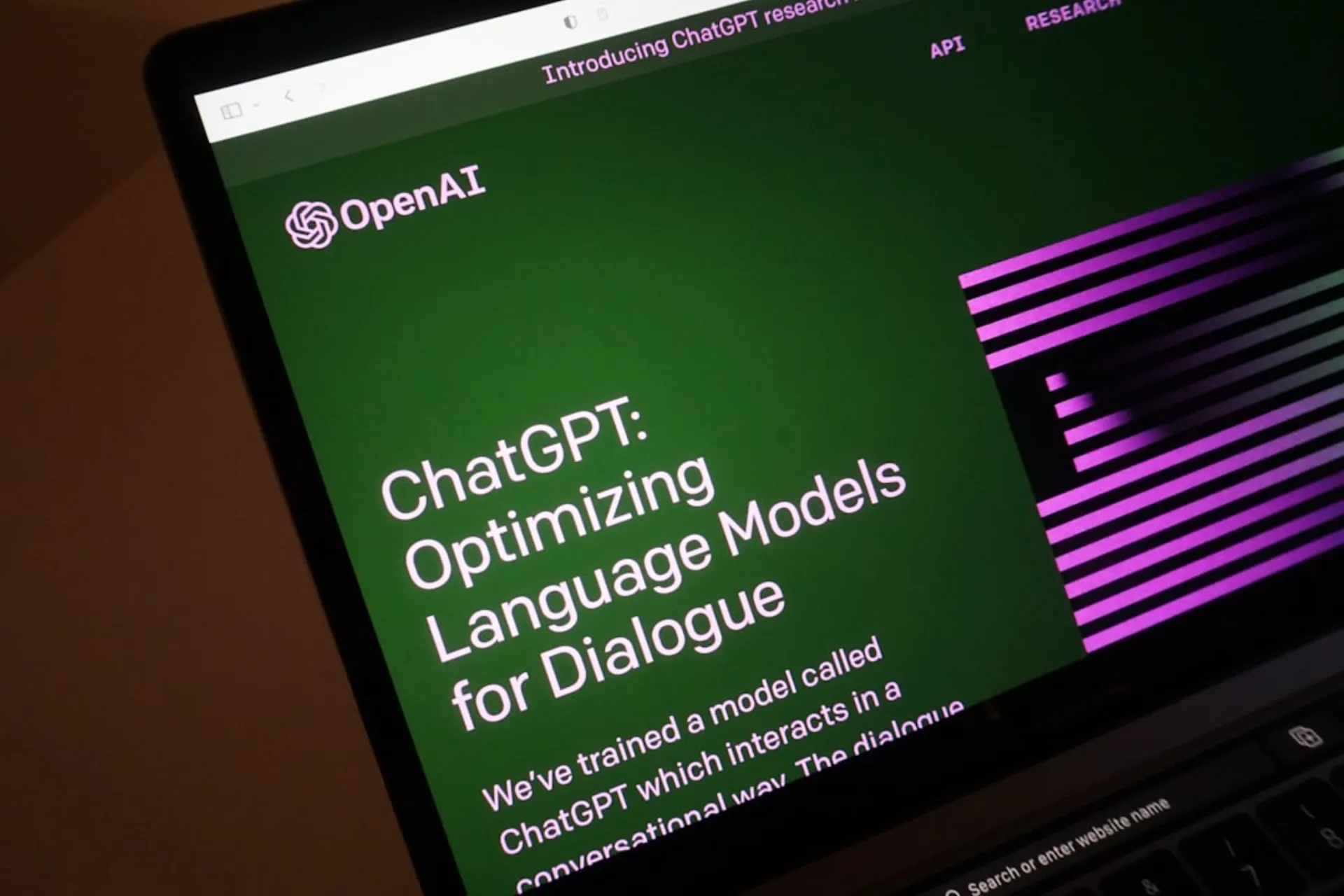
ChatGPT changed what marketing teams expect from AI, but copying and pasting between ChatGPT and your actual tools is not integration. True GPT integration embeds large language model capabilities directly into the systems your team uses daily—content management platforms, reporting dashboards, client portals, CRM systems, and project management tools.
4.9/5Verified rating
300+Clients served
23Products shipped
100+Case studies
Since 2015In production
90%
Team-wide GPT adoption within 6 weeks
40%
Content production speed increase
35 hrs
Weekly analyst hours saved on report narratives
60%
Cost reduction versus individual ChatGPT subscriptions
We build GPT integrations for marketing agencies that make AI assistance available where work happens, eliminating context-switching and enabling AI-powered workflows that operate at the speed of your team.
GPT integration for marketing agencies connects large language model capabilities to the operational systems where marketing work actually happens. The gap between using ChatGPT as a standalone tool and integrating GPT into agency workflows is the difference between an interesting experiment and a productivity transformation. When GPT capabilities are embedded in the content management system, the reporting platform, the client portal, and the project management tool, AI assistance becomes a natural part of every workflow rather than a separate step that most people skip.
Content management integration embeds GPT capabilities directly into the platforms where writers and editors work. Rather than drafting content in ChatGPT and pasting it into the CMS, writers can generate drafts, expand sections, create variations, optimize for SEO, and adapt tone within their authoring environment. The integration maintains context—brand guidelines retrieved through RAG, SEO targets from the content brief, and style preferences from the client profile—so every generation is contextually appropriate.
Reporting system integration adds narrative intelligence to data visualization platforms. Dashboards show numbers and charts, but clients want to understand what the numbers mean and what they should do about them. GPT integration generates narrative summaries that interpret data trends, identify significant changes, compare performance to benchmarks, and recommend strategic actions. These narratives are generated automatically from the same data that powers the visualizations, ensuring consistency between visual and textual reporting.
Client portal integration provides self-service AI capabilities to agency clients. Clients can ask questions about campaign performance in natural language and receive accurate answers sourced from their campaign data. They can request content modifications, campaign adjustments, or strategic recommendations through conversational interfaces rather than email threads. This self-service capability improves client satisfaction while reducing account manager communication overhead.
CRM integration embeds GPT capabilities into the customer relationship management system. Contact enrichment uses language models to research and summarize prospect information. Email drafting uses GPT to compose personalized outreach based on prospect data and engagement history. Meeting preparation generates briefing documents from CRM data and recent communication history. Each integration reduces the manual effort of CRM-dependent tasks.
Project management integration adds AI assistance to task management and collaboration platforms. GPT can generate task descriptions from brief instructions, create project timelines from scope documents, draft status updates from task completion data, and summarize long discussion threads into actionable summaries. These integrations reduce the administrative overhead that project management tools sometimes create.
Slack and communication platform integration brings GPT capabilities into the channels where team communication happens. Team members can query campaign data, generate content drafts, summarize client feedback, or access agency knowledge bases through conversational Slack commands. This integration makes AI assistance accessible without leaving the communication flow where most real-time collaboration occurs.
API architecture design determines how GPT integrations connect, scale, and maintain reliability. Well-designed API layers abstract the specific LLM provider—enabling the agency to switch between OpenAI, Anthropic, or other providers without modifying consuming applications. This provider-agnostic design protects against vendor lock-in and enables the agency to use the best model for each specific task.
The Marketing Agencies Market
The LLM API landscape has expanded beyond OpenAI to include Anthropic Claude, Google Gemini, Mistral, and numerous open-source alternatives. Each provider offers different strengths—OpenAI excels at instruction following, Claude at nuanced analysis, Gemini at multimodal tasks. Agencies benefit from integrations that can leverage multiple providers based on task requirements rather than being locked to a single provider.
The cost of LLM API calls has decreased dramatically since GPT-3.5 launched. GPT-4o provides near-GPT-4 quality at significantly reduced cost. Claude 3 Haiku provides fast, inexpensive processing for simpler tasks. This cost reduction makes high-volume GPT integration economically viable for agency operations where thousands of generations happen daily.
Prompt engineering has become a recognized discipline that directly impacts the quality of GPT-integrated applications. Well-crafted system prompts, few-shot examples, and structured output formats produce significantly better results than naive prompting. Agency-specific prompt libraries—tested and optimized for marketing content types—are a form of intellectual property that differentiates agency AI capabilities.
Function calling and tool use capabilities in modern LLMs enable GPT integrations that take actions rather than just generating text. GPT can query databases, call APIs, create records, and trigger workflows based on conversational instructions. These capabilities transform GPT from a text generator into an intelligent interface layer that enables natural language interaction with complex systems.
Structured output capabilities in modern LLMs enable GPT integrations that produce consistently formatted JSON, tables, and structured data rather than free-form text. This structured output is essential for integrations that feed GPT-generated content into downstream systems—databases, dashboards, and automated workflows—where format consistency is required for reliable processing.
The reliability requirements for production GPT integrations exceed what casual ChatGPT usage demands. Latency management, rate limiting, error handling, fallback behavior, and output validation are engineering concerns that distinguish production integrations from prototype demonstrations. Agencies cannot have client-facing systems that fail because an API call timed out or returned an unexpected response.
How We Deliver GPT Integration for Marketing Agencies
Our GPT integration for agencies begins with workflow mapping—identifying every point in agency operations where language model capabilities would improve productivity, quality, or speed. We prioritize integration points by impact, feasibility, and dependency relationships to create an implementation sequence that builds value incrementally.
Architecture design creates the integration infrastructure that connects LLM capabilities to agency systems. The architecture includes an API gateway that manages model routing, authentication, rate limiting, and cost tracking. Provider abstraction enables switching between LLM providers without changing consuming applications. Caching reduces costs and improves response times for repeated or similar queries.
Prompt engineering develops the system prompts, few-shot examples, and output structures that produce high-quality results for each integration use case. Marketing-specific prompts are tested against diverse inputs and evaluated for quality, consistency, and brand alignment. Prompt libraries are versioned and maintained as agency intellectual property.
Integration development connects GPT capabilities to each target system through platform-appropriate methods—browser extensions, platform plugins, API integrations, or webhook processors. Each integration is designed for seamless user experience—AI assistance appears naturally within the tool rather than requiring context-switching to a separate interface.
Output quality controls ensure that GPT-generated content meets agency standards. Automated checks validate output format, length, tone, and factual consistency. Confidence scoring flags outputs that may need human review. Feedback loops capture user corrections and incorporate them into prompt refinement. These controls prevent the quality inconsistencies that uncontrolled GPT usage produces.
Cost management and monitoring track API usage, costs, and performance across all integrations. Dashboards show which integrations consume the most tokens, which produce the most value, and where optimization opportunities exist. Cost alerts prevent unexpected spending spikes from high-volume usage patterns.
Ready to discuss your GPT integration project?
Free consultation — no commitment required.
Case StudyIntegrated Marketing Agency
Integrating GPT Across 6 Core Systems for an Integrated Marketing Agency
The Challenge
A 55-person integrated agency had team members using ChatGPT individually with no consistency, no brand safety, and no measurement of AI impact. Content quality varied wildly depending on individual prompting skill. Client-sensitive information was being pasted into ChatGPT without policy guidance. The agency needed structured GPT integration that provided consistent quality, protected client data, and embedded AI assistance into existing tools rather than running parallel to them.
Our Solution
We built a centralized GPT integration layer that connected to six core agency systems. Content Management—GPT-powered drafting and editing within the CMS with brand voice retrieval. Reporting—automated narrative generation for weekly and monthly client reports. CRM—email drafting, contact research, and meeting preparation assistance. Project Management—task description generation and status update drafting. Slack—conversational access to campaign data, content generation, and knowledge base queries. Client Portal—natural language performance inquiries and self-service content requests. All integrations routed through a central API layer with prompt management, usage tracking, and data privacy controls.
The Results
Team-wide GPT adoption reached 90 percent within 6 weeks as AI assistance was embedded in tools everyone already used. Content production speed increased 40 percent with consistent quality through engineered prompts replacing ad-hoc ChatGPT usage. Report narrative generation saved 35 analyst hours per week. Client data exposure risk was eliminated as all GPT interactions routed through the controlled API layer rather than direct ChatGPT usage. Monthly AI costs were 60 percent lower than the aggregate of individual ChatGPT subscriptions the team had been using previously.
GPT Integration Capabilities for Marketing Agencies
- ✓Custom GPT Development
We build custom GPTs with tailored instructions, knowledge bases, and API actions that represent your brand in the ChatGPT marketplace — driving traffic and leads directly from OpenAI's platform.
- ✓ChatGPT Plugin Development
Full plugin development including OAuth authentication, API manifest configuration, and OpenAPI schema design so ChatGPT users can interact with your product natively.
- ✓OpenAI API Integration
Production-grade integration of GPT-4o, GPT-4 Turbo, Whisper, DALL-E, and Embeddings APIs into your application with proper error handling, rate limiting, and cost optimization.
- ✓Prompt Engineering & Optimization
Systematic prompt design, testing, and optimization to maximize accuracy while minimizing token usage and cost. We build prompt management systems for versioning and A/B testing.
- ✓Function Calling & Tool Use
Implement OpenAI's function calling to let GPT interact with your databases, APIs, and business logic — turning the model into an intelligent agent within your application.
- ✓Streaming & Real-Time Responses
Server-sent events and streaming implementations that deliver token-by-token responses for a responsive user experience, with proper error handling and fallbacks.
GPT Integration Landscape for Marketing Agencies
The GPT integration landscape includes platform-native AI features built into SaaS tools, horizontal AI integration platforms, custom integration development, and AI middleware services that connect LLMs to business applications.
Platform-native AI features from HubSpot, Salesforce, Canva, and other SaaS tools provide GPT-powered capabilities within their platforms. These features are easy to adopt but limited to their platform's context—HubSpot AI only works within HubSpot, providing no cross-platform intelligence or agency-specific customization.
Horizontal AI integration platforms provide pre-built connections between LLMs and common business tools. These platforms offer faster deployment than custom development but with limited customization for agency-specific workflows, prompt strategies, and quality controls.
Custom integration development provides maximum control over how GPT capabilities are embedded in agency systems. Custom integrations can implement agency-specific prompt engineering, brand voice retrieval, output quality controls, and cross-system intelligence that pre-built solutions cannot provide.
AI middleware services provide an abstraction layer between applications and LLM providers. These services handle provider routing, cost optimization, and basic prompt management. They simplify the technical complexity of multi-provider LLM usage but do not provide the application-level integration that agencies need.
The differentiation in GPT integration comes from prompt engineering quality, integration depth, and output control rather than from the underlying API technology. Two agencies using the same GPT-4 API can produce dramatically different results based on how they engineer prompts, structure retrievals, and control output quality.
GPT Integration Pricing for Marketing Agencies
GPT integration for marketing agencies ranges from $20,000 to $100,000 depending on integration count and complexity. Single-system integrations—CMS content assistance or report narrative generation—range from $20,000 to $35,000. Multi-system integration programs covering 3 to 4 platforms range from $35,000 to $65,000. Comprehensive agency-wide integration covering 5 or more systems with centralized management range from $65,000 to $100,000. Ongoing costs include LLM API fees, prompt maintenance, and integration updates—typically $1,000 to $5,000 per month depending on usage volume.
Frequently Asked Questions
Common questions about GPT integration for marketing agencies
Fundamentally different. ChatGPT is a standalone tool that requires context-switching and manual input. GPT integration embeds AI capabilities directly into your working tools—your CMS, reporting platform, CRM, and Slack—with pre-configured prompts, brand guidelines, and data access. The result is AI assistance that appears naturally in your workflow rather than requiring a separate tab.
Ready for GPT Integration Built for
Marketing Agencies?
Our team has deep expertise in marketing agencies technology. Get a free consultation.
500+
Projects Delivered
4.9/5
Client Rating
90%
Repeat Clients