Multi-Agent Orchestration for Food & Beverage
Multi-Agent Orchestration for Food and Beverage With Supply Chain Coordination, Production Scheduling Agents, Quality Assurance Automation, Demand Forecasting Integration, and Food Safety Compliance Monitoring
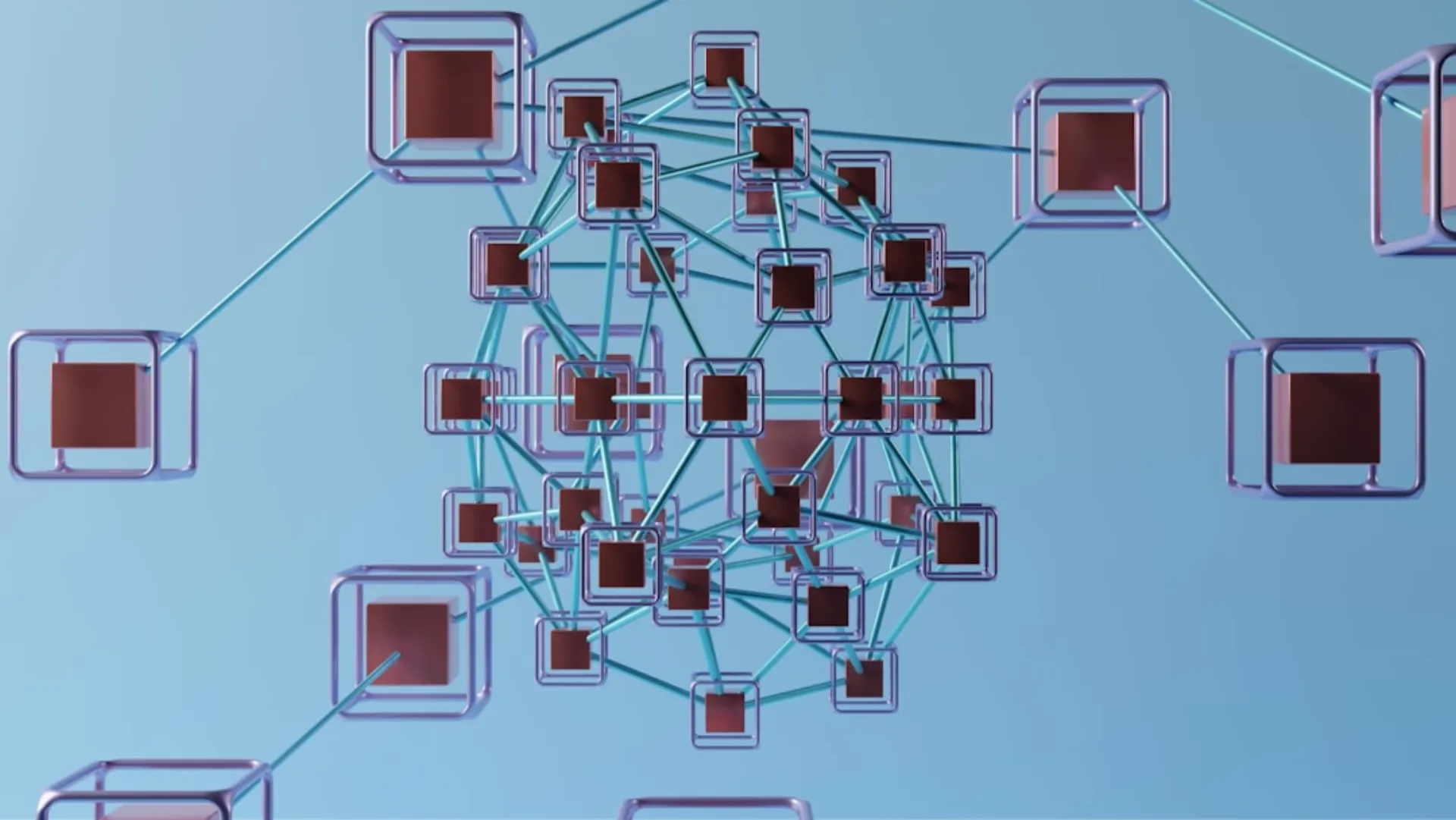
We build multi-agent orchestration systems for food and beverage — deploying coordinated AI agents where a supply chain agent monitors ingredient availability and supplier performance and procurement timing, a production scheduling agent optimizes batch sequencing and equipment utilization and changeover minimization, a quality assurance agent tracks inspection results and deviation patterns and corrective actions, a demand forecasting agent analyzes sales trends and seasonal patterns and promotional impacts, and an orchestration layer coordinates all agents to make unified decisions across the food operation.
4.9/5Verified rating
300+Clients served
23Products shipped
100+Case studies
Since 2015In production
91%
Demand forecast accuracy at weekly SKU level
78%
Reduction in ingredient spoilage costs
97%
On-time delivery rate, up from 88%
5mo
Payback period for multi-agent platform investment
Multi-agent orchestration for food and beverage coordinates multiple specialized AI agents — each responsible for a specific operational domain — into a unified system that manages food operations with the cross-functional awareness that no single system or department can achieve alone.
Food and beverage operations are inherently interconnected. A procurement decision affects production scheduling. A production delay affects order fulfillment. A quality deviation affects both production output and customer commitments. A demand surge affects procurement, production, inventory, and logistics simultaneously. In traditional food operations, these interconnections are managed by humans — operations managers, production supervisors, and supply chain coordinators communicating through meetings, emails, phone calls, and spreadsheets. This human coordination works at moderate scale but breaks down as complexity increases: more products, more facilities, more channels, more suppliers, and faster cycle times create more interdependencies than humans can track and optimize simultaneously.
Multi-agent orchestration replaces this manual coordination with AI agents that operate continuously, share information instantly, and make coordinated decisions across the entire operation. Each agent specializes in one domain — bringing depth of analysis that a generalist human coordinator cannot match — while the orchestration layer ensures agents' decisions are aligned and mutually supportive rather than conflicting.
The food industry is particularly suited to multi-agent architectures because of its operational complexity. A mid-size food manufacturer manages: 50 to 200 SKUs across multiple product categories, 20 to 80 raw material suppliers with varying lead times and quality profiles, 2 to 8 production lines with product-specific configurations and changeover requirements, perishability constraints that create time pressure throughout the supply chain (raw materials expire, finished goods have shelf life limits, and customers require minimum remaining shelf life at delivery), regulatory requirements that impose constraints at every stage (ingredient sourcing, production processes, labeling, storage conditions, and traceability), and multi-channel distribution (wholesale, food service, DTC, and marketplace) with different lead time expectations and order patterns. No single AI system can optimize across all these dimensions simultaneously — the problem space is too large and the domain knowledge too specialized. Multi-agent architectures decompose this complexity: each agent handles one domain expertly, and the orchestration layer manages their interaction.
At ZTABS, we build multi-agent orchestration systems for food and beverage that coordinate specialized agents across the operational domains food companies need automated — from ingredient procurement through production, quality, and fulfillment — creating an autonomous operations layer that supplements human decision-making.
The Food & Beverage Market
Food and beverage operations face coordination challenges that intensify with growth, making multi-agent orchestration increasingly valuable at scale.
The bullwhip effect is particularly damaging in food supply chains. Small demand variations at the retail level create amplified ordering fluctuations upstream — a 5 percent increase in consumer demand can trigger a 20 to 30 percent spike in raw material ordering as each stage in the supply chain overreacts to protect against stockouts. For food companies, this amplification is worse because perishability prevents buffering with large safety stocks. Multi-agent orchestration dampens the bullwhip effect by sharing demand signals across agents: the demand forecasting agent communicates demand patterns to the procurement agent, which adjusts ordering to match actual demand rather than reacting to order-by-order signals.
Production scheduling in food manufacturing is a multi-constraint optimization problem that exceeds human analytical capability. Constraints include: allergen sequencing (products containing allergens must be scheduled to minimize cross-contamination risk — running peanut products before tree-nut-free products requires full line cleaning), batch size optimization (production runs must be large enough for efficiency but not so large that finished goods expire before sale), equipment capacity (shared equipment across product lines creates scheduling conflicts), raw material availability (production cannot be scheduled before ingredients arrive, and some ingredients have limited shelf life after receipt), and customer order deadlines (wholesale orders with specific delivery dates, subscription shipments with promised schedules, and retailer replenishment orders with service level requirements). A production scheduling agent considers all these constraints simultaneously — finding schedules that a human planner would need days to develop through trial and error.
Food safety compliance creates coordination requirements that span the entire operation. A food safety agent must monitor: incoming ingredient quality (supplier certifications, lot testing results, and Certificate of Analysis data), production parameters (temperature, time, pH, and other Critical Control Points), finished goods testing (microbiological and chemical testing results), storage conditions (temperature monitoring in warehouses and during transportation), and traceability completeness (ensuring every ingredient lot can be traced through production to finished goods and customer shipments). When the food safety agent detects an issue — a supplier lot failing specifications, a production parameter deviation, or a storage temperature excursion — it must coordinate with other agents: the production scheduling agent may need to reschedule affected batches, the procurement agent may need to source replacement ingredients, and the fulfillment agent may need to hold affected shipments.
How We Deliver Multi-Agent Orchestration for Food & Beverage
Our multi-agent orchestration for food and beverage covers agent architecture design, individual agent development, orchestration layer engineering, system integration, and deployment.
Agent architecture design defines the agent ecosystem. We identify: which operational domains need dedicated agents (typically: procurement, production scheduling, quality assurance, demand forecasting, inventory management, and food safety compliance — the specific agent set depends on the food company's operational complexity), what data each agent needs (procurement agents need supplier data, pricing, and lead times; production agents need recipes, equipment capacity, and scheduling constraints; quality agents need inspection data and specification thresholds), how agents communicate (message-passing protocols that allow agents to share information, request actions from other agents, and escalate conflicts to the orchestration layer), and the orchestration policy (the rules that govern how agent recommendations are prioritized when they conflict — for example, food safety constraints always override production efficiency optimization).
Individual agent development builds each specialized agent. We develop: the procurement agent (monitors ingredient inventory levels against consumption forecasts, evaluates supplier performance and pricing, generates purchase orders based on production schedules and lead times, and alerts when supplier issues threaten production continuity), the production scheduling agent (optimizes batch sequencing across production lines considering: allergen separation, changeover minimization, batch size efficiency, raw material availability, and order deadlines — continuously re-optimizing as conditions change throughout the production day), the quality assurance agent (analyzes inspection data for trend detection — identifying emerging quality issues before they become critical, tracking corrective action effectiveness, and correlating quality outcomes with production parameters and ingredient lots to identify root causes), the demand forecasting agent (processes historical sales data, promotional calendars, seasonal patterns, weather data, and market signals to generate SKU-level demand forecasts — continuously updating as new data arrives), the inventory management agent (maintains optimal stock levels across raw materials, work-in-progress, and finished goods — balancing service levels against carrying costs and spoilage risk with perishability-aware optimization), and the food safety compliance agent (monitors all compliance-relevant data points — CCP records, environmental monitoring, supplier certifications, testing results — against regulatory requirements, generating compliance documentation automatically and alerting when deviations require corrective action).
Orchestration layer engineering builds the coordination system. We implement: inter-agent communication (a message bus that allows agents to publish decisions, subscribe to relevant information from other agents, and request coordinated action), conflict resolution (when agent recommendations conflict — for example, the production scheduling agent wants to run a large batch for efficiency but the demand forecasting agent indicates insufficient demand to sell the batch before shelf life expiry — the orchestration layer applies priority rules and may request agents to re-optimize with additional constraints), cascade management (when one agent's action triggers changes in other domains — a procurement agent reporting an ingredient shortage triggers the production scheduling agent to reschedule affected products and the inventory management agent to reallocate existing stock), human escalation (the orchestration layer identifies situations that require human judgment — novel scenarios outside agent training, high-stakes decisions above configurable thresholds, and situations where agent confidence is low — and presents the relevant information to human operators for decision), and audit logging (every agent decision, inter-agent communication, and orchestration action is logged for: operational review, compliance documentation, and system improvement).
System integration connects agents to the food company's operational data and systems. We integrate: ERP (agents read and write to the company's ERP for: purchase orders, production orders, inventory transactions, and sales data), MES (production agents connect to manufacturing execution systems for: real-time production data, equipment status, and batch tracking), QMS (quality agents connect to quality management systems for: inspection data, deviation records, and corrective action tracking), supply chain platforms (procurement agents connect to supplier portals, EDI systems, and logistics platforms for: order placement, shipment tracking, and supplier communication), and sales channels (demand forecasting agents connect to: wholesale order systems, DTC e-commerce platforms, and marketplace feeds for real-time demand data).
Deployment launches agents incrementally. We deploy: one agent at a time (starting with the agent providing the highest standalone value — typically demand forecasting or production scheduling), validate each agent's performance before adding the next, activate inter-agent coordination as multiple agents come online, and progressively increase agent autonomy as confidence in the system grows (starting with agent recommendations that humans approve, progressing to automated execution with human notification, and eventually to fully autonomous operation within defined parameters).
Ready to discuss your multi-agent orchestration project?
Free consultation — no commitment required.
Case StudyFood manufacturer / packaged sauces and condiments
Multi-Agent Operations Platform for Food Manufacturer
The Challenge
A packaged sauce and condiment manufacturer operating 2 production facilities with 85 SKUs, 42 raw material suppliers, and distribution across wholesale, food service, and DTC channels was experiencing coordination failures that cost money and constrained growth. Production scheduling was done manually by a senior planner who spent 2 full days each week creating and revising the weekly production schedule — a schedule that was typically outdated within 24 hours due to supplier delays, demand changes, and equipment issues. Ingredient procurement was reactive: the procurement team ordered based on current inventory levels rather than production forecasts, resulting in both stockouts (3 to 5 production delays per month from missing ingredients) and excess inventory (average $280,000 in ingredient inventory with $22,000 in monthly spoilage from over-ordering perishable ingredients). Demand forecasting relied on spreadsheet-based analysis that was updated monthly — too infrequent to capture promotional impacts, seasonal shifts, and channel-specific trends.
Quality data was collected but not analyzed in real-time: quality trends were reviewed in monthly meetings, meaning emerging issues were identified weeks after they began. The company estimated these coordination failures cost $1.8 million annually in: production delays, ingredient spoilage, missed delivery dates (resulting in retailer chargebacks), and quality-related waste.
Our Solution
We deployed a 5-agent orchestration system over 14 weeks. The demand forecasting agent processed: 3 years of sales history by SKU and channel, promotional calendars, seasonal adjustment factors, and weekly actual sales — generating rolling 12-week demand forecasts updated daily. Forecast accuracy reached 91 percent at the weekly SKU level (versus 74 percent for the monthly spreadsheet-based approach). The procurement agent used demand forecasts and production schedules to generate purchase orders aligned with actual production needs rather than inventory-trigger reordering. The agent tracked supplier lead times, price trends, and quality history — recommending supplier selection based on the combination of price, reliability, and quality performance. The production scheduling agent optimized weekly schedules across both facilities: minimizing changeovers (allergen-aware sequencing reduced cleaning cycles by 30 percent), maximizing equipment utilization, and ensuring production timing aligned with ingredient availability and order deadlines.
The schedule was re-optimized automatically when conditions changed — supplier delays, rush orders, or equipment issues triggered immediate rescheduling rather than waiting for the weekly planning cycle. The quality assurance agent monitored incoming ingredient quality data and production inspection results in real-time: identifying trend shifts (gradual changes in a supplier's quality metrics or production line's defect rates) and correlating quality outcomes with specific ingredient lots and production parameters. The orchestration layer coordinated all agents: when the procurement agent reported an ingredient delivery delay, it automatically triggered the production scheduling agent to reschedule affected batches, the inventory management component to check if alternative facilities had stock, and the demand forecasting agent to flag customer orders at risk — presenting a unified impact assessment and response plan to the operations manager within minutes of the delay notification.
The Results
Results after 8 months: production delays from ingredient shortages decreased from 3 to 5 per month to 0.3 per month (one delay every 3 months, down from weekly occurrences) — the procurement agent's forecast-driven ordering aligned ingredient availability with production needs. Ingredient spoilage decreased from $22,000 per month to $4,800 per month — a 78 percent reduction — as procurement volumes matched actual production consumption rather than buffer-stock approaches. Production scheduling time decreased from 2 days per week to 2 hours per week (the planner reviewed and approved agent-generated schedules rather than building them from scratch). Production changeover time decreased 30 percent through allergen-aware sequencing — adding 12 percent effective capacity without equipment investment. On-time delivery rate improved from 88 percent to 97 percent — the coordinated system identified fulfillment risks earlier and adjusted production priorities to meet customer commitments.
Quality issue detection time decreased from weeks (monthly review meetings) to hours (real-time monitoring with automated alerts). Total coordination cost savings: $1.4 million annually (from the $1.8 million baseline cost of coordination failures) — the multi-agent platform paid for itself within 5 months of full deployment.
Multi-Agent Orchestration Capabilities for Food & Beverage
- ✓Agent Team Architecture
Design teams of specialized agents with defined roles, tools, and communication protocols.
- ✓Workflow Orchestration
Sequential, parallel, and conditional agent execution with dependency management and state passing.
- ✓Agent Communication Protocols
Structured message passing, shared memory, and context management between agents in the system.
- ✓Supervisor & Consensus Patterns
Supervisor agents that monitor quality, resolve conflicts, and ensure output meets requirements.
- ✓Observability & Cost Tracking
Real-time dashboards showing agent activity, step latency, token usage, and cost per workflow.
- ✓Fault Tolerance & Recovery
Automatic retries, fallback agents, graceful degradation, and human escalation for production reliability.
Multi-Agent Orchestration Landscape for Food & Beverage
Multi-agent orchestration for food and beverage can be sourced from: food industry ERP vendors adding AI capabilities (SAP, Oracle, Infor — incremental AI features within their platforms, but limited multi-agent coordination across systems), supply chain optimization platforms (o9, Kinaxis, Blue Yonder — strong demand planning and supply chain coordination but limited food manufacturing depth and typically enterprise-priced), food industry point solutions (individual tools for production scheduling, procurement optimization, or quality management — each operating independently without cross-domain coordination), and general AI development firms (multi-agent technical capability but lacking food industry domain knowledge). ZTABS builds food-specific multi-agent systems with domain expertise across procurement, production, quality, and compliance.
Multi-Agent Orchestration Pricing for Food & Beverage
Multi-agent orchestration for food and beverage ranges from $120,000 to $350,000. Two-agent system (demand forecasting plus production scheduling or procurement plus inventory) costs $120,000 to $180,000 across 10 to 16 weeks. Four-agent system with orchestration (demand, procurement, production, and quality — with coordinated decision-making) costs $180,000 to $280,000 across 14 to 22 weeks. Full operations platform (all agents with comprehensive orchestration, human escalation, and compliance integration) costs $280,000 to $350,000 across 18 to 28 weeks. Monthly operating costs: $3,000 to $8,000 for compute, LLM APIs, and system maintenance.
Frequently Asked Questions
Common questions about multi-agent orchestration for food & beverage
The orchestration layer manages coordination. When agents' recommendations conflict (production wants to run a large batch for efficiency, but demand forecasting shows insufficient demand), the orchestration layer applies priority rules — food safety constraints always override efficiency, customer commitments override cost optimization. Conflicts are resolved automatically or escalated to human operators with full context.
Ready for Multi-Agent Orchestration Built for
Food & Beverage?
Our team has deep expertise in food & beverage technology. Get a free consultation.
500+
Projects Delivered
4.9/5
Client Rating
90%
Repeat Clients