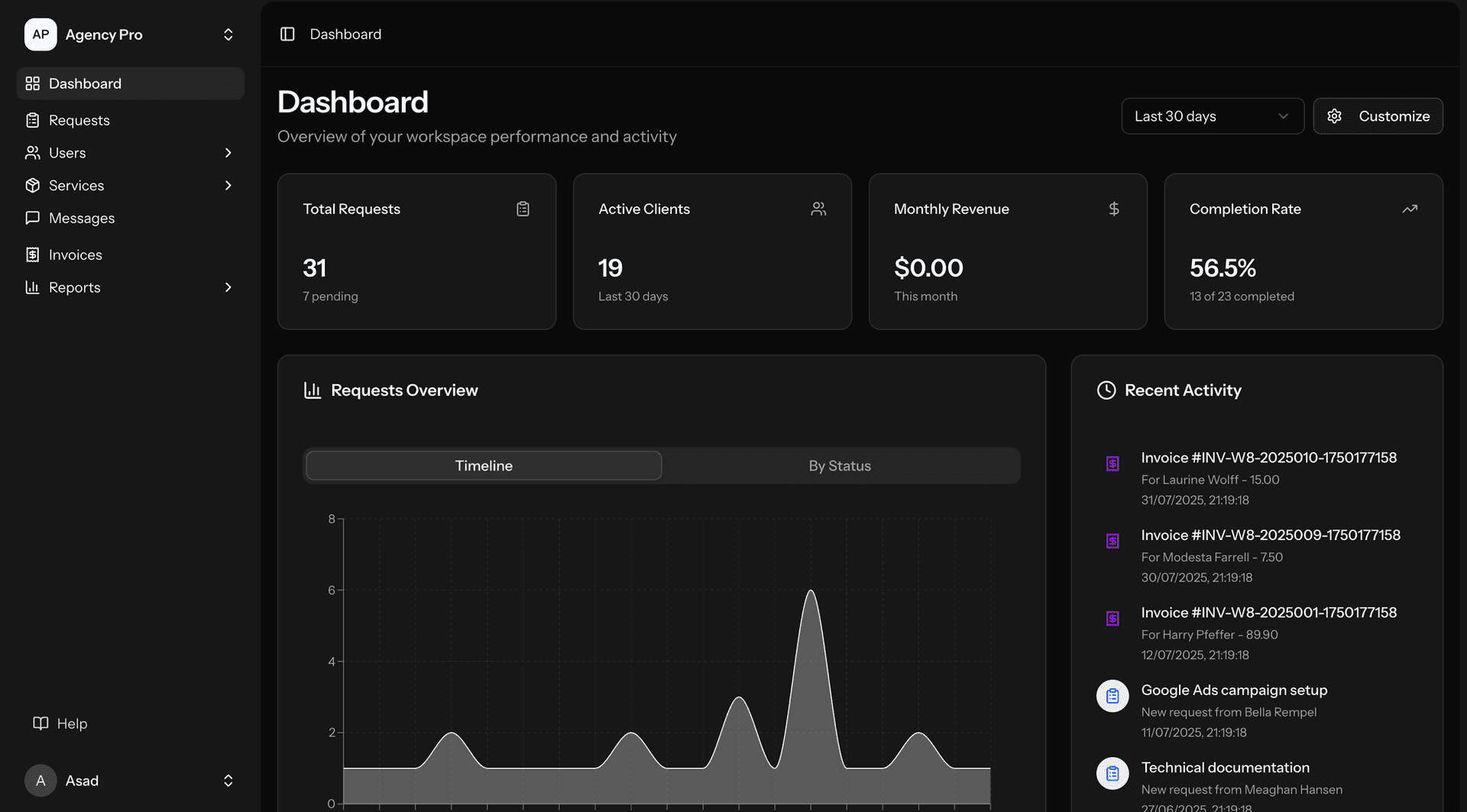
Our Doha multi-agent orchestration projects follow a structured methodology covering architecture design, agent development, orchestration, and deployment. Architecture design (weeks 1-2): defining the multi-agent system. We design: workflow decomposition (breaking the business process into discrete tasks — each task becoming an agent's responsibility. Key question: what is the minimum set of agents that covers the full workflow without overlap? Too few agents: individual agents become too complex. Too many agents: orchestration overhead increases and inter-agent communication becomes a bottleneck), agent specifications (for each agent: its input format, output format, tools and data sources it needs, the AI model it should use, quality criteria for its output, and failure modes — what happens when it can't complete its task), orchestration topology (sequential — Agent A → Agent B → Agent C, where each agent depends on the previous; parallel — Agents A, B, C running simultaneously and a collector agent aggregating results; hierarchical — a supervisor agent delegating to worker agents and evaluating their output; or mixed — the most common in real systems, combining sequential, parallel, and hierarchical patterns based on task dependencies), and Arabic-English handling (in Doha's bilingual environment: which agents process Arabic input? Which produce Arabic output? Where does translation happen — should there be a dedicated translation agent, or should each agent handle bilingual content natively? The answer depends on the specific workflow and the quality requirements for Arabic output). Agent development (weeks 3-6): building individual agents. Each agent is a self-contained module with: prompt engineering (the system prompt defining the agent's role, capabilities, constraints, and output format — extensively tested with Doha-specific scenarios), tool integration (API connections, database queries, document processing — the external capabilities the agent needs to perform its task. In Doha: often including connections to Arabic OCR services, government databases, and industry-specific data sources), quality validation (each agent validating its own output before passing to the orchestrator — checking for completeness, consistency, and accuracy against defined criteria. For Arabic output: additional validation including proper script rendering, diacritics handling, and cultural appropriateness), and error handling (retry logic for transient failures, fallback strategies for persistent failures, and escalation paths for errors that require human intervention. In Doha's 24/7 operational environments — particularly energy and financial services — error handling must account for time zones and available on-call personnel). Orchestration layer (weeks 5-7): building the coordinator. The orchestrator manages: workflow execution (triggering agents in the correct sequence, managing parallel execution, and collecting results), state management (tracking the progress of each workflow instance — where it is in the pipeline, which agents have completed, which are running, and which are waiting), inter-agent communication (passing data between agents — format transformation, data validation, and context enrichment between steps), quality gates (evaluating each agent's output against defined criteria — accepting, rejecting, or routing for human review), human-in-the-loop integration (pausing workflows at defined points for human review — presenting the current state and agent outputs to a human reviewer, capturing their decision, and resuming the workflow), monitoring and observability (real-time dashboards showing: active workflows, completion rates, processing times per agent, error rates, and quality scores — enabling operations teams to identify and address issues quickly), and Arabic localisation of the monitoring interface (for Doha operations teams who may prefer Arabic-language dashboards and alerts). Testing and deployment (weeks 7-8): validating and launching the system. Integration testing: end-to-end testing with realistic Doha business scenarios — including Arabic documents, multi-system interactions, and error conditions. Performance testing: validating processing times under expected load — particularly important for systems that need to process large volumes (energy data, financial transactions). The multi-agent system must complete workflows within business SLA requirements. User acceptance testing: Doha stakeholders testing the system with their actual data and workflows — verifying that the AI outputs meet their quality expectations and that the human-in-the-loop integration works smoothly. Deployment: production deployment with monitoring — typically phased (starting with a subset of workflows or data, expanding as confidence grows).