MVP Development for Agriculture & AgTech
MVP Development for Agriculture & Agritech Startups
Agritech innovation requires validation with real farmers before committing to full-scale product development—because agricultural technology that works in concept but fails in field conditions wastes capital and credibility. Our MVP development services build minimum viable products for agricultural startups and innovation teams that test critical assumptions with actual farming users, validate market demand with working prototypes, and generate the traction data investors and stakeholders require to fund continued development.
4.9/5Verified rating
300+Clients served
23Products shipped
100+Case studies
Since 2015In production
82%
Beta farm retention through full season
22%
Average irrigation water reduction achieved
$2.8M
Series A raised on MVP traction data
4.3/week
Average user sessions during irrigation
MVP development for agriculture carries unique requirements that distinguish it from typical startup product development. Agricultural users operate in seasonal cycles—a farm management MVP launched in July misses the entire planting season and cannot validate its core value proposition until the following spring. Farming users work in field conditions with limited connectivity, bright sunlight, and dirty hands—an MVP that only works on desktop browsers in office conditions cannot demonstrate value where farming actually happens. Agricultural decision-makers are practical, skeptical, and time-constrained—an MVP must deliver recognizable value within the first use or farmers will dismiss it permanently.
The validation timeline for agricultural MVPs follows the agricultural calendar rather than typical startup sprint cycles. Crop management tools must be tested across at least one growing season to demonstrate value through actual crop outcomes. Livestock management tools need validation across breeding, calving, and marketing cycles. Market intelligence tools must prove accuracy across multiple market conditions. This agricultural timeline reality means MVP development must be exceptionally strategic about which assumptions to test first and how to structure validation for maximum learning within seasonal constraints.
Agritech investor expectations have evolved from speculative bets on agricultural technology concepts to data-driven evaluation of validated traction. Seed-stage agricultural investors expect MVPs that demonstrate farmer willingness to use and pay for the product—not just prototypes that look impressive in pitch decks. Growth-stage investors expect validated unit economics and retention metrics from real agricultural users. MVP development that generates these traction metrics accelerates fundraising timelines and improves valuation outcomes.
Technical debt management in agricultural MVPs requires particular discipline because agricultural technology must eventually handle the data quality, integration complexity, and reliability requirements of production farming software. An MVP built with shortcuts that cannot evolve into production architecture forces a complete rebuild that wastes the time and money the MVP was supposed to save. We build agricultural MVPs with intentional technical decisions—accepting appropriate shortcuts for speed while maintaining the architectural foundations needed for production evolution.
Domain expertise requirements for agricultural MVPs are high because farming audiences quickly identify products built by teams that do not understand agriculture. Terminology errors, workflow assumptions that contradict farming practices, and feature priorities that address perceived rather than actual farming problems undermine credibility with the agricultural users whose feedback is essential for validation. MVP development teams need either agricultural background or close collaboration with agricultural advisors to build products that farming users take seriously.
Multi-stakeholder validation is common in agricultural MVP development because many agritech products serve multiple user types. A crop advisory platform serves both agronomists and the farmers they advise. A supply chain traceability tool serves producers, processors, and retailers. A marketplace connects buyers and sellers. MVPs for multi-stakeholder agricultural products must validate value propositions for each user type—not just the primary user—because marketplace and platform products fail without engagement from all sides.
The Agriculture & AgTech Market
Agritech venture funding has matured from early-stage experimentation to a substantial investment category with defined evaluation criteria. Agricultural venture investors evaluate MVPs based on farmer engagement metrics, willingness-to-pay validation, unit economics potential, and the agricultural domain expertise of the founding team. The bar for agritech MVP quality has risen as investors compare new ventures against the growing portfolio of validated agricultural technology companies.
Farmer technology adoption patterns affect MVP validation strategy. Agricultural technology adoption follows a progression from innovator farmers (the 5 to 10 percent who eagerly try new tools) through early adopters to the mainstream majority. MVP validation should target innovator farmers who are willing to experiment with incomplete products—not the mainstream farmers who require polished, proven technology. Identifying and accessing these agricultural innovators is a critical MVP development challenge.
Academic and extension partnerships accelerate agricultural MVP validation by providing access to research farms, agricultural data, and farmer networks. University agricultural programs, cooperative extension services, and agricultural research organizations can provide beta testing environments, agronomic validation, and introductions to farming communities that would take startup teams months to develop independently.
Regulatory considerations affect certain agricultural MVP categories. Products that provide pesticide recommendations must comply with EPA labeling requirements. Products that handle food safety data must accommodate traceability regulations. Products that process agricultural financial transactions must comply with lending and payment regulations. Understanding regulatory requirements early prevents MVP development investment in approaches that cannot achieve regulatory compliance at scale.
Competitive intelligence gathering during MVP development identifies the existing solutions agricultural users are currently using and the specific shortcomings that create opportunity. Farmers rarely have zero solutions—they manage with spreadsheets, paper records, existing software, or manual processes. Understanding the incumbent solution helps MVP development focus on the specific improvement that motivates farmers to switch from familiar tools to an unproven alternative.
How We Deliver MVP Development for Agriculture & AgTech
Our agricultural MVP development begins with assumption mapping—identifying the critical assumptions that must be true for the agritech product to succeed and prioritizing which assumptions to test first. Core assumptions typically include: farmers have this problem (problem validation), farmers will use this type of solution (solution validation), farmers will pay this amount (pricing validation), and we can deliver the solution at viable unit economics (feasibility validation). We structure MVP development to test the highest-risk assumptions earliest.
User research with agricultural audiences informs MVP design through direct farmer interaction. We conduct field visits, farmer interviews, and agricultural community observation to understand the actual workflows, pain points, and decision processes the MVP must address. This research frequently reveals that the problem as originally conceived differs from the problem as farmers experience it—redirecting MVP development toward the actual opportunity before development resources are committed.
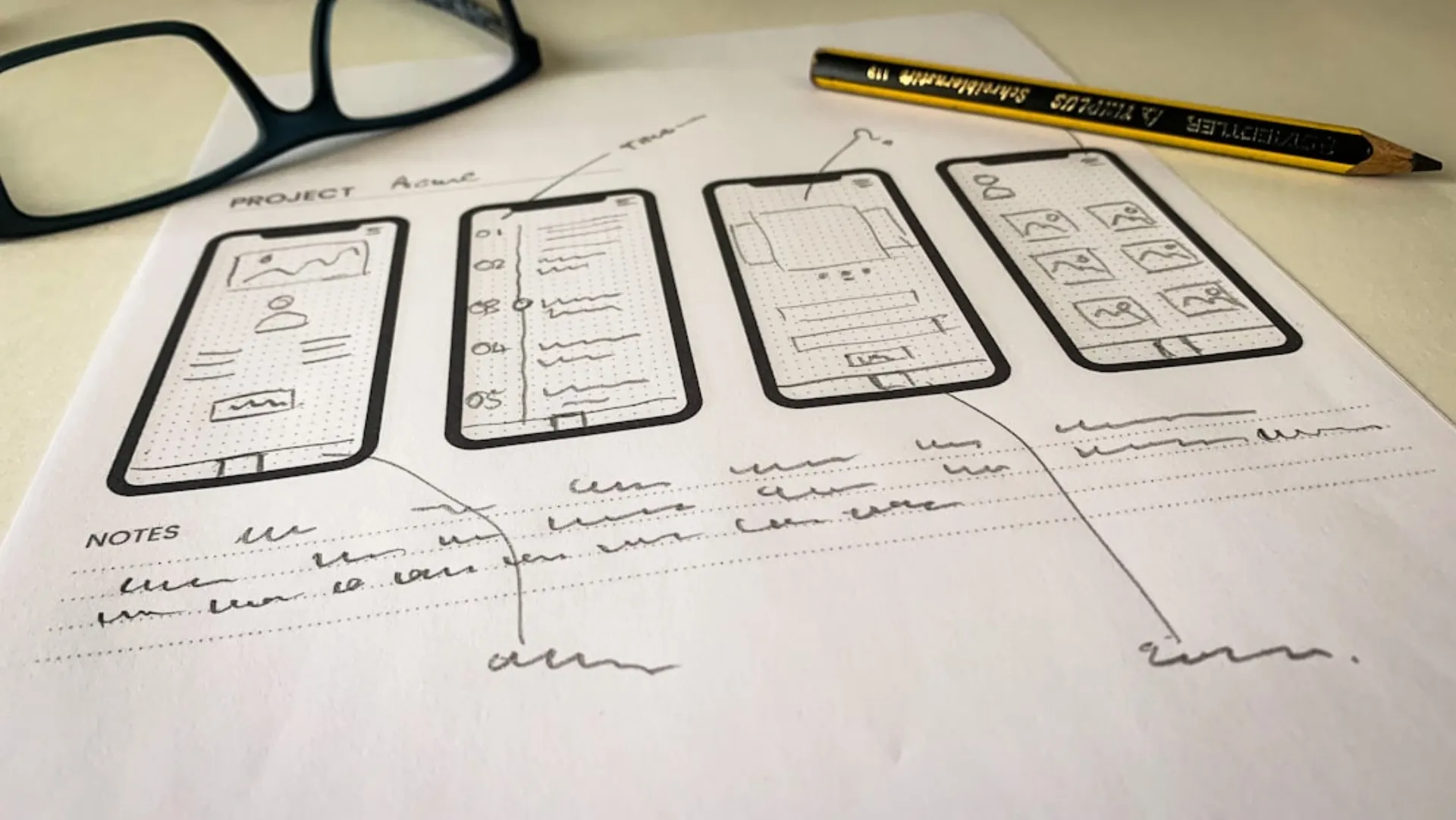
Rapid prototyping creates testable representations of the agricultural product before full development begins. Interactive prototypes that simulate the core user experience enable farmer feedback on workflow, interface, and value proposition without the investment of full development. Agricultural prototypes must be testable in field conditions—mobile-optimized, functional on agricultural devices, and demonstrable during brief windows of farmer attention.
Core feature development builds the minimum set of features needed to deliver the MVP's primary value proposition. Agricultural MVP scope discipline is critical because agritech products face enormous feature temptation—every farmer interview reveals additional features that would be valuable. We maintain strict focus on the features that test the core assumption, deferring valuable but non-essential features to future iterations.
Field deployment and testing places the MVP in the hands of target agricultural users during the appropriate seasonal window. We coordinate deployment timing with the agricultural calendar to ensure the MVP is available when farmers need the capability it provides. Beta farmer recruitment through agricultural networks, extension partnerships, and industry relationships identifies the innovator farmers who provide the most valuable early feedback.
Metrics collection and analysis measures the validation signals that determine MVP success. Usage frequency, feature engagement, task completion rates, and—most importantly—whether farmers continue using the MVP after initial novelty wears off provide the quantitative validation that subjective feedback alone cannot. For marketplace MVPs, transaction volume and repeat engagement metrics validate platform economics.
Ready to discuss your MVP development project?
Free consultation — no commitment required.
Case StudyPrecision Agriculture and Water Management
Precision Irrigation MVP for Agricultural Water Management Startup
The Challenge
An agritech startup had developed a sensor-based soil moisture monitoring concept that promised to reduce irrigation water usage by 20 to 30 percent through precise, zone-specific watering recommendations. The founding team had agricultural engineering backgrounds but no product development experience. They needed to validate that farmers would adopt sensor-based irrigation management, that the recommendation algorithm produced accurate irrigation schedules, and that the water savings justified the sensor hardware and subscription costs. The startup had $400,000 in seed funding and needed validated traction within one irrigation season to raise a Series A.
Our Solution
We built an MVP focused on the core value proposition—soil moisture monitoring with irrigation timing recommendations—stripped of the advanced analytics, multi-season historical analysis, and enterprise features the founders originally envisioned. The MVP consisted of a mobile-first web application that displayed real-time soil moisture data from field-deployed sensors, generated irrigation timing recommendations based on soil moisture levels, weather forecasts, and crop growth stage, and tracked water usage against baseline consumption. We partnered with a cooperative extension program to recruit 18 irrigated farming operations as beta users. The application was built with offline data caching for field access, a simplified dashboard showing the single most important decision—whether to irrigate today—and a detailed view for users who wanted to understand the underlying data. Sensor integration was limited to the two most common soil moisture sensor brands to minimize hardware complexity.
The Results
Fourteen of the 18 beta farms completed the full irrigation season using the MVP. Average irrigation water reduction was 22 percent compared to the farms' previous season usage—within the projected range. Twelve of the 14 completing farms expressed willingness to pay the proposed subscription price. User engagement averaged 4.3 sessions per week during active irrigation—indicating the MVP became part of daily farming routine rather than occasional curiosity. Three beta users independently contacted the startup offering to serve as references for investor discussions. The validated traction data—82 percent retention, confirmed water savings, and willingness-to-pay signals—enabled the startup to raise a $2.8 million Series A within 4 months of the irrigation season conclusion. Two features farmers consistently requested—multi-field comparison and historical trend analysis—informed the product roadmap for the funded development phase.
MVP Development Capabilities for Agriculture & AgTech
- ✓Rapid Prototyping
Interactive prototypes to validate your concept before writing a single line of production code.
- ✓Core Feature Development
We identify and build only the features that matter — the ones that prove your hypothesis and attract early users.
- ✓Scalable Architecture
Even lean MVPs need a solid foundation. We build with production-grade tech so you can scale without a rewrite.
- ✓User Feedback Integration
Built-in analytics and feedback loops so you can learn from real user behavior from day one.
- ✓Investor-Ready Product
A polished, functional product that demonstrates traction — not just a pitch deck.
- ✓Iteration & Pivot Support
Agile development cycles that let you adapt quickly based on what the market tells you.
MVP Development Landscape for Agriculture & AgTech
Agricultural MVP development is served by agritech-focused development firms, general startup development agencies, agricultural technology incubators, and freelance development teams. Agritech-focused firms bring domain knowledge but may be few in number and capacity-constrained. General startup agencies bring MVP methodology expertise but typically lack agricultural domain understanding—building products that test assumptions important to the startup team rather than assumptions validated against farming reality.
Agricultural technology incubators (like the Western Growers Innovation Center or ag-focused accelerators) provide mentorship and development resources but may focus on specific agricultural segments rather than general agritech MVP capability. Freelance teams offer cost efficiency but may lack the structured MVP methodology and agricultural domain expertise needed for effective agritech validation.
The differentiator for agricultural MVP development partners is the combination of lean startup methodology with genuine agricultural understanding. Partners who know how to build efficiently and know how agriculture works deliver MVPs that validate real agricultural opportunities rather than wasting resources testing assumptions that agricultural domain expertise could evaluate without building anything.
Speed-to-field capability matters because agricultural validation windows are seasonal. Partners who can move from concept to deployed MVP within the timeframe needed to catch the appropriate agricultural season prevent the 12-month delays that missed seasonal windows create for agritech startups.
MVP Development Pricing for Agriculture & AgTech
Agricultural MVP development typically ranges from $40,000 to $150,000+ depending on product complexity, hardware integration requirements, and validation scope. Simple agricultural software MVPs with web and mobile interfaces typically cost $40,000 to $80,000. Agricultural MVPs with IoT sensor integration, data pipeline requirements, and field-ready mobile applications range from $80,000 to $120,000. Complex agricultural platform MVPs with multi-stakeholder interfaces, marketplace mechanics, and agricultural data integration cost $120,000 to $150,000 or more.
Hardware costs for agricultural IoT MVPs are additional—sensor hardware, communication modules, and field installation typically add $10,000 to $50,000 depending on the number of beta deployment sites and sensor density requirements.
Beta program management costs—farmer recruitment, field support, and feedback collection—typically add $5,000 to $15,000 for structured beta testing with 10 to 25 agricultural beta users.
The ROI of agricultural MVP investment is measured through validation outcomes: validated or invalidated core assumptions, traction metrics that support fundraising, farmer feedback that informs product direction, and the capital saved by identifying product-market fit issues before full-scale development investment. A $100,000 MVP that prevents a $500,000 investment in the wrong product direction delivers substantial return through avoided waste.
Frequently Asked Questions
Common questions about MVP development for agriculture & agtech
Typical agricultural MVPs take 8 to 14 weeks from concept to field deployment. Timeline depends on product complexity and seasonal requirements. We work backward from the agricultural season target to ensure the MVP is ready when farmers need the capability it provides.
Ready for MVP Development Built for
Agriculture & AgTech?
Our team has deep expertise in agriculture & agtech technology. Get a free consultation.
500+
Projects Delivered
4.9/5
Client Rating
90%
Repeat Clients