MVP Development for Fitness & Wellness
MVP Development for Fitness & Wellness Validate Your Fitness Product Idea Before Building Everything
The fitness and wellness industry is full of entrepreneurs with brilliant product ideas—a better coaching platform, a smarter gym management tool, a marketplace connecting wellness providers with corporate clients. But building the complete vision before testing it with real users burns through capital and time on features nobody wants.
4.9/5Verified rating
300+Clients served
23Products shipped
100+Case studies
Since 2015In production
12 weeks
Typical MVP launch timeline
$28K
Marketplace revenue generated in 3-month pilot
75%
Company repeat booking rate validating demand
$500K
Seed funding raised on MVP traction data
We build fitness and wellness MVPs that isolate your core value proposition, get it in front of real users within 12 to 16 weeks, and generate the data you need to decide what to build next—whether that means scaling up, pivoting, or refining before the next round of investment.
MVP development for fitness and wellness businesses creates focused, functional products that test the core hypothesis behind a fitness technology idea with real users and real revenue. The fitness industry is particularly well-suited to the MVP approach because fitness consumers are early adopters of technology, willing to try new tools that promise better results, and vocal about what works and what doesn't—providing the rapid feedback that MVP methodology depends on.
Fitness coaching platform MVPs test whether trainers and clients will adopt a new delivery model for remote or hybrid coaching. The core hypothesis might be that trainers can deliver better results through structured digital programming than through ad-hoc text messaging, or that clients will pay premium prices for AI-augmented coaching that combines human expertise with algorithmic personalization. The MVP tests this hypothesis with a focused feature set—perhaps just workout programming, client messaging, and progress tracking—before investing in video libraries, nutrition planning, marketplace features, and enterprise capabilities.
Gym management tool MVPs test whether a specific operational pain point is severe enough that gym owners will switch from established platforms. Rather than building a complete Mindbody alternative, the MVP might focus exclusively on the specific feature gap—perhaps automated trainer scheduling optimization, or real-time equipment utilization tracking, or AI-powered class demand forecasting—that existing platforms handle poorly.
Wellness marketplace MVPs test whether supply and demand exist for a new marketplace concept. Corporate wellness service marketplaces, local wellness practitioner directories, or fitness experience booking platforms all face the classic marketplace challenge—you need providers to attract consumers and consumers to attract providers. MVP strategy for marketplaces focuses on seeding one side of the market in a specific geography or vertical before attempting broad scale.
Connected fitness MVPs test hardware-software integration concepts with minimal hardware investment. Rather than manufacturing custom hardware, the MVP might integrate with existing wearables, gym equipment APIs, or smartphone sensors to test whether the software experience creates sufficient value before committing to hardware development.
Content and subscription MVPs test whether a specific audience will pay for digital fitness or wellness content delivered through a subscription model. Rather than building a complete content library and custom platform, the MVP might deliver content through existing infrastructure—Teachable for courses, Vimeo for video, or a simple member portal—while testing pricing, content format preferences, and retention patterns.
B2B fitness technology MVPs test whether gyms, studios, or wellness businesses will purchase a new technology product. Enterprise sales cycles are long, so the MVP must demonstrate clear value quickly—often through pilot programs with a small number of partner facilities that provide usage data, feedback, and case study material for broader sales efforts.
Wearable and IoT fitness MVPs test sensor-based fitness concepts without full hardware manufacturing. Prototypes using off-the-shelf development boards, existing wearable APIs, or smartphone-based sensing validate whether the data collection and analysis concept provides valuable insights before investing in custom hardware design and manufacturing.
The Fitness & Wellness Market
The fitness technology startup ecosystem has produced notable successes—Peloton, ClassPass, Whoop, Future, Tonal—that demonstrate market appetite for innovative fitness products. These successes have attracted venture capital to the category, creating both funding opportunities and competitive pressure for new entrants who must demonstrate differentiation and traction quickly.
The failure rate for fitness technology startups remains high, often because founders build complete products before validating core assumptions. A coaching platform that assumes trainers want to manage 50 remote clients simultaneously may discover that trainers actually prefer serving 15 clients with deeper engagement. A marketplace that assumes consumers will book fitness classes across multiple studios may discover that consumers prefer loyalty to a single brand. These assumption failures are dramatically cheaper to discover through MVP testing than through full product development.
Platform risk affects fitness MVPs that depend on third-party ecosystems—Apple HealthKit data policies, Instagram API restrictions, gym equipment manufacturer partnerships, or payment processor terms. MVPs should validate that critical platform dependencies are stable and accessible before building products that rely on them.
The fitness consumer's willingness to experiment with new technology is a significant advantage for MVP development. Fitness enthusiasts actively seek tools that improve their results, making them more receptive to trying imperfect early products than consumers in more conservative industries. This experimentation willingness accelerates the feedback cycle that MVP methodology depends on.
Subscription business model validation is particularly important for fitness MVPs because the economics of fitness SaaS depend on retention. A fitness app that acquires users easily but loses them within 30 days has a fundamentally different business trajectory than one that retains users for 12 months. MVP testing must run long enough to observe retention patterns, not just initial adoption enthusiasm.
How We Deliver MVP Development for Fitness & Wellness
Our fitness MVP development begins with assumption mapping—identifying every assumption embedded in the product concept and prioritizing them by risk and impact. The assumptions most likely to be wrong and most consequential if wrong become the focus of MVP testing. For a coaching platform, the highest-risk assumption might be trainer adoption willingness. For a marketplace, it might be consumer willingness to pay the proposed price.
Scope definition creates the minimum feature set that tests the highest-priority assumptions. We aggressively eliminate features that are important for a mature product but unnecessary for hypothesis validation. A coaching MVP doesn't need white-labeling, enterprise billing, or 50 integrations—it needs the core coaching workflow to be compelling enough that trainers and clients choose to use it over their current alternative.
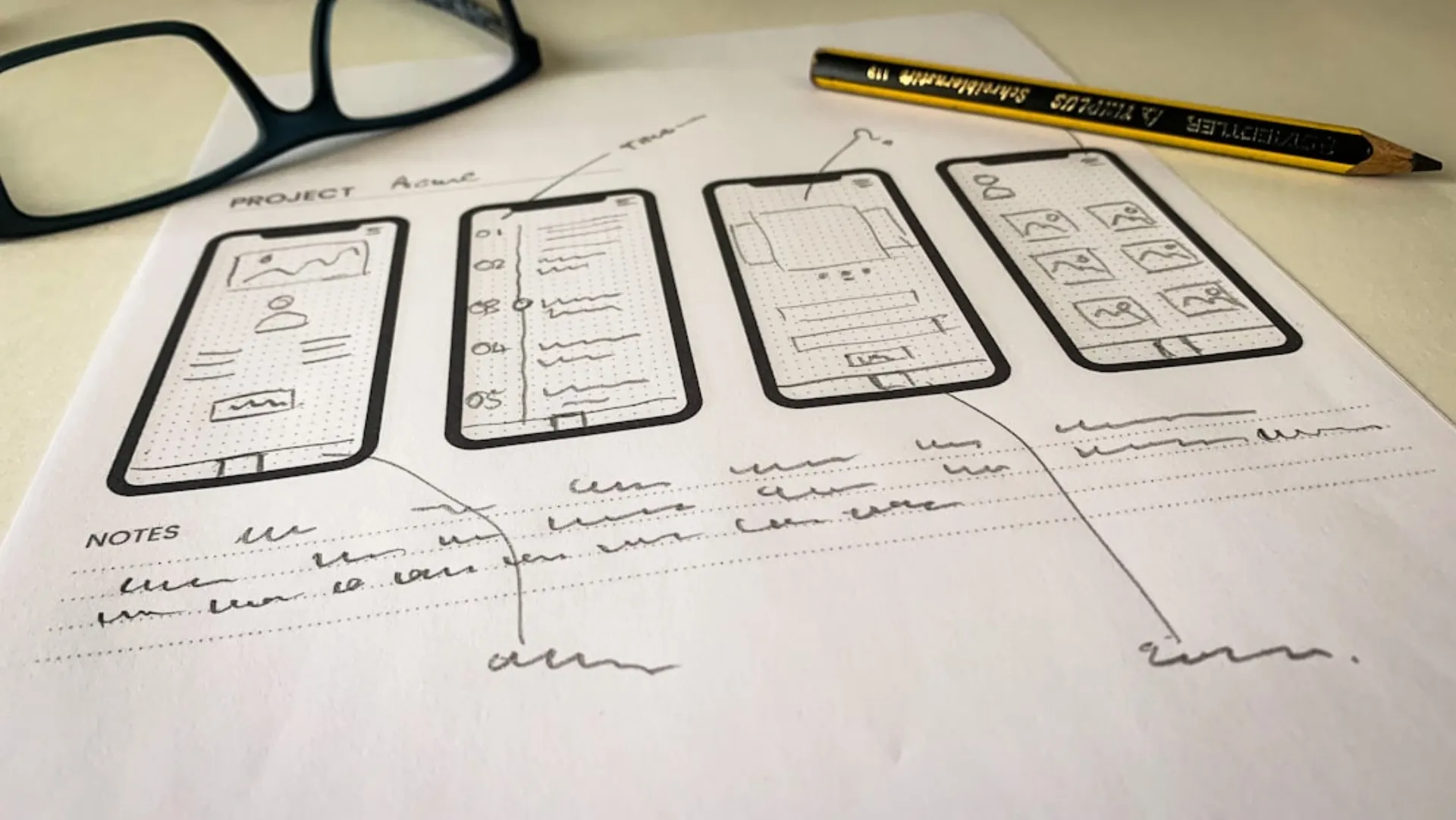
Rapid design and prototyping create the user experience through wireframes, interactive prototypes, and user testing before code is written. Prototype testing with target users—trainers, gym owners, fitness consumers—validates UX assumptions and identifies usability issues that would undermine the MVP's ability to test business hypotheses. Prototype iterations are dramatically faster and cheaper than code iterations.
Development sprints build the MVP in 2-week cycles with functional deliverables at each sprint boundary. This incremental approach enables early user testing with partial functionality and course corrections based on emerging feedback. Technology choices prioritize development speed—using established frameworks, third-party services, and proven patterns rather than novel architectures that introduce technical risk.
Launch and measurement deploy the MVP to the target user group with analytics that capture the metrics needed to evaluate each hypothesis. For a coaching platform, key metrics include trainer activation rate, client engagement frequency, and paid conversion rate. For a marketplace, key metrics include provider listing rate, consumer booking rate, and repeat booking frequency.
Iteration based on data refines the MVP through rapid cycles of measurement, analysis, and improvement. Features that users ignore are removed or reconsidered. Features that users request are evaluated against the product vision. Pricing that creates resistance is adjusted. The iteration phase transforms the MVP from a hypothesis test into a validated product ready for growth investment.
Ready to discuss your MVP development project?
Free consultation — no commitment required.
Case StudyCorporate Wellness Technology
Building an MVP for a Corporate Wellness Marketplace
The Challenge
A team of corporate wellness consultants wanted to build a marketplace connecting companies with local wellness providers—yoga instructors, meditation teachers, nutritionists, and fitness coaches—for on-site and virtual employee wellness programs. They had $120,000 in funding and needed to validate the concept before seeking Series Seed investment. The full platform vision included provider matching algorithms, program management dashboards, employee engagement tracking, ROI reporting, and integrated billing.
Our Solution
We built an MVP focused on the core marketplace transaction—companies discovering and booking wellness providers for employee programs. The MVP included a provider directory with profiles, availability, and pricing; a company booking flow with date, location, and service selection; provider-side booking management and calendar integration; and basic program tracking. We excluded advanced matching algorithms, ROI reporting, employee-facing features, and enterprise billing—all planned for post-validation development. The MVP launched in one metropolitan market with 40 pre-recruited wellness providers.
The Results
Within 3 months, 12 companies booked wellness programs through the platform, generating $28,000 in gross marketplace revenue. Provider satisfaction averaged 4.6 out of 5 stars. Company repeat booking rate reached 75 percent—the strongest validation signal. User feedback revealed that program scheduling flexibility mattered more than provider matching sophistication, redirecting development priorities. The MVP data and traction supported a $500,000 seed round that funded full platform development with validated priorities.
MVP Development Capabilities for Fitness & Wellness
- ✓Rapid Prototyping
Interactive prototypes to validate your concept before writing a single line of production code.
- ✓Core Feature Development
We identify and build only the features that matter — the ones that prove your hypothesis and attract early users.
- ✓Scalable Architecture
Even lean MVPs need a solid foundation. We build with production-grade tech so you can scale without a rewrite.
- ✓User Feedback Integration
Built-in analytics and feedback loops so you can learn from real user behavior from day one.
- ✓Investor-Ready Product
A polished, functional product that demonstrates traction — not just a pitch deck.
- ✓Iteration & Pivot Support
Agile development cycles that let you adapt quickly based on what the market tells you.
MVP Development Landscape for Fitness & Wellness
The fitness MVP development landscape includes general startup development agencies, fitness-specialized technology firms, no-code development platforms, and offshore development teams.
General startup agencies bring strong MVP methodology—lean startup practices, rapid iteration, and growth metric tracking—but may lack fitness industry knowledge. Understanding fitness consumer behavior, trainer workflows, and gym operations affects both product design and go-to-market strategy.
Fitness-specialized firms understand the industry but may not have the lean development discipline that MVP methodology requires. Building too much too soon is the most common and costly mistake in MVP development, and it requires discipline to resist feature expansion pressure from stakeholders who envision the complete product.
No-code platforms like Bubble, Glide, and Softr enable rapid MVP creation at lower cost but with significant limitations in performance, customization, and scalability. No-code MVPs work well for marketplace concepts and simple workflow tools but struggle with complex fitness-specific features like workout programming, wearable integration, or real-time class management.
Offshore development teams offer cost advantages but distance creates communication friction that slows the rapid iteration cycles MVP development demands. The most effective fitness MVPs are built through close collaboration between developers and domain experts, which benefits from proximity and shared context.
The selection criterion should prioritize MVP discipline over development cost. An agency that builds a focused $80,000 MVP in 12 weeks provides dramatically more value than one that builds a $200,000 product in 6 months—because the faster, leaner approach generates validation data sooner and preserves capital for iteration.
MVP Development Pricing for Fitness & Wellness
MVP development for fitness and wellness products ranges from $40,000 to $120,000 depending on product complexity and platform requirements. Simple web-based MVPs for content platforms, directories, or workflow tools range from $40,000 to $65,000. Mobile app MVPs with backend infrastructure and third-party integrations range from $65,000 to $90,000. Complex MVPs with marketplace mechanics, hardware integration, or AI capabilities range from $90,000 to $120,000. Post-MVP iteration typically runs $10,000 to $25,000 per month for continued development based on user feedback and validation data.
Frequently Asked Questions
Common questions about MVP development for fitness & wellness
Most fitness MVPs launch within 12 to 16 weeks from project kickoff. This includes 2 to 3 weeks of discovery and design, 8 to 10 weeks of development, and 2 to 3 weeks of testing and launch preparation. Simpler concepts can launch in 8 to 10 weeks. Complex products with hardware integration may require 16 to 20 weeks.
Ready for MVP Development Built for
Fitness & Wellness?
Our team has deep expertise in fitness & wellness technology. Get a free consultation.
500+
Projects Delivered
4.9/5
Client Rating
90%
Repeat Clients