MVP Development for Recruitment & HR Tech
MVP Development That Validates Your HRTech Vision Before You Build the Full Platform
The HRTech market is crowded with well-funded competitors, making it essential to validate product-market fit before committing to full platform development. MVP development for recruitment and HRTech builds the minimum viable product that tests your core value hypothesis with real users—whether you are validating a new approach to candidate matching, testing a novel employee engagement concept, or proving that a niche recruitment vertical needs a purpose-built solution.
4.9/5Verified rating
300+Clients served
23Products shipped
100+Case studies
Since 2015In production
14 weeks
MVP development from kickoff to launch
34
Employers validated concept within 3 months of launch
3.4x
Higher assessment-to-interview conversion vs resume screening
$3.2M
Series A raised based on MVP validation data
We build the smallest product that generates meaningful market signal, enabling data-driven decisions about what to build next.
MVP development for recruitment and HRTech addresses the specific validation challenges that talent technology products face. HRTech MVPs must navigate a market where customers have existing workflows and switching costs, where data quality determines product value, and where trust is essential because talent decisions affect people's careers and livelihoods. A recruitment MVP that demonstrates compelling value must work well enough with real hiring data to prove its advantage over established alternatives.
The MVP challenge in HRTech is defining what "minimum" means in a market with high baseline expectations. Recruiters and HR professionals use sophisticated tools daily—they can immediately identify products that feel unfinished or lack essential functionality. An MVP that omits core workflow steps forces users to work around the product rather than through it, generating misleading validation data. Effective HRTech MVPs include complete core workflows—even if simplified—while excluding peripheral features that can be added later.
Our recruitment MVP development creates products that validate market hypotheses through real user engagement. We build MVPs that include enough functionality to generate authentic usage data, enough design quality to feel professional to talent industry users, and enough flexibility to pivot based on what validation reveals. Every MVP is architected so that validated features become the foundation for full product development rather than throwaway prototypes.
The Recruitment & HR Tech Market
HRTech market saturation makes validation critical before full investment. The ATS market alone has over 200 products. The broader HRTech landscape includes thousands of solutions spanning recruitment, talent management, payroll, benefits, learning, and workforce analytics. Launching a product without validated differentiation wastes development resources in a market where undifferentiated products struggle to acquire customers regardless of technical quality.
Vertical-specific HRTech opportunity drives many MVP validations because horizontal recruitment tools serve all industries adequately but no industry excellently. Healthcare staffing, legal recruitment, technology hiring, hospitality staffing, and construction workforce management all have unique requirements that purpose-built tools can serve better than horizontal platforms. MVP development validates whether the vertical-specific value proposition is compelling enough to justify a new product.
AI-enabled HRTech innovation creates MVP opportunities because AI can potentially transform processes that existing tools automate without intelligence. AI-powered skills assessment, predictive workforce planning, automated job description optimization, and intelligent candidate engagement represent hypotheses that MVPs can test before committing to full AI platform development.
Workforce demographic shifts create emerging HRTech needs that established products may not address. Gen Z workplace expectations, gig economy growth, remote work normalization, and skills-based hiring trends create potential market gaps that MVP development can explore.
Regulatory changes create product opportunities when new compliance requirements generate demand for new tools. Hiring transparency laws, pay equity requirements, AI audit mandates, and worker classification regulations create compliance needs that existing products may not fully address, opening opportunities for purpose-built compliance solutions.
Product-led growth models reward MVPs that demonstrate value quickly. HRTech products that enable users to experience value within minutes of signup—without requiring sales engagement, implementation, or data migration—can achieve viral adoption that sales-led products cannot match. MVPs designed for product-led growth validate both the product concept and the acquisition model simultaneously.
How We Deliver MVP Development for Recruitment & HR Tech
Our recruitment MVP development begins with hypothesis definition—articulating the specific assumptions that the MVP must validate. We distinguish between market hypotheses (does this problem exist at sufficient scale?), value hypotheses (does our approach solve the problem better than alternatives?), and growth hypotheses (can we acquire users efficiently?). Each hypothesis is paired with measurable validation criteria that define what success looks like. This disciplined approach prevents MVPs from becoming mini-products that attempt to validate everything simultaneously.
Scope definition identifies the minimum feature set that enables meaningful validation. We use the "one workflow" principle—identifying the single complete workflow that demonstrates the product's core value and building only what is needed to execute that workflow end-to-end. For a matching product, this might be the complete flow from job posting to matched candidate shortlist. For a screening tool, this might be the flow from application submission through automated screening to recruiter review. Peripheral features—analytics, reporting, admin tools—are excluded unless they are essential to the core value demonstration.
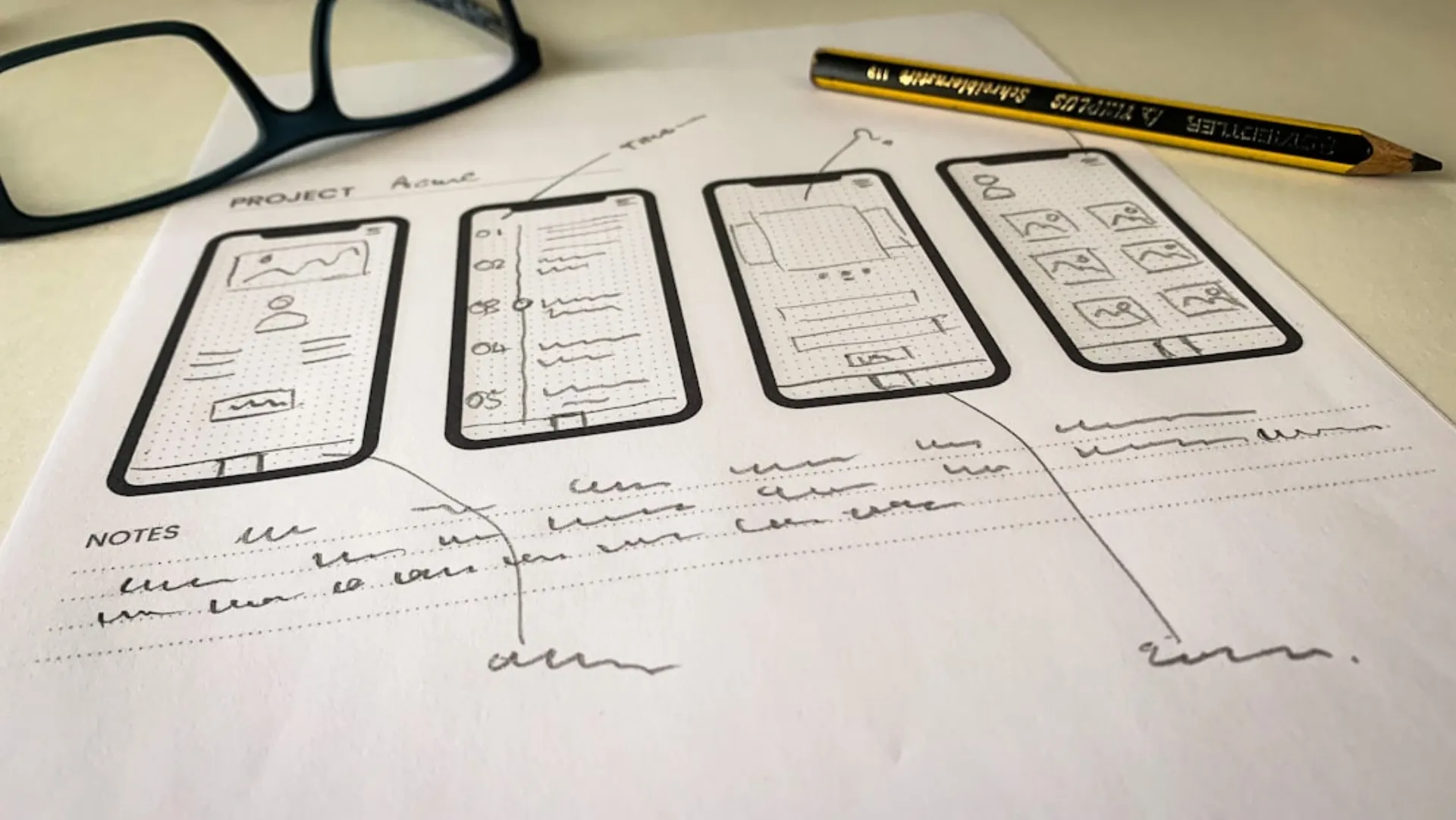
Rapid prototyping creates interactive prototypes that validate user experience assumptions before development investment. Clickable prototypes enable user testing of workflow concepts, information architecture, and interaction patterns. Prototype testing with target users—recruiters, candidates, or HR professionals—reveals usability issues and workflow mismatches that are inexpensive to fix in prototyping but costly to fix in development.
MVP development builds the functional product using technology choices that balance development speed with production readiness. We use modern frameworks and managed services that accelerate development without creating technical debt that impedes future scaling. Database design accommodates future feature expansion. API architecture supports future integration development. Authentication and authorization implement production-grade security from the start because talent data requires protection even during validation.
Data seeding and onboarding optimization ensure that MVP users experience value quickly. Empty-state products that require extensive data entry before demonstrating value generate poor validation signal. We implement sample data, guided setup flows, and import tools that get users to the product's value moment within minutes. For recruitment MVPs, this often means enabling immediate job posting with candidate matching or providing pre-configured screening workflows that demonstrate capability without extensive setup.
Validation infrastructure creates the measurement capability that turns user behavior into validation evidence. Analytics track feature usage, workflow completion, time-in-app, and return visit patterns. User feedback mechanisms—in-app surveys, session recording, and feedback widgets—capture qualitative insights. Funnel analysis identifies where users engage versus where they disengage. This data infrastructure transforms MVP usage from anecdotal observation into quantitative validation.
Ready to discuss your MVP development project?
Free consultation — no commitment required.
Case StudyTechnical Skills Assessment HRTech Startup
MVP for AI-Powered Technical Skills Assessment Platform
The Challenge
A founding team with backgrounds in technical recruiting and AI/ML wanted to build a platform that assessed software developer skills through AI analysis of code contributions rather than traditional coding tests. The hypothesis was that analyzing actual work—GitHub repositories, open-source contributions, and code review patterns—would predict job performance more accurately than timed coding challenges. The team had $400,000 in seed funding and needed to validate the concept with paying customers before pursuing Series A funding.
Our Solution
We built an MVP that validated the core value hypothesis—AI-analyzed code contribution assessment—with a single complete workflow. Employers entered a job description with technical requirements. The platform analyzed candidate GitHub profiles using NLP and code analysis models that evaluated code quality patterns, contribution consistency, technology breadth, and collaborative behavior. Results were presented as skill profiles with confidence scores and comparison against role requirements. The MVP supported JavaScript, Python, and Java analysis—the three most requested languages from early customer interviews. A candidate-facing experience showed developers their AI-generated skill profile, creating a supply-side viral loop that drove developer opt-in. Rapid onboarding enabled employers to submit their first assessment within 8 minutes of signup. Analytics tracked assessment completion, employer engagement with results, and conversion from assessment to interview invitation.
The Results
The MVP launched 14 weeks after development began. Within 3 months, 34 employers had completed at least one assessment cycle—exceeding the 20-employer validation threshold the team had defined. Employers reported that AI skill assessments matched their independent evaluation in 71 percent of cases—sufficient for the team to proceed with confidence. The candidate viral loop generated 2,200 developer profile opt-ins, creating an initial talent pool without advertising spend. Conversion from AI assessment to interview invitation was 3.4 times higher than the employers' previous resume screening—validating the value hypothesis. The validation data supported a Series A raise of $3.2 million. Post-MVP development expanded to 8 programming languages and added team assessment capability based on employer feedback during validation.
MVP Development Capabilities for Recruitment & HR Tech
- ✓Rapid Prototyping
Interactive prototypes to validate your concept before writing a single line of production code.
- ✓Core Feature Development
We identify and build only the features that matter — the ones that prove your hypothesis and attract early users.
- ✓Scalable Architecture
Even lean MVPs need a solid foundation. We build with production-grade tech so you can scale without a rewrite.
- ✓User Feedback Integration
Built-in analytics and feedback loops so you can learn from real user behavior from day one.
- ✓Investor-Ready Product
A polished, functional product that demonstrates traction — not just a pitch deck.
- ✓Iteration & Pivot Support
Agile development cycles that let you adapt quickly based on what the market tells you.
MVP Development Landscape for Recruitment & HR Tech
MVP development for recruitment and HRTech is served by startup studios, development agencies, freelance technical teams, and co-founder CTOs. Startup studios provide structured MVP development programs with methodology and mentorship but may apply standardized approaches that do not accommodate the specific domain challenges of HRTech validation. Their equity or revenue-share models may also be unfavorable for well-capitalized founding teams.
Development agencies offer broad technical capability and reliable delivery but may approach MVPs as scaled-down versions of full products rather than purpose-built validation instruments. Agencies whose business model depends on follow-on development may not optimize for the minimum scope that validates hypotheses most efficiently.
Freelance technical teams provide cost-efficient development but may lack the product strategy expertise needed to define effective MVP scope, design validation frameworks, and interpret user behavior data. Technical execution without product strategy guidance often produces functional software that does not effectively validate market hypotheses.
The differentiator in HRTech MVP development is combining rapid technical execution with product strategy expertise and recruitment domain knowledge. Partners who understand both what makes an effective MVP and what makes an effective HR technology product build validation instruments that generate actionable market insight rather than just demonstrating technical feasibility.
Post-MVP transition capability distinguishes partners who build MVPs as foundations for full products from those who build prototypes that must be discarded. MVPs that validate successfully should evolve into production products—partners who architect for this evolution from the start reduce the total cost of product development.
MVP Development Pricing for Recruitment & HR Tech
MVP development for recruitment and HRTech companies typically ranges from $40,000 to $150,000 depending on feature scope, AI complexity, and validation requirements. Focused MVPs validating a single core workflow typically cost $40,000 to $75,000. MVPs with AI/ML components requiring model development and training range from $75,000 to $120,000. Comprehensive MVPs with multiple user types, system integration, and advanced validation infrastructure cost $120,000 to $150,000 or more.
MVP timelines typically range from 8 to 16 weeks depending on scope complexity.
The ROI of HRTech MVP development is measured through validation outcomes. The skills assessment case study MVP cost approximately $95,000 to build and validated a concept that attracted $3.2 million in Series A funding. More importantly, validation prevented potential investment in a product direction that users did not value—the insight value of a negative validation outcome often exceeds the development cost.
Frequently Asked Questions
Common questions about MVP development for recruitment & hr tech
We identify the single core value hypothesis and build only the complete workflow needed to test it. Scope is defined by validation requirements rather than feature wishlists. We explicitly identify features to exclude and explain why each exclusion does not compromise validation validity. This discipline keeps MVPs focused and development timelines short.
Ready for MVP Development Built for
Recruitment & HR Tech?
Our team has deep expertise in recruitment & hr tech technology. Get a free consultation.
500+
Projects Delivered
4.9/5
Client Rating
90%
Repeat Clients