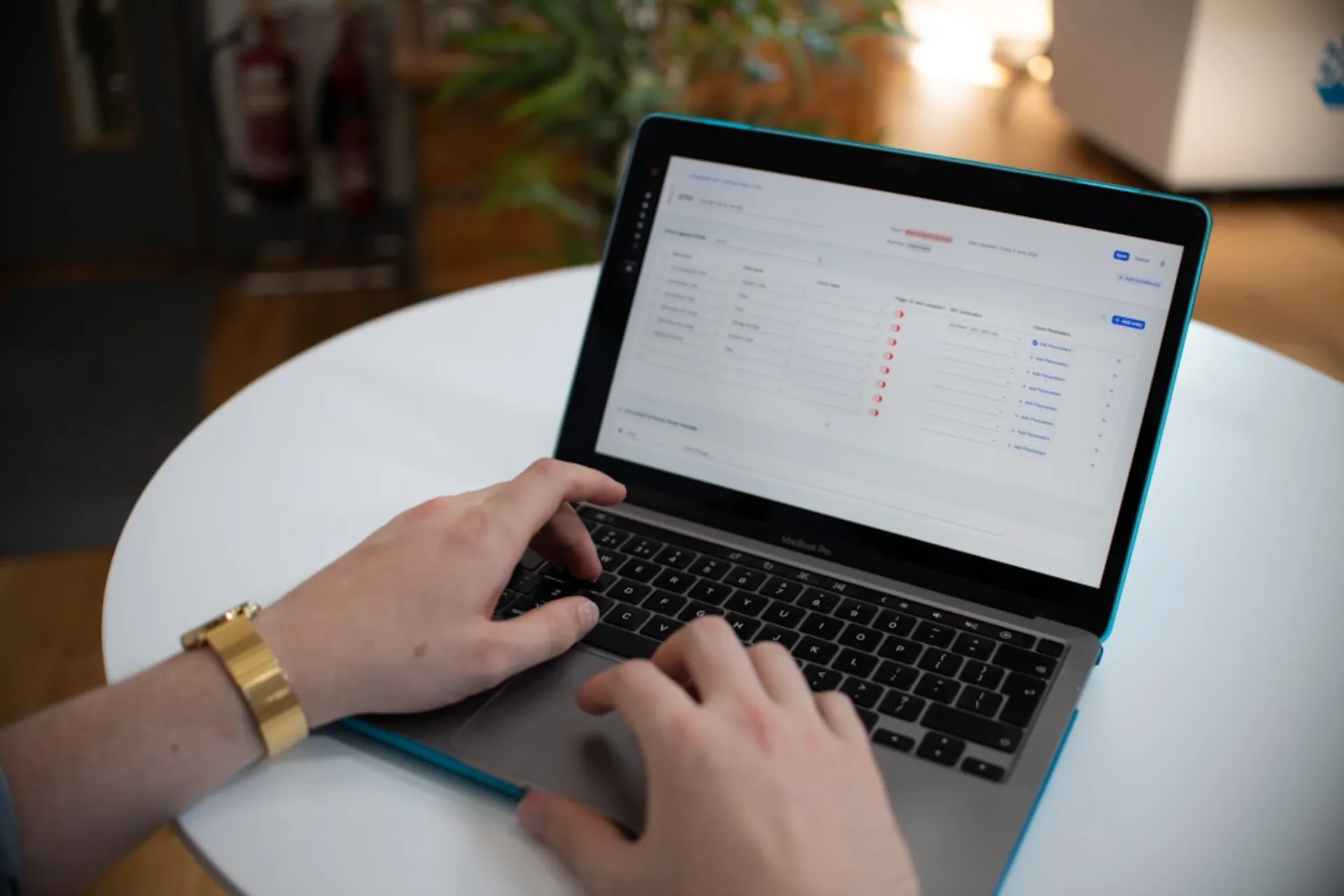
ZTABS builds workflow automation for Paris enterprises where CNIL data protection enforcement, CSE employee consultation rights, French labour law and sector-specific regulation create a distinctive automation environment. Paris headquarters some of Europe's largest enterprises across banking, insurance, energy and pharma, each with complex organisational structures and formal governance requirements. ZTABS is remote-first by design from our Houston, Texas office.
CNIL enforces GDPR and specifically scrutinises automated data processing. CSE information and consultation rights on new technology and work organisation apply at companies with 50 or more employees. Droit a la deconnexion protects employee rest and private family life through company-negotiated modalities or employer charter following consultation.
Workflow automation in Paris at a glance
| Need | What we build | Key consideration |
|---|
| Financial services | KYC/AML, credit, reporting | ACPR, AMF, Tracfin |
| Insurance | Claims, underwriting, Loi Hamon | Code des Assurances |
| Procurement | Requisition, approval, invoice, payment | LME payment terms, DGCCRF |
| Enterprise | Contract, reporting, financial close | FEC, URSSAF, Sage/Cegid |
| French compliance | VAT, payroll, e-invoicing | Current rates and phases |
Financial services automation
Paris banking and financial services require workflows governed by ACPR and AMF.
KYC/AML. Client onboarding with identity verification under French AML requirements. Tracfin reporting obligations. Automated compliance workflows with documentation, risk classification and periodic review.
Credit decisioning. Consumer credit regulated by French Consumer Code. RGPD Article 22(1) restricts solely automated credit decisions producing legal or similarly significant effects. Where permitted under Article 22(2) contract necessity or explicit consent, Article 22(3) requires suitable measures including human intervention, expressing a view and contesting. Authorising law under 22(2)(b) must provide its own suitable safeguards. Our agreed design includes human review for credit decisions as part of the engagement's governance model.
Regulatory reporting. ACPR prudential reporting, COREP/FINREP, AML/CFT reporting. Automated data extraction, validation and formatted submission with review workflows.
AMF and ACPR scope. Actual regulated entity scope for each authority. Not all financial firms fall under both simultaneously. The distinction matters for determining applicable workflow governance requirements.
Insurance and claims
French insurance operates under ACPR and the Code des Assurances with unique product requirements.
Claims processing. FNOL intake, assessment, investigation, determination, payment authorisation and settlement. Each insurance line (auto, habitation, responsabilite civile, protection juridique) has distinct workflows.
Loi Hamon. Annual cancellation rights for auto and home insurance create workflow volume around cancellation processing, portability and retention. Automated workflows handling cancellation requests within statutory timelines.
Convention IRSA. Inter-company automobile claims settlement with automated responsibility determination based on convention rules, claim exchange and settlement calculation between participating insurers. High-volume automated processing for standard scenarios with human review for complex cases.
Delegue de gestion. Third-party claims administrators process claims on behalf of insurers with specific contractual and regulatory obligations. Workflow automation supports delegation management with audit trails.
Prevoyance and mutuelle. French employee benefits administration including prevoyance (death, disability, incapacity) and mutuelle (complementary health insurance) with mandatory employer contributions. Automated enrolment, portability processing and provider communication.
Automating your Paris financial or insurance workflows?
Tell us about your CSE situation, compliance requirements and operational bottlenecks. We start with the workflow that delivers the most value with CSE alignment.
Procurement-to-payment automation
Paris enterprises automate procure-to-pay workflows spanning requisition through payment with LME payment term compliance throughout.
Purchase requisition. Mobile-first requisition with guided forms, budget validation, supplier suggestion and automatic routing based on category, amount and department.
Approval routing. Multi-level French approval hierarchies with configurable thresholds. Mobile approval for managers at sites or travelling. Escalation for overdue approvals.
Three-way matching. Automated invoice capture with OCR, PO matching with tolerance-based rules and exception routing for discrepancies. Structured resolution workflow replacing email investigation.
LME compliance. Default B2B payment terms are 30 days from receipt of goods or service. Parties may agree to 60 days from invoice date or 45 days end of month, provided the term is express and not abusive. Acceptance and verification procedures cannot abusively shift the payment clock. Automated payment scheduling tracks each invoice against its applicable payment term. Real-time monitoring dashboard for invoices approaching deadlines with DGCCRF audit readiness.
Underwriting and policy administration. New business processing, endorsements and renewals with defined approval thresholds and compliance controls for insurance operations.
French regulatory compliance
CNIL and RGPD. RGPD is directly applicable; CNIL enforces. AIPD for high-risk processing. Documented legal basis per Article 6 or 9. Data minimisation, purpose limitation, retention schedules. Article 22(1) restricts solely automated decisions producing legal or similarly significant effects. Permissible exceptions under Article 22(2) include contract necessity, authorising law with its own suitable safeguards, or explicit consent; for contract and consent routes, Article 22(3) requires suitable measures including human intervention, expressing a view and contesting. Our agreed design includes human gates for consequential decisions as an agreed governance model.
CSE consultation. Mandatory information and consultation on new technology and work organisation changes at companies with 50 or more employees. We provide CSE-ready documentation, impact analysis and attend consultation meetings.
Droit a la deconnexion. Companies negotiate deconnexion modalities with employee representatives or establish an employer charter following consultation. Automated notifications configured with agreed roles, hours and escalation rules. Staff are not obliged to respond outside agreed hours.
French marketing. Prior consent required for B2C electronic marketing. Existing-customer exception allows marketing own similar products with opt-out clearly offered at collection and each subsequent communication. B2B professional-role relevance applies with actual notice and opt-out, not universal exception for all staff contacts.
HDS. Hebergement de Donnees de Sante applies to actual covered hosting activities, data and provider roles. FranceConnect has actual qualified integration and organisation rights.
Current e-invoicing. Plateformes agreees (PA) with phased implementation: all entities receive from September 2026, large enterprises and ETI issue from 2026, SME from 2027, subject to actual transaction scope. FEC is the required computerised accounting format in flat-file or XML with 18 mandatory fields. EMEBI is the sampled statistical declaration replacing DEB from 2022, distinct from the VAT recapitulative statement.
Qualified signature. Identity verification versus legal approval distinct. Workflow automation implements the correct signature level (simple, advanced, qualified) based on legal requirements and transaction type.
How delivery works
ZTABS is remote-first by design from our Houston, Texas office, delivering CNIL-compliant automation with French system integration.
Platform selection. n8n self-hosted on French infrastructure (OVHcloud or client data centre) for workflows needing local primary processing. The applicable n8n edition determines execution limits, features and support scope. Full stack assessment including connected SaaS or AI services, API payloads, logs, backups, remote support and subprocessor terms is required; local primary hosting alone does not establish compliance across all connected services. Make for moderate complexity. Power Automate for Microsoft ecosystem. Custom engines for regulation-specific workflows.
French system integration. Connecting with Sage, Cegid and French accounting platforms alongside SAP and Oracle. URSSAF social security integration. Tracfin AML reporting. ACPR regulatory filing systems.
CSE support. CSE-ready business case documentation, impact analysis in accessible language, implementation timeline and attendance at consultation meetings.
Droit a la deconnexion compliance. All notifications configured with agreed roles, hours and escalation rules per company-negotiated modalities or employer charter. French public holiday calendar integrated.
Trigger and event semantics. Workflows triggered by requisitions, invoices or regulatory deadlines handle stale, duplicate and out-of-order events. Bounded retry with backoff, timeouts and unknown-outcome reconciliation before replay.
Human approval boundaries. Financial commitments, compliance determinations, credit decisions and regulatory submissions include human gates.
Agreed languages and coverage. French user interfaces, documents, notifications and training materials are agreed and tested as part of engagement scope. Staff working languages, reviewer availability and translation resources are confirmed before deployment.
Illustrative Example
Hypothetical: Paris industrial group automating procurement-to-payment
A Paris-headquartered industrial group with 12,000 employees across France, Germany, Spain and Poland processes 340 purchase orders weekly. Average PO cycle is 2.8 days with 9% accuracy issues. Invoice three-way matching runs at 62% automatic rate with 2,800 monthly exceptions. Late payment penalties from LME non-compliance affect operational costs.
Automation would implement mobile requisition with guided forms and budget validation, intelligent supplier selection from a centralised approved supplier database, automated three-way matching with tolerance-based rules, LME-compliant payment scheduling with deadline monitoring tracking each invoice against its applicable payment term, and droit a la deconnexion notification rules per company-negotiated modalities.
Assumptions: SAP MM supports standard API integration for the applicable licence, CSE consultation proceeds constructively, and French-speaking supplier community accepts structured PO communication. Residual risks include CSE requesting timeline modifications, complex multi-site goods receipt variations requiring site-specific configuration, and LME edge cases for specific contract types requiring legal review. No guarantee of specific match rate improvement, cycle time reduction or penalty elimination.
This is a hypothetical scenario for illustration. Actual scope, timeline and cost depend on your requirements.
Cost and timeline
Custom workflow automation follows the published cost guide. These are planning ranges for custom build scope, not minimums for every configuration task.
| Tier | Range | Timeline | Example |
|---|
| Internal Tool | $25K to $60K | 6 to 14 weeks | Single workflow, Sage integration |
| Business Application | $60K to $150K | 14 to 28 weeks | P2P with CSE consultation |
| Enterprise Platform | $150K to $300K | 28 to 40 weeks | Multi-site, SAP integration |
| Large-Scale System | $300K to $500K+ | 40 to 60+ weeks | Mission-critical with HA and DR |
Optional recurring costs depend on actual platform edition, plan tier, execution volume and support contract. Ongoing support depends on scope and SLA requirements.
2026 US business application planning benchmark
A representative 2026 US business-application build at this scope typically involves multi-role access with SAML or OIDC single sign-on, a workflow engine orchestrating approval chains, ERP and HRIS integrations, audit logging, and applicable SOC 2 or HIPAA readiness preparation where the engagement requires it. That combination touches front-end, back-end, integration, infrastructure and compliance architecture work. The Business Application and Enterprise Platform tiers in the table above reflect this benchmark scope.
Budget look right for your Paris project?
Share your workflow requirements, CSE context and French compliance needs. We provide a scoped estimate based on the published guide ranges.
Evaluating a workflow automation proposal
Use these six criteria to compare any vendor proposal, including ours.
| Criterion | What to verify |
|---|
| Scope, deliverables and acceptance | Written scope with named deliverables, acceptance criteria and what is explicitly excluded |
| Data, integration and action authority | Which systems are accessed, what editions, licences or interfaces are required, who retains data ownership, and which party holds filing, payment or clinical action authority for each external system |
| Baselines, evaluation and acceptance | Current-state metrics, how improvement will be measured, held-out evaluation when AI components are used, and conditions for accepting each milestone |
| Operational exception, reconciliation and support | How the system handles partial failures, duplicate events, unknown-outcome reconciliation before replay, operating handover and after-hours incidents |
| Staff and user languages, resources and coverage | Agreed staff working languages, user interface languages, document and reviewer languages, translation and review resources, tested locale and template coverage, and key personnel commitments |
| Commercial terms, change control and exit | Payment schedule, change-order process, IP ownership, support responsibilities and data-export provisions at contract end |
When this engagement is not the right fit
- An existing SAP Ariba covers the P2P scope. If existing procurement platform handles requirements with minimal customisation, configure that first.
- The engagement requires on-site embedded staff. ZTABS is remote-first by design. If the proposed engagement requires daily on-site coverage, the customer should arrange an on-site team or select a provider who offers that model.
- The scope requires the customer's own CSE negotiation. ZTABS supports CSE engagement and documentation but does not replace the employer's obligation to consult the CSE directly.
- The engagement requires separately contracted professional advisory. French legal counsel on LME interpretation and tax advisory on e-invoicing obligations are separately contracted from qualified professionals, not included in workflow automation scope.
Enterprise integration and French systems
Connecting French enterprise systems for automated workflows.
Sage and Cegid integration. French mid-market accounting platforms with specific API capabilities. Integration connects procurement, billing, payroll and reporting workflows to actual available interfaces and licence terms.
SAP France. Large French enterprises typically run SAP. Workflow automation connects through standard SAP APIs for procurement, finance, HR and sales for the applicable edition and licence.
URSSAF integration. Social security contribution calculation and filing. Cotisations patronales with actual bases, caps and contribution rates that change annually. Workflow automation maintains current rate tables.
French payroll specifics. Cotisations patronales, mutuelle contribution, prevoyance, transport contribution and specific regional taxes. Current rates and URSSAF bases apply.
Risks and mitigations
CSE consultation timeline. CSE engagement timeline depends on scope and organisational context. Building consultation into project timelines from the start. Describing actual customer change consultation plans facilitates constructive dialogue.
LME edge cases. Specific contract types may have different payment term provisions. Legal review for edge cases before configuring automated payment scheduling. DGCCRF audit preparation with real-time compliance evidence.
French payroll complexity. Cotisations patronales, URSSAF bases and caps, mutuelle rates and prevoyance contributions change annually. Architecture supports January parameter updates without code changes.
Droit a la deconnexion enforcement. Notification timing rules configured per company-negotiated modalities. Testing validates that notifications follow agreed hours and escalation rules.
Irreversible actions. Tax filings, supplier payments, regulatory submissions, insurance settlements and ACPR reports cannot be reversed. Owner-approved action boundaries, approval gates and dry-run modes reduce exposure.
Ongoing support model
Post-deployment support covers platform management, workflow optimisation, integration maintenance and expansion planning. Monthly automation reports show execution volumes, error rates, processing times and business impact.
Operating handover. Documentation for ongoing operation, exception handling and troubleshooting. Recovery drills validate that the client's team can diagnose and resolve common failure modes independently. The goal is operational independence, not ongoing consultant dependency.
Ready to automate your Paris operations?
Tell us about your CSE requirements, procurement complexity or compliance needs. We build from the highest-value workflow.