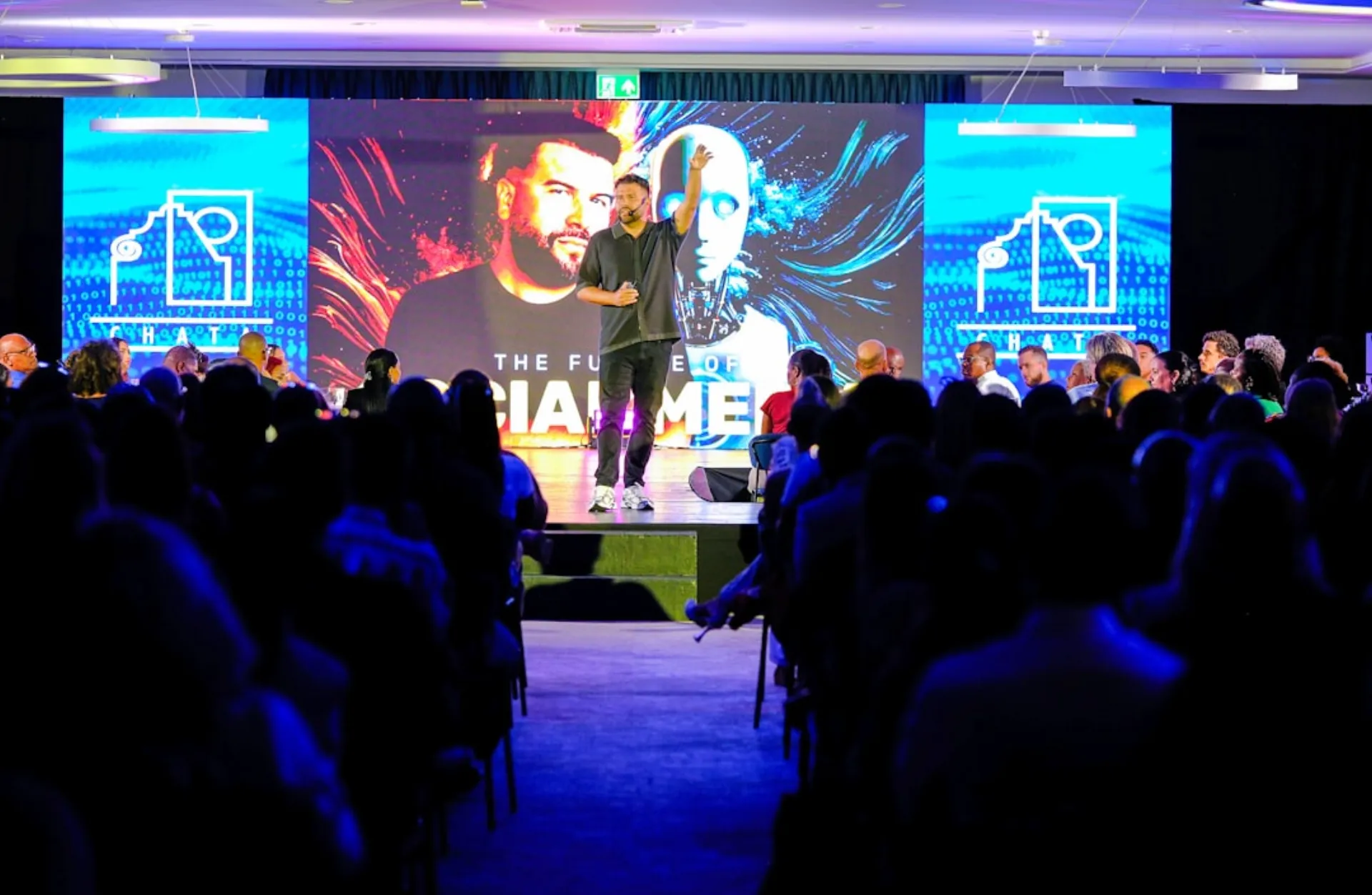
AI consulting in Seattle addresses a paradox: the city hosts a dense concentration of AI engineering talent, yet many Seattle organisations struggle to capture business value from AI. Amazon AI, Microsoft AI, Google's Seattle AI research lab, Meta's Seattle office and hundreds of AI startups operate in the region. The University of Washington's Paul G. Allen School of Computer Science is among the world's top AI research institutions. The talent pool includes thousands of machine learning engineers, data scientists and AI researchers. Yet many Seattle businesses find that having AI talent does not automatically translate to AI business value. The gap spans strategy, organisation, data infrastructure and implementation. Common patterns include proof-of-concept purgatory where companies build impressive AI prototypes that never reach production, talent mismatch where companies hire AI researchers when they need ML engineers or vice versa, infrastructure investment without clear business problems to solve, and vendor evaluation paralysis where teams spend months comparing platforms rather than deploying solutions. Washington My Health My Data Act (MHM) applies to consumer health data. HIPAA-related exemptions are information-specific, not a blanket exemption for every activity of a HIPAA-covered entity. For in-scope consumer health data, collection requires consent or the necessary-to-provide-a-requested-product-or-service exception; sharing requires separate and distinct consent from collection consent, or the applicable necessary-to-provide route. Sale requires separate authorisation. Geofence provisions govern prohibited uses around healthcare facilities. Small businesses had different commencement dates. Breach notification under RCW 19.255.010 requires notice in the most expedient time and without unreasonable delay, no later than 30 calendar days after discovery, subject to statutory exceptions. Washington is an all-party recording state for private communications; organisations deploying AI voice or call analytics must address applicable consent and recording requirements. Boeing has major manufacturing operations in Everett and Renton, distinct from its corporate headquarters in Arlington, Virginia. Consulting addresses the supplier-ecosystem dynamics of the Puget Sound aerospace corridor. Cloud platform data, retail analytics, health records and MLS property feeds each carry purpose limitations, API permissions and licensing terms that AI integrations must address. ZTABS provides AI consulting in Seattle, remote-first by design with an office in Houston, Texas.
Our AI development services and automation and integration services complement Seattle AI consulting.
Seattle AI consulting at a glance
| Segment | Advisory focus | Key considerations |
|---|
| Technology | ML production, MLOps, AI product features | Prototype-to-production gap |
| Aerospace | Manufacturing quality, supply chain, maintenance | AS9100, ITAR, safety-critical |
| Healthcare | Clinical AI, operations, research | FDA SaMD, HIPAA, clinician adoption |
| Enterprise | Strategy, data infrastructure, governance | Organisational readiness |
| Maritime | Port operations, vessel routing, cargo | Environmental compliance |
Technology advisory
ML production readiness for technology companies with AI experiments that need to move to production. Assessing data infrastructure reliability and scalability, model reproducibility and versioning, deployment infrastructure, monitoring for model drift and performance degradation, and organisational readiness with clear ownership and processes. Many Seattle companies have individual data scientists building models in notebooks with only a fraction reaching production deployment.
MLOps strategy designing ML operations infrastructure including automated training pipelines, model registry with versioned storage and lineage tracking, CI/CD for ML with automated testing and staging, monitoring and observability for production model performance, and retraining pipelines triggered by performance degradation. MLOps strategy must account for cloud platform choice and existing engineering practices.
AI product strategy helping technology companies identify and prioritise AI-powered product features. Determining which product capabilities benefit from AI, what data is available, and realistic timelines from concept to customer-facing deployment. Preventing the common pattern of building AI features that are technically impressive but do not solve real customer problems.
Need AI consulting for your Seattle technology company?
Share your current AI initiatives, production challenges and strategic questions.
Aerospace advisory
Manufacturing quality advisory for Boeing suppliers and the Puget Sound aerospace supply chain evaluating AI for defect detection with computer vision, predictive quality based on process parameters, and digital twin integration. AS9100 quality management requirements depend on the customer contract, QMS and certification scope. ITAR covers USML-controlled defence articles, technical data and services including applicable unclassified controlled items, not only classified applications. The aerospace industry requires higher evidence thresholds before trusting AI recommendations than many other sectors.
Supply chain advisory evaluating AI for aerospace supply chain optimisation including demand sensing from delivery schedules, supplier risk assessment monitoring financial stability, quality metrics and delivery performance, and inventory optimisation balancing parts costs against production delay costs. Aerospace supply chains have long lead times where some components require 12 to 18 months from order to delivery, strict quality requirements and single-source dependencies.
Predictive maintenance advisory evaluating equipment failure prediction for manufacturing equipment. Sensor data strategy, predictive model approaches and maintenance workflow integration that translates predictions into work orders that maintenance teams trust and act upon.
Healthcare advisory
Clinical AI roadmap evaluating AI for UW Medicine, Swedish, Providence and the Fred Hutchinson Cancer Center ecosystem. Identifying highest-value clinical AI use cases, assessing data readiness in clinical data warehouses, evaluating FDA regulatory pathways for Software as a Medical Device, planning EHR integration within existing clinical workflows, and designing validation studies.
Research AI strategy for research institutions evaluating AI for literature mining and systematic review, biomarker discovery from multi-omics data, clinical trial optimisation for design, site selection and recruitment prediction, and data collaboration approaches enabling multi-institutional research without centralising patient data.
Illustrative Example
Hypothetical: Seattle aerospace supplier AI strategy engagement
A Puget Sound aerospace supplier manufacturing precision-machined components for commercial aircraft programmes, with several hundred employees and multiple manufacturing facilities, whose previous AI attempts (predictive maintenance, demand forecasting, quality inspection) had each stalled or failed due to sensor placement issues, data infrastructure gaps, training data insufficiency and factory environment challenges, would engage AI consulting. Assessment would audit each previous attempt to identify specific failure causes, evaluate data assets across MES, QMS, ERP and machine data historians, and identify that data existed in siloed systems requiring manual merging. Strategy would prioritise quality prediction (predicting which parts will have quality issues based on process parameters during machining rather than detecting defects after they occur), event-driven demand intelligence (replacing time-series forecasting with event-driven approaches ingesting schedule changes and engineering change orders), and tool life optimisation (predicting optimal replacement timing from actual wear data). Advisory cost drivers include number of manufacturing sites, equipment complexity, data integration requirements and organisational change planning. No guaranteed scrap reduction percentages, specific payback periods or universal AI forecast superiority.
This is a hypothetical scenario for illustration. Actual scope, timeline and cost depend on your requirements.
Advisory cost drivers
AI consulting engagements are scoped by advisory complexity. There is no published cost guide for AI consulting advisory. Key cost drivers include:
| Driver | Impact |
|---|
| Organisational complexity | Number of departments and AI initiatives |
| Regulatory scope | MHM, HIPAA, FDA SaMD, ITAR requirements |
| Data assessment | Infrastructure evaluation and gap analysis |
| Technology evaluation | Platform selection and architecture design |
| Stakeholder breadth | Interviews across technology, operations, leadership |
| Implementation roadmap | Phased plan with pilot and measurement design |
| Governance framework | Model risk, safety or compliance requirements |
| Change management | Adoption planning and workforce communication |
Where consulting identifies implementation opportunities, actual AI development or AI agent development build projects can be separately scoped with published cost guides.
Planning AI strategy for your Seattle enterprise?
Share your workstream inventory, data infrastructure, regulatory scope and stakeholder breadth so we can scope the advisory engagement and cost drivers.
Evaluating a proposal
| Criterion | What to verify |
|---|
| Scoped deliverables and discovery | Written scope defining assessment, strategy or roadmap with named outputs, decision gates and completion criteria before engagement starts |
| Evaluation methodology | Representative held-out evaluation against simpler baselines, failure cost assessment and uncertainty quantification rather than vendor demo results |
| Data, access and confidentiality | Data access requirements, confidentiality and retention terms, integration responsibilities and who provides production-representative test data |
| Regulatory and approval ownership | Which legal, regulatory and customer approvals the client retains versus which the adviser identifies; adviser does not assume the client's compliance obligations |
| Implementation handoff | How advisory outputs transition to implementation teams, operational support scope and change management responsibilities |
| Working model and coverage | Agreed working languages, stakeholder access expectations, documentation standards and remote or on-site coverage model |
When this engagement is not the right fit
- This advisory engagement does not include aerospace engineering, clinical practice or activities requiring security clearance. Where your project involves regulated activities requiring an authorised entity or qualified professionals, you retain them; the agreed advisory work supports and integrates with their processes.
- You need full-time embedded AI staff rather than scoped strategic advisory.
- You need guaranteed production deployment timelines, clinical outcomes or manufacturing yield. AI consulting identifies opportunities and reduces risk but does not guarantee specific numerical results.
Risks in Seattle AI consulting
Proof-of-concept purgatory. The most common failure mode. AI prototypes that demonstrate capability but never reach production because they lack data pipeline infrastructure, monitoring and organisational integration.
Talent mismatch. Hiring AI researchers when the organisation needs ML engineers, or ML engineers when it needs data engineers. Seattle's competitive market makes this mismatch expensive.
Platform decision paralysis. Excessive evaluation of cloud platforms that delays deployment. The platform matters less than the data, models and organisational practices.
MHM compliance. Consumer health data processing must address actual entity scope, consent requirements and geofence provisions. Regulatory requirements vary by data type and entity classification.
What AI consulting delivers
Production gap bridge. Connecting AI experiments to production deployment. MLOps infrastructure, monitoring, governance and organisational integration that reduces the risk of prototypes stalling before delivering business value.
Data strategy. Evaluating data assets against proposed AI applications. Many Seattle enterprises have massive data in siloed systems needing integration before AI can deliver value.
Vendor-neutral evaluation. Assessing AI platforms, tools and vendors against specific requirements rather than recommending by vendor relationship. Protecting organisations from platform lock-in anxiety while preventing evaluation paralysis.
Regulatory navigation. MHM, HIPAA, FDA SaMD and evolving regulations addressed within advisory framework. Regulatory requirements integrated into recommendations from the start; the adviser identifies applicable obligations but the client retains compliance ownership.
Organisational transformation. Addressing the human factors that determine AI success. Executive sponsorship, team capabilities, change management and cultural shifts required to integrate AI into decision-making. Our DevOps services and API development services complement implementation. ZTABS builds custom white-label AI products for clients to brand and resell.
Maritime and logistics advisory. Evaluating AI for Port of Seattle operations, vessel routing, cargo handling efficiency and environmental compliance monitoring. The broader Puget Sound maritime industry handles international trade and cruise operations where AI can optimise scheduling and resource allocation.
Retail and consumer advisory. Evaluating AI for Seattle-headquartered retailers including demand forecasting, personalisation, supply chain optimisation and customer experience. Many retailers beyond the largest companies are in earlier stages of AI maturity needing strategic guidance on which applications deliver genuine value versus technology demonstrations.
Additional advisory domains
Enterprise AI transformation. Evaluating AI strategy for traditional Puget Sound industries including timber, agriculture, commercial real estate and maritime shipping that recognise AI's potential but need guidance translating industry-specific challenges into actionable roadmaps with realistic timelines. These industries generate significant data and have clear AI use cases but often lack the organisational framework to move from experimental AI to production systems.
AI governance framework. Establishing governance covering model lifecycle management, bias monitoring, explainability requirements, incident response and documentation standards. Seattle enterprises operating in regulated sectors need governance that satisfies compliance requirements while avoiding multi-year approval cycles that frustrate data science teams and destroy AI programme momentum.
Talent strategy. Evaluating AI talent requirements and team design for Seattle organisations competing in the world's most competitive AI talent market. Determining whether to hire AI researchers, ML engineers or data engineers for specific initiatives. Recommending hybrid approaches combining strategic hires for core leadership with external partnerships for implementation capacity. Many organisations discover the gap between AI research talent and production ML engineering talent too late.
Model evaluation methodology. Establishing systematic evaluation against representative held-out tasks and simpler baselines. Failure cost assessment, uncertainty quantification and deployment monitoring design. Continuous performance tracking with alerts and escalation processes that identify changes in model behaviour and support timely response. Human review and controls reduce risk but never guarantee zero hallucinations, bias or production disruption.
Build versus buy assessment. Systematic evaluation of custom development versus vendor platforms versus foundation model APIs for each identified opportunity. Each approach with different cost, control, defensibility and speed tradeoffs. Seattle companies often have strong opinions about build versus buy that benefit from structured evaluation rather than default assumptions.
Data infrastructure advisory. Evaluating and designing the data platform that AI applications depend on. Many Seattle enterprises have significant data assets trapped in siloed systems with no integration layer. Creating a unified data foundation that serves multiple AI use cases rather than building one-off data pipelines for each project. Data strategy that accounts for current state, not idealised architecture diagrams.
Observability and monitoring. Designing production monitoring with minimised sensitive data exposure. Performance tracking, data drift detection and output quality measurement. Addressing vendor retention and training versus inference terms. Establishing continuous monitoring with alert thresholds and escalation workflows that surface performance changes and support investigation before widespread impact.
Pilot design and measurement. Selecting the initial use case that demonstrates AI value with acceptable risk. Defining success criteria before launch. Designing measurement frameworks that distinguish AI improvement from coincidental variation. Each pilot designed to produce evidence that supports or challenges the broader strategy before committing to full-scale deployment.
Ready for AI consulting in Seattle?
Share your technology, aerospace or healthcare operations and AI objectives.