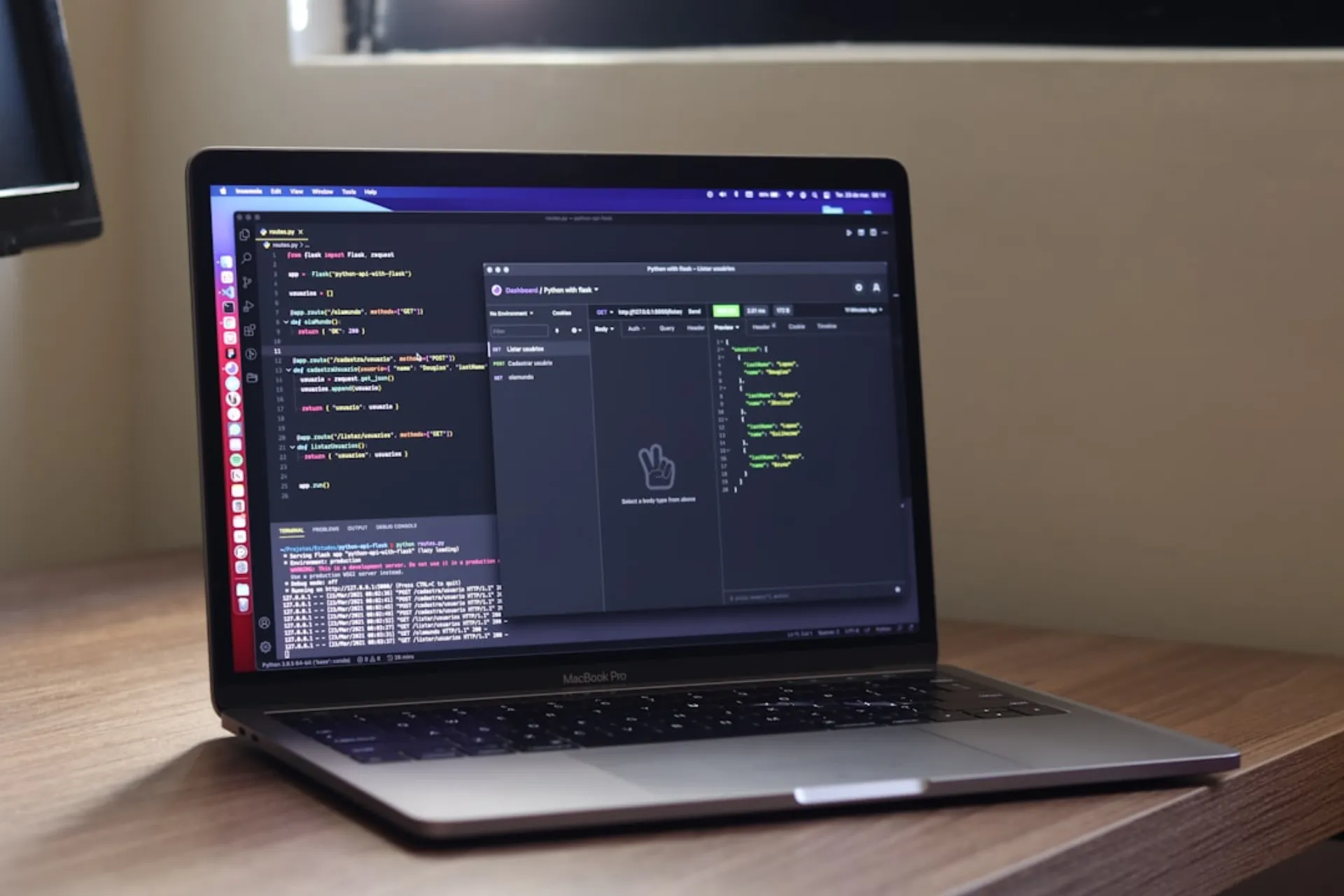
Our Cape Town API development follows a methodology designed for South African conditions: (1) API design (weeks 1-2): designing the API before writing any code. API-first design: defining the API contract before implementation — using OpenAPI 3.0 (Swagger) for REST APIs or GraphQL schema for GraphQL APIs. The API specification: reviewed and agreed with all stakeholders (frontend developers, mobile developers, integration partners, and business stakeholders) before development begins. South African design considerations: payload efficiency (designing responses to minimise data transfer — critical for South African mobile users on expensive data plans. No unnecessary fields, no deeply nested objects when flat structures serve, and no returning entire objects when only specific fields are needed), offline support (designing APIs that support offline-first client architectures — idempotent operations, conflict resolution strategies, and sync-friendly data structures), error handling (robust error responses that help South African developers working in environments where debugging is harder — clear error codes, human-readable messages, and suggested remediation. API errors during load shedding: handled gracefully with appropriate retry guidance), and versioning (API versioning strategy ensuring backwards compatibility — critical for APIs serving mobile apps where users may not update immediately. South African mobile users: often on older app versions due to data-conscious update behaviour). Authentication and authorisation: OAuth 2.0 with JWT tokens (our default), API keys for server-to-server integration, and mTLS for high-security financial APIs. South African financial APIs: often requiring additional security layers — IP whitelisting, certificate pinning, and transaction signing. Rate limiting: configured for South African usage patterns — bursty traffic (many API consumers connecting simultaneously when load shedding ends and connectivity restores) requiring higher burst limits than steady-state rates would suggest. (2) Development (weeks 2-5): building the API. Technology stack: Node.js with TypeScript (our default for most Cape Town API projects — excellent performance, strong typing, and the largest ecosystem of API libraries), Python with FastAPI (for data-intensive APIs — ML model serving, data processing, and analytics endpoints), and Go (for high-performance, low-latency APIs — payment processing, real-time messaging, and high-throughput event processing). Framework: Express.js or Fastify (Node.js), FastAPI (Python), or Gin (Go) — selected based on performance requirements and team familiarity. Database: PostgreSQL (our default — robust, reliable, and well-suited to South African hosting options), Redis (caching and real-time features — reducing database load and improving response times), and MongoDB (for document-heavy APIs where schema flexibility is required). South African hosting: Azure South Africa (Johannesburg and Cape Town data centres — lowest latency for SA users), AWS (Cape Town local zone or Johannesburg), or local hosting providers (Hetzner SA, Afrihost — for cost-sensitive projects requiring ZAR-denominated hosting). The hosting decision: balancing latency, cost (USD-denominated cloud vs. ZAR-denominated local), reliability (international cloud providers having higher SLA guarantees than most local providers), and data sovereignty (some data requiring South African hosting under POPIA or sector-specific regulations). South African integrations: payment integration (PayFast, Ozow, Peach Payments — each with different API patterns. PayFast: redirect-based payment flow with server notification. Ozow: instant EFT with webhook confirmation. Peach Payments: card processing with tokenisation), banking integration (South African bank APIs for account verification, DebiCheck mandate management, and real-time payment notification), identity verification (Department of Home Affairs integration for ID verification — checking ID numbers against the national population register. Difficult integration: government systems with limited availability and inconsistent response times), and logistics (integration with South African courier APIs — The Courier Guy, Aramex, Fastway, and SAPO — for shipping rate calculation, booking, and tracking). Testing: comprehensive API testing embedded in development. Unit tests (testing individual functions and business logic), integration tests (testing API endpoints with actual database and service interactions), contract tests (verifying that the API implementation matches the specification — preventing drift between documentation and reality), and load tests (simulating South African traffic patterns — including the "post-load-shedding surge" where traffic spikes when connectivity restores). (3) Documentation and developer experience (weeks 4-5): making the API usable. API documentation: auto-generated from the OpenAPI specification — interactive documentation (Swagger UI or Redoc) where developers can test API calls directly. South African developer experience: clear onboarding guide, sandbox environment with test data, code examples in JavaScript, Python, and PHP (the most common languages in the South African developer community), and WhatsApp/email support channel (South African developers: often preferring WhatsApp for quick support questions). SDKs: client libraries in JavaScript/TypeScript, Python, and potentially PHP — wrapping the raw API with typed methods, error handling, and authentication management. SDKs: reducing integration time from days to hours for common integrations. (4) Deployment and monitoring (weeks 5-6): going live reliably. Deployment: containerised (Docker) deployment with Kubernetes or serverless (AWS Lambda, Azure Functions) — depending on the traffic pattern and cost structure. South African deployment: infrastructure in South African regions with CDN edge caching for static responses. Load shedding resilience: multi-AZ deployment (if available in the hosting provider's SA region), health checks detecting infrastructure failures, and automated failover. Monitoring: API observability — request/response logging, error tracking (Sentry), performance monitoring (response times by endpoint, percentile analysis), and business metrics (API usage by consumer, transaction volumes, error rates by integration partner). Uptime monitoring: synthetic checks from South African locations — measuring API availability from the perspective of South African API consumers. SLA: defined uptime targets — typically 99.5% for standard APIs, 99.9% for critical financial APIs (achievable in South Africa with proper architecture but requiring load-shedding-resilient infrastructure).