MVP Development for Real Estate
PropTech MVP Development That Validates Your Real Estate Product Idea With Paying Customers in Months, Not Years
We build MVPs for real estate startups and companies — property management platform prototypes, brokerage operations tools, real estate marketplace MVPs, investor portal prototypes, and tenant experience platforms — with the MLS integration, payment processing, and domain-specific features that real estate MVPs must include to be credible.
4.9/5Verified rating
300+Clients served
23Products shipped
100+Case studies
Since 2015In production
3-5 months
Typical PropTech MVP development timeline
91%
Vendor acceptance rate for AI-matched maintenance assignments
$2.1M
Seed extension raised on MVP traction data
4.2/5
Property manager satisfaction with MVP vendor matching
PropTech is one of the most active startup categories in venture capital — with billions invested annually in companies building technology for the real estate industry. Yet most PropTech startups fail, and the failures follow a pattern: the founding team builds a technically impressive product over 12-18 months, launches to discover that real estate professionals have different workflows and priorities than assumed, iterates for another 6-12 months while burning cash, and runs out of runway before achieving product-market fit.
The MVP approach addresses this by validating assumptions with real users before committing to a full product build. But real estate MVPs are fundamentally different from MVPs in other industries — and founders who apply generic MVP methodology to real estate products often build prototypes that real estate professionals dismiss as not credible.
Real estate professionals evaluate software differently than typical SaaS buyers. They are pragmatic, skeptical of technology promises, and will not adopt tools that disrupt established workflows without demonstrating clear, immediate value. A property management MVP that cannot actually process a rent payment is not useful — property managers need to see real money moving through the system to evaluate whether it fits their operations. A brokerage CRM MVP that cannot display MLS listing data feels incomplete — agents expect to see properties alongside contacts. An investor portal MVP that cannot calculate IRR is not credible — investors will not log into a portal that shows less information than the Excel spreadsheet it aims to replace.
This means real estate MVPs must include specific domain features that would be premature in a generic SaaS MVP. Payment processing, MLS integration, financial calculations, and regulatory compliance are not features to add later — they are table stakes that real estate professionals require to take the product seriously enough to provide meaningful validation feedback.
At ZTABS, we build PropTech MVPs that include the domain-specific features real estate professionals expect — MLS data integration, payment processing, financial calculations, and compliance-aware workflows — while maintaining the speed and scope discipline that MVP methodology requires. Our MVPs validate product-market fit with real users generating real data within 3-5 months.
The Real Estate Market
PropTech MVPs target specific segments of the real estate market — each with distinct validation requirements, competitive dynamics, and technical minimum thresholds.
Property management MVPs target the operational challenges of managing residential or commercial properties. The market is segmented by property size (small landlords managing 1-20 units, mid-market companies managing 50-500 units, enterprise operators managing thousands), property type (residential, commercial, student housing, senior living, short-term rental), and functional focus (full-stack management platforms, maintenance-specific tools, tenant experience platforms, owner reporting systems). MVP validation requires demonstrating that the product solves a specific pain point better than existing solutions — which means understanding exactly what existing solutions do well and where they fall short. A property management MVP competing with AppFolio must demonstrate a compelling advantage in a specific area (better mobile maintenance workflow, superior tenant onboarding, more intuitive owner reporting) rather than attempting to match AppFolio's comprehensive feature set. Minimum viable features for a property management MVP typically include: tenant database with lease tracking, online rent collection (ACH at minimum), maintenance request intake and tracking, and basic financial reporting. Without these core features, property managers cannot evaluate the product in a real operational context.
Brokerage tool MVPs target agent productivity, transaction management, or lead generation challenges. The brokerage technology market is fragmented with dozens of competitors in each functional area — CRM, transaction management, marketing, and analytics. MVPs succeed by focusing on a specific pain point rather than attempting to build a comprehensive brokerage platform. Successful brokerage MVPs typically target a specific workflow: showing management and feedback collection, offer comparison and presentation, market analytics for a specific property type, or agent team coordination. MLS data integration is a common MVP requirement — most brokerage tools need to display or reference listing data, and an MVP without MLS connectivity may not be testable in real agent workflows. Minimum viable MLS integration can use IDX data feeds, third-party MLS APIs (Spark, Bridge, Trestle), or recorded MLS data for demonstration purposes.
Real estate marketplace MVPs connect buyers and sellers, landlords and tenants, or investors and sponsors. Marketplace MVPs have a unique challenge: they must demonstrate value to both sides of the marketplace simultaneously. A rental marketplace must attract both landlords listing properties and renters searching — which creates a chicken-and-egg problem for validation. MVP strategies for marketplace validation include: geographic focus (launching in a single market to achieve density), supply-side first (recruiting properties before marketing to renters), and demand aggregation (building an audience of renters before approaching landlords with validated demand data). Marketplace MVPs must be realistic enough for both sides to transact — a rental marketplace MVP needs real property listings (even if manually entered initially), search and filtering, communication between parties, and ideally application processing.
Investor portal MVPs target the communication and reporting needs of real estate investment firms. The investor relations technology market is growing as real estate investment becomes more accessible (crowdfunding, tokenization, fractional ownership) and investor expectations for digital experiences increase. Investor portal MVPs must demonstrate financial credibility — investors will not engage with a portal that does not display their actual financial data accurately. Minimum viable features include: investment summary with current NAV and returns, document access (quarterly reports, K-1 tax documents), distribution history, and secure login. Financial calculations must be accurate — a beta investor who discovers an incorrect return calculation will lose trust in the platform permanently.
Tenant experience MVPs target the emerging category of platforms that improve the living experience beyond basic property management. These platforms may address amenity booking, community engagement, package management, smart home integration, or personalized services. Tenant experience is a newer category with fewer established competitors, creating opportunity for MVPs that define new market categories. Validation focuses on tenant engagement metrics — do tenants actually use the features? — and property owner willingness to pay for tenant experience improvements.
How We Deliver MVP Development for Real Estate
Our PropTech MVP development follows a domain-aware lean methodology that adapts startup principles for the specific requirements of real estate product validation.
Market and competitive analysis identifies the specific opportunity, target user, and differentiation before any development begins. We analyze the competitive landscape in the target segment: which products exist, what they do well, where users are frustrated, and what gaps create an opportunity for a new product. We interview potential users (property managers, agents, investors, tenants) to validate the assumed pain points and understand the workflows that the product must support. Competitive analysis is particularly important in real estate because the market is crowded with existing solutions — the MVP must demonstrate clear differentiation from day one.
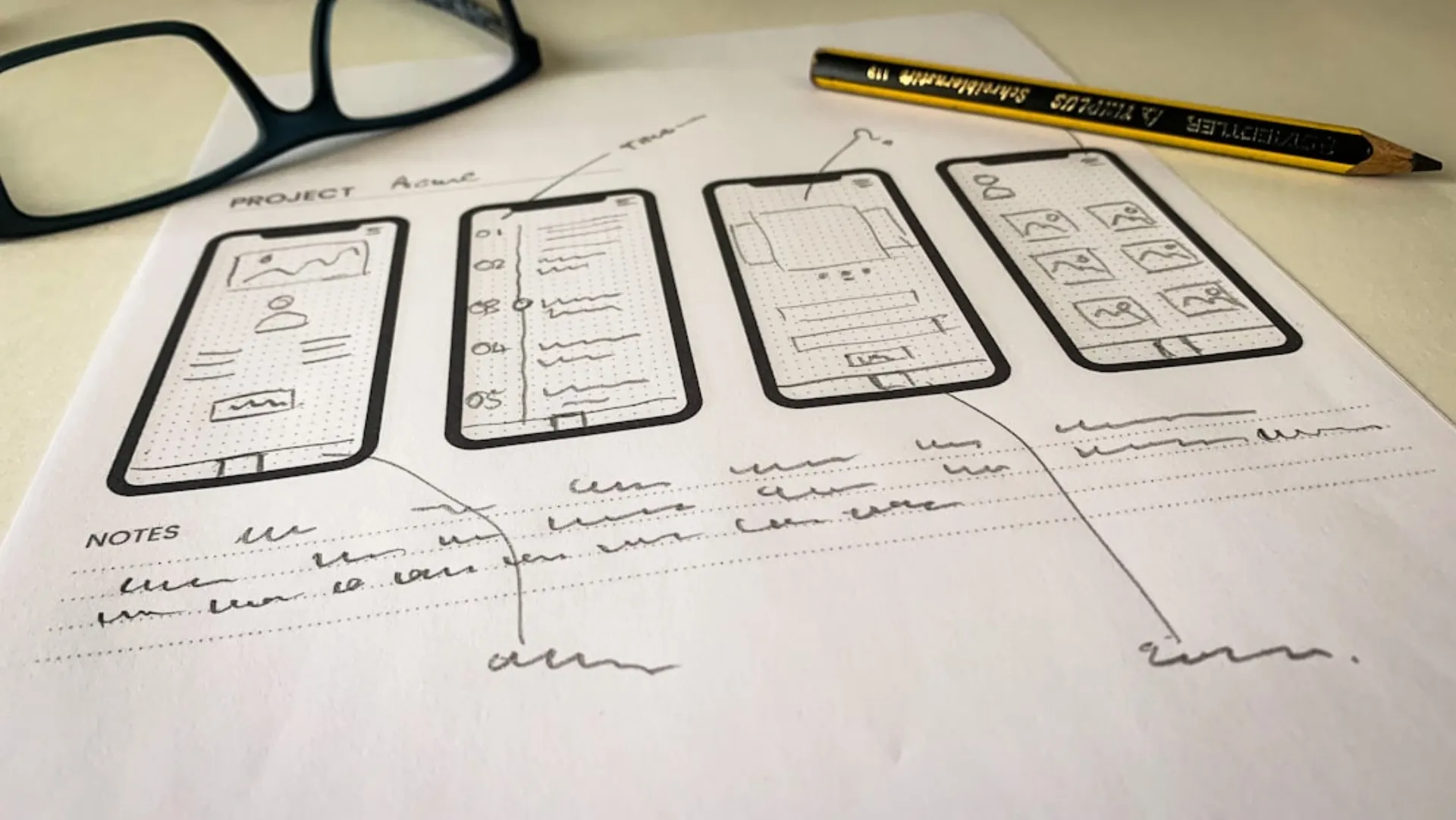
Scope definition determines the minimum feature set needed for credible validation — balancing speed with the domain-specific requirements that real estate professionals expect. We distinguish between must-have features (without which the product cannot be tested in a real-world context), should-have features (that significantly improve the validation but are not absolutely required), and nice-to-have features (that can be added after initial validation). For real estate MVPs, must-have features often include domain-specific capabilities that generic MVPs would defer: payment processing for property management products, MLS data display for brokerage tools, financial calculations for investment platforms, and compliance-aware workflows for any product that handles regulated activities. Scope definition produces a feature list, wireframes, and a development plan with a fixed timeline — typically 3-5 months to launch.
Iterative development builds the MVP in 2-week sprint cycles with user feedback throughout. Each sprint delivers working functionality that can be demonstrated to beta users for feedback — not just engineering progress that only the development team can evaluate. Early sprints focus on core workflow functionality: the primary user journey from start to completion. Middle sprints add the integration and data features that make the product functional in a real context: MLS connectivity, payment processing setup, and data import capabilities. Final sprints focus on polish, onboarding, and the monitoring infrastructure needed to learn from production usage. Beta user recruitment begins during development — identifying 5-15 users who will test the product in their actual operations and provide candid feedback.
Launch, measurement, and iteration deploys the MVP to beta users and establishes the feedback loops that drive product-market fit. Usage analytics track every user interaction — identifying which features are used, which are ignored, where users drop off, and how frequently they return. User interviews supplement analytics with qualitative insight — understanding why users behave as they do, what they wish the product did differently, and whether they would pay for the product in its current form. The critical validation question is not "do users like it?" but "does this change their behavior?" — a property manager who actually processes rent through the MVP is providing stronger validation than one who says they would hypothetically use it. Post-launch development sprints respond to user feedback — adding features users request, fixing workflows that cause confusion, and pivoting direction if the initial assumptions prove incorrect.
Ready to discuss your MVP development project?
Free consultation — no commitment required.
Case StudyPropTech startup / MVP development
MVP for a Rental Property Maintenance Coordination Platform
The Challenge
A PropTech startup founded by a former property manager identified an opportunity in maintenance coordination — the process of connecting property managers with qualified, reliable maintenance vendors. The founder's insight was that mid-size property management companies (managing 100-500 units) struggle with vendor management: finding reliable vendors for each trade, negotiating rates, ensuring quality, and tracking vendor performance. Existing property management platforms handle work order creation but do not help with vendor discovery, qualification, or performance management. The startup had $400,000 in seed funding and needed to validate the concept, acquire initial customers, and demonstrate traction for a Series A raise — all within 12 months. The founding team consisted of the CEO (the former property manager), a business development lead, and no technical staff.
Our Solution
We built a maintenance coordination MVP in 4 months that enables property management companies to submit maintenance work orders and have them matched to qualified vendors from a curated network. The MVP includes: a property manager dashboard for work order submission (with photo upload, category classification, and urgency selection), an AI-powered vendor matching engine that selects the best vendor based on trade specialization, proximity, availability, pricing tier, and performance history, automated vendor dispatch via the vendor's preferred communication channel (text, email, or in-app notification), work order tracking with status updates from vendor to property manager to tenant, completion documentation with photo evidence and cost recording, and vendor performance scoring based on response time, completion quality, and cost consistency. The vendor network was seeded with 80 vendors in the launch market (recruited by the CEO through personal connections and targeted outreach).
The platform integrates with popular property management systems (AppFolio and Buildium) through their APIs — pulling property and unit data so property managers do not need to re-enter property information. Mobile-first design enables property managers to submit and track work orders from the field. Analytics track: vendor match quality (manager satisfaction with vendor assignments), response times, completion rates, and cost benchmarks.
The Results
The MVP launched to 8 beta customers (property management companies managing a combined 1,600 units) within 4 months of development start. In the first 3 months of operation, the platform processed 420 work orders with an average vendor assignment acceptance rate of 91%. Property managers rated vendor match quality at 4.2 out of 5 — validating the AI matching approach. Average vendor response time (acknowledgment of work order) was 42 minutes — significantly faster than the 3-4 hour response time managers reported with their previous manual dispatch process. Three of the 8 beta customers converted to paying subscribers at $3/unit/month within the first 60 days — providing $4,800 in monthly recurring revenue and the early revenue traction needed for fundraising. The vendor network expanded to 140 vendors through vendor referrals (existing vendors invited colleagues) and inbound vendor applications (vendors heard about the platform from property manager customers).
The startup used the MVP traction data to raise a $2.1 million seed extension 8 months after the MVP launch — with investors citing the strong unit economics ($3/unit with ~$1.50 in vendor matching cost) and the high customer satisfaction metrics as primary investment thesis validators.
MVP Development Capabilities for Real Estate
- ✓Rapid Prototyping
Interactive prototypes to validate your concept before writing a single line of production code.
- ✓Core Feature Development
We identify and build only the features that matter — the ones that prove your hypothesis and attract early users.
- ✓Scalable Architecture
Even lean MVPs need a solid foundation. We build with production-grade tech so you can scale without a rewrite.
- ✓User Feedback Integration
Built-in analytics and feedback loops so you can learn from real user behavior from day one.
- ✓Investor-Ready Product
A polished, functional product that demonstrates traction — not just a pitch deck.
- ✓Iteration & Pivot Support
Agile development cycles that let you adapt quickly based on what the market tells you.
MVP Development Landscape for Real Estate
PropTech founders evaluating development options consider no-code/low-code platforms (Bubble, Webflow, Retool), general dev agencies without real estate experience, offshore development teams, and real estate-specialized development partners. No-code platforms enable rapid prototyping but hit limitations with real estate-specific requirements — MLS integration, payment processing, and complex financial calculations often exceed no-code capabilities. General dev agencies build functional software but may not understand what real estate professionals consider "minimum viable" — building features that seem complete but miss domain-critical capabilities. Offshore teams offer cost advantages but timezone and communication challenges can extend timelines beyond what runway constraints allow. ZTABS provides PropTech MVP development with built-in real estate domain knowledge — understanding which features real estate professionals require for credible evaluation, how MLS and payment integrations work, and what compliance considerations apply to each product category.
MVP Development Pricing for Real Estate
PropTech MVP development ranges from $80,000 to $250,000 depending on product complexity, integration requirements, and market scope. Simple tool MVPs (single-function brokerage tools, basic tenant portals) range from $80,000 to $130,000 with 3-4 month timelines. Platform MVPs with multiple user types and core integrations (property management, marketplace, investor portal) range from $130,000 to $200,000 with 4-5 month timelines. Complex platform MVPs with AI components, multiple integrations, and sophisticated financial logic represent the upper range. Post-MVP development for feature expansion, scaling, and market expansion typically runs $15,000-$40,000 per month. ZTABS structures MVP engagements with fixed scope and timeline — providing cost certainty that seed-stage startups need for financial planning.
Frequently Asked Questions
Common questions about MVP development for real estate
We use a progressive integration approach. For initial development and testing, we use recorded MLS data or synthetic listing data that mimics MLS format. For beta testing, we can connect through third-party MLS aggregation APIs (Spark, Bridge, Trestle) that provide data access without requiring a direct MLS relationship — often faster to obtain than direct MLS access. For production, we help you establish direct MLS data access through the appropriate licensing agreements. This approach lets you build and test MLS-dependent features without waiting for data access agreements to complete.
Ready for MVP Development Built for
Real Estate?
Our team has deep expertise in real estate technology. Get a free consultation.
500+
Projects Delivered
4.9/5
Client Rating
90%
Repeat Clients