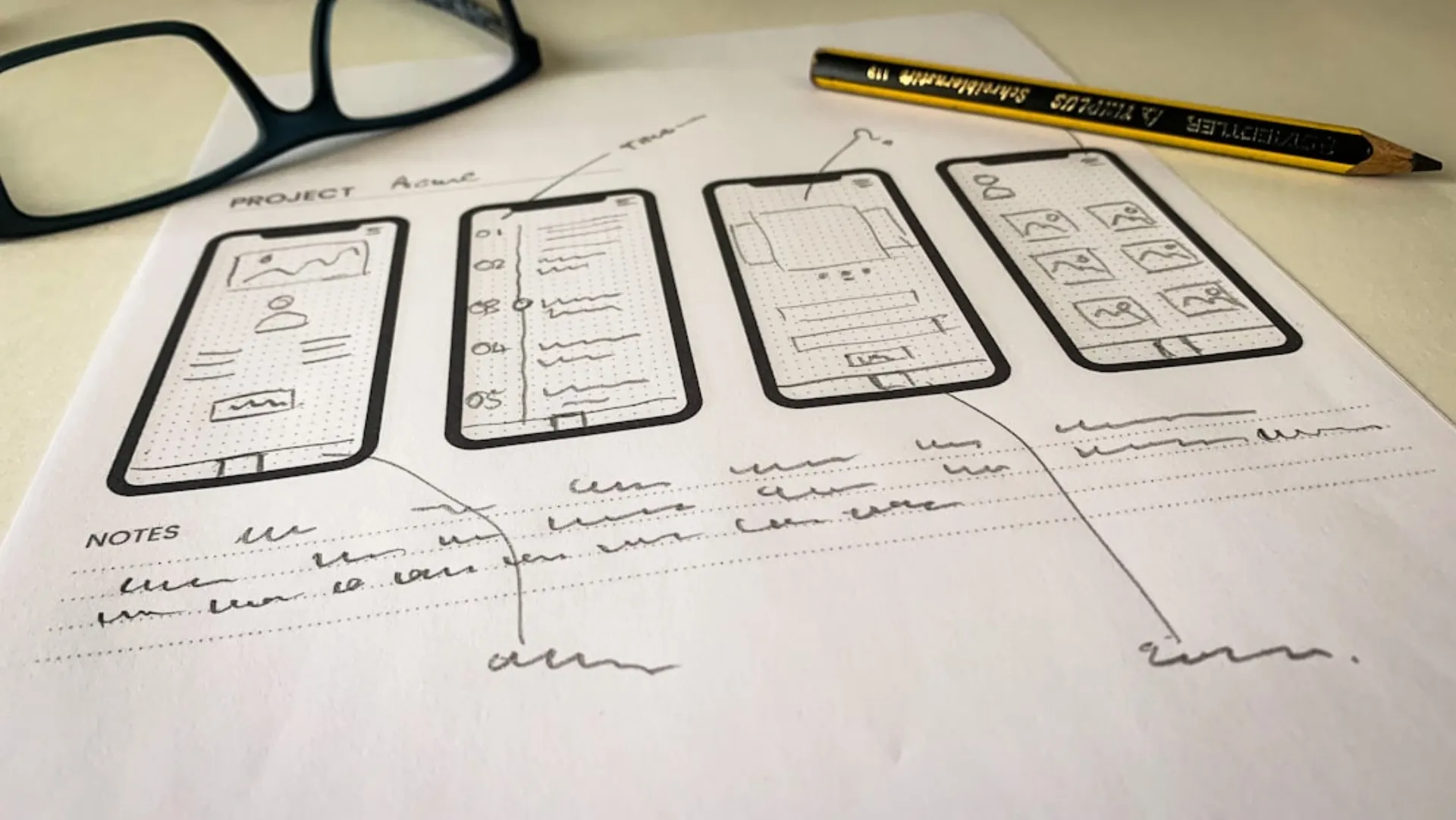
ZTABS builds MVPs for Miami startups and enterprises. We are remote-first by design from our office in Houston, Texas.
Miami's startup ecosystem has become a significant technology hub, particularly for products serving LATAM markets, real estate technology, cross-border commerce and bilingual consumer applications. The city's position as a gateway between North American and Latin American markets, combined with its growing venture capital presence, creates distinct MVP requirements. Our broader MVP development capabilities are on the MVP development services page, and planning benchmarks are in the MVP development cost guide.
Miami's MVP landscape is distinct from other US tech hubs. The city's bilingual population (approximately 75% of Miami-Dade County residents aged 5 and older speak a language other than English at home, per US Census Bureau 2020-2024 American Community Survey data), its geographic proximity to LATAM markets and its established real estate, hospitality and trade industries shape the types of products that succeed here. MVPs that work in Miami often need to account for multilingual users, cross-border commerce and the physical-digital intersection of industries like real estate and tourism.
Miami MVP development at a glance
| Industry | MVP type | What we build |
|---|
| Proptech | Rental management, property listing, tenant screening, transaction platforms | Products for South Florida's diverse real estate market |
| Trade tech | Cross-border payment, logistics, trade finance, import-export | Platforms for the Americas trade corridor |
| Consumer (bilingual) | Marketplace, social, local commerce, service platforms | Bilingual products for Miami's diverse consumer base |
| LATAM expansion | Market-entry platforms, localisation, compliance-ready products | Products designed for LATAM market entry from a US base |
| Fintech | Payment processing, remittance, banking-as-a-service | Financial products for cross-border transactions |
Proptech MVPs
South Florida's real estate market presents distinct proptech opportunities. The market's characteristics (high transaction volume, international buyer base, condominium-heavy inventory, seasonal rental patterns) create demand for technology products that address specific real estate workflows. Proptech MVPs typically involve property listing aggregation, tenant screening, rental management, transaction platforms and smart building management.
Real estate technology patterns
Miami proptech MVPs commonly involve integration with local MLS data, property management systems and real estate CRM platforms. Access to MLS data depends on licensing relationships the business establishes with local associations. Real estate platforms serving international buyers need currency conversion, multilingual property descriptions and timezone-aware communication tools. Condominium technology may involve integration with building management systems and HOA workflows.
Illustrative Example
Hypothetical: Rental Management Proptech MVP
A Miami proptech startup would build a rental management MVP targeting property managers with portfolios of 50 to 200 units across South Florida. The product concept: streamline tenant communication, maintenance requests, rent collection and lease management in a single bilingual platform.
MVP scope: tenant portal (English and Spanish), maintenance request tracking with photo upload, Stripe-based rent collection, lease document management and a property manager dashboard. Pilot with 3 to 5 property management companies. Architecture: Next.js frontend with i18n, Node.js backend, PostgreSQL, AWS. Integration with property management systems scoped to the pilot partners' specific tools.
Validation: does the platform reduce property manager administrative time per unit? Measured against the pilot partners' current workflow efficiency. Timeline and cost dependent on scope, bilingual content requirements and integration complexity. Use published planning benchmarks as a starting point.
This is a hypothetical scenario for illustration. Actual scope, timeline and cost depend on your requirements.
Building a proptech or marketplace MVP in Miami?
Tell us your product concept, target users and market. We will assess scope, architecture requirements and cost range using our published benchmarks.
Trade tech and cross-border commerce MVPs
Miami's position in the Americas trade corridor creates opportunities for technology products that facilitate cross-border commerce, trade finance, logistics management and supply chain visibility. These MVPs often need to handle multiple currencies, regulatory compliance across jurisdictions, multilingual interfaces and integration with customs and shipping systems.
Cross-border commerce patterns
Trade tech MVPs frequently involve payment processing across currencies, trade document management, customs compliance support, logistics tracking and supplier management. Integration with payment processors, banking APIs and logistics providers depends on the specific partnerships and licensing the business establishes. Multi-currency handling, cross-border tax considerations and international shipping logistics add complexity to MVP scope.
Bilingual consumer products
Miami's bilingual population creates a natural testing ground for products that serve both English and Spanish-speaking users. Consumer MVPs launching in Miami benefit from implementing internationalisation architecture (i18n) from the beginning. This includes separate content strings for each language, locale-aware date and currency formatting, culturally appropriate content and imagery, and locale-aware input validation.
Bilingual MVPs benefit from being designed with both language communities in mind from the start, which affects information architecture, content strategy, customer support workflows and marketing. The scope of professional translation, adaptation and cultural review depends on the target audience, content volume and agreed engagement scope.
Instagram and social commerce
Miami's consumer market is visually driven, with Instagram playing a significant role in local commerce (particularly in fashion, food, beauty and lifestyle). Consumer MVPs targeting Miami frequently integrate with social commerce workflows: Instagram Shopping, direct-message commerce, influencer collaboration tools and visual content management. Mobile-first design is commonly appropriate for consumer products targeting Miami's demographics but is an agreed scope decision, not a universal rule.
Hospitality and tourism technology
Miami's tourism industry (cruise ports, hotels, restaurants, nightlife, events) creates opportunities for hospitality technology MVPs. These products may address booking and reservation management, guest experience platforms, event ticketing, restaurant technology and tourism experience marketplaces. Seasonal demand patterns (winter high season, hurricane season, Art Basel, cruise schedules) affect product design and user behaviour assumptions. Multilingual support (English, Spanish, Portuguese, French Creole) broadens the addressable market for hospitality technology.
Building a bilingual or LATAM-expansion MVP in Miami?
Tell us your product concept, target markets and language requirements. We will assess internationalisation scope, architecture approach and cost range.
LATAM market-entry MVPs
Several Miami-based startups use the city as a base for LATAM expansion, building products that serve markets in Brazil, Mexico, Colombia, Argentina and other Latin American countries. LATAM-entry MVPs need to account for different payment ecosystems (PIX in Brazil, SPEI in Mexico), local compliance requirements (LGPD in Brazil, Ley Federal de Datos Personales in Mexico), currency considerations and localisation beyond language (cultural differences across LATAM markets).
Localisation complexity
LATAM localisation goes beyond Spanish translation. Brazilian Portuguese is distinct. Mexican Spanish differs from Argentine or Colombian Spanish in vocabulary, formality and cultural references. Local payment methods, address formats, identification document types and regulatory requirements vary by country. A LATAM-entry MVP typically starts with one target market, validates product-market fit, then expands to additional markets incrementally.
Cross-border fintech and remittance
Miami's position in the Americas corridor makes it a natural base for cross-border financial technology. Remittance products, trade finance platforms, cross-border B2B payment tools and multi-currency treasury management MVPs address real demand from businesses operating across the US and LATAM markets. These products face regulatory complexity: US FinCEN requirements, state money transmitter licensing, and destination-country financial regulations that vary by market. MVP scope typically focuses on one corridor (e.g., US-Mexico, US-Brazil, US-Colombia) before expanding.
Fintech and remittance MVPs
Miami's financial services ecosystem serves both domestic and international markets. The city's concentration of international banks, family offices and wealth management firms creates opportunities for fintech MVPs in wealth management, private banking technology, international tax compliance tools and investment platforms. Miami has attracted fintech founders and companies from around the world, particularly from LATAM, drawn by the city's cultural connections, timezone advantages and Florida's business-friendly regulatory environment.
Cryptocurrency and digital assets
Miami has positioned itself as a crypto-friendly city, and the area has attracted digital asset companies, blockchain startups and Web3 projects. While the regulatory landscape for cryptocurrency remains complex (SEC, CFTC, FinCEN, state money transmitter laws), Miami-based startups building compliant crypto infrastructure, institutional custody solutions, decentralised finance interfaces and blockchain analytics products address real demand. MVP scope for crypto products should carefully delineate the regulatory requirements for the specific activities involved.
How delivery works
-
Discovery (1 to 2 weeks). Customer interviews with Miami and LATAM target users. Market analysis including bilingual and cross-border requirements. Feature prioritisation: minimum feature set to test the core hypothesis. Architecture design including i18n, currency handling and compliance scope.
-
Design sprint (1 week). Five-day design sprint producing clickable prototypes in both languages (if bilingual). Tested with target users before engineering begins. Validates UX assumptions for both language communities.
-
Development (4 to 12 weeks). Two-week sprints with stakeholder demos. i18n implemented from the first sprint. Continuous deployment to staging. Cross-border payment and compliance features built as defined in discovery.
-
Pilot deployment and iteration. Pilot customers using the MVP in their actual workflow across both language communities. Measurement against pre-defined success metrics. Post-pilot decision: continue, pivot or stop.
Our usual stack: Next.js for frontend and API layers, Node.js for backend services, PostgreSQL for the database, and AWS for infrastructure. Next.js i18n routing for bilingual products. Technology choices depend on the specific product requirements.
MVP product-type planning benchmarks
Our published cost guide provides these planning benchmarks by product type:
| Product type | Cost range | Timeline |
|---|
| Landing page with waitlist | $3K to $8K | 1 to 3 weeks |
| Web app MVP | $10K to $30K | 4 to 10 weeks |
| Mobile app MVP | $20K to $50K | 8 to 14 weeks |
| Platform MVP | $40K to $80K | 12 to 20 weeks |
These are product-type benchmarks, not city-specific prices or fixed quotes. Actual costs depend on scope, complexity, bilingual requirements, cross-border payment integrations, compliance requirements and pilot deployment needs. Bilingual products add development scope for content management, localisation infrastructure, locale-aware validation and QA in both languages; the specific effort depends on content volume and interface complexity. See the full cost breakdown.
Vendor comparison
Our cost guide includes a vendor comparison scoped to a single-platform web MVP with authentication, 3 to 5 core features, Stripe integration, admin dashboard and an 8 to 12 week timeline:
| Vendor type | Typical cost range | Tradeoffs |
|---|
| Freelancer | $6K to $25K | Lower cost, variable quality. Ask about bilingual interface and cross-border trade integration |
| Offshore | $12K to $40K | Lower cost, timezone and communication challenges. Ask about US regulatory knowledge |
| Nearshore | $25K to $60K | Moderate cost. Ask about bilingual capability and proptech integration experience |
| US agency (ZTABS tier) | $30K to $80K | Production-quality architecture. Ask about Latin America multi-market and healthcare compliance depth for your specific product |
| No-code | $2K to $15K | Fast for simple products. Ask about bilingual and trade integration capability for your needs |
These ranges are for the specific web MVP scope described above. Cross-border commerce, multi-currency and bilingual platforms have additional complexity.
Florida regulatory considerations
Florida does not currently have a comprehensive consumer privacy law comparable to the CCPA. The Florida Digital Bill of Rights (FDBR), effective July 1, 2024, applies to controllers conducting business in Florida with global annual gross revenues exceeding $1 billion AND meeting at least one qualifying business-model condition under section 501.702: deriving 50% or more of global gross revenue from online advertising sales, operating a consumer smart speaker and voice assistant service (with specific exclusions), or operating an app store or digital distribution platform with 250,000 or more different software applications. Most early-stage startups do not meet these thresholds.
The CCPA may apply to Miami-based products that serve California consumers, depending on the business's California nexus, revenue, data processing volume and revenue source. Federal regulations (FTC Act, CAN-SPAM, COPPA) apply regardless of state. For fintech and cross-border commerce, FinCEN, state money transmitter licensing and international payment regulations may apply depending on the specific product and transaction types. Whether specific regulations apply depends on the business model and should be assessed with legal counsel.
Choosing an MVP development partner for Miami
| Option | Good for | What to verify |
|---|
| ZTABS (remote-first, Houston office) | Full-stack MVPs for proptech, trade tech and bilingual products with production-quality architecture | Remote-first by design |
| LATAM nearshore agency | Budget-conscious products with LATAM market knowledge | Ask about US enterprise integration capability |
| Local Miami studio | Founders wanting local meetings | Ask about cross-border commerce and compliance capability |
| Freelance developer | Simple products with limited scope | Ask about i18n architecture and payment integration knowledge |
Working across timezones
ZTABS is remote-first by design from our Houston, Texas office. Houston and Miami are only one timezone apart (Central and Eastern), making real-time collaboration straightforward. Sprint demos, design reviews and planning sessions align naturally with Miami business hours. For Miami startups working with LATAM partners and customers, we accommodate timezone-flexible collaboration schedules when needed. Asynchronous communication works well for development sprints with clearly defined deliverables and acceptance criteria.
Post-MVP considerations
After pilot validation, the product evolves through iteration. Cross-border products may need additional market localisation, payment method integrations and compliance adjustments for each new LATAM market. Proptech products may need additional property type support, MLS integrations and property management company partnerships. Phase plans are illustrative and agreed during scoping. Ongoing costs (hosting, API consumption, payment processing fees, translation), review and maintenance cycles and applicable taxes are separate from the development engagement.
Miami's position in the Americas trade corridor and its bilingual market make it a strong base for products that need to serve diverse cultural and linguistic communities. Products validated in Miami's multilingual market are well-positioned for expansion to other US markets with significant Hispanic populations and to LATAM markets.
We also offer web development, AI development and ecommerce development.
Next step
Ready to build an MVP in Miami?
Send us your product concept, target markets and timeline. We will reply with a preliminary scope assessment, architecture approach and cost range using our published benchmarks.