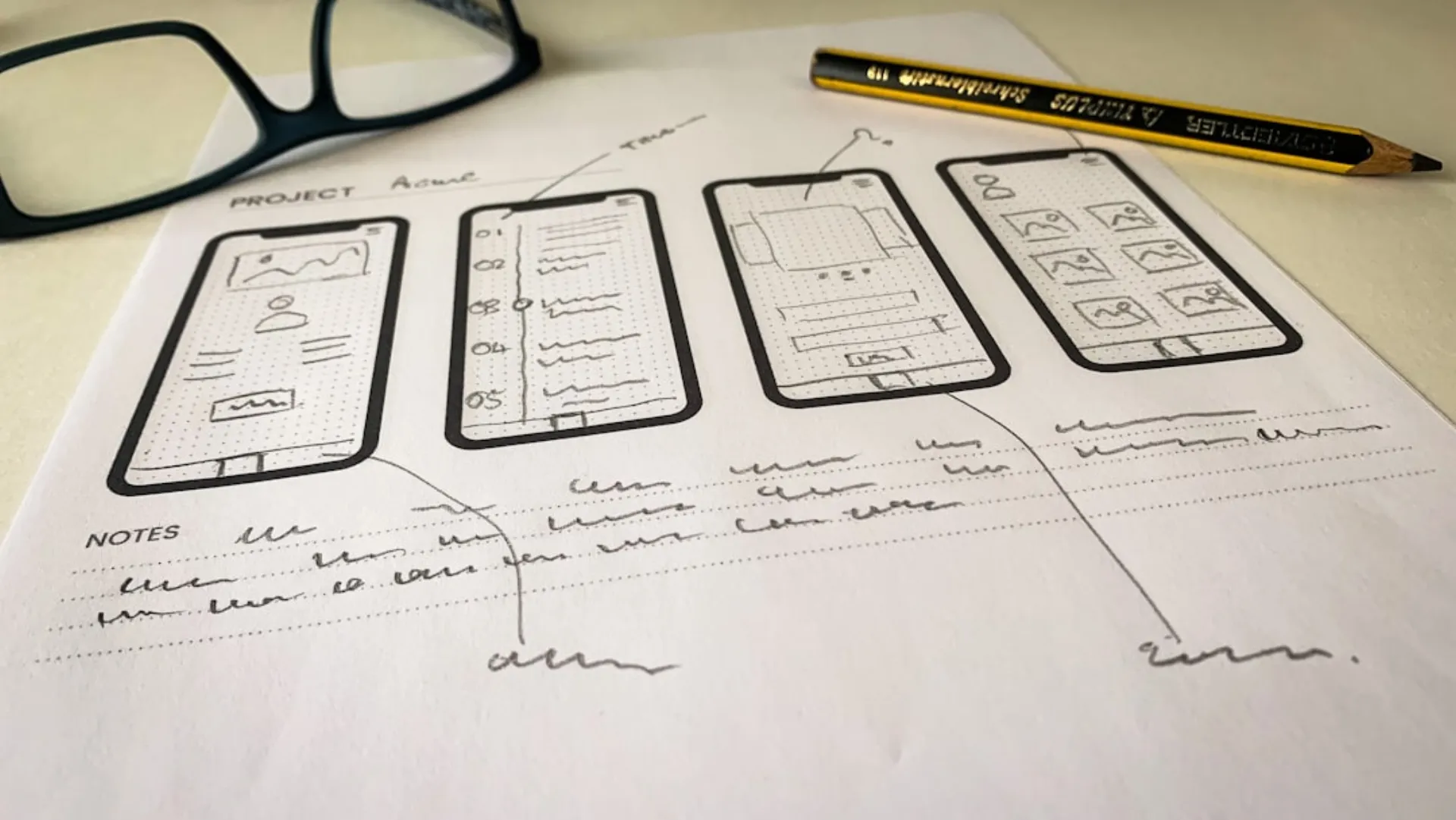
Our Lisbon MVP development follows a structured process optimised for speed, learning, and investor readiness. Product strategy (week 1): defining what to build and why. We don't build features — we test hypotheses. The first session: identifying the core hypothesis your MVP must validate. Not "we need a marketplace for X" but "we believe that [target users] will [specific behaviour] because [specific reason], and we can test this by building [minimum feature set]." Feature prioritisation: ruthless. For every proposed feature, we ask: "does this feature help validate the core hypothesis?" If no: it goes to the backlog. MVPs fail most often from building too much, not too little. The outcome of week 1: a one-page product brief (hypothesis, target user, core features, success metrics, and timeline) and a design prototype (Figma — interactive wireframes showing the complete user journey). The prototype: shareable — you can show it to potential users and investors before writing any code, getting feedback that shapes the product before development starts. Technical architecture (week 1-2): choosing the right stack. For most Lisbon MVPs, we use: Next.js (React framework — fast development, excellent performance, SEO-ready if the product has a marketing site, and easy deployment on Vercel), PostgreSQL (relational database — via Supabase for rapid development. Supabase provides the database plus authentication, real-time subscriptions, and storage — reducing the number of services to set up and manage), and Tailwind CSS + shadcn/ui (UI components — consistent, accessible, and fast to implement. Not custom-designing every button and form — using a proven component library that looks professional and works correctly). For mobile MVPs: React Native with Expo (cross-platform — one codebase for iOS and Android. For an MVP: the development speed advantage of cross-platform outweighs the performance advantage of native. If the MVP validates and the product grows: native migration is a future decision, not an MVP decision). For AI-integrated MVPs: OpenAI API or Anthropic API integrated into the Next.js application — GPT-4o for core AI features, with a model abstraction layer enabling future model switching. RAG architecture if the product involves knowledge retrieval — Pinecone or Weaviate for vector storage, integrated into the application layer. Development (weeks 2-7): building the MVP in sprints. Sprint structure: 1-week sprints (shorter than the typical 2-week sprint — MVP pace requires faster iteration). Each sprint: planning (Monday morning — 30 minutes), development (Monday-Thursday), review/demo (Friday morning — showing progress to the founder), and retrospective (Friday afternoon — adjusting approach based on learnings). Sprint 1: authentication, user onboarding, and core data model. The user can sign up, log in, and see the main interface. Sprint 2-3: core feature implementation. The primary value proposition functional — users can perform the key action that validates the hypothesis. Sprint 4-5: secondary features, integrations, and polish. Supporting features that make the core feature usable in a real-world context. Sprint 6: testing, bug fixing, and launch preparation. Performance testing, security review, and deployment configuration. Continuous deployment: every commit deployed to a staging environment. The founder: seeing progress daily, not waiting for sprint reviews. Major decisions: discussed asynchronously on Slack/WhatsApp during the week, not queued for meetings. Launch and measurement (weeks 7-8): getting real users. Launch strategy depends on the product: B2C: Product Hunt launch (Lisbon startups consistently perform well on Product Hunt), social media launch (LinkedIn for professional products, Instagram for consumer), and Portuguese tech media (Eco, Sapo Tek, Dinheiro Vivo — coverage that reaches the Portuguese market). B2B: direct outreach to 20-30 target customers (identified during product strategy week), demo sessions, and trial onboarding. Measurement: the MVP instrumented from day one with analytics — user signups, activation (did they complete the core action?), retention (did they come back?), and the specific metrics that validate or invalidate the core hypothesis. The data: presented to the founder in a weekly dashboard — not vanity metrics (page views, downloads) but hypothesis-validation metrics (did users do the thing we predicted they would do?). Investor readiness (weeks 8-10): preparing for fundraising. The MVP: not just a working product but an investment thesis. We prepare: product demo (a scripted demo showing the product's value proposition in 5 minutes — usable in investor meetings), metrics dashboard (key metrics visible in real-time — the investor can see traction, not just hear about it), technical documentation (architecture overview, technology choices, and scalability plan — the CTO-equivalent document that technical investors review), and pitch deck contribution (the product slides — screenshots, metrics, and technical approach — ready for inclusion in the founder's pitch deck).