How We Approach WordPress to Next.js Migration
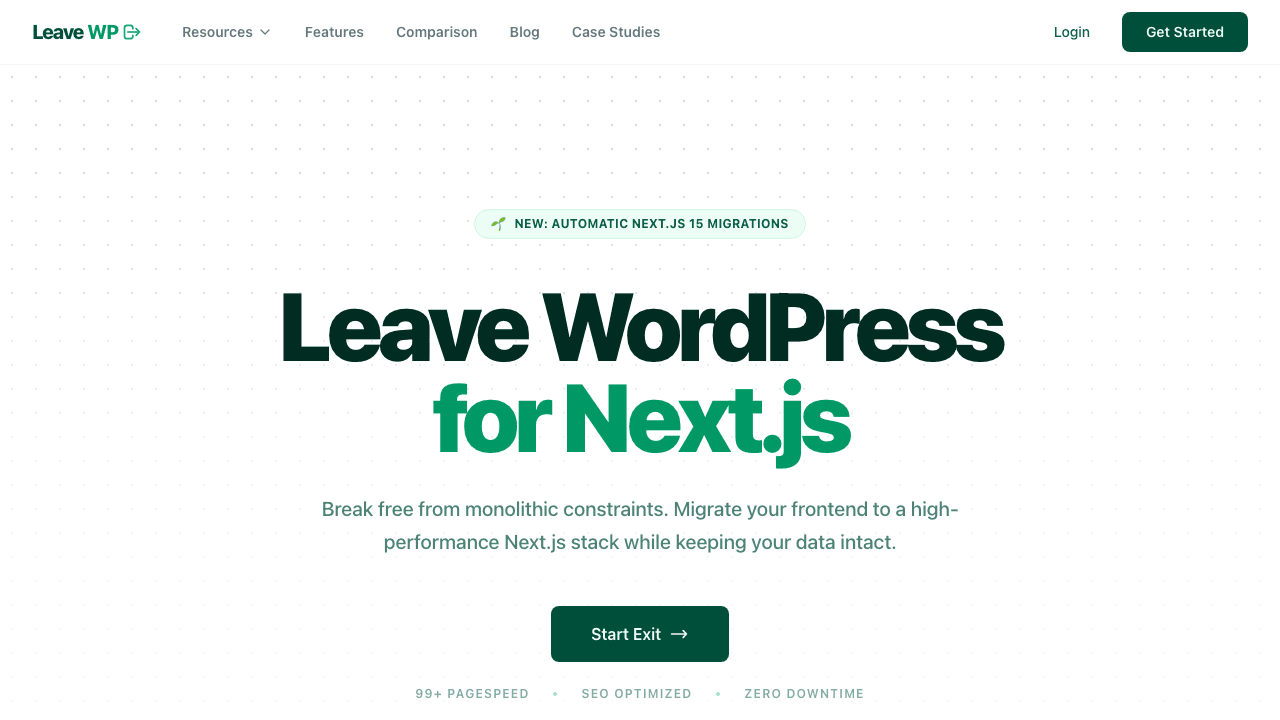
WordPress served you well, but it's holding you back. Plugin bloat, slow page loads, security patches, hosting complexity, and a PHP codebase that modern developers don't want to touch. Next.js solves all of these problems while keeping what WordPress does well — content management.
A WordPress to Next.js migration doesn't mean losing your content workflow. We move your content to a headless CMS (Sanity, Contentful, Payload, or Strapi) that gives editors an even better writing experience than WordPress, while the Next.js frontend serves pages in under 1 second with static generation, image optimization, and edge caching built in. The typical performance improvement is dramatic: WordPress sites scoring 40–60 on Google's Core Web Vitals consistently score 90–98 after migration to Next.js.
That's not just a vanity metric — Google uses Core Web Vitals as a ranking factor, and faster sites convert better (every 100ms of load time improvement increases conversion by ~1%). Our migration process is methodical. We start by crawling every page of your WordPress site: URLs, content, metadata, images, internal links, redirect chains, structured data, and custom functionality.
We build the new Next.js site in parallel with your live WordPress site, so there's zero disruption during development. When the new site is ready, we run an automated comparison — every page, every URL, every meta tag — to verify parity. Cutover happens in under 30 minutes with DNS switching, and we monitor Google Search Console daily for 60 days post-launch.
We've migrated sites ranging from 50-page marketing sites to 5,000+ page content platforms. The content volume doesn't scare us — we use AI-assisted content extraction and transformation pipelines that handle bulk migrations efficiently.