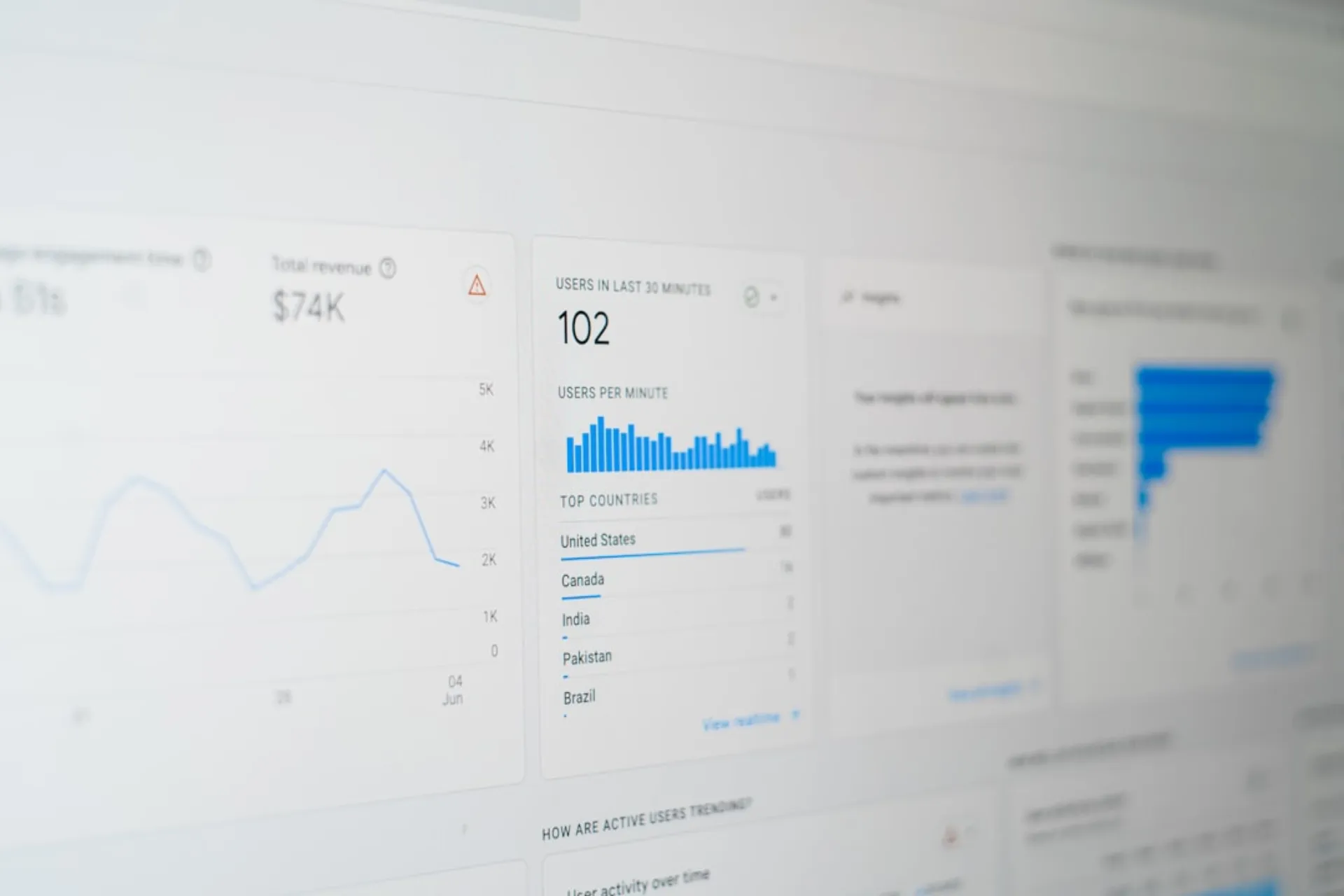
Our Lisbon digital marketing projects follow a methodology designed for the Portuguese market: (1) Market and competitor analysis (weeks 1-2): understanding the Portuguese digital landscape before executing. Portuguese keyword research: using SEMrush, Ahrefs, and Google Keyword Planner configured for pt-PT (European Portuguese) and Portugal geo-targeting. Keyword analysis: identifying search volumes, competition levels, and SERP features for target keywords. Portuguese-specific: checking that keyword tools are returning pt-PT data (many tools default to pt-BR — Brazilian Portuguese — which has different search volumes and competition), analysing Portuguese SERP features (featured snippets, People Also Ask, local packs — Portuguese SERPs having different feature prevalence than English SERPs), and identifying Portuguese-specific search behaviour (Portuguese consumers often search using longer, more conversational queries than English speakers — "qual é o melhor restaurante de marisco em Lisboa" rather than "best seafood Lisbon"). Competitor analysis: identifying Portuguese digital competitors — which companies rank for target keywords, what content they produce, their advertising strategy, and their social media presence. Portuguese competitors: often different from global competitors — local businesses with strong Portuguese SEO may outrank international brands. RGPD audit: reviewing current digital marketing compliance — cookie consent implementation, email list consent documentation, privacy policy accuracy, and advertising pixel compliance. Fixing compliance issues before scaling marketing: avoiding the risk of CNPD enforcement action during a growth phase. (2) SEO strategy and implementation (weeks 2-8): building organic visibility. Technical SEO: site audit — page speed (Core Web Vitals), mobile usability, crawlability, indexing status, and structured data. Portuguese-specific: hreflang implementation (if targeting multiple Portuguese-speaking markets — pt-PT for Portugal, pt-BR for Brazil), character encoding (Portuguese characters — ã, ç, õ, é — correctly encoded in URLs, meta tags, and content), and local schema (LocalBusiness schema with Portuguese address format, NIF for business identification). Content strategy: creating content that ranks in Portuguese search. Content types: pillar pages (comprehensive guides on core topics — "Guia Completo de [Topic]" format that performs well in Portuguese search), blog content (regular articles targeting long-tail Portuguese keywords — answering specific questions Portuguese consumers search for), and location pages (for businesses serving multiple Portuguese locations — Lisbon, Porto, Algarve — each with locally relevant content). Content creation: written by native European Portuguese speakers — not translated from English, not adapted from Brazilian Portuguese, but created in pt-PT from scratch. Content quality: meeting Google's E-E-A-T standards — particularly important for YMYL (Your Money Your Life) topics common in professional services, health, and financial content. Link building: Portuguese link acquisition — getting links from Portuguese domains (.pt), Portuguese media (Público, Expresso, Observador, Eco), Portuguese business directories (Páginas Amarelas, Racius), and Portuguese industry associations. Portuguese link building: relationship-based, with Portuguese business culture valuing personal connections in ways that affect link acquisition strategy. (3) Paid advertising (weeks 3-8+): targeted campaigns for immediate visibility. Google Ads: search campaigns targeting high-intent Portuguese keywords — ad copy in European Portuguese, landing pages in Portuguese, and conversion tracking configured for Portuguese business objectives. Portuguese Google Ads: CPCs typically €0.50-2.00 for B2B keywords (vs. €3-8 in the UK), €0.30-1.50 for B2C keywords (vs. €1-4 in the UK) — making paid acquisition significantly more cost-effective in Portugal. Campaign structure: separating Portuguese-language campaigns from English-language campaigns (for businesses targeting both Portuguese and international audiences), using Portuguese ad extensions (location, call, sitelink — all in Portuguese), and implementing Portuguese conversion tracking (phone calls, form submissions, WhatsApp messages). Meta Ads (Facebook/Instagram): Portuguese audience targeting — interest-based and behavioural targeting configured for Portuguese demographics. Portuguese Meta advertising: strong for B2C (fashion, food, lifestyle, tourism) and increasingly effective for B2B (LinkedIn alternative at lower cost). Creative: Portuguese-language ad creative featuring Portuguese cultural context — not adapted from generic European creative but designed for Portuguese audiences. LinkedIn Ads: B2B targeting in the Portuguese market — company size, industry, job title, and seniority targeting for Portuguese business decision-makers. LinkedIn: the primary B2B advertising platform for Lisbon businesses, with targeting capability that enables reaching specific segments of Portugal's business community. (4) Social media marketing (weeks 2-8+): building Portuguese social presence. Platform strategy: platform selection based on target audience. Facebook (still the largest social platform in Portugal — broad reach, strong for 30+ demographics, effective for local business marketing), Instagram (visual platform — strong for lifestyle, tourism, food, fashion. Portuguese Instagram: high engagement rates, with Portuguese-language content outperforming English content for Portuguese audiences), LinkedIn (B2B — Portuguese business community active on LinkedIn, with thought leadership content generating strong engagement), TikTok (growing rapidly among Portuguese 16-30 demographic — opportunity for early-mover brands to build presence before the platform becomes crowded), and WhatsApp Business (not traditional social media, but essential for Portuguese business communication — customer service, appointment booking, and promotional messaging with opt-in). Content creation: Portuguese-language social content created by native speakers — understanding Portuguese humour, cultural references, and communication style. Portuguese social media: more personal and relationship-oriented than Northern European markets — brands that communicate warmly and authentically outperform corporate-tone brands. (5) Analytics and reporting (ongoing): measuring Portuguese digital marketing performance. Analytics setup: Google Analytics 4 (configured for RGPD compliance — consent-mode integration, IP anonymisation, and data retention settings compliant with Portuguese requirements), Google Search Console (monitoring Portuguese search performance — pt-PT search queries, click-through rates, and indexing status), and conversion tracking (Portuguese-specific conversion events — phone calls, WhatsApp messages, form submissions in Portuguese, and offline conversion import for businesses with offline sales cycles). Reporting: monthly performance reports — organic traffic growth, paid advertising ROI, social media engagement, and conversion metrics. Reports: contextualised for the Portuguese market (Portuguese benchmarks, seasonal patterns, and competitive context — not generic global comparisons).