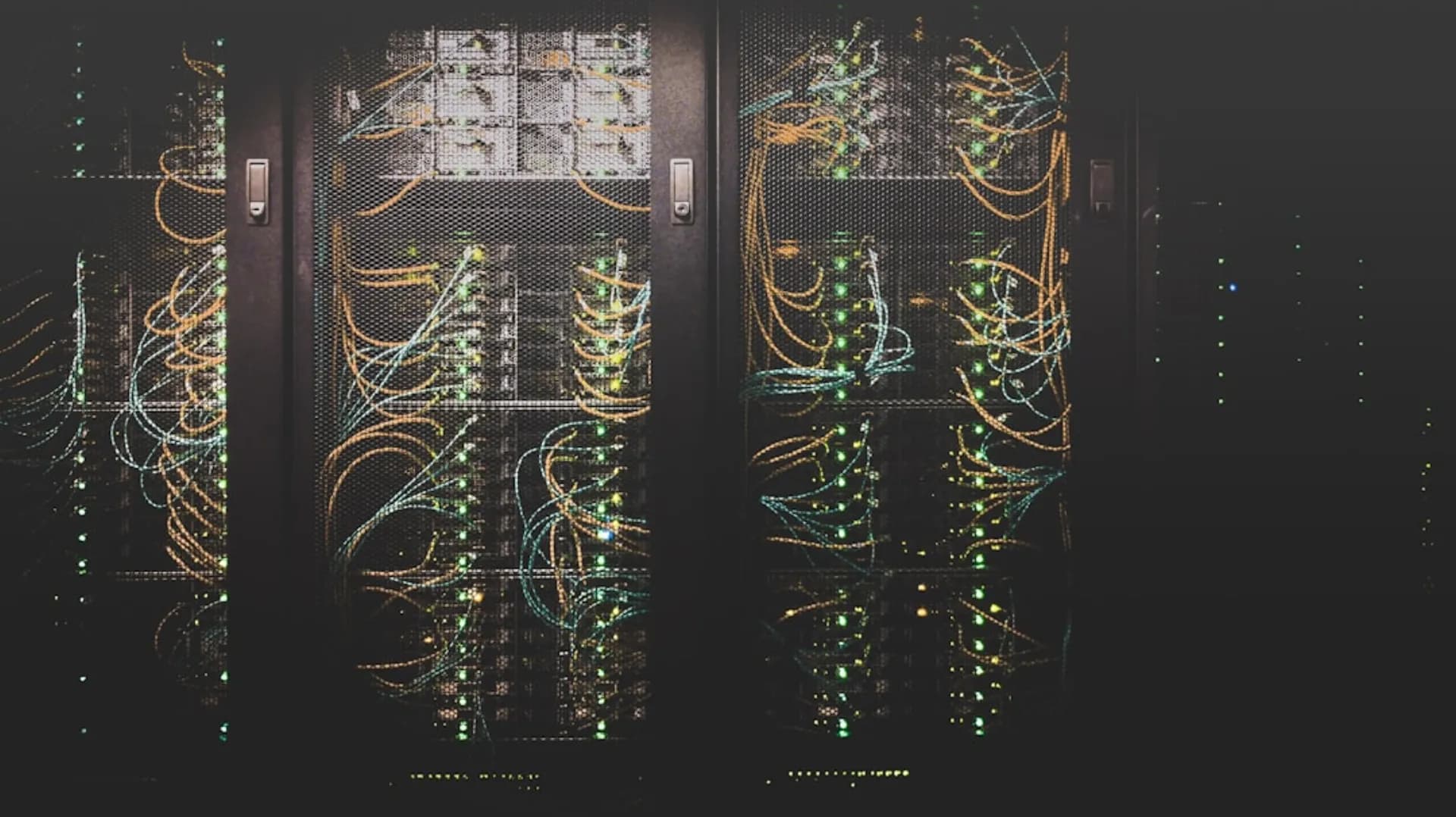
Our Berlin self-hosted AI methodology delivers production-grade, sovereign AI infrastructure that meets German regulatory and security requirements. Infrastructure architecture: designing for performance and sovereignty. Hardware selection: GPU infrastructure sized for the organisation's AI workload — NVIDIA A100 or H100 GPUs for high-performance inference, NVIDIA L40S for cost-efficient inference, or AMD MI300X for organisations preferring AMD. Sizing based on: model size (7B, 13B, 34B, 70B parameter models having dramatically different hardware requirements), concurrent users (how many simultaneous inference requests), latency requirements (real-time applications needing different architecture than batch processing), and throughput (total tokens per hour across the organisation). Deployment options: on-premises (GPUs installed in the organisation's data centre — maximum sovereignty, the organisation controlling hardware, network, and physical security), German colocation (GPUs in German data centres — Equinix Frankfurt, Interxion Frankfurt, NTT Munich — providing enterprise-grade power, cooling, and connectivity without requiring the organisation to operate data centre infrastructure), sovereign cloud (T-Systems Sovereign Cloud, IONOS, Hetzner — German cloud providers offering GPU instances on German infrastructure, with German data protection law applying and no US jurisdiction exposure), and EU cloud (AWS eu-central-1 Frankfurt, Azure Germany, GCP europe-west3 — hyperscaler GPU instances in German regions, but subject to the US CLOUD Act risk that some German organisations are unwilling to accept). Network architecture: AI infrastructure isolated from general-purpose networks — dedicated VLANs, firewall rules restricting access to authorised users and applications, and no internet connectivity for the AI inference layer (air-gapped deployment available for maximum security). Model selection and optimisation: choosing and tuning open-source models. Model evaluation: evaluating open-source models on the organisation's specific use cases — not relying on generic benchmarks. German language: evaluating models on German-language tasks — Llama 3.1, Mistral/Mixtral, and Qwen performing differently on German text generation, understanding, and instruction following. The evaluation using the organisation's actual documents and queries — ensuring the selected model performs well on the specific domain. Model optimisation: quantisation (AWQ, GPTQ — reducing model precision from FP16 to INT4/INT8, reducing memory requirements by 2-4x with minimal accuracy loss), vLLM or TGI (Text Generation Inference) for efficient inference serving — supporting continuous batching, paged attention, and speculative decoding for high-throughput deployment, and fine-tuning (LoRA/QLoRA fine-tuning on the organisation's domain data — adapting the model to specific vocabulary, style, and knowledge. Fine-tuning on medical terminology for healthcare, financial terminology for banking, or legal terminology for law firms). RAG integration: connecting self-hosted AI with organisational knowledge. Self-hosted RAG: the entire RAG pipeline — embedding generation, vector storage, retrieval, and generation — running on the same self-hosted infrastructure. Embedding model: self-hosted embedding model (BGE, E5, or multilingual-e5) running on the same GPU infrastructure — no data leaving the environment for embedding generation. Vector database: self-hosted Weaviate, Qdrant, or pgvector — vector storage on the organisation's infrastructure with the organisation's encryption and access controls. The RAG pipeline: ensuring that AI responses are grounded in organisational documents while maintaining complete data sovereignty — no document content, embeddings, or queries leaving the organisation's control. Security and compliance: meeting German security standards. BSI IT-Grundschutz: implementing BSI security controls for the AI infrastructure — asset management, access control, cryptography, physical security, operations security, communications security, and incident management. Logging and audit: comprehensive logging of all AI interactions — who submitted a query, what was the query, what was the response, what sources were retrieved (for RAG). Logs stored on the organisation's infrastructure, available for compliance audit. GDPR compliance: AI infrastructure designed with GDPR principles — data minimisation (retaining only necessary interaction data), purpose limitation (AI processing limited to declared purposes), and data subject rights (ability to identify and delete data related to a specific individual). EU AI Act: technical documentation for the AI system — model provenance, training data description, performance metrics, known limitations, and risk assessment. For high-risk applications: conformity assessment documentation prepared.