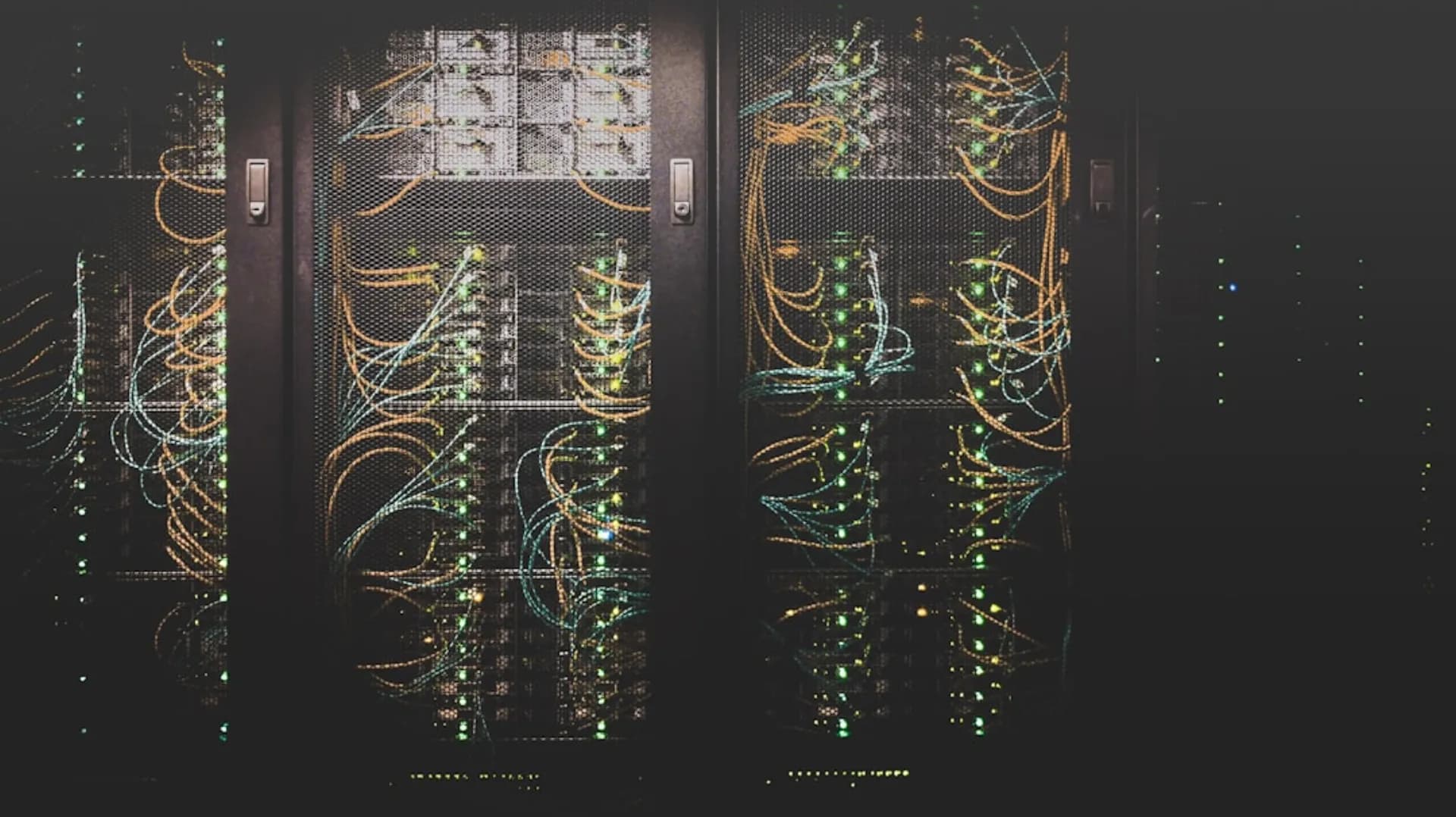
Our self-hosted AI deployment methodology for Boston institutions addresses hardware selection, model optimization, security hardening, and operational management. Phase 1 — Requirements and Architecture: defining the deployment requirements: security classification (determining the security level: air-gapped (no network connectivity — the most restrictive, required for classified defense environments), network-isolated (connected to the institutional network but not the internet — common for hospital and financial deployments), and private cloud (running on the institution's own cloud infrastructure — providing isolation without physical air-gapping)), workload characterization (understanding the AI workload: model size (7B, 13B, 70B+ parameters — larger models require more GPU memory), concurrency (how many simultaneous users/requests — determines the number of GPU instances needed), latency requirements (interactive use requires sub-second inference — batch processing can tolerate longer), and throughput requirements (tokens per second needed — determines GPU selection and quantity)), model selection (choosing the right open-source model: Llama 3 70B (strong general-purpose performance, good for most enterprise applications), Mistral/Mixtral (excellent efficiency, good for resource-constrained deployments), Phi-3 (small but capable — good for edge deployments or low-resource environments), and domain-specific models (BioMistral for clinical, CodeLlama for programming, finance-tuned models for investment research)), and infrastructure design (designing the hardware and software stack: GPU selection (NVIDIA H100 for maximum performance, A100 for cost-effective production, L40S for inference-optimized workloads, RTX 4090 for development and small-scale deployment), networking (InfiniBand for multi-GPU communication in training workloads, standard Ethernet for inference), storage (NVMe SSDs for model weights and inference cache, object storage for training data and model versions), and cooling and power (GPU-heavy deployments have significant power and cooling requirements — data center planning is essential)). Phase 2 — Model Optimization: preparing models for efficient on-premise inference: quantization (reducing model precision to decrease memory requirements and increase inference speed: 4-bit quantization (GPTQ, AWQ) reduces memory requirements by 75% with minimal quality loss — enabling a 70B parameter model to run on a single GPU that would otherwise require 4 GPUs for full-precision inference, 8-bit quantization (bitsandbytes) provides a balance between quality and efficiency), model serving framework (deploying inference infrastructure: vLLM (high-throughput inference with PagedAttention — the best choice for most production deployments, supporting continuous batching, tensor parallelism, and efficient memory management), Text Generation Inference (TGI) by Hugging Face (production-ready, well-documented, supports quantization and batching), and Ollama (simple deployment for smaller models — good for development environments and individual workstations)), and fine-tuning (adapting models to the institution's domain: LoRA/QLoRA fine-tuning (parameter-efficient fine-tuning that adapts the model to domain-specific tasks without retraining all parameters — reducing training time and compute requirements by 90%+ compared to full fine-tuning), training on institutional data (clinical notes, legal documents, financial filings — adapting the model's vocabulary, style, and domain knowledge to the institution's specific needs), and evaluation on domain-specific benchmarks (measuring fine-tuned model performance against: general benchmarks and institution-specific test sets created by domain experts)). Phase 3 — Security Hardening: securing the AI deployment for regulated environments: network security (air-gap implementation for classified environments — with data diode or manual transfer mechanisms for model updates, network segmentation for healthcare and financial environments — isolating AI infrastructure from general network traffic, and encrypted communication for all AI service traffic within the institutional network), access control (role-based access to AI services — restricting which users can: query the model, view inference logs, modify model configurations, and access model weights and training data), audit logging (comprehensive logging of: every inference request (timestamp, user identity, prompt, response), all model configuration changes, all access to model weights and training data, and all administrative actions — meeting NIST 800-171 and HIPAA audit requirements), and data handling (ensuring that: training data is stored with appropriate access controls, inference inputs and outputs are logged and retained per institutional policy, model outputs are not cached in ways that could expose sensitive information, and model weights are protected as institutional intellectual property)). Phase 4 — Operations and Monitoring: ongoing management of the self-hosted AI infrastructure: performance monitoring (tracking: GPU utilization, inference latency, throughput, queue depth, and error rates — alerting when performance degrades or capacity limits are approached), model management (versioning and deploying model updates: A/B testing new model versions against production models, rollback capability for model updates that degrade quality, and model registry for tracking all deployed models and their configurations), capacity planning (monitoring usage trends and planning hardware expansion: predicting when additional GPUs will be needed based on usage growth, planning procurement and installation — GPU lead times can be 8-16 weeks for enterprise hardware, and right-sizing infrastructure to avoid over-provisioning), and disaster recovery (backup and recovery for AI infrastructure: model weight backups (stored in secure, separate locations), configuration backups (all infrastructure-as-code and model configurations version-controlled), and recovery procedures (documented, tested procedures for restoring AI service after infrastructure failure)).