ChallengeA Toronto-headquartered Canadian property and casualty insurance group (CAD $4.8B direct written premium, operating across personal auto, home, commercial property, commercial liability, and specialty lines, 4,200 employees, serving 3.2 million policyholders across all 10 provinces and 3 territories) needed to deploy AI capabilities to transform underwriting, claims, and customer service operations. The insurer had invested in data science teams and built several ML models in-house, but deploying LLM capabilities for document processing, customer communication, and underwriting analysis required infrastructure decisions that their existing data science platform could not support. Core challenges: (1) Canadian data residency — non-negotiable. The insurer processed personal information for 3.2 million Canadian policyholders — driver's license numbers, vehicle identification, property details, claims histories, medical records (for accident benefits claims in Ontario), and financial information. OSFI (the insurer was federally regulated) and PIPEDA required that this data be processed with appropriate safeguards. The insurer's legal team had concluded that sending policyholder data to US-headquartered cloud AI APIs created unacceptable risk: the US CLOUD Act potentially enabling US government access to Canadian policyholder data, AI provider terms of service not providing sufficient guarantees against data use for model training, and the insurer's inability to audit or control how data was processed once it left their infrastructure. The board had approved a policy: all AI inference involving policyholder data must occur on Canadian-resident infrastructure controlled by the insurer. (2) Ontario auto insurance complexity — Ontario personal auto insurance represented 38 percent of the insurer's book (CAD $1.8B DPW) and was regulated by FSRA (Financial Services Regulatory Authority of Ontario). Ontario auto was the most complex auto insurance system in North America: mandatory accident benefits (medical, rehabilitation, income replacement, attendant care — each with specific statutory limits and dispute resolution processes), a hybrid tort/no-fault system (drivers could sue for non-pecuniary damages above threshold — creating complex litigation exposure assessment), and FSRA rate filing requirements (every rate change requiring regulatory approval with actuarial justification). Claims processing in Ontario auto involved: medical records review (accident benefits claims requiring analysis of treatment plans, medical assessments, and insurer examination reports), litigation management (personal injury lawsuits requiring document analysis, settlement evaluation, and reserve assessment), and fraud detection (Ontario auto fraud estimated at CAD $1.6B annually — the insurer losing approximately CAD $120M to fraud). The insurer needed AI to process these complex documents — but the documents contained the most sensitive personal health information, requiring PHIPA-compliant processing within the insurer's own infrastructure. (3) Multi-province regulatory complexity — the insurer operated across 13 jurisdictions, each with different insurance regulations. Alberta: Superintendent of Insurance regulations, different auto insurance regime (predominantly tort-based). British Columbia: ICBC as public auto insurer with the insurer writing only optional coverages — different data requirements. Quebec: distinct civil law regime with no-fault auto insurance under SAAQ — French-language documents and Quebec-specific legal terminology. Maritime provinces: each with unique regulatory requirements. The insurer needed AI that understood Canadian insurance terminology across provinces — not just English-language insurance concepts but specifically Canadian regulatory language, provincial coverage differences, and the legal framework of each jurisdiction. (4) Claims volume and complexity — the insurer processed 680,000 claims annually across all lines of business. Auto claims: 380,000 (including 42,000 Ontario accident benefits claims). Home claims: 180,000 (including increasing severe weather events — Canadian hailstorms, ice storms, wildfire). Commercial claims: 120,000 (ranging from small property claims to complex liability claims). Each claim generated substantial documentation: first notice of loss (FNOL) reports, police reports, contractor estimates, medical records (Ontario auto), engineering reports (commercial property), legal correspondence (litigated claims), and adjuster notes. Claims handlers spent 55 percent of their time on document review and data entry — time that could be redirected to customer service and complex claim resolution if AI could handle document processing. (5) Bilingual requirements — 22 percent of the insurer's policyholders were in Quebec and francophone New Brunswick, generating French-language correspondence, claims documentation, and regulatory filings. The AI platform needed to process French and English documents with equal quality — not translated processing but genuine bilingual capability understanding Canadian French insurance terminology.
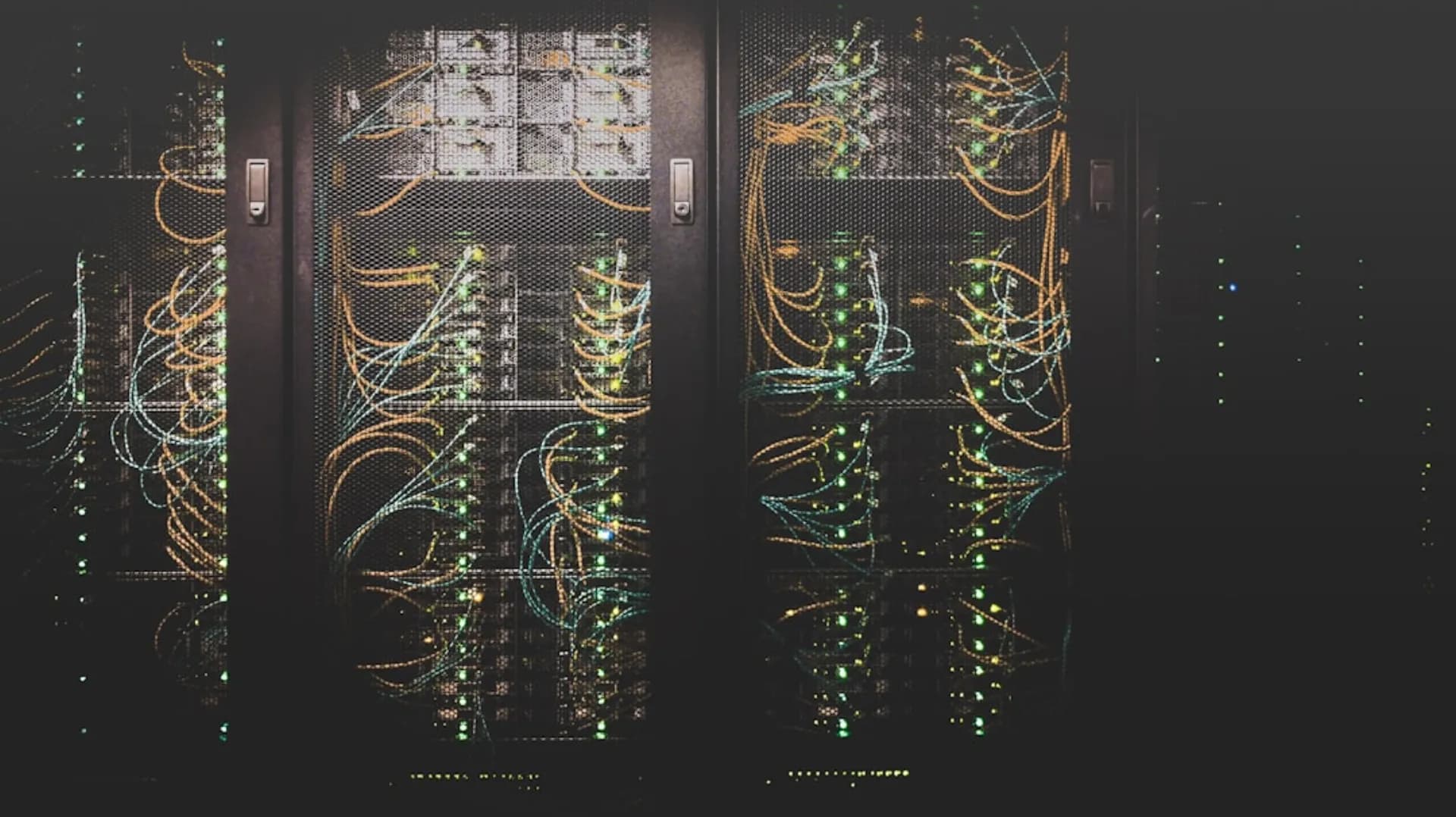
SolutionWe deployed a self-hosted AI platform over 14 weeks — purpose-built for Canadian P&C insurance operations, hosted in the insurer's Toronto-area data centres. (1) Canadian-resident GPU infrastructure. Hardware: 32 NVIDIA H100 80GB GPUs across 4 server nodes, deployed in the insurer's primary data centre in Markham, Ontario (a Tier 3 facility the insurer owned and operated, meeting OSFI infrastructure requirements). Node configuration: 8x H100 per node, 1.5TB system RAM, 24TB NVMe storage, 100Gbps Ethernet interconnect between nodes. Total GPU memory: 2.56TB — capacity for simultaneous deployment of multiple models serving different business lines. Network: connected to the insurer's internal network with no external internet connectivity for the inference cluster. Claims adjusters, underwriters, and customer service representatives accessed AI capabilities through the insurer's existing secure applications — AI appearing as an internal service, not an external tool. Disaster recovery: model weights and configurations replicated to the insurer's DR facility in Southwestern Ontario — meeting OSFI business continuity expectations with 4-hour recovery time objective. (2) Claims document AI: processing 680,000 claims annually. FNOL processing: AI processing first notice of loss submissions — extracting structured data (date of loss, peril, location, description, claimant information, policy details) from phone transcripts, online submissions, and broker-submitted forms. The system classifying claims by severity (fast-track small claims versus complex claims requiring senior adjuster assignment), identifying potential fraud indicators at first notice (inconsistent details, prior claim patterns, known fraud schemes), and routing to appropriate claims teams. Processing time: FNOL structured data extraction in 8 seconds (versus 12 minutes manual entry). Ontario accident benefits: the most complex claims processing challenge. AI processing: treatment plans (OCF-18 forms from healthcare providers — extracting treatment type, duration, cost, and assessing reasonableness against guidelines), insurer examination reports (IE reports from the insurer's medical assessors — extracting diagnoses, prognoses, and treatment recommendations), and dispute resolution documents (LAT — Licence Appeal Tribunal — applications and decisions, requiring understanding of Ontario auto dispute resolution procedures). The system fine-tuned on 12,000 Ontario accident benefits files annotated by experienced AB claims handlers — learning the specific terminology, form structures, and assessment criteria used in Ontario's unique AB system. AB claims processing: medical record review time reduced from 3.2 hours to 42 minutes per file (78 percent reduction). Reserve accuracy: AI-recommended reserves within 12 percent of experienced handler assessments (measured on 500 blind test files). Auto damage assessment: AI processing photos and estimates from body shops and independent appraisers — validating repair versus replace decisions, identifying estimate inconsistencies, and flagging potential fraud (inflated estimates, phantom damage, prior damage claimed as new). The system trained on 85,000 historical auto damage estimates from the insurer's database. Home claims — weather event processing: Canadian weather events generating surge claim volumes — a single Alberta hailstorm generating 15,000 claims in 48 hours. AI enabling surge processing: automated FNOL extraction from high-volume submissions, damage classification from policyholder-submitted photos (roof damage severity assessment, water damage extent estimation), and contractor estimate validation against regional cost benchmarks. The system processing 4x normal volume during weather events without additional staffing. Commercial claims: AI processing complex commercial claims documentation — building engineer reports, business interruption calculations, liability investigation reports. Commercial claims requiring deeper analysis than personal lines — the AI providing document summarisation and data extraction rather than automated decisions, supporting senior commercial adjusters. (3) Fraud detection AI: targeting CAD $120M annual fraud losses. Multi-signal fraud scoring: AI combining document analysis with network analysis to identify fraudulent claims. Document indicators: inconsistencies between FNOL description and supporting documentation, medical treatment patterns inconsistent with claimed injuries (Ontario AB fraud often involving clinics billing for services not rendered), and estimate patterns suggesting organised fraud rings (multiple claims from related parties using the same service providers). Network analysis: graph-based analysis identifying connections between claimants, healthcare providers, body shops, and legal representatives — identifying organised fraud rings that individual claims analysis missed. The insurer's SIU (Special Investigations Unit) had previously identified fraud through manual referrals — the AI system scoring every claim at FNOL and flagging high-risk claims for SIU review. Fraud detection results: 340 percent increase in SIU referrals (from manual identification of approximately 2,400 annual referrals to AI-flagged 8,160), with referral-to-confirmed-fraud rate maintained at 38 percent — indicating the AI was identifying genuinely suspicious claims, not generating false positives. Estimated fraud savings: CAD $28M annually in prevented fraudulent payouts (conservative estimate based on confirmed fraud on AI-referred claims). (4) Underwriting AI: risk assessment and pricing support. Auto underwriting: AI processing new business applications — extracting driver information, vehicle details, and coverage requirements, then providing underwriting recommendations based on: driver risk scoring (claims history, violation history, credit information where permitted by provincial regulation), vehicle risk assessment (make, model, year, usage pattern, telematics data where available), and territorial rating (geography-specific risk factors — Ontario urban versus rural, Alberta hail exposure, BC flood exposure). The system supporting the insurer's underwriters rather than replacing them — providing risk assessments that underwriters reviewed and approved. Fine-tuned on the insurer's 8 years of underwriting and claims data (2.4 million policies), learning the insurer's specific risk appetite and pricing philosophy. Commercial underwriting: AI processing commercial applications — analysing financial statements, loss runs, and business descriptions to provide preliminary risk assessments for underwriter review. Commercial lines requiring deep understanding of industry-specific risks — the system fine-tuned on the insurer's commercial book covering 45 industry classifications. (5) Bilingual processing: genuine French-English capability. French-language AI: deployed bilingual models capable of processing Quebec French insurance documents — not translated processing but models fine-tuned on French-language insurance terminology. Training data: 4,800 French-language claims files, 2,200 French-language policy documents, and Quebec regulatory filings — ensuring the model understood Quebec insurance terminology (attestation, franchise, surprime) and Quebec civil law concepts (responsabilite civile, recours) that differed from common-law English equivalents. Automatic language detection: the system automatically detecting document language and routing to appropriate processing — claims handlers in Ontario receiving English AI outputs, handlers in Quebec receiving French outputs. Quality parity: French-language processing achieving within 3 percent of English-language accuracy across all document types — validated through bilingual quality assurance testing with Quebec-based claims handlers. (6) OSFI-aligned model governance. Model risk framework: comprehensive governance meeting OSFI Guideline E-23 (Enterprise-Wide Model Risk Management) expectations. Model inventory with risk classification (Tier 1 models affecting policyholder outcomes requiring quarterly validation, Tier 2 operational models requiring annual validation). Validation: independent model validation using the insurer's existing actuarial team (not the data science team that built the models) — testing for accuracy, bias (particularly important for auto insurance pricing where prohibited discrimination grounds like age, gender, and marital status vary by province), and stability over time. Ongoing monitoring: automated monitoring of model performance with drift detection — accuracy metrics, processing time, and output distribution monitored continuously with alerts for significant deviations. Audit trail: every AI-processed claim maintaining a complete record of model version, input data, AI output, and human decision — enabling regulatory audit and litigation support.
OutcomeResults over 12 months post-deployment. Claims processing: 680,000 annual claims processed through AI platform. FNOL processing: from 12 minutes to 8 seconds per claim for structured data extraction. Ontario AB claims: medical record review from 3.2 hours to 42 minutes per file (78 percent reduction). Auto damage estimates: processing 4,200 estimates daily with 94 percent accuracy in repair/replace validation. Weather surge capacity: processing 4x normal volume during events without additional staffing. Total claims handler time savings: 142,000 hours annually (equivalent to 68 FTE — handler time redirected to customer service and complex claim resolution rather than document processing). Fraud detection: SIU referrals: from 2,400 to 8,160 annually (340 percent increase). Confirmed fraud on AI referrals: 38 percent rate maintained (3,101 confirmed fraudulent claims). Estimated fraud prevention savings: CAD $28M annually. Organised fraud ring identification: 12 rings identified through network analysis in first 12 months (versus 3 rings identified manually in prior 12 months). Underwriting: new business processing time: 34 percent reduction in auto underwriting cycle time. Quote-to-bind conversion: 8 percent improvement (faster quoting capturing more business). Commercial underwriting: preliminary risk assessment from 2 days to 4 hours for standard commercial accounts. Bilingual: French-language processing: 148,000 claims and documents processed in French annually with accuracy within 3 percent of English processing. Quebec claims handler satisfaction: 82 percent rating AI outputs as "good" or "excellent" — comparable to Ontario handler ratings (86 percent). Performance: H100 cluster handling full workload at 58 percent average GPU utilisation. Inference latency: median 2.8 seconds for document extraction, 6.4 seconds for complex analysis (AB medical records). System uptime: 99.96 percent. OSFI compliance: full model governance framework operational. Quarterly validation reports submitted to the insurer's risk committee. Zero OSFI examination findings related to AI. Model bias testing confirming no prohibited discrimination across all provincial jurisdictions. Cost: infrastructure investment: CAD $4.2M (32 H100 GPUs, servers, networking, storage, DR replication). Annual operating cost: CAD $1.1M (power, cooling, maintenance, ZTABS quarterly reviews). Annual value generated: claims efficiency: CAD $8.4M (142,000 hours at average handler loaded cost). Fraud prevention: CAD $28M. Underwriting efficiency: CAD $3.2M. Total annual value: CAD $39.6M. ROI: 7.5x in year one. The insurer's CFO noted that the fraud prevention savings alone justified the entire AI investment — all other benefits were incremental to an already-positive business case.