How We Approach RAG & Knowledge Systems
Large language models are powerful but they hallucinate when asked about your specific company, products, or processes. RAG solves this by grounding LLM responses in your actual data. When a user asks a question, the system first searches your documents for relevant passages, then feeds those passages to the LLM alongside the question.
The result: accurate answers with source citations, not fabricated responses. We build production RAG systems that go beyond basic vector search. Our pipelines use hybrid retrieval (combining semantic and keyword search), reranking models that prioritize the most relevant passages, query expansion that handles ambiguous questions, and agentic RAG that breaks complex queries into sub-questions and synthesizes answers from multiple sources.
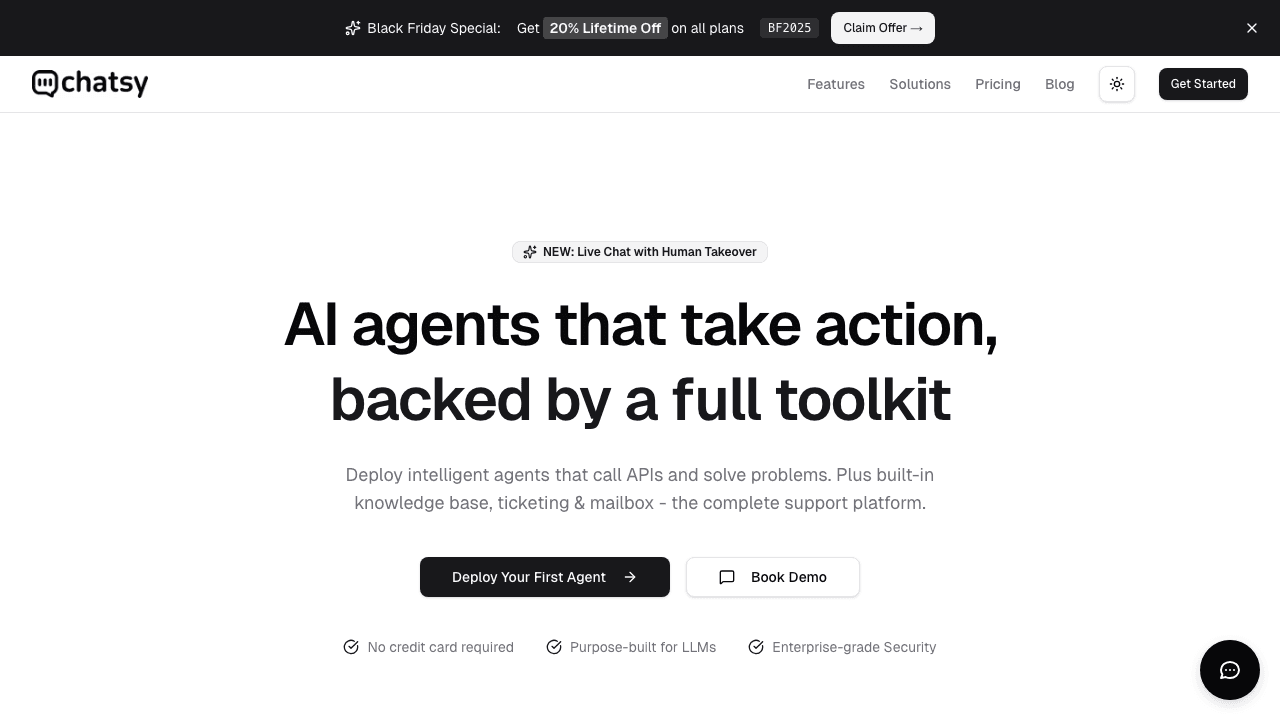
We built Chatsy — our own AI chatbot platform with RAG at its core — which processes thousands of queries daily. That production experience informs every system we build. Data ingestion is where most RAG projects fail silently.
PDFs with tables, scanned documents, nested folder structures, and inconsistent formatting all require custom parsing. We build ingestion pipelines that handle messy real-world data, not just clean markdown files. Every system includes evaluation frameworks that measure retrieval precision, answer accuracy, and hallucination rates against ground-truth datasets so you can track quality and improve over time.