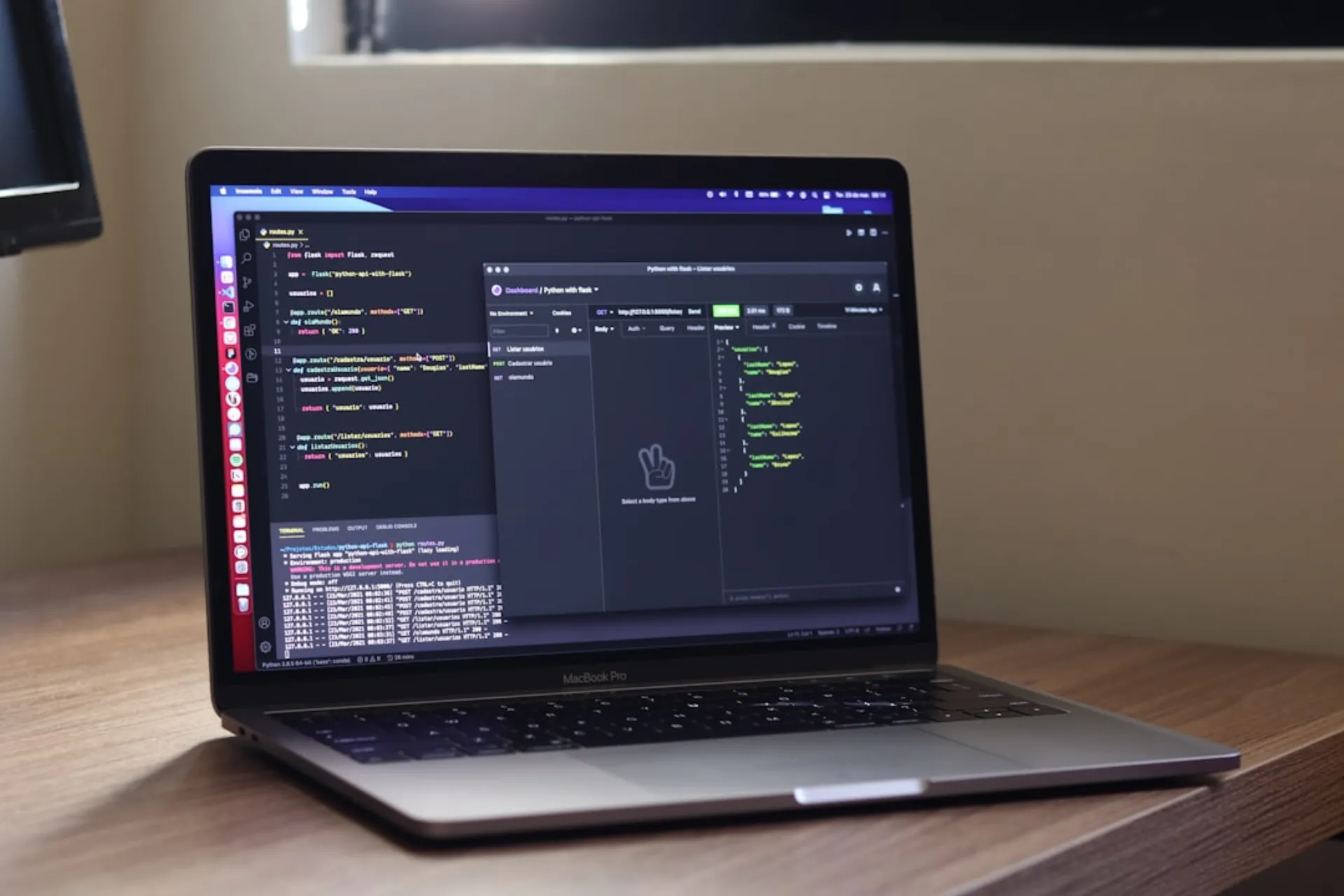
Custom API development in Boston addresses the city's concentration of healthcare, life sciences and financial services industries where API development is driven by regulatory mandates, research collaboration needs and extreme reliability requirements. The 21st Century Cures Act drives FHIR API investment across Boston's hospital systems. Biotech companies in the Kendall Square corridor need APIs for data sharing with CROs and regulators. Investment management firms need APIs for market data, portfolio analytics and regulatory reporting. ZTABS builds APIs for Boston enterprises, remote-first by design with an office in Houston, Texas.
Our API development services cover every Boston requirement from healthcare FHIR interoperability to financial services integration.
Boston API development at a glance
| Sector | API need | Key requirement |
|---|
| Healthcare | FHIR interoperability, EHR integration, bulk export | HIPAA, SMART on FHIR, multi-EHR |
| Life sciences | Lab data, EDC, regulatory submission, collaboration | IP protection, 21 CFR Part 11, research |
| Financial services | Market data, portfolio, trade execution, reporting | Sub-millisecond latency, SOX, SEC |
| Enterprise | API platforms, governance, developer portals | Versioning, SLA monitoring, scale |
Healthcare FHIR APIs
Boston's healthcare sector, anchored by hospital systems and academic medical centres, generates substantial API demand driven by federal interoperability mandates and clinical research requirements.
Patient Access APIs implement FHIR endpoints for patient data access. ONC Cures Act Final Rule obligations apply to certified health IT and providers using it. CMS interoperability rules (including CMS-0057-F for prior authorisation) apply to specified impacted payers with programme-specific provisions and current compliance dates. A hospital FHIR facade can be a chosen interoperability scope, not automatically a universal payer mandate. APIs expose FHIR R4 resources including Patient, Encounter, Condition, Procedure, MedicationRequest, Observation, DiagnosticReport and DocumentReference in standardised formats.
Clinical data exchange APIs enable data sharing between providers through FHIR-based interfaces including care summaries, referral information and clinical documents. FHIR facade layers translate between EHR-specific data models (Epic, Oracle Health, MEDITECH) and standardised FHIR R4 resources behind a unified API. EHR integration requires appropriate provider agreements and application registration with each vendor.
Bulk FHIR export APIs support the $export operation for population health analytics, research cohort identification and value-based care programmes. Bulk exports produce NDJSON output enabling research teams to access de-identified clinical data programmatically. De-identification pipelines implement HIPAA Safe Harbor by removing the eighteen defined identifier categories AND confirming no actual knowledge that remaining information could identify an individual. Expert determination under a qualified statistician is a distinct alternative route. Bulk NDJSON output is not itself de-identified; Safe Harbor processing applies after export.
CDS Hooks integration enables clinical decision support tools (sepsis prediction, drug interaction checking, clinical pathway engines) to integrate at defined decision points within clinical workflows. CDS Hooks expose clinical decision points to third-party services through standardised interfaces.
SMART on FHIR authorisation implements an OAuth 2.0 authorization framework (with OIDC for identity where selected) enabling third-party app access with scoped permissions and patient consent where applicable. OAuth 2.0 provides authorization; it is not itself authentication. The SMART App Launch framework provides secure, standards-based app connectivity for patient-facing and provider-facing health applications with actual purpose and permissions, not all access based on patient consent alone.
Developer portal and ecosystem enables approved developers to build applications using health system APIs through self-service onboarding, sandbox environments with synthetic patient data, interactive documentation and production access management with application review workflows.
Need healthcare FHIR APIs for your Boston organisation?
Share your FHIR resource requirements, EHR integration scope and compliance needs. We scope based on actual healthcare interoperability complexity.
Life sciences data APIs
Boston's biotech and pharmaceutical companies need APIs connecting laboratory instruments, informatics systems, clinical trial platforms and regulatory submission gateways.
Laboratory data integration APIs connect instruments (HPLC, mass spectrometry, plate readers) with LIMS and ELN systems, translating instrument-specific data formats into standardised laboratory data models. APIs handle high-throughput screening data, assay results and quality control measurements.
Electronic data capture (EDC) APIs integrate clinical trial data collection with statistical analysis and reporting systems. APIs connect EDC platforms with randomisation systems, safety databases and regulatory submission tools, enabling automated data flow through the clinical trial lifecycle.
Regulatory submission APIs connect internal document management systems with regulatory gateways for electronic submissions. APIs handle document packaging, format validation and submission tracking. Access to specific regulatory submission systems requires appropriate registration and authorisation with the relevant agencies.
Research collaboration APIs enable data sharing between sponsors, CROs, academic research sites and regulatory agencies with fine-grained access controls protecting intellectual property. APIs implement role-based data access ensuring each party sees only the data they are authorised to access per the collaboration agreement.
AI and ML model APIs expose trained models for drug discovery, biomarker identification and clinical outcome prediction as API services consumed by multiple internal applications. APIs handle model version management, input validation, inference serving and result tracking.
Financial services APIs
Boston's investment management firms need APIs handling market data distribution, portfolio analytics, trade execution and regulatory reporting with extreme performance and compliance requirements.
Market data APIs consume real-time data from exchanges and data providers, processing millions of price updates and distributing them to trading systems, risk engines and client platforms. APIs implement WebSocket streaming for real-time data with automatic connection recovery.
Portfolio analytics APIs calculate risk metrics, performance attribution and compliance checks across portfolios. APIs serve both real-time portfolio monitoring and batch analytics reporting.
Trade execution APIs connect order management systems with execution venues through FIX protocol gateways and algorithmic execution interfaces. These APIs require the lowest practical latency because execution speed directly affects trading outcomes.
Regulatory reporting APIs provide automated data aggregation and submission for SEC, FINRA and state regulatory requirements. SOX audit trail requirements apply to APIs processing financial data for publicly traded companies. The specific regulatory obligations depend on the entity's registration status and activities.
201 CMR 17.00 and Massachusetts data protection
201 CMR 17.00 requires persons who own or license personal information about Massachusetts residents to develop, implement and maintain a comprehensive written information security programme containing technically feasible administrative, technical and physical safeguards for defined personal information (resident's first name or initial plus last name combined with SSN, driver's licence or state-issued ID number, or financial account or card number with or without any required security code, access code or password permitting account access).
For APIs handling defined personal information of Massachusetts residents, implementation includes encryption of personal information transmitted across public networks and wirelessly, encryption of personal information stored on portable devices, access controls, user authentication, secure access control measures, monitoring for unauthorised use, employee training and incident response procedures. The specific technical safeguards must be appropriate to the size, scope and type of business, resources available, amount of stored data and the need for security and confidentiality.
API architecture best practices for Boston
Authorization and identity implements OAuth 2.0 for authorization with OIDC for identity where selected, SMART on FHIR for healthcare applications, mTLS for high-security financial integrations and API key management for service-to-service communication. OAuth 2.0 is an authorization framework; OIDC supplies the identity layer. Object-level authorization controls which resources an authenticated caller can access, separate from the authentication decision.
Webhook and event-driven APIs deliver real-time notifications for clinical events, market data updates and research data changes. Implementation includes HMAC signature validation, delivery retry with exponential backoff, replay defence and dead letter handling.
Contract testing validates API responses against OpenAPI specifications through every code change. For healthcare APIs subject to ONC conformance requirements, contract tests verify FHIR resource compliance against applicable implementation guides.
Idempotency for mutating operations supports safe retries within key-validity windows and where recipients support deduplication. Healthcare APIs reduce duplicate clinical data submissions. Financial APIs reduce duplicate trade executions. Research APIs reduce duplicate regulatory submissions. Idempotency depends on operation type, atomic durable deduplication, key scope and retention, and cannot undo physical actions or all third-party effects.
Performance and availability targets depend on specific workload, infrastructure configuration, data volumes and traffic patterns. Healthcare APIs must remain responsive during peak clinical activity periods. Financial APIs face peak demand during market open and close periods. Published targets should be validated against measured project-specific conditions.
Risks in Boston API projects
Multi-EHR integration complexity. Healthcare organisations running multiple EHR platforms require FHIR normalisation across vendor-specific implementations that differ in resource support, data mapping and API capabilities. Each vendor has different registration, testing and production approval workflows.
Research data governance. Life sciences APIs sharing research data between organisations must implement IP protection, de-identification for human subjects data, audit trails for regulatory compliance and access controls reflecting collaboration agreements. 21 CFR Part 11 applies to electronic records and signatures in FDA-regulated contexts where those records are required by predicate rules.
Financial regulatory complexity. Financial APIs may be subject to overlapping federal and state regulations (SEC, FINRA, state securities commissions). The specific requirements depend on the entity's registration status, activities and data categories.
HIPAA scope determination. HIPAA covered-entity status requires conducting covered standard electronic transactions, not merely any electronic health communication. Business associate status arises from actual on-behalf PHI functions, not every subprocessor or recipient relationship. Clinical and research provider APIs require actual provider agreements, tenant permissions and contracts. Determining covered entity or business associate status requires qualified health care regulatory counsel.
EHR vendor API limitations. Epic and Oracle Health (formerly Cerner) FHIR APIs have different implementation characteristics, rate limits and data coverage. Out-of-the-box EHR APIs may not support custom use cases (advanced bulk export, custom CDS Hooks, non-standard FHIR profiles). Custom FHIR facade APIs supplement native EHR capabilities but require ongoing maintenance as EHR vendors periodically update their APIs.
Life sciences IP protection. APIs sharing preclinical and clinical data between organisations must implement granular access controls protecting proprietary research data. Access logging, data watermarking and contractual controls complement technical security measures. Data sharing agreements define exactly which specific data elements each party can access.
How we deliver Boston API projects
Discovery maps integration requirements, regulatory compliance scope, performance targets and platform architecture. For healthcare, discovery identifies FHIR resource requirements, EHR integration scope and consent management needs. For life sciences, discovery maps data sharing requirements, IP protection needs and regulatory submission scope. For financial services, discovery identifies latency requirements, regulatory obligations and trading system integration points.
ZTABS delivers from our Houston, Texas office, remote-first by design. Our cloud services, DevOps capabilities and AI development services support deployment infrastructure. ZTABS also builds custom white-label AI products that clients can brand and resell.
Illustrative Example
Hypothetical: Boston academic medical centre building FHIR interoperability API platform
A Boston academic medical centre with 10 to 20 hospitals, 2,000 to 5,000 physicians, running Epic at most facilities and Oracle Health at acquired community hospitals, would build a FHIR interoperability API platform over 14 to 24 weeks. The build would include: FHIR R4 facade layer covering selected interoperability resources (aligned with applicable ONC and CMS requirements for the entity's regulatory status) with translation between Epic and Oracle Health data models. SMART on FHIR authorization enabling third-party app access with scoped permissions and patient consent where applicable. Bulk FHIR export API supporting research data access with HIPAA Safe Harbor de-identification pipeline. CDS Hooks integration enabling clinical decision support tools at defined workflow decision points. Developer portal with synthetic patient data sandbox, interactive documentation and production access management. Integration platform replacing point-to-point interfaces with standardised FHIR APIs for lab results, medications, scheduling, clinical documents and billing. Performance architecture with FHIR data cache, query optimisation and horizontal scaling for concurrent users.
This is a hypothetical scenario for illustration. Actual scope, timeline and cost depend on your requirements.
Budget confirmed for your Boston API?
Share your integration requirements, regulatory obligations and performance targets for a fixed-scope estimate.
API development cost and timeline
Costs follow our published API development cost guide.
| Tier | Typical range | Timeline | What is included |
|---|
| Simple REST API | $8,000 to $20,000 | 3 to 6 weeks | CRUD endpoints, basic authentication, database integration, simple validation |
| Mid-complexity API | $20,000 to $50,000 | 6 to 14 weeks | OAuth/JWT auth, role-based access, webhook system, rate limiting, comprehensive docs |
| Enterprise API platform | $50,000 to $100,000 | 14 to 24 weeks | API gateway, versioning, analytics, developer portal, SDKs, sandbox environment |
| Complex integration API | $100,000+ | 24 to 40 weeks | Microservices architecture, event-driven, real-time streaming, multi-region, compliance |
Healthcare FHIR API platforms with multi-EHR integration typically fall in the enterprise to complex integration range. Life sciences data platforms depend on the number of instrument integrations, regulatory submission scope and collaboration partner count.
Choosing an API development partner for Boston
| Provider type | Strength | Tradeoff |
|---|
| ZTABS (remote-first, Houston office) | Full-stack API, healthcare/life-sciences domain, AI capability | Remote-first by design |
| EHR vendor professional services | EHR-specific API knowledge | Evaluate scope beyond native EHR capabilities per vendor |
| Healthcare IT consultant (Nordic, Avanade) | Healthcare domain | Evaluate breadth beyond healthcare per engagement |
| Interoperability platform (Redox, Health Gorilla) | Pre-built EHR connections | Evaluate custom API depth per vendor |
When custom API development is not what you need
- You need only Epic's native FHIR APIs. Epic's out-of-the-box FHIR APIs handle basic patient access without custom development.
- You need API management only. AWS API Gateway, Kong or Apigee handle gateway functions without custom API development.
- You need HIPAA or 201 CMR 17.00 compliance assessment only. We build APIs with compliance architecture; determining specific obligations requires qualified counsel.
See our enterprise software services and AI development services for adjacent needs.
Ready to build your Boston API?
Whether you need healthcare FHIR interoperability, life sciences data platforms or financial services APIs, we scope based on your specific requirements.