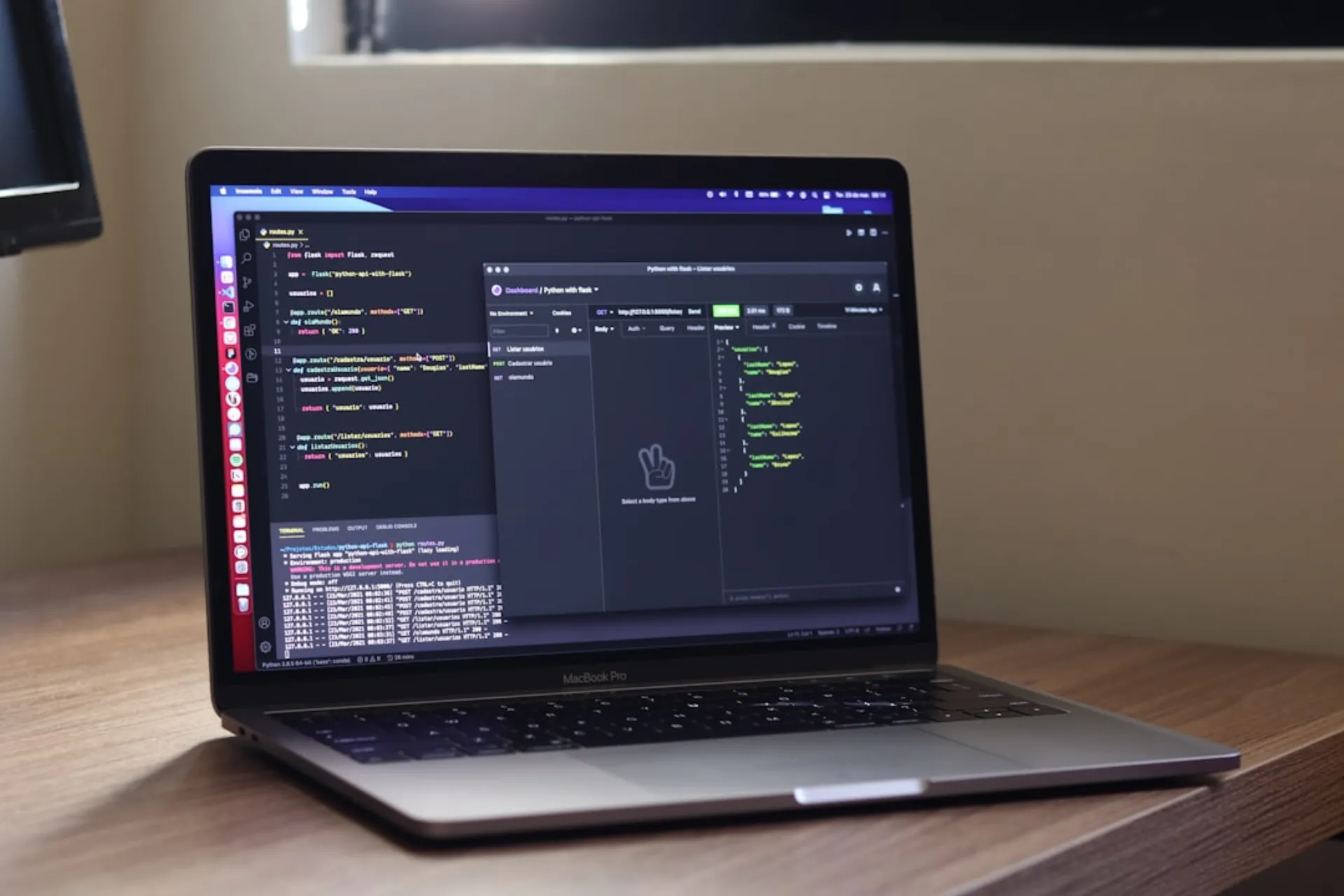
Custom API development in Seattle addresses the city's technology requirements shaped by cloud computing headquarters (Amazon/AWS, Microsoft/Azure), major maritime trade operations, large enterprise headquarters and healthcare organisations serving the Pacific Northwest. Seattle's cloud computing ecosystem creates demand for cloud-native API architectures. The Port of Seattle and Port of Tacoma (managed jointly through the Northwest Seaport Alliance) generate maritime trade API needs. Major enterprise operations in the region (Boeing has significant Puget Sound operations though its corporate headquarters relocated to Arlington, Virginia; Costco, Starbucks and others maintain headquarters in the area) require middleware modernisation and integration APIs. Washington health systems need FHIR-compliant APIs with attention to the state's consumer health data protections. ZTABS builds APIs for Seattle enterprises, remote-first by design with an office in Houston, Texas.
Our API development services cover every Seattle requirement from cloud platform APIs to maritime trade integration.
Seattle API development at a glance
| Sector | API need | Key requirement |
|---|
| Cloud platforms | AWS/Azure integration, infrastructure APIs | Cloud-native, serverless, managed services |
| Maritime trade | Cargo tracking, EDI modernisation, customs | Multi-partner, EDI/API hybrid, compliance |
| Enterprise | Middleware modernisation, ESB replacement | Legacy integration, incremental migration |
| Healthcare | FHIR interoperability, consumer health data | HIPAA, My Health My Data Act, multi-EHR |
Cloud platform APIs
Seattle's cloud computing ecosystem, anchored by Amazon Web Services and Microsoft Azure headquarters, creates demand for APIs built on cloud-native architectures that leverage provider-specific capabilities.
AWS-native APIs use API Gateway for request routing and throttling, Lambda for serverless compute, DynamoDB or Aurora for data persistence, SQS/SNS/EventBridge for event-driven processing, Cognito for authentication and CloudFront for CDN delivery. Architecture decisions balance serverless simplicity with container-based (ECS/EKS) flexibility based on workload characteristics including request volume, execution duration and memory requirements.
Azure-native APIs use Azure API Management for gateway functionality, Azure Functions for serverless compute, Cosmos DB or Azure SQL for data, Service Bus for messaging, Azure AD/Entra ID for identity and Azure CDN for delivery. Azure-specific patterns include Logic Apps for workflow orchestration, Event Grid for event routing and Azure Cognitive Services for AI-powered API features.
Multi-cloud APIs abstract cloud provider differences behind consistent API interfaces, enabling workload portability and avoiding single-provider dependency. Multi-cloud API layers handle provider-specific authentication, service mapping, data format differences and operational monitoring across providers. Multi-cloud adds complexity and cost; the tradeoff is justified when business requirements demand provider independence.
Infrastructure automation APIs provide programmatic access to cloud resource management, deployment orchestration, cost monitoring and security policy enforcement. APIs enable platform engineering teams to offer self-service infrastructure provisioning, environment management and compliance enforcement through internal developer portals.
Cost optimisation APIs monitor cloud spending, provide cost allocation by team/project/environment, identify optimisation opportunities (right-sizing, reserved instance recommendations, spot instance eligibility) and enforce budgets. APIs integrate with cloud provider billing APIs and provide custom analytics beyond what provider consoles offer.
Need cloud platform APIs for your Seattle enterprise?
Share your cloud architecture, integration requirements and platform scope. We scope based on actual cloud platform complexity.
Maritime trade APIs
The Northwest Seaport Alliance (managing Port of Seattle and Port of Tacoma marine cargo operations) handles significant container volumes connecting Pacific Northwest commerce with Asian and other international markets. Maritime trade APIs modernise supply chain integration across the port community.
Container tracking APIs provide real-time visibility into container status from vessel arrival through terminal operations to inland delivery. APIs aggregate data from terminal operating systems, vessel tracking services (AIS data), rail and trucking providers into unified container lifecycle views with estimated arrival times, milestone alerts and exception notifications.
EDI modernisation APIs wrap existing EDI transactions (EDIFACT BAPLIE for vessel stowage, COPARN for container announcement and release, IFTMIN for transport instruction) behind REST and event-driven interfaces. API adapters translate between EDI segments and JSON structures, handle partner-specific EDI variants and support hybrid operation where some partners use modern APIs while others continue with traditional EDI. Full EDI replacement is rarely practical because many maritime partners, particularly international carriers, require EDI.
Customs documentation APIs automate preparation of customs entries, ISF (Importer Security Filing), certificates of origin and other trade documents. APIs integrate with US Customs and Border Protection ACE system for electronic filing. Licensed customs brokers handle formal entries on behalf of importers, though importers may file on their own account where authorised.
Terminal integration APIs connect with terminal operating systems across multiple terminals for appointment scheduling, container availability queries, gate transaction data and vessel schedule information. Each terminal operates different systems requiring terminal-specific adapters behind unified API endpoints. Integration requires data access agreements with terminal operators.
Chassis and equipment APIs manage intermodal chassis availability, pool management and maintenance scheduling. APIs track chassis location, condition, lease status and availability across chassis pools, enabling efficient equipment utilisation and reducing chassis-related delays.
Enterprise middleware APIs
Seattle-area enterprise headquarters need APIs replacing legacy middleware infrastructure with modern integration patterns while maintaining connectivity with existing systems.
ESB replacement APIs migrate from aging Enterprise Service Bus (WebSphere, TIBCO, MuleSoft) to API-first architecture with modern API gateways, event-driven patterns and cloud-native services. Migration is incremental, running old ESB and new API infrastructure in parallel during transition. APIs implement the same business logic and data transformations as existing ESB flows while providing modern interfaces for new consumers.
SAP integration APIs connect SAP ERP, S/4HANA and industry-specific SAP modules with cloud applications, partner systems and internal tools. APIs use SAP BTP (Business Technology Platform) integration, RFC/BAPI connectors and IDoc processing to expose SAP business functions through REST endpoints. SAP integration requires understanding of SAP data models, authorisation concepts and change management procedures.
Legacy system facade APIs wrap mainframe transactions, AS/400 programs, legacy databases and file-based interfaces behind modern REST APIs. Facade APIs protect legacy systems from direct external access while exposing business functions to modern applications. Caching and rate limiting prevent legacy backend systems from being overwhelmed by API traffic.
Event-driven enterprise APIs implement event publication patterns using Kafka, Amazon EventBridge or Azure Event Grid for real-time business event distribution across enterprise applications. Event publication through a message broker is distinct from event sourcing, which requires an actual source-of-truth event log as the system of record. Event-driven architecture enables loose coupling between systems, enabling independent deployment, scaling and evolution of enterprise applications.
Washington My Health My Data Act considerations
The Washington My Health My Data Act applies to regulated entities (broadly defined to include small businesses) that collect, share, sell or process consumer health data. Consumer health data means personal information linked or reasonably linkable to a consumer that identifies past, present or future physical or mental health status. The Act exempts HIPAA-covered entities and business associates with respect to PHI they process under HIPAA regulations; this is a data-level exemption for PHI specifically, not a blanket exemption for every datum a covered entity or business associate handles. Non-PHI consumer health data processed by a HIPAA-covered entity may still fall within the Act's scope.
The Act requires consent before collection and separate consent before sharing of consumer health data. A necessary consumer-requested-product/service route exists where collection or sharing is necessary to provide a product or service the consumer has specifically requested. Sale of consumer health data requires separate valid authorisation under RCW 19.373.070, distinct from collection and sharing consent. The Act prohibits geofencing around health care facilities for the specific purposes of identifying or tracking consumers seeking health care services, collecting consumer health data from consumers at or near health care facilities or sending notifications to consumers related to health care data.
APIs processing data meeting the Act's definition of consumer health data must implement consent before collection and separate consent before sharing, consumer access and deletion rights, data sharing restrictions and compliance with the geofencing prohibitions for the specified purposes. Public or open-data APIs providing publicly available information are distinct from APIs processing individual consumer health data. Determining whether specific data constitutes consumer health data and whether an entity qualifies for exemptions requires qualified legal analysis of the specific data, entity and processing activities.
API architecture for Seattle enterprises
API gateway centralises authentication, rate limiting, routing, transformation and monitoring. For cloud platform APIs, the gateway leverages cloud-native gateway services (AWS API Gateway, Azure API Management). For enterprise APIs, the gateway may be deployed on-premises or in hybrid configurations.
Contract testing validates API responses against specifications through every code change. Helps detect tested breaking changes before production, critical for enterprise APIs where downstream systems managed by different teams depend on exact API behaviour. Contract tests cover the scenarios they are written for; they do not guarantee backward compatibility for every possible client.
Idempotency for all mutating operations supports safe retries within configured key-validity windows across logistics and enterprise APIs. Maritime trade APIs target prevention of duplicate customs filings. Enterprise APIs target prevention of duplicate business transactions. Idempotency operates within defined scope and key-validity windows.
Observability includes distributed tracing across API calls spanning multiple services, latency tracking, error rate monitoring and business metric dashboards. For enterprise APIs replacing ESB middleware, observability must match or exceed the monitoring capabilities of the replaced middleware.
Performance and availability targets depend on specific workload, cloud provider capabilities, network topology, integration partner response times and geographic deployment. Published targets should be validated against measured project-specific conditions rather than assumed as universal guarantees.
Risks in Seattle API projects
Cloud provider lock-in. Cloud-native APIs that heavily leverage provider-specific services (Lambda, DynamoDB, Cosmos DB) become difficult to migrate to other providers. Architecture decisions should explicitly acknowledge lock-in tradeoffs and document migration paths where provider independence is a business requirement.
EDI partner migration resistance. Maritime trade partners (international carriers, freight forwarders, customs authorities) may require EDI indefinitely. API architectures must support long-term hybrid EDI/API operation rather than assuming full EDI elimination. Hybrid architectures add complexity because every integration must be tested through both EDI and API paths.
Enterprise middleware migration scope. ESB replacement projects often reveal previously undocumented integrations, unrecognised data dependencies and business logic embedded in middleware transformations. Comprehensive incremental migration with thorough discovery and parallel operation reduces risk.
How we deliver Seattle API projects
Discovery maps integration requirements, cloud architecture, maritime trade flows, enterprise system landscape and regulatory considerations. For cloud platform APIs, discovery identifies cloud services, integration patterns and infrastructure requirements. For maritime trade, discovery maps terminal integrations, EDI partnerships and customs requirements.
ZTABS delivers from our Houston, Texas office, remote-first by design. Our cloud services, DevOps capabilities and AI development services support deployment infrastructure. ZTABS also builds custom white-label AI products that clients can brand and resell.
Illustrative Example
Hypothetical: Seattle enterprise replacing legacy ESB with API-first integration platform
A Seattle-area enterprise with 50 to 100 integrated applications running on aging TIBCO or WebSphere ESB infrastructure would build an API-first integration platform over 24 to 40 weeks. The build would include: API gateway deployment with authentication, rate limiting and routing for all integration traffic. Event-driven architecture using Kafka for real-time business event distribution replacing ESB publish/subscribe patterns. SAP integration APIs exposing ERP business functions through REST endpoints with appropriate authorisation. Legacy system facade APIs wrapping mainframe and AS/400 programs behind modern interfaces. Cloud-native services replacing ESB transformation and orchestration logic with serverless functions and managed services. Incremental migration plan running ESB and API infrastructure in parallel during transition. Comprehensive observability with distributed tracing, latency monitoring and business metric dashboards matching or exceeding existing ESB monitoring. Developer portal for internal teams with API documentation, sandbox environments and self-service API key management.
This is a hypothetical scenario for illustration. Actual scope, timeline and cost depend on your requirements.
Budget confirmed for your Seattle API?
Share your cloud architecture, integration landscape and migration scope for a fixed-scope estimate.
API development cost and timeline
Costs follow our published API development cost guide.
| Tier | Typical range | Timeline | What is included |
|---|
| Simple REST API | $8,000 to $20,000 | 3 to 6 weeks | CRUD endpoints, basic authentication, database integration, simple validation |
| Mid-complexity API | $20,000 to $50,000 | 6 to 14 weeks | OAuth/JWT auth, role-based access, webhook system, rate limiting, comprehensive docs |
| Enterprise API platform | $50,000 to $100,000 | 14 to 24 weeks | API gateway, versioning, analytics, developer portal, SDKs, sandbox environment |
| Complex integration API | $100,000+ | 24 to 40 weeks | Microservices architecture, event-driven, real-time streaming, multi-region, compliance |
Enterprise middleware modernisation projects typically fall in the complex integration range due to the number of integrated applications, legacy system complexity and incremental migration requirements. Maritime trade APIs depend on terminal count, EDI partner count and customs integration scope.
Choosing an API development partner for Seattle
| Provider type | Strength | Tradeoff |
|---|
| ZTABS (remote-first, Houston office) | Full-stack API, cloud-native, enterprise integration, AI capability | Remote-first by design |
| Cloud consulting firm (Slalom, Avanade) | Cloud provider expertise | Evaluate custom API development per engagement |
| Maritime technology vendor | Port and logistics domain | Evaluate cloud and enterprise breadth per vendor |
| Enterprise platform (MuleSoft, Dell Boomi) | Integration platform | Evaluate domain-specific depth and customisation per engagement |
When custom API development is not what you need
- You need cloud infrastructure management only. Cloud provider managed services and Terraform handle infrastructure without custom API development.
- You need standard EDI translation only. EDI translation platforms handle standard EDI processing without custom API work.
- You need My Health My Data Act compliance assessment only. We build APIs with privacy architecture; determining specific obligations requires qualified legal counsel.
See our enterprise software services and AI development services for adjacent needs.
Ready to build your Seattle API?
Whether you need cloud platform APIs, maritime trade integration or enterprise middleware modernisation, we scope based on your specific requirements.