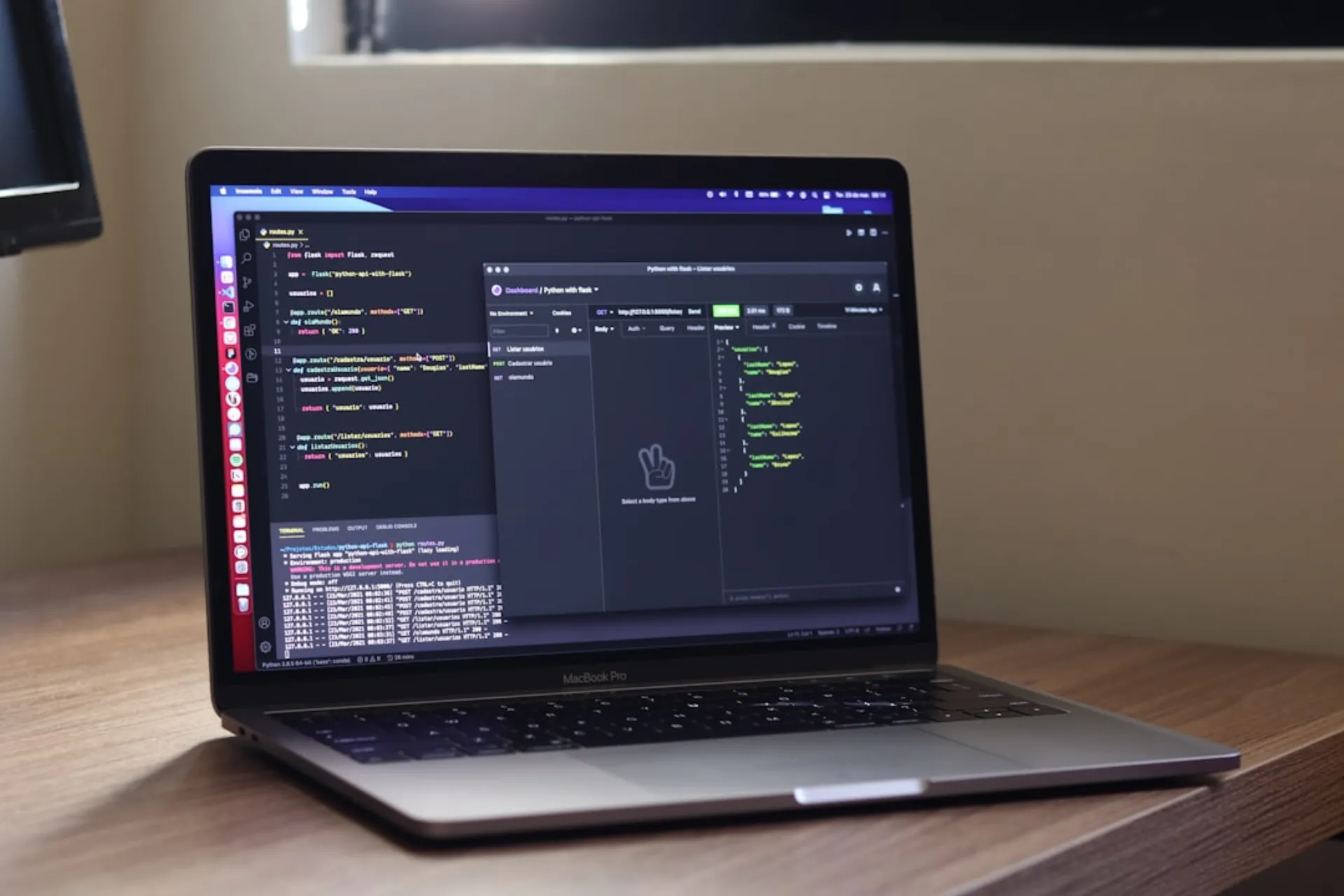
Custom API development in Toronto addresses Canada's evolving open banking framework, OSFI regulatory compliance and the unique integration challenges of the Canadian financial, mining and telecommunications sectors. Canada's Consumer-Directed Finance framework is transforming how financial data is shared through APIs. The Big Five banks need API platforms for consumer-authorised data sharing. TSX-listed mining companies need resource data APIs. Canadian market characteristics including bilingual requirements and specific regulatory frameworks shape API design decisions. ZTABS builds APIs for Toronto enterprises, remote-first by design with an office in Houston, Texas.
Our API development services cover every Toronto requirement from Canadian open banking to mining data platforms.
Toronto API development at a glance
| Sector | API need | Key requirement |
|---|
| Open banking | Consumer-Directed Finance, Interac, consent | OSFI, FAPI security, bilingual |
| Financial services | Regulatory reporting, credit bureau, SEDAR+ | Audit trails, PIPEDA, data residency |
| Mining | NI 43-101 data, geological, environmental | Domain-specific data models, TSX |
| Enterprise | Telecommunications, healthcare, government | Bilingual, Canadian cloud, scale |
Canadian open banking APIs
Canada's Consumer-Directed Finance framework establishes requirements for secure, consent-driven data sharing between banks, fintechs and third-party providers through standardised APIs. The initial framework focuses on read access and data sharing; write/payment initiation capabilities are planned for future phases. Participant and provider API readiness varies across the ecosystem, and not all products are mandatory or live at this stage.
Account information APIs provide consumer-authorised access to account data (balances, transactions, standing orders) across all retail product types (chequing, savings, credit cards, lines of credit, mortgages, investment accounts) in standardised formats regardless of underlying product systems.
Payment APIs integrate with Interac (Canada's national payment network) for e-Transfer initiation, debit processing and online payments through authorised Interac products and contracts. TPP payment initiation is planned for future framework phases; the current implementation status and availability depend on specific Interac product readiness and participant agreements. Interac integration has specific API patterns different from standard card processing.
Consent management provides customer-controlled authorisation of data sharing with granular scope and duration controls. Customers see exactly what data each TPP can access, for how long, and can revoke consent. Consent enforced at the API gateway level ensures no data is served without valid, current consent.
FAPI security implements Financial-grade API security profile with OAuth 2.0, PKCE, pushed authorisation requests and mutual TLS for TPP authentication, aligned with international open banking security standards adapted for Canadian requirements.
Credit bureau and SEDAR+ integration connects with Equifax Canada, TransUnion Canada for credit reports, score monitoring and fraud detection, and with SEDAR+ for Canadian securities filing access (financial statements, prospectuses, material change reports). These integrations require appropriate provider agreements and data access authorisation.
Need Canadian open banking APIs for your Toronto institution?
Share your open banking requirements, Interac integration scope and OSFI compliance needs. We scope based on actual Canadian banking complexity.
Mining and resource data APIs
Toronto's TSX-listed mining companies generate distinctive API demand for resource data exchange, geological data management and environmental monitoring.
NI 43-101 data exchange APIs provide structured access to technical report data including mineral resource estimates, geological data and economic assessments. APIs handle the domain-specific data models required for mining industry reporting with appropriate versioning for estimate revisions.
Geological data APIs manage drill assay results, geophysical survey data, core logging and geochemical analysis in standardised formats for analysis, modelling and reporting. APIs handle large datasets with spatial query capabilities for geographic data.
Environmental monitoring APIs provide real-time data from monitoring stations covering water quality, air emissions, biodiversity and tailings management, integrated with regulatory reporting requirements. APIs aggregate sensor data with appropriate data validation and quality controls.
TSX compliance APIs support continuous disclosure filing, material change reporting and insider trading reporting through programmatic interfaces connecting corporate systems with regulatory filing platforms.
Financial services and OSFI considerations
OSFI Guideline B-13 addresses technology and cyber risk management for federally regulated financial institutions. APIs at these institutions must implement security controls consistent with B-13 requirements including security assessment, incident management, audit logging and access controls. The specific technical requirements depend on the institution's risk assessment and the sensitivity of the data handled.
OSFI Guideline B-10 is the current risk-proportionate framework for third-party arrangement management at FRFIs, covering all third-party arrangements with intensity proportionate to risk and criticality (not limited to traditional outsourcing classification). APIs connecting to third-party services must implement governance, security assessment and contractual controls consistent with B-10 expectations. The specific B-10 obligations are proportionate to the arrangement's risk and criticality assessment within the FRFI's framework, including foreign branch obligations under current E-4 context.
FINTRAC reporting applies to reporting entities handling specified financial transactions. APIs at reporting entities must support suspicious transaction reporting, large cash transaction reporting and electronic funds transfer reporting. The specific reporting obligations depend on the entity's registration and the transaction types handled.
Canadian data residency is addressed differently across sectors. OSFI-regulated institutions often choose Canadian-region cloud deployment based on risk management considerations. There is no blanket legal requirement that all Canadian data must stay in Canada. The specific residency approach depends on the institution's regulatory obligations, internal policies and risk assessment.
Enterprise APIs
Telecommunications APIs expose network capabilities to enterprise developers for messaging, voice, location and identity verification. APIs follow emerging CAMARA standards for network API interoperability. Subscriber management, billing and IoT connectivity APIs support partner ecosystem development.
Healthcare APIs in Ontario connect with provincial health data systems. FHIR R4 implementation supports Canadian healthcare interoperability. PHIPA (Personal Health Information Protection Act) applies to health information custodians and their agents in Ontario; the specific requirements depend on the entity's role and the health information involved. Clinical API access requires appropriate provider registration and authorisation.
Government APIs integrate with federal and provincial systems for digital identity, business registration, tax reporting and service delivery. APIs connect with shared platforms while respecting the distinct jurisdictional responsibilities of federal and provincial governments.
API architecture for Toronto enterprises
Mainframe API gateway provides real-time data access from legacy core banking systems through CICS transaction gateways with caching, circuit breakers and load management protecting mainframe resources while providing responsive API access.
Bilingual architecture supports English and French throughout API responses, error messages, documentation and developer portals through content negotiation. Bilingual requirements apply to national institutions; the specific obligations depend on the organisation's mandate.
Webhook infrastructure delivers event notifications for payment status, consent changes, regulatory alerts and data updates with HMAC signature validation, delivery retry and dead letter handling.
Idempotency for mutating operations supports safe retries within key-validity windows and where recipients support deduplication. Interac e-Transfer, consent grants and regulatory submissions reduce duplicate risk through idempotency keys with appropriate TTLs. Idempotency depends on operation type, atomic durable deduplication and receiver support; it cannot undo physical actions or guarantee exactly-once external effects.
Performance and availability targets depend on specific workload, infrastructure, mainframe response characteristics and traffic patterns. Financial APIs face peak demand during market hours and month-end processing. Published targets should be validated against measured project-specific conditions.
Risks in Toronto API projects
Mainframe integration complexity. Big Five banks rely on mainframe core banking systems that were not designed for real-time API access. APIs must achieve acceptable response times through caching and transaction gateway optimisation while protecting mainframe stability. Mainframe maintenance windows, batch processing schedules and capacity constraints affect API availability and performance.
Consumer-Directed Finance evolution. Canada's open banking framework is still developing, with technical specifications, accreditation requirements and scope (beyond banking to potentially include insurance, investments and telecommunications) evolving. API architecture must accommodate framework changes without major redesign.
Multi-jurisdictional privacy. Canada's privacy landscape includes federal (PIPEDA), provincial (Alberta PIPA, British Columbia PIPA, Quebec Law 25) and sector-specific (PHIPA in Ontario) legislation. APIs serving customers across provinces may need to comply with multiple privacy regimes simultaneously. The specific requirements depend on the organisation's activities, the provinces involved and any applicable substantial similarity determinations.
Bilingual maintenance. Maintaining bilingual API documentation, error messages, developer portal content and changelogs doubles the documentation maintenance burden. Automated translation tools may assist but cannot replace human review for technical accuracy in both languages. Not all APIs require bilingual support; the obligation depends on the organisation's mandate.
Mining data domain complexity. NI 43-101 technical reports contain complex geological data with specialised terminology, measurement units and estimation methodologies. API data models must accurately represent mineral resource categories (Measured, Indicated, Inferred), reserve classifications and quality assurance/quality control procedures that mining industry consumers expect.
Interac integration specifics. Interac APIs have specific technical requirements, settlement patterns and error handling behaviours that differ from international payment networks. Integration requires Interac-specific testing and certification processes. Not all payment types route through Interac; the routing depends on the payment method, institution and transaction type.
Banking API consumer management. Open banking APIs serving dozens to hundreds of TPPs require governance infrastructure managing certificates, consent lifecycle, rate limit allocation, incident communication and version migration across a diverse consumer ecosystem with varying technical capabilities.
Data residency full-stack scope. Canadian data residency, where chosen for banking APIs, must consider the complete technology stack including application data, logs, backups, CDN, monitoring, analytics, email services, support tools and subprocessors. Choosing a Canadian cloud region for the primary database does not automatically ensure all processing stays in Canada.
PIPEDA and Canadian privacy for APIs
PIPEDA applies to the collection, use and disclosure of personal information in the course of commercial activities by organisations subject to the Act. Federal-works organisations (banking, telecommunications, inter-provincial transportation) are subject to PIPEDA across Canada. In provinces with substantially similar legislation (Alberta, British Columbia, Quebec), the provincial law generally applies to intra-provincial commercial activities.
For APIs handling personal information under PIPEDA, implementation includes meaningful consent mechanisms appropriate to the sensitivity of the information, purpose limitation ensuring information is used only for the purposes for which consent was obtained, individual access rights enabling data subjects to access and correct their information, and security safeguards appropriate to the sensitivity of the information.
PHIPA applies to health information custodians (healthcare providers, hospitals, pharmacies) and their agents in Ontario. APIs handling personal health information in custodian contexts must implement PHIPA-specific requirements including consent management, access controls and logging. The specific requirements depend on the entity's role as custodian or agent.
Not all Toronto APIs require AODA (Accessibility for Ontarians with Disabilities Act) compliance; AODA applies to specific organisations and services in Ontario. Similarly, not all Toronto APIs need bilingual support; bilingual obligations depend on the organisation's federal or provincial mandate and specific legislative requirements.
How we deliver Toronto API projects
Discovery maps open banking scope, OSFI compliance requirements, mining data integration needs and platform architecture. For open banking, discovery identifies product types, Interac integration scope and consent management requirements. For mining, discovery maps NI 43-101 data structures, environmental monitoring stations and TSX filing requirements.
ZTABS delivers from our Houston, Texas office, remote-first by design. Our cloud services, DevOps capabilities and AI development services support deployment infrastructure. ZTABS also builds custom white-label AI products that clients can brand and resell.
Illustrative Example
Hypothetical: Big Five Canadian bank building Consumer-Directed Finance API platform
A Big Five Canadian bank with 10 to 15 million retail customers and a mainframe-based core banking system would build a Consumer-Directed Finance API platform over 14 to 24 weeks. The build would include: account information APIs covering all retail product types in standardised formats. Payment APIs with Interac e-Transfer initiation through authorised TPPs. Consent management with customer-controlled dashboard showing data sharing authorisations with granular scope and revocation. FAPI security at the profile selected for the Canadian ecosystem with pushed authorisation requests, certificate-bound tokens and mutual TLS (OAuth 2.0 for authorization, OIDC for identity where selected, consent management separate from gateway authentication). Mainframe API gateway translating REST requests into CICS transactions with caching and circuit breakers. Bilingual platform with English and French API responses, error messages, developer portal and documentation. Fintech partnership platform with tiered API access, revenue sharing and partner onboarding. API observability with performance dashboards, consent metrics and OSFI compliance monitoring.
This is a hypothetical scenario for illustration. Actual scope, timeline and cost depend on your requirements.
Budget confirmed for your Toronto API?
Share your open banking requirements, regulatory obligations and integration scope for a fixed-scope estimate.
API development cost and timeline
Costs follow our published API development cost guide.
| Tier | Typical range | Timeline | What is included |
|---|
| Simple REST API | $8,000 to $20,000 | 3 to 6 weeks | CRUD endpoints, basic authentication, database integration, simple validation |
| Mid-complexity API | $20,000 to $50,000 | 6 to 14 weeks | OAuth/JWT auth, role-based access, webhook system, rate limiting, comprehensive docs |
| Enterprise API platform | $50,000 to $100,000 | 14 to 24 weeks | API gateway, versioning, analytics, developer portal, SDKs, sandbox environment |
| Complex integration API | $100,000+ | 24 to 40 weeks | Microservices architecture, event-driven, real-time streaming, multi-region, compliance |
Canadian open banking platforms with mainframe integration, FAPI security and bilingual support typically fall in the enterprise to complex integration range. Mining data APIs depend on NI 43-101 scope, sensor count and regulatory reporting requirements.
Choosing an API development partner for Toronto
| Provider type | Strength | Tradeoff |
|---|
| ZTABS (remote-first, Houston office) | Full-stack API, Canadian banking domain, AI capability | Remote-first by design |
| Canadian fintech aggregator (Flinks) | Canadian financial data | Evaluate custom platform depth per vendor |
| Enterprise platform (MuleSoft, Apigee) | API management | Evaluate Canadian domain depth per engagement |
| Canadian IT consultant (CGI, Deloitte) | Canadian market presence | Evaluate per-firm proposal scope and cost |
When custom API development is not what you need
- You need Canadian financial data aggregation only. Flinks or Plaid provide pre-built connectivity without custom API development.
- You need API management only. Kong, AWS API Gateway or Azure API Management handle gateway functions without custom API work.
- You need OSFI compliance assessment only. We build APIs with compliance architecture; determining specific OSFI obligations requires qualified regulatory counsel.
See our enterprise software services and AI development services for adjacent needs.
Ready to build your Toronto API?
Whether you need Canadian open banking, mining data platforms or enterprise API governance, we scope based on your specific requirements.