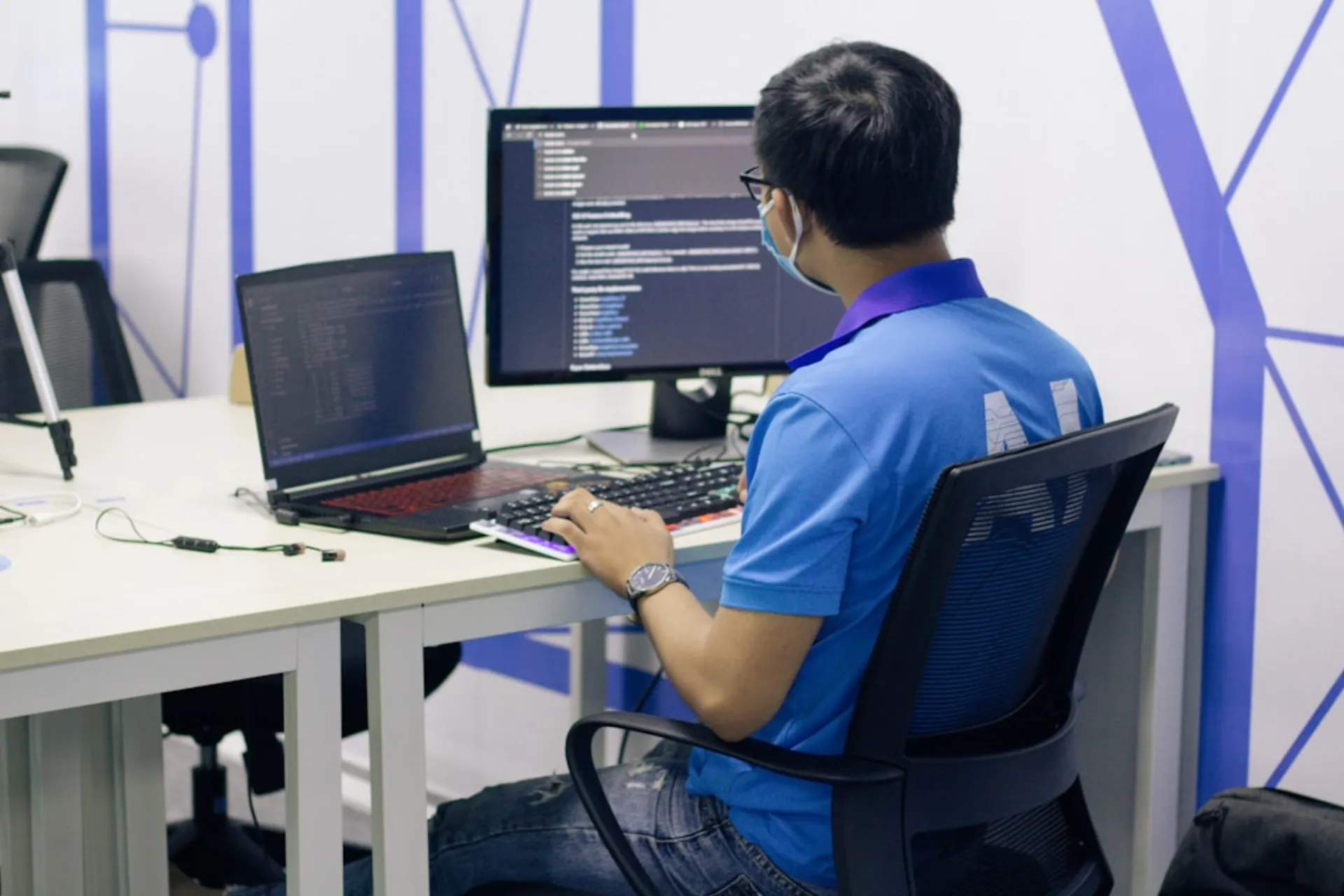
QA testing in Munich must meet the exacting standards of German enterprise: thorough, documented, compliant and reproducible. Munich is home to major automotive, insurance and Mittelstand companies that demand engineering-quality software. DSGVO compliance testing is enforced by BayLDA, one of Germany's strictest data protection authorities. SAP integration testing is essential for Bavarian manufacturers. German payment methods each require dedicated test coverage. ZTABS provides QA testing for Munich enterprises, remote-first by design with an office in Houston, Texas.
Our enterprise software services and DevOps capabilities support Munich's testing needs.
Munich QA testing at a glance
| Sector | Testing need | Key requirement |
|---|
| Automotive | Connected car, fleet, dealer portals | ISO 26262 adaptation, telematics |
| Insurance | Claims, underwriting, actuarial | Complex business rules |
| Mittelstand | SAP integration, B2B, configurator | Data integrity, multilingual |
| Enterprise SaaS | Multi-tenant, DSGVO, SSO | Compliance, regression |
SAP integration testing
SAP data flow verification validates transaction processing between web applications and SAP MM, SD and PP modules. Product data sync, order creation, inventory updates, customer data synchronisation and invoice generation are tested with full data integrity validation. SAP sandbox environments require specific expertise and access permissions.
B2B order flow testing validates the distributor ordering workflow including login with assigned price lists, product search, quote requests, cart with tier pricing, checkout with VAT calculation across countries and order submission to SAP SD.
SAP order push testing verifies that orders submitted through web applications are correctly created in SAP SD. Order header, line items, pricing, shipping address and payment terms validated against the SAP record. Bidirectional sync verified for order status updates.
DSGVO and German compliance testing
DSGVO (GDPR) is directly applicable EU regulation; BDSG supplements it with national provisions. Cookie consent testing follows the BGH Planet49 standard: explicit opt-in for non-essential cookies with genuine reject option.
TDDDG actual terminal access purpose and necessary exceptions apply. Not all cookieless analytics are automatically exempt from TDDDG requirements. Testing validates the actual scope of exemptions.
Impressum completeness verification validates that all legally required company information is correctly displayed. Datenschutzerklarung link testing verifies privacy policy accessibility.
Works council awareness. An actual elected and existing works council has co-determination conditions for technical employee monitoring. A works council is not automatic whenever a business has five staff; it requires actual election and establishment.
DOI (double opt-in) may be evidence or best practice but is not a universal BDSG legal command. UWG Section 7(3) permits marketing to existing customers for the business's own similar products provided no objection was raised, with contact lawfully obtained at point of sale, easy opt-out offered at collection AND at each message.
Need QA testing for your Munich enterprise application?
Share your SAP integrations, DSGVO requirements and payment scope. We scope testing based on your specific German enterprise needs.
German payment testing
SEPA Lastschrift (direct debit) mandate testing validates mandate creation, authorisation, recurring collection and error handling. SEPA direct debit accounts for a significant share of German online purchases.
Kauf auf Rechnung (invoice payment) workflow testing validates invoice generation, payment terms, dunning process and reconciliation. Invoice payment remains one of the most popular German payment methods.
Additional payment methods including PayPal, Klarna and applicable PSP-integrated routes are tested against sandbox environments with German-specific scenarios. Giropay retired on 31 December 2024; testing covers current payment methods only.
German retention and invoicing
GoBD compliance testing validates financial software against GoBD requirements. AO and HGB retention periods distinguish 10-year books, 8-year booking vouchers and 6-year commercial correspondence with actual start dates and retention holds. Not all accounting records require 10 years or all correspondence 8 years.
E-invoice testing validates compliance with EN16931 and ERechV submission conditions. XRechnung is one permissible structured format but not universally the only one. Testing validates invoice structure, endpoint submission and error handling.
ELSTER integration testing validates electronic tax filing integration against ELSTER sandbox environments with specific authentication requirements.
Automotive testing
Connected car platform testing validates web and mobile applications for vehicle connectivity, fleet management and dealer portals. Integration testing with vehicle telematics systems.
Functional safety adaptation. Manufacturing vehicle, aerospace and medical testing standards follow actual component, safety class, programme and contract. No unproven TUV, ISO, FAA or NASA approval is claimed. Testing validates software controls against the applicable requirements for the specific project.
Illustrative Example
Hypothetical: Munich industrial manufacturer implementing SAP integration testing
A Munich industrial manufacturer would implement SAP integration testing over 8 to 12 weeks. The build would include: automated post-sync validation comparing product records between SAP and the web application covering pricing, specifications, inventory and product status. B2B order flow testing for the distributor ordering workflow with tier pricing and multi-country VAT. Multilingual testing in German, English and additional languages for international distributors. SEPA Lastschrift and Kauf auf Rechnung payment testing. GoBD compliance testing for financial data handling. Performance testing simulating concurrent distributor access. CI/CD integration running regression tests on every deployment.
This is a hypothetical scenario for illustration. Actual scope, timeline and cost depend on your requirements.
Budget confirmed for your Munich QA engagement?
Share your SAP modules, payment methods and compliance requirements for a scoped estimate.
QA testing cost drivers
There is no published QA testing cost guide because QA engagements vary significantly by scope. These factors drive project-specific pricing:
| Cost driver | Impact | What affects it |
|---|
| SAP integration scope | High | Modules, sandbox depth, data integrity |
| Enterprise documentation | High | Audit-ready, regulatory compliance |
| German payment scope | Medium to high | Number of methods, sandbox depth |
| DSGVO/TDDDG compliance | Medium | Consent, data rights, retention |
| BFSG accessibility | Medium | Covered services, entity criteria |
| Automation framework | Medium | Initial build, CI/CD, maintenance |
| Ongoing maintenance | Low to medium | Test suite updates, SAP changes |
Contact us for a proposal-specific estimate based on your testing needs.
Testing methodology for Munich enterprises
Risk-based testing allocates intensive testing to high-risk areas: DSGVO compliance, SAP data integrity, German payment accuracy and regulatory requirements. Lower-risk areas receive proportionate testing.
Enterprise documentation meets German standards including test plans, test case specifications, defect reports and completion reports. Documentation supports procurement and audit compliance reviews.
BFSG accessibility testing. The German Accessibility Strengthening Act covers actual products and services with applicable entity criteria. Relevant microenterprise service exemptions or public accessibility framework requirements apply based on the specific entity. Not all private dashboards require BFSG compliance. Testing combines automated WCAG 2.1 AA scanning with manual keyboard navigation and German-language screen reader testing.
German-language testing validates formal register (Sie) consistency, German typography, date and number formatting (DD.MM.YYYY, 1.234,56) and German address validation.
Insurance testing validates claims processing with complex business rules including policy coverage determination, excess calculation and settlement computation. Actuarial model validation and regulatory reporting testing for applicable requirements.
Mittelstand manufacturing testing validates product configurators, B2B portals with quote-to-order workflows, approval chains and ERP data synchronisation. Multilingual testing for international market presence.
BaFin-regulated testing produces documentation meeting BaFin expectations where applicable. BaFin regulates actual supervised entities and activities; testing validates software controls against applicable requirements. Transaction accuracy, MaRisk compliance requirements and regulatory reporting data validation. QA testing produces software evidence that controls function correctly; regulatory authorisation is a separate institutional obligation.
Performance testing validates transaction throughput under German enterprise usage patterns, concurrent user testing and API performance benchmarking.
Security testing embeds OWASP Top 10, API security testing and penetration testing. Security testing aligned with applicable regulatory and industry requirements.
CI/CD integration runs automated suites on every PR. No code merges without passing tests. For Munich companies deploying frequently, pipeline testing maintains velocity and quality.
Test data management generates synthetic German data including German names, addresses, tax IDs and IBAN numbers without using real personal data.
Mobile application testing validates iOS and Android with German-specific requirements including German keyboard input and locale formatting.
Defect management classifies defects by severity, regulatory impact and affected module. Root cause analysis investigates patterns across SAP integrations, payment flows and language versions.
Quality metrics track SAP sync accuracy, payment success rates, DSGVO compliance, documentation status and performance trends. Dashboards provide stakeholder visibility into release readiness.
Test environment management maintains isolated environments replicating production architecture. For SAP-integrated applications, test environments require proper SAP sandbox configuration.
Release readiness assessment provides objective criteria for deployment decisions. Quality gates define measurable thresholds for test coverage, defect density, security scan results and performance benchmarks.
Regression test maintenance keeps automated test suites current as applications and SAP APIs evolve. SAP version updates and German regulatory changes require test suite updates. Flaky test triage identifies unreliable tests.
Continuous improvement uses quality data to refine testing processes. Escaped defect analysis identifies gaps and drives iterative improvement.
Enterprise SaaS testing validates multi-tenant isolation, German-specific compliance testing for DSGVO and GoBD financial data requirements, SSO and SCIM integration testing, and regression testing for continuous deployment pipelines.
Fintech testing validates transaction accuracy, SEPA payment processing and PSD2 SCA flow verification. BaFin regulatory compliance testing for applicable supervised entities and activities. AML and KYC workflow testing with sandbox-based verification.
Public sector testing validates Bavarian government applications against applicable accessibility and design guidelines. BITV 2.0 compliance testing covers WCAG 2.1 AA requirements for public sector digital services.
Data migration testing validates completeness, accuracy and integrity when migrating between enterprise systems. Every record must transfer correctly. Migration rehearsals identify discrepancies before production cutover. Automated comparison tools run after each rehearsal.
Load and stress testing pushes beyond expected peak to find breaking points. Enterprise usage patterns including month-end processing, quarter-end reporting and concurrent user scenarios. Stress testing identifies infrastructure bottlenecks before they affect production.
API backward compatibility testing validates API changes against known supported consumer fixtures using Pact or similar contract testing, detecting breaking changes before deployment with documented residual scope. For B2B platforms with distributor integrations, backward compatibility directly affects partner operations.
Subscription and billing testing validates recurring billing workflows across German payment methods. Subscription lifecycle testing covers sign-up, recurring charge, payment method change, pause, resume and cancellation with each applicable payment method.
Cross-border EU testing validates applications serving multiple European markets. Multi-country tax handling, cross-border payment processing and regulatory compliance variations across EU member states.
Disaster recovery testing validates DR procedures with documented results. For BaFin-regulated entities, annual DR testing with evidence may be expected. Testing covers failover, data recovery, system restoration and service continuity verification.
Forschungszulage. The German research allowance provides 25% tax credit on qualifying R&D expenditure. Novel test automation frameworks may qualify. Eligibility depends on actual R&D classification and is not guaranteed for all QA work.
Healthcare testing validates applications handling patient data under DSGVO with German-specific health data provisions. Clinical data accuracy testing, patient record integrity verification and compliance with applicable medical device software requirements where the actual intended use classifies the software.
E-commerce testing validates product catalogues, checkout flows across German payment methods, shipping integration and German consumer law compliance including the 14-day withdrawal right and Widerrufsbelehrung verification.
Logistics and warehouse testing validates warehouse management systems, shipping label generation and carrier integration testing. Multi-carrier testing with DHL, Hermes, DPD and UPS for German domestic and international shipping.
Handelsregister data verification validates business registration data integration. Testing uses buyer-relevant supplied or licensed register data with approved lookup routes and actual authentication and use conditions from the selected provider.
Sprint retrospective quality analysis uses testing data to identify recurring defect patterns. Quality trends by module, team and release cycle inform process improvements and testing strategy adjustments for subsequent sprints.
Risks in Munich QA engagements
SAP sandbox access. SAP sandbox environments require specific expertise and access permissions. Testing validates against authorised environments; production SAP access is separate.
TDDDG exemption scope. Not all cookieless analytics are automatically exempt. Testing must validate the actual scope of terminal access exemptions.
Works council co-determination. Technical employee monitoring may require works council involvement where an actual elected body exists. Testing tools that monitor individual employee activity may trigger co-determination requirements.
Manufacturing standards scope. Vehicle, aerospace and medical testing standards depend on actual component, safety class, programme and contract. No generic certification is claimed.
How we deliver Munich QA engagements
Discovery assesses the application, maps German regulatory requirements, evaluates SAP integration scope and identifies testing gaps. For automotive, discovery maps telematics integration and applicable standards. For insurance, discovery determines claims testing depth and regulatory scope. For Mittelstand, discovery maps SAP modules and B2B workflow requirements.
ZTABS delivers from our Houston, Texas office, remote-first by design. Our cloud services and AI development services support testing infrastructure. ZTABS also builds custom white-label AI products that clients can brand and resell.
Choosing a QA testing partner for Munich
| Provider type | Strength | Tradeoff |
|---|
| ZTABS (remote-first, Houston office) | Full-stack QA, SAP, DSGVO, automation | Remote-first by design |
| German testing house | Thorough, proper documentation | Evaluate cost and timeline |
| DACH consulting firm | Enterprise strategy, audit-ready | Evaluate implementation depth |
| Offshore QA firm | Manual testing volume capacity | Evaluate DSGVO, SAP, German payment depth and total engagement cost |
When QA testing is not what you need
- You need an enterprise software build. QA validates existing software. For custom development, see our enterprise software services.
- You need BaFin regulatory authorisation. We test against BaFin requirements; authorisation requires the BaFin approval process.
- You need SAP implementation. We test SAP integrations; SAP implementation requires SAP consulting services.
See our DevOps services and AI development services for adjacent needs.
Ready to improve your Munich software quality?
Whether you need SAP integration testing, DSGVO compliance or German payment validation, we scope based on your specific requirements.