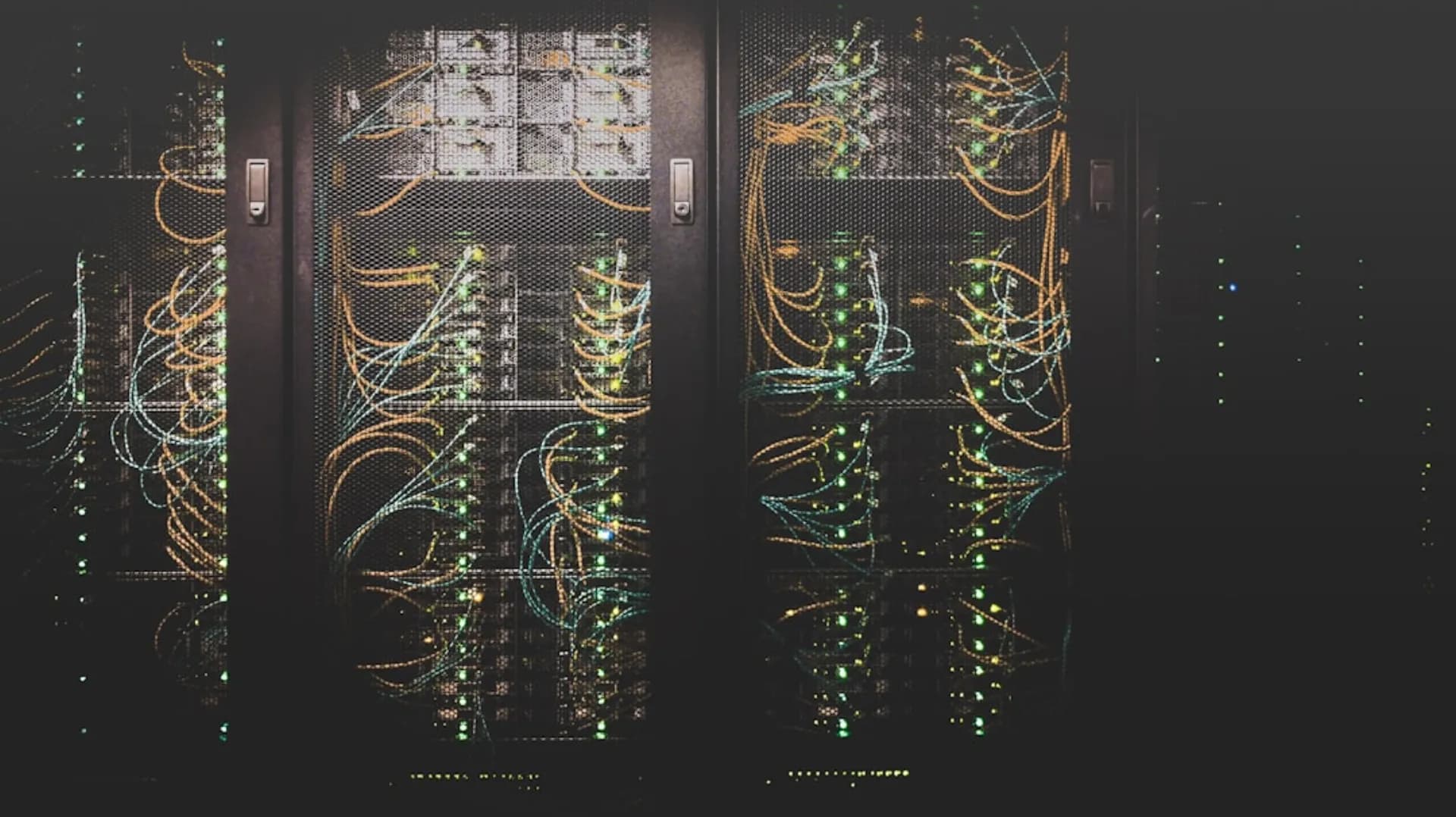
Our self-hosted AI deployment methodology covers the complete infrastructure stack — from GPU hardware selection through model optimization to production monitoring — designed for Austin enterprises that need enterprise-grade AI running entirely within their controlled infrastructure. Phase 1 — Requirements and Infrastructure Assessment: we evaluate the organization's AI use cases, data sensitivity classification, existing infrastructure (data center capacity, power and cooling budget, network architecture), and compliance requirements (ITAR, CMMC, HIPAA, EAR, SOX). This assessment determines: GPU hardware requirements (NVIDIA A100, H100, or L40S depending on model size and inference volume), storage architecture (NVMe for model weights, high-throughput NAS for training data), network topology (dedicated AI inference network isolated from production corporate network), and physical security requirements (badge access, camera monitoring, tamper detection for defense applications). Phase 2 — Model Selection and Optimization: not every self-hosted deployment needs the largest model. We evaluate the specific tasks against available open-source models to find the optimal performance-to-cost ratio: for document classification, entity extraction, and structured data processing, fine-tuned 7-8B parameter models (Llama 3.1 8B, Mistral 7B) deliver excellent accuracy at 1/10th the inference cost of larger models — running on a single GPU. For complex reasoning, multi-step analysis, and code generation, 70B parameter models (Llama 3.1 70B, Mixtral 8×22B) are required — running on 4× A100 or 2× H100 GPUs. For multi-modal use cases (processing engineering drawings, analyzing microscope images, reading mixed text-image documents), we deploy vision-language models (LLaVA, CogVLM) alongside text models. Model optimization is critical for self-hosted economics: quantization (reducing model precision from FP16 to INT8 or INT4) reduces GPU memory requirements by 50-75% with minimal accuracy loss (typically <2% degradation on enterprise tasks). vLLM or TensorRT-LLM serve as the inference engine, providing efficient batched inference that maximizes GPU utilization. For deployments requiring multiple model types (LLM + embedding model + vision model), we implement model routing that directs requests to the appropriate model based on the task type. Phase 3 — Infrastructure Deployment: we deploy the complete AI infrastructure stack: GPU servers with redundant power supplies and remote management (IPMI/iLO), containerized model serving using Kubernetes with GPU scheduling (NVIDIA GPU Operator), model weight storage and versioning (enabling rapid model swaps and rollbacks), API gateway providing the same interface as commercial AI APIs (OpenAI-compatible endpoints) so that application developers can build against a familiar API without knowing whether the backend is self-hosted or cloud, monitoring and alerting (GPU utilization, inference latency, error rates, thermal management), and high-availability configuration (load balancing across multiple GPU servers, automatic failover if a GPU fails). Phase 4 — Security Hardening: for semiconductor and defense clients, the AI infrastructure receives additional security layers: network isolation (dedicated VLAN with no internet connectivity for air-gapped deployments), access control (certificate-based authentication, MFA for administrative access, role-based API access), audit logging (every inference request logged with user identity, timestamp, and input/output hashes — without storing the actual sensitive content), data-at-rest encryption (AES-256 for model weights and any cached data), and compliance documentation (architecture diagrams, data flow maps, and security controls documentation formatted for CMMC assessors, ITAR compliance officers, or SOC 2 auditors). Phase 5 — Application Integration: we connect the self-hosted AI infrastructure to the organization's applications — providing the same developer experience as commercial AI APIs but running entirely on controlled infrastructure. For semiconductor companies: integration with EDA tool workflows, document management systems (Windchill, Teamcenter), and engineering knowledge bases. For defense contractors: integration with classified network applications, mission planning systems, and intelligence analysis platforms. For healthcare: integration with EHR systems, medical imaging PACS, and clinical decision support workflows.