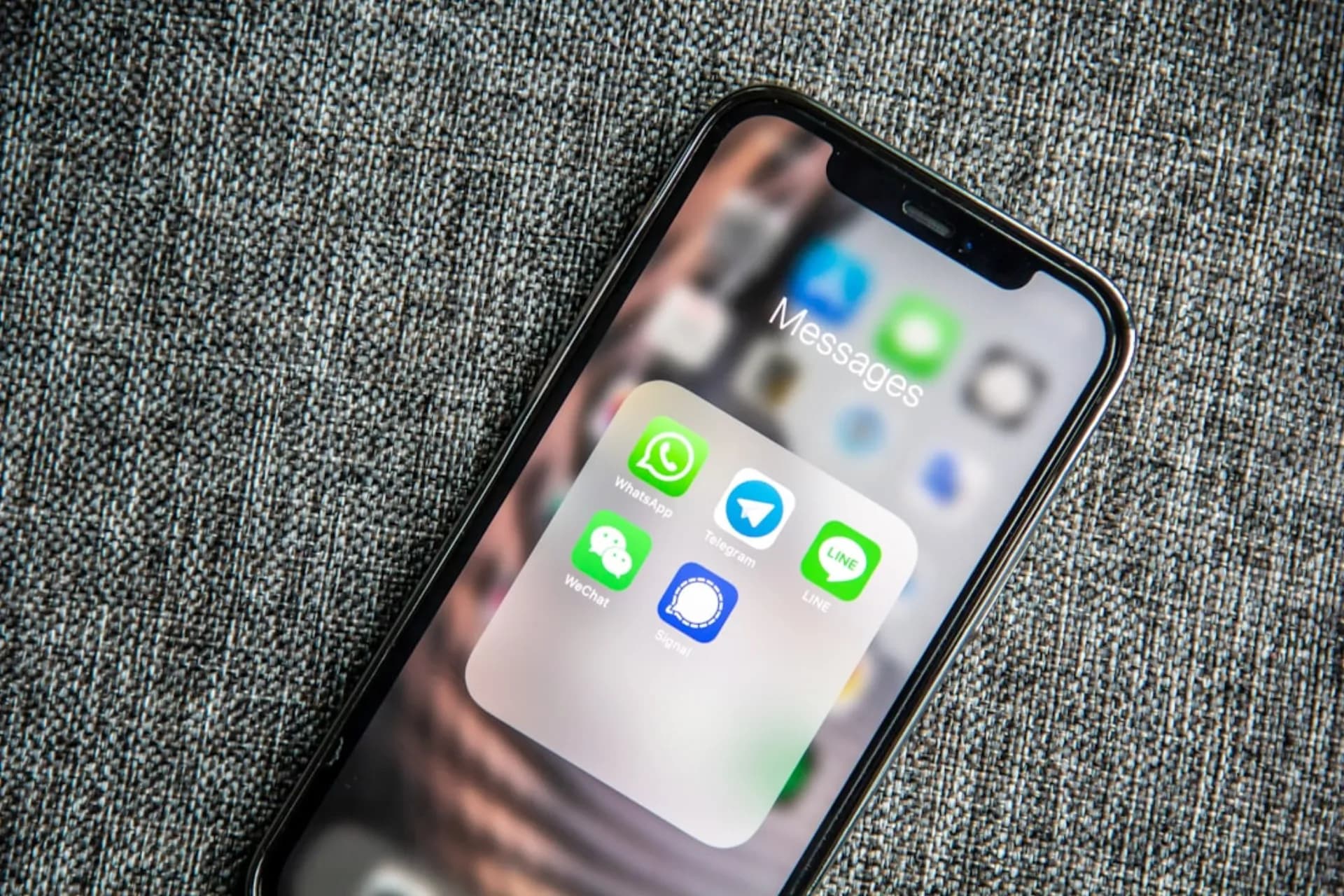
WhatsApp API development in Munich addresses auto service businesses and industrial companies that need structured service enquiry routing via WhatsApp with portal direction for appointments and service details, verified UWG section 7 marketing consent with the narrow existing-customer exception, strict boundaries keeping VIN records, workshop diagnostics, appointment-specific details and industrial specifications in authorised backend systems, and separate GDPR processing base verification. Munich's automotive industry and broader industrial sector benefit from structured WhatsApp enquiry routing that respects the sensitivity of vehicle and industrial data.
ZTABS delivers WhatsApp API development and API development services remote-first by design from our Houston, Texas office. Munich auto service and industrial WhatsApp builds provide service enquiry routing, generic portal direction for appointments and service details, template management with UWG consent controls, GDPR-compliant processing, and prompt human handoff for complex technical questions.
Munich WhatsApp API at a glance
| Need | What we build | Key constraint |
|---|
| Service enquiry routing | Auto service and industrial enquiry intake by service category | No VIN records, make/model intake, diagnostics or industrial specifications through WhatsApp |
| Portal direction | Opaque link to approved booking portal for appointments and service details | Appointment booking, confirmation, cancellation and rescheduling in authenticated portal only |
| Generic notifications | Eligible generic notifications with opaque portal link | No service status, appointment-specific details, diagnostic codes or private vehicle data |
| UWG section 7 compliance | Marketing consent verification with existing-customer exception | All four exception conditions verified; missing any requires express consent |
| GDPR compliance | Processing base verification, privacy notices, data subject rights | UWG consent and GDPR lawful basis verified independently |
| Human handoff | Complex technical or general questions route to service advisors | Enquiry category and language transferred; no VIN, make/model or diagnostic data |
Auto service and industrial messaging in Munich
Munich is the headquarters of BMW Group and a hub for the German automotive industry, including dealerships, independent workshops, parts suppliers and industrial service companies. The automotive aftermarket generates continuous customer communication: service appointment requests, maintenance reminders, service status updates, parts availability enquiries and recall notifications. Industrial companies in Munich's broader manufacturing sector handle similar communication patterns for equipment servicing, spare parts and technical support.
WhatsApp provides an accessible channel for these interactions. The integration handles the communication layer while keeping sensitive vehicle and industrial data in controlled systems.
Portal boundaries and VIN privacy
WhatsApp handles general service communication: enquiries by service category (scheduled maintenance, tyre change, HU/AU inspection, specific concern); parts availability for common items; general service pricing for standard maintenance; and support routing. The authenticated workshop management system (DMS) handles: appointment booking and confirmation, service status updates (vehicle received, in progress, ready for collection), VIN-linked service records, diagnostic trouble codes, inspection reports, emission test results, repair authorisations, detailed cost estimates and payment processing. Vehicle make, model and year are not collected through WhatsApp; these are provided through the approved booking portal.
If a customer sends their VIN through WhatsApp, the integration does not perform a VIN lookup or return VIN-linked data through the chat. The customer is informed that VIN-specific information is available through the workshop portal or at the service desk. This protects the link between VIN and vehicle owner identity.
Industrial routing context
Munich's industrial sector includes machinery manufacturers, precision engineering firms and industrial service companies. Industrial WhatsApp enquiries cover: spare part availability by part number, equipment service scheduling, general technical questions and supplier communication. Detailed technical specifications, proprietary engineering drawings, safety-critical documentation and formal procurement terms are handled through authenticated industrial portals, not through WhatsApp.
WhatsApp Business Platform fundamentals
Template categories, service messages and UWG
A business needs an eligible, purpose-matched approved template to initiate a conversation and for every outbound message outside 24 hours from the latest user message. A permitted service reply can use non-template text inside that window. Before every send and retry, the system checks sender, recipient and purpose eligibility, applicable opt-in and suppression. If no eligible route exists, the message is not sent. An approval or receipt does not settle delivery or any business operation. For proposed marketing to US recipients, check current Meta account and recipient eligibility before each send and retry. If either is unknown or ineligible, block the send without relabelling it.
Marketing templates must separately satisfy UWG section 7 requirements. Utility templates require an eligible existing interaction and correct classification. If a template is missing, paused, rejected or ineligible, no send occurs and the content is never relabelled. A utility candidate that contains promotional content is blocked; any separate marketing send needs separate review, an approved purpose-matched marketing template and all applicable permission checks.
Meta pricing structure
Meta charges per chargeable delivered message by recipient market and category. Template categories are marketing, utility and authentication. Service is a separate message category: non-template replies within the 24-hour window opened by the user's latest message. The first 1,000 service messages per business phone number each month are free effective October 1, 2026, with charges applying from the 1,001st. Rates vary by market, category and account conditions; buyers should verify current rates on Meta's billing FAQ before budgeting. BSP fees, hosting and integration costs are separate.
UWG section 7 existing-customer exception for auto service
UWG section 7(3) provides a narrow exception for electronic advertising without express consent when all four conditions are met simultaneously and on an ongoing basis: the business obtained the customer's electronic contact details in connection with a sale of goods or services, the business uses the details to advertise its own similar goods or services, the customer has not objected to such use, and the customer was clearly informed at the time of collection and is informed on each use that they may object at any time at no more than basic transmission cost. For auto service, "similar goods or services" requires a business-specific determination per the scope of the prior sale; the exception does not automatically extend from one service type (e.g. tyre change) to all maintenance categories. Cross-selling to unrelated business lines requires separate consent.
What we build for Munich auto service and industrial businesses
Service enquiry routing
Customers message with the service category needed (scheduled maintenance, tyre service, HU/AU inspection, specific concern, recall enquiry). The system categorises the enquiry and provides general information. General pricing for standard services (oil change, brake inspection, tyre rotation) is provided where published. Complex or vehicle-specific pricing requires a workshop assessment. Vehicle make, model and year are not collected through WhatsApp.
Portal direction for appointments and service details
Customers asking to book, cancel or reschedule an appointment receive an opaque non-prefilled link to the approved booking portal where the named workshop owner and DMS records handle appointment scheduling, vehicle identification and confirmation. Appointment-specific details (date, time, workshop address, service advisor identity) are available only through the authenticated workshop portal. Service status (vehicle received, in progress, ready for collection) is available through the authenticated workshop portal. No WhatsApp-triggered booking, cancellation, rescheduling, status notification or work authorisation occurs. If a user sends private vehicle data unsolicited, the integration does not solicit, copy, process for a business decision, log, retain or forward it; the user receives a generic fallback directing them to the workshop portal.
Industrial parts and service routing
Industrial customers query spare part availability by part number. The system checks the parts catalogue and returns availability, general pricing (where published) and estimated delivery. Equipment service requests are routed to the industrial service scheduling system. Technical specification requests beyond catalogue information are routed to the engineering team through authenticated channels.
Describe your Munich auto service or industrial WhatsApp needs
Tell us about your workshop or industrial operation, service types, customer volume and communication requirements. We assess the WhatsApp API service portal architecture before development.
How delivery works
ZTABS delivers remote-first by design from our Houston, Texas office. Munich integrations accommodate CET/CEST timezone overlap. The delivery process covers: WhatsApp Business API provisioning, workshop/DMS API integration, UWG consent verification, GDPR-compliant privacy notice flows, template design and Meta submission, testing across service types, and staged rollout.
Callbacks authenticated by verifying the raw request body against the X-Hub-Signature-256 header using the Meta app secret for direct Cloud API, or the BSP's configured signature verification mechanism before any state mutation. Invalid signatures rejected. Events deduplicated by provider event identity or stable composite key. Non-regressive ordered status transitions maintained. Conflicting late failures reconciled against the durable webhook and send ledger. Unknown delivery or upstream write status held; consent, opt-in and template or window eligibility rechecked before any retry; unresolved escalated to the named workshop owner who checks both the durable ledger and DMS/booking upstream.
Illustrative Example
Auto service WhatsApp portal for a Munich workshop group
If a Munich independent workshop group (five locations, servicing all major brands, 3,000 monthly service appointments, no structured WhatsApp channel) were to scope a WhatsApp API integration for service communication, the scenario would be scoped as follows.
Prerequisites would include: Meta Business Manager account with verified business identity; customer-authorised WABA and eligible sender number; workshop management system (DMS) API access for calendar and status; named workshop owner as accountable role with access to DMS and booking records as the authoritative upstream sources.
The integration would provide an auto service enquiry portal. A customer messages asking about a winter tyre changeover. The system categorises the enquiry as tyre service and provides general information, then directs the customer to the approved booking portal via an opaque non-prefilled link where vehicle identification, appointment scheduling and confirmation are handled. No make, model or year is collected through WhatsApp chat. A customer messages asking for the diagnostic results from their recent inspection. The system directs the customer to the authenticated workshop portal or service desk for inspection results; the system does not confirm inspection status or display any service-specific information through WhatsApp. A customer sends their VIN asking about outstanding recalls. The integration does not solicit, copy, process for a business decision, log, retain or forward the VIN; the customer receives a generic fallback directing them to the manufacturer's recall portal or the workshop service desk.
Service status flow: the workshop receives the vehicle and updates the DMS. Service status (vehicle received, inspection in progress, additional work identified, service complete, ready for collection) is available through the authenticated workshop portal. No private service status notifications, vehicle-received confirmations, additional-work-identified alerts or ready-for-collection notices are sent through WhatsApp. The customer accesses service status through the workshop portal. Work authorisation is handled through a phone call or the authenticated portal, not through WhatsApp chat.
UWG marketing verification: a marketing template promoting seasonal tyre change offers is submitted. Before sending to each recipient, the system verifies UWG section 7 consent. For existing customers claiming the subsection 3 exception, all four conditions are checked on an ongoing basis: contact details obtained in connection with a prior sale of goods or services, advertising the workshop's own similar goods or services (business-specific determination of scope; the exception does not automatically extend from one service type to all maintenance), customer has not objected, and the customer was clearly informed at collection and is informed on this use that they may object at any time at no more than basic transmission cost. Recipients missing any condition do not receive the message.
EU GDPR verification (implemented in Germany through supplementary legislation including the BDSG) runs separately: lawful basis confirmed per processing purpose, privacy notice covering WhatsApp processing delivered, and data subject rights procedures operational.
Webhook callbacks authenticated by verifying the raw request body against the X-Hub-Signature-256 header using the Meta app secret for direct Cloud API, or the BSP's configured signature verification mechanism. Missing or invalid signatures rejected without state change. Events deduplicated by provider event identity or composite key (account, message ID, status, event identity); exact replay does nothing. Valid distinct status events are preserved; only an allowed transition advances state. An older or contradictory event does not regress state; contradictions are reconciled against the durable ledger. A separate stable business-operation idempotency key prevents duplicate actions across retries and duplicate triggers. Unknown delivery or upstream write status stays on hold without automatic resubmit; the named workshop owner checks both the durable send and event ledger and the DMS/booking upstream system before any retry. Completed means no duplicate; unresolved means hold and authorised fallback. Retry only after confirmed no-op and fresh consent, suppression, sender, recipient, purpose, correct category and approval eligibility recheck.
The customer service window test: a non-template reply to a customer whose latest message was 23 hours ago is allowed as an otherwise eligible service reply; a non-template reply at 25 hours is blocked and only an eligible approved template or no message is permitted.
Held-out evaluation fixtures and expected outcomes: service enquiries categorised by service type with portal direction for booking; no make/model/year collected in chat; no service status notifications through WhatsApp; VIN enquiries receive generic fallback to portal; UWG consent verified with all four conditions on ongoing basis with business-specific similar-goods scope; GDPR basis verified independently. These are design-time test fixtures, not claims that the described events occurred. Negative tests: when UWG consent is absent and no exception qualifies, no marketing send; when a user sends VIN, integration does not solicit, copy, process, log, retain or forward; generic fallback only; when any private service status or additional work notification is attempted through WhatsApp, blocked; when opt-in is revoked at send or retry, no message; when a template is paused or rejected, no resend under any category; at 25h with no eligible approved template, no send; at 23h, only an otherwise eligible reply permitted; when X-Hub-Signature-256 is invalid, rejection with no state change; exact replay does nothing; valid distinct status events preserved with only allowed transitions advancing; older or contradictory event does not regress; unknown status stays on hold while the named workshop owner checks both durable ledger and DMS/booking upstream before authorised retry.
Residual risks: UWG "similar goods or services" scope for multi-line workshops; DMS integration complexity across five locations; additional-work authorisation communication boundaries; Betriebsrat co-determination for internal workshop WhatsApp use (where applicable); US marketing eligibility must be verified at every send for US-based recipients.
This is a hypothetical scenario for illustration. Actual scope, timeline and cost depend on your requirements.
Project costs and planning benchmarks
Costs reference the API development cost guide as a published implementation benchmark, separate from Meta messaging fees, BSP fees and hosting costs.
| Tier | Range | Timeline | Scope |
|---|
| Simple REST API | $8K to $20K | 3 to 6 weeks | CRUD endpoints, basic authentication, database integration |
| Mid-Complexity API | $20K to $50K | 6 to 14 weeks | Mid-complexity REST with OAuth/JWT auth, role-based access, webhook system, rate limiting, OpenAPI docs and monitoring |
| Enterprise API Platform | $50K to $100K | 14 to 24 weeks | API gateway, versioning, analytics, developer portal, SDK generation, sandbox |
| Complex Integration API | $100K+ | 24 to 40 weeks | Microservices, event-driven, real-time streaming, multi-region, compliance |
An auto service WhatsApp portal with DMS integration and UWG consent verification typically falls in the mid-complexity range. Multi-location deployments with industrial routing may reach enterprise range.
2026 US-buyer benchmark
This published US-buyer benchmark covers a mid-complexity REST API with OAuth or JWT, webhooks, rate limiting, OpenAPI documentation and monitoring.
| Vendor type | Typical cost | Timeline | What to check |
|---|
| Freelancer or solo backend dev | $5K to $25K | 3 to 8 weeks | Security and docs; WhatsApp webhook and DMS integration experience |
| Offshore agency | $12K to $40K | 5 to 12 weeks | Observability, OpenAPI discipline, auto service workflow integration |
| Nearshore agency | $20K to $65K | 4 to 10 weeks | Timezone alignment; TypeScript, Go, Python API patterns |
| US or EU agency (ZTABS tier) | $28K to $90K | 4 to 10 weeks | Senior engineers, contract-first OpenAPI, SDK generation, production monitoring, German compliance |
| Auto-generated API (Hasura, PostgREST, Supabase) | $0 to $8K | 1 to 3 weeks | Low for CRUD; insufficient for UWG consent verification and DMS integration; migration risk if requirements outgrow generated layer |
Managed API gateways add $50 to $500 per month. Monitoring and observability tools add $100 to $1,000 per month depending on volume. Additional project costs may include TLS certificate management, load testing before launch, parallel API versioning during integration and developer support hours. Meta WhatsApp messaging fees and BSP fees run separately.
Budget your Munich WhatsApp API integration
Describe your workshop operations, service types and customer communication needs. We reference the published API development cost guide with Meta fees and German compliance costs estimated separately.
Choosing a partner
| Provider type | Strength | Tradeoff |
|---|
| ZTABS | WhatsApp API with German auto service compliance, DMS integration, Houston office | Remote-first by design |
| German automotive platform (CXBox, autoiXpert, local DMS vendors) | German automotive expertise, DMS integration | Limited WhatsApp API customisation for multi-service routing |
| BSP (Twilio, Bird, 360dialog) | WhatsApp infrastructure, per-message pricing, SDKs | Infrastructure only; UWG consent and DMS integration are separate |
| General software agency | Custom development capability | May lack UWG section 7 verification, DMS integration and auto service workflow experience |
When this engagement scope does not fit
- The engagement requires sharing VIN-linked diagnostic records, inspection reports or emission test results through WhatsApp. These belong in the authenticated workshop system.
- The engagement scope is a DMS or workshop management system replacement rather than a WhatsApp communication layer.
- The engagement requires marketing broadcasts without UWG-verified consent or exception qualification.
- The business needs an industrial procurement platform rather than a WhatsApp messaging integration.
Risk register
| Risk | Mitigation approach |
|---|
| UWG "similar goods or services" scope for multi-line workshops | Business-specific determination; documented per service category |
| VIN or diagnostic data in WhatsApp messages | VIN lookup blocked; diagnostics routed to portal; content review on templates |
| DMS integration complexity across locations | Staged rollout per location; consistent API wrapper |
| Service status and work authorisation boundaries | All service status and work authorisation through authenticated portal or phone; not through WhatsApp |
| Betriebsrat co-determination (where applicable) | Internal use of WhatsApp for employee communication verified separately |
| Meta template rejection or pausing | Submit templates early; design within WhatsApp Business Messaging Policy |
Proposal evaluation criteria
| Criterion | What the proposal specifies |
|---|
| 1. Deliverables and IP | WhatsApp API auto service and industrial portal, service enquiry routing, appointment portal direction (no automatic chat booking), status notification system, UWG consent verification with ongoing conditions, GDPR processing base verification, template management, webhook handler, evaluation harness, documentation. |
| 2. Validation and holdout method | Service enquiries categorised with portal direction for booking; no make/model/year collected in chat; no service status through WhatsApp; VIN enquiries receive generic fallback; UWG consent verified with all four ongoing conditions and business-specific similar-goods scope; GDPR basis verified independently. Negative fixtures: UWG-unconsented marketing blocked; VIN not solicited, copied, processed, logged or forwarded; service status and make/model intake through chat blocked; promotional utility candidate blocked with no relabel; 25h window requires template; invalid signature rejected; replayed event discarded. |
| 3. Deployment and data scope | Meta Cloud API or named BSP with customer-authorised WABA. DMS API and calendar integration. No VIN records, diagnostics or industrial specifications through WhatsApp. |
| 4. Cost structure | Development with milestone payments. Meta messaging fees estimated separately. BSP fees noted separately. DMS integration costs noted per location. |
| 5. Acceptance and fallback | Held-out acceptance evidence: when UWG consent is absent and no exception qualifies (with business-specific similar-goods scope), no send; when VIN or private vehicle data sent unsolicited, not solicited, copied, processed, logged or forwarded; when any private service status notification or make/model intake is attempted through chat, blocked; when opt-in is revoked, no message; when signature is invalid, rejection with no state change; when a promotional utility candidate is submitted, blocked with no relabel. Named workshop owner verifies outcomes by checking both the durable event and send ledger and the DMS upstream, reconciles contradictory events, holds if unresolved, confirms no duplicate if completed, and authorises retry only after confirmed no-op and fresh consent, suppression, template/window and recipient checks. |
| 6. Roles, languages and handover | Provider implements WhatsApp API integration, consent verification, testing and documentation. Customer provides DMS and calendar API access, Meta Business Manager account and named workshop owner as accountable role with DMS and booking records as authoritative upstream. Languages agreed; data ownership specified. |
Ready to add WhatsApp to your Munich auto service or industrial operations?
Describe your workshop network, service types and customer communication needs. We assess the WhatsApp API service portal architecture in a focused initial call.