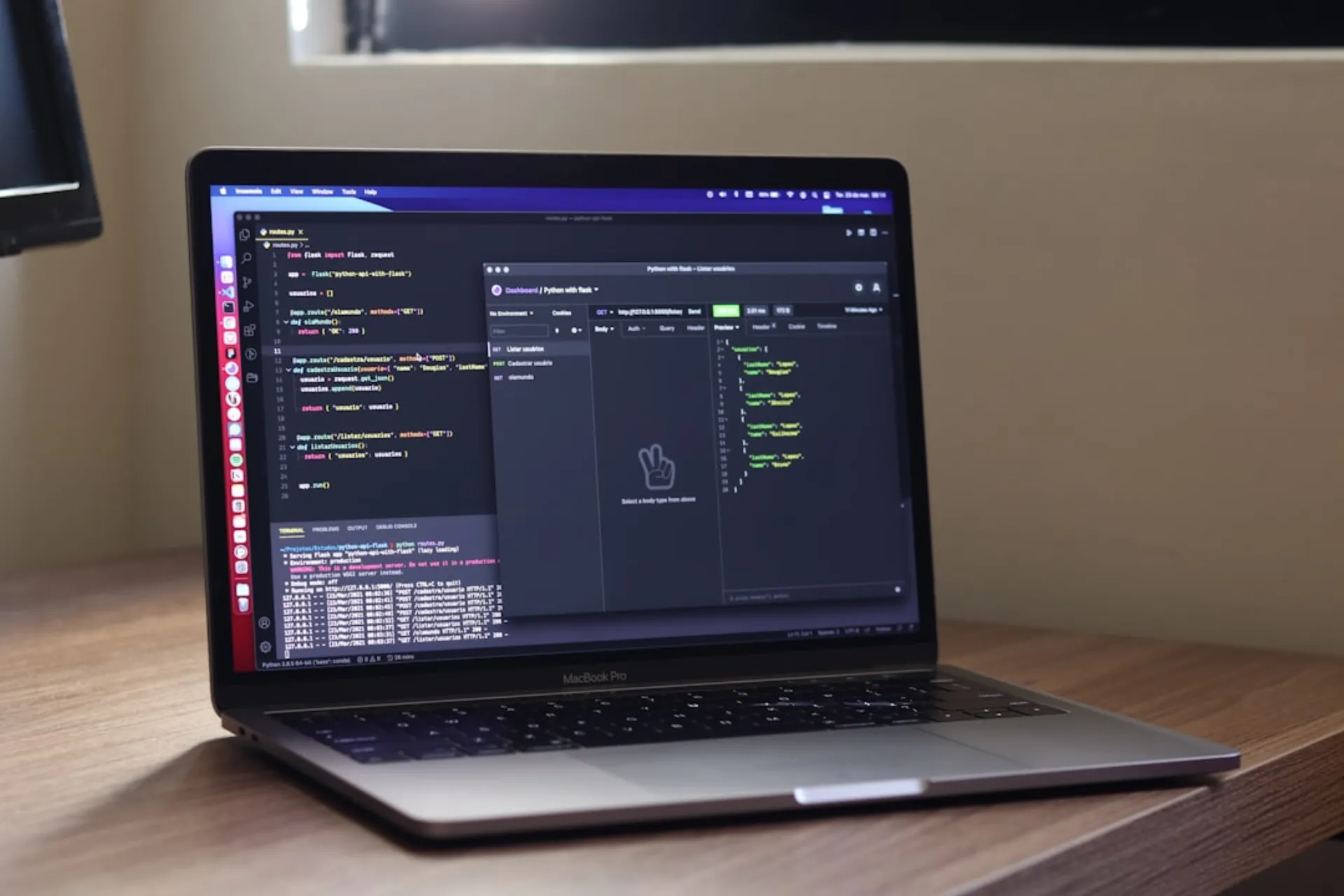
Custom API development in Dublin addresses the city's role as the EMEA technology hub where major platform companies operate their European businesses, Ireland's indigenous SaaS sector and the CBI-regulated financial services ecosystem. APIs enable data exchange between SaaS platforms, power enterprise customer integrations, facilitate open banking connections and deliver AI capabilities through programmable interfaces. GDPR governs how APIs handle personal data, with the DPC actively enforcing compliance. PSD2 creates specific requirements for financial services APIs. ZTABS builds APIs for Dublin enterprises, remote-first by design with an office in Houston, Texas.
Our API development services cover every Dublin requirement from CBI-compliant open banking to SaaS platform APIs.
Dublin API development at a glance
| Sector | API need | Key requirement |
|---|
| Financial services | PSD2 open banking, CBI compliance, payments | Berlin Group NextGenPSD2, SCA, audit |
| Technology/SaaS | Multi-tenant, partner ecosystem, webhooks | API-first, developer experience |
| Enterprise | Legacy modernisation, ERP integration | Event-driven, cross-entity governance |
| Fintech | API-as-product, marketplace, lending | CBI supervision, data protection |
Financial services APIs
Dublin's IFSC-based institutions and fintech companies need APIs for open banking compliance, regulatory reporting and third-party ecosystem connectivity.
PSD2 open banking APIs implement the Berlin Group NextGenPSD2 specification for Account Information Service Provider (AISP), Payment Initiation Service Provider (PISP) and Confirmation of Funds (CBPII) endpoints. Strong Customer Authentication requires two independent factors for end-user verification. OAuth 2.0 with PKCE handles delegated authorisation for user-facing applications, while mTLS provides certificate-based client authentication for TPP connections. Consent management enables customers to view, modify and revoke third-party access. CBI oversees Irish PSD2 implementation through authorised, registered and EEA-passported provider routes and supervises API security and data handling standards.
Regulatory reporting APIs facilitate data submissions to the CBI, ECB and EBA. Structured API-based reporting replaces manual data assembly, reducing preparation time and error rates for quarterly and annual submissions.
Core banking integration uses Change Data Capture (CDC) and event-driven layers to decouple API platforms from legacy core banking systems (Temenos T24, Finacle, custom platforms). APIs serve from real-time data stores rather than querying legacy systems directly, protecting legacy stability while providing modern API performance.
Payment APIs handle SEPA credit transfers, SEPA direct debits, card processing and emerging payment methods. Each payment type has different integration patterns, settlement cycles and reconciliation requirements.
Need CBI-compliant financial APIs for your Dublin business?
Share your CBI requirements, legacy system landscape and platform scope. We scope based on actual Irish financial services complexity.
SaaS platform APIs
Dublin's SaaS ecosystem needs API architecture supporting customer integrations, marketplace ecosystems, data exchange and webhook systems.
Customer integration APIs enable enterprise customers to connect the SaaS product with their existing tools (CRM, ERP, HR, finance systems). Well-designed integration APIs are a competitive differentiator; enterprise customers evaluate API quality, documentation and reliability as purchase criteria.
Partner ecosystem APIs enable third-party developers to build on the SaaS platform through marketplace connectors, white-label APIs and structured partner onboarding workflows. Developer portals with interactive documentation, sandbox environments and SDKs reduce integration friction.
Webhook systems provide real-time event notifications to customer systems. Webhook infrastructure includes reliable delivery with retry policies, dead letter handling, HMAC signature verification, consumer health monitoring and configurable event filtering.
Multi-tenant architecture isolates customer data while enabling shared infrastructure. Tenant-level rate limiting, usage metering, billing integration and configurable feature flags support SaaS business models.
Enterprise integration APIs
Legacy system modernisation wraps existing applications behind modern REST or GraphQL interfaces, enabling gradual modernisation where the API surface remains stable as backend systems are replaced. Facade APIs protect legacy systems from direct external access while exposing business functions.
ERP integration APIs connect SAP, Oracle, Microsoft Dynamics and Workday with digital channels, mobile applications and partner systems. Cross-entity data flows must comply with GDPR and local data protection requirements.
Event-driven architecture using Apache Kafka or AWS EventBridge provides real-time data streaming alongside request-response APIs. Systems react to events (transactions, status changes, regulatory triggers) as they occur rather than polling for updates.
GDPR-native API architecture
GDPR governs all API processing of personal data in Ireland and the EU. The Data Protection Commission (DPC) is one of the EU's most active enforcement authorities, making GDPR compliance a genuine business requirement rather than a theoretical exercise.
Data minimisation ensures APIs return only fields necessary for the requesting use case. Field-level projection enables consumers to request specific fields rather than receiving entire objects. Personal data fields are tagged in the API schema with purpose classification and retention policies.
Data subject rights endpoints implement access (providing a copy of personal data), rectification (correction), erasure (right to deletion, subject to applicable retention obligations, legal holds and technically available records) and portability (machine-readable export where the lawful basis is consent or contract) as first-class API operations.
Lawful basis is not limited to consent. Article 6 provides multiple bases including contractual necessity, legal obligation and legitimate interest. The specific basis depends on the processing activity. API architecture must support the documented lawful basis for each data processing operation.
Data residency enforcement at the API gateway level routes requests to appropriate regional infrastructure based on the data subject's jurisdiction. EU customers may require data processed within EU jurisdictions. Full-stack residency includes application data, logs, backups, CDN, analytics, monitoring and subprocessors, not just the primary database location.
Fintech and API-as-product
Dublin's fintech companies build API-first products where the API is the product. Stripe's payment APIs, Intercom's messaging APIs and similar platform companies operate significant Dublin engineering teams building and maintaining APIs for European markets.
API product design treats APIs as products with versioning, lifecycle management, usage analytics, developer onboarding and monetisation capabilities. Well-designed API products attract third-party developers, create platform lock-in and generate API-based revenue.
Developer experience is a competitive differentiator. Enterprise customers evaluate API quality, documentation and reliability as purchase criteria. Interactive documentation (OpenAPI/Swagger UI), sandbox environments with realistic test data, client SDKs in multiple languages, code samples and integration guides reduce time-to-integration.
API monetisation implements tiered access plans (free tier for basic usage, premium tiers for enhanced capabilities and higher rate limits), usage metering, billing integration and revenue reporting. Transaction-based, subscription-based and hybrid pricing models each require different API metering and billing architecture.
European-specific API requirements include data residency (EU customers requiring data processed within EU jurisdictions), GDPR compliance endpoints (data export, deletion, consent management) and localisation (currency, language, date format, regulatory context). These requirements add engineering complexity for platform companies serving European markets from Dublin.
API security for Dublin enterprises
OAuth 2.0 with certificate-bound tokens implements delegated authorisation for CBI-regulated financial APIs. OAuth 2.0 authorises limited access; OpenID Connect supplies identity where selected. Client credentials for server-to-server calls, authorisation code with PKCE for user-facing applications. mTLS provides certificate-based client authentication for PSD2 TPP connections, distinct from end-user strong customer authentication.
API gateway security centralises authentication, authorisation, rate limiting, request validation and DDoS protection. For financial APIs, the gateway enforces consent-based access controls and tracks availability metrics for CBI reporting.
Input validation enforces strict validation of all API inputs against OpenAPI schemas, preventing injection attacks, buffer overflows and data corruption. OWASP API Security Top 10 coverage is standard for Dublin enterprise APIs.
Encryption uses TLS 1.3 for transit and AES-256 for data at rest. Field-level encryption protects sensitive data (account numbers, personal data) in storage and logs. Key management follows appropriate security standards for the regulated context.
Audit logging captures API interactions with timestamps, consumer identity, endpoint accessed and response status. Logs record actor, resource, action and correlation references with purpose-limited retention; complete raw request and response bodies are not universally required and may expose personal data or secrets. CBI-regulated institutions require appropriate API access records for regulatory examination.
Penetration testing validates API security before production deployment. Financial APIs and APIs handling sensitive personal data receive security testing proportionate to the data sensitivity and regulatory expectations.
Risks in Dublin API projects
DPC enforcement activity. The DPC has imposed significant GDPR fines on technology companies operating from Dublin. API-level violations (excessive data collection, missing deletion capabilities, inadequate consent management) create genuine regulatory risk for Dublin-based operations.
CBI regulatory expectations for APIs. CBI expectations for API security, data handling and operational resilience are explicit. API failures in financial services are regulatory events, not just technical incidents. CBI examination may review API access controls, audit logging and incident response capabilities.
Legacy core system performance. Core banking and enterprise systems may respond slowly under API-driven load patterns. CDC and caching layers bridge the performance gap but introduce data freshness tradeoffs requiring careful cache invalidation strategies.
DORA compliance scope. DORA affects financial entities and their ICT service arrangements. The specific DORA scope depends on the entity's CBI-regulated status and the API service's criticality to financial operations. Not every Dublin API project falls under DORA.
R&D tax credit eligibility. Ireland's R&D Tax Credit applies to qualifying expenditure on systematic research and development involving scientific or technological uncertainty. Whether specific API development qualifies depends on the novelty and uncertainty involved, the company's eligible activities and the tax period. Do not assume all API development qualifies; specific eligibility requires professional tax assessment.
API design patterns for Dublin enterprises
API-first design produces OpenAPI 3.1 specifications before implementation. Contract-first development enables parallel frontend and backend work, automated contract testing and always-current documentation. Dublin's technology community expects production-grade API documentation and developer experience.
API versioning with semantic versioning, backward compatibility guarantees and documented deprecation policies. PSD2 APIs follow Berlin Group versioning conventions. SaaS APIs provide documented deprecation timelines agreed with consumers.
Rate limiting and fair usage protects APIs from overload. PSD2 APIs handle TPP traffic with varying consumption patterns. SaaS APIs enforce per-tenant rate limits with burst capacity. Gaming and high-throughput APIs require different rate limiting profiles.
Monitoring and observability tracks response times, error rates, throughput and availability per endpoint and per consumer. CBI-regulated APIs require availability monitoring and incident tracking for regulatory reporting.
Testing strategy includes contract tests validating against OpenAPI specifications, integration tests for end-to-end API flows, performance tests under peak traffic patterns, security tests covering OWASP API Security Top 10 and PSD2 conformance tests for regulatory compliance. Automated testing pipelines catch specification violations and security regressions before production deployment. Load testing validates API behaviour under Dublin's enterprise-scale traffic patterns including peak-hour usage, month-end processing surges and promotional traffic spikes.
How we deliver Dublin API projects
Discovery maps CBI regulatory scope, GDPR requirements, legacy system landscape and platform architecture. For financial services, discovery identifies core banking connectivity, TPP management and consent architecture. For SaaS, discovery maps customer integration requirements, webhook patterns and multi-tenant isolation needs.
ZTABS delivers from our Houston, Texas office, remote-first by design. Our cloud services, DevOps capabilities and AI development services support deployment infrastructure. ZTABS also builds custom white-label AI products that clients can brand and resell.
Illustrative Example
Hypothetical: CBI-regulated institution building open banking API platform with fintech ecosystem
A CBI-regulated retail bank with 500,000 to 2 million customers would build an open banking API platform over 14 to 24 weeks. The build would include: PSD2-compliant AISP, PISP and CBPII endpoints implementing Berlin Group NextGenPSD2. Core banking integration layer with CDC streams from legacy system to real-time API data store. Strong Customer Authentication using two independent end-user factors per the bank's selected SCA journey, with OAuth 2.0 and PKCE for delegated authorisation and certificate-bound tokens for TPP client authentication. Consent management with granular scope, time-bound access and instant revocation. Commercial APIs beyond PSD2 mandate for fintech partner ecosystem. Developer portal with interactive documentation, sandbox environment and SDKs. API monetisation infrastructure with tiered plans and usage metering. Monitoring with CBI-ready reporting dashboards for API availability and security events.
This is a hypothetical scenario for illustration. Actual scope, timeline and cost depend on your requirements.
Budget confirmed for your Dublin API?
Share your CBI requirements, SaaS integration scope and platform needs for a fixed-scope estimate.
API development cost and timeline
Costs follow our published API development cost guide.
| Tier | Typical range | Timeline | What is included |
|---|
| Simple REST API | $8,000 to $20,000 | 3 to 6 weeks | CRUD endpoints, basic authentication, database integration, simple validation |
| Mid-complexity API | $20,000 to $50,000 | 6 to 14 weeks | OAuth/JWT auth, role-based access, webhook system, rate limiting, comprehensive docs |
| Enterprise API platform | $50,000 to $100,000 | 14 to 24 weeks | API gateway, versioning, analytics, developer portal, SDKs, sandbox environment |
| Complex integration API | $100,000+ | 24 to 40 weeks | Microservices architecture, event-driven, real-time streaming, multi-region, compliance |
CBI-compliant open banking platforms with legacy integration typically fall in the enterprise to complex integration range. SaaS platform APIs depend on tenant count, webhook volume and partner ecosystem scope.
Choosing an API development partner for Dublin
| Provider type | Strength | Tradeoff |
|---|
| ZTABS (remote-first, Houston office) | Full-stack API, financial/SaaS domain, AI capability | Remote-first by design |
| Irish software firm | Local presence, Irish market knowledge | Evaluate per-firm financial regulation and scale depth |
| Enterprise consultancy (Accenture, Capgemini) | Large programme management | Evaluate per-engagement API engineering depth and cost |
| Multinational internal team | Platform domain knowledge | Evaluate surge capacity and European regulatory depth |
When custom API development is not what you need
- You need standard payment processing only. Payment providers (Stripe, Adyen) offer payment APIs without custom development.
- You need PSD2 data aggregation only. Open banking aggregation platforms provide connectivity without custom API work.
- You need GDPR, CBI or tax assessment only. We build APIs with compliance architecture; determining specific obligations requires qualified Irish legal or tax counsel.
See our enterprise software services and AI development services for adjacent needs.
Ready to build your Dublin API?
Whether you need CBI-compliant open banking, SaaS platform APIs or enterprise integration, we scope based on your specific requirements.