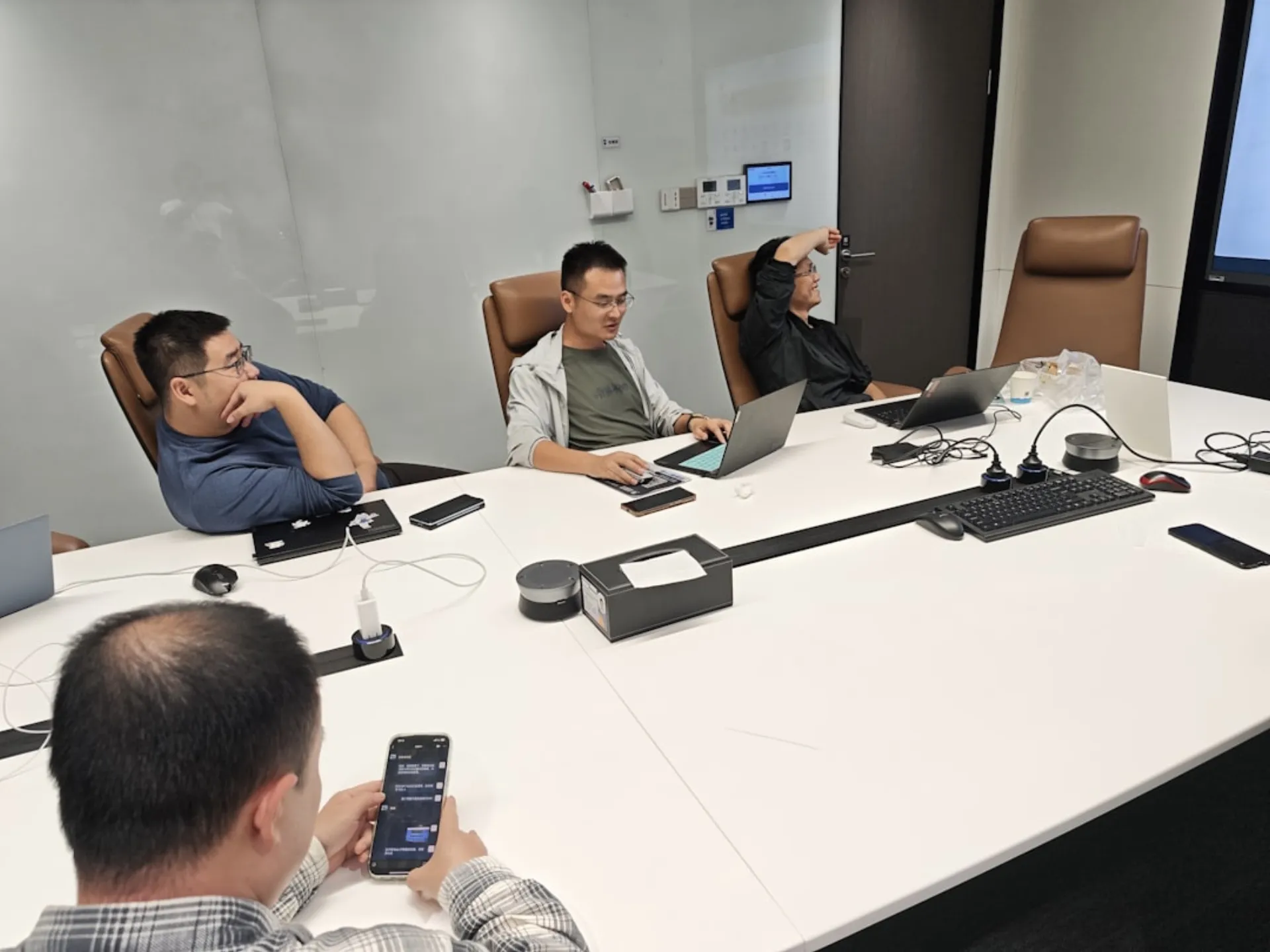
IT consulting in Atlanta serves the Southeast's commercial capital where mid-market companies across food distribution, manufacturing and professional services face technology decisions that determine whether they can scale efficiently, healthcare organisations manage clinical technology across growing provider networks, logistics companies headquartered in one of America's primary distribution hubs evaluate WMS, TMS and fleet technology investment, and growth-stage companies in Atlanta's expanding technology sector need the architecture, compliance and organisational foundations for enterprise selling. Atlanta's practical business culture demands consulting that delivers actionable recommendations with clear implementation paths and measurable outcomes rather than theoretical frameworks. ZTABS provides IT consulting in Atlanta, remote-first by design with an office in Houston, Texas.
Our AI development services and automation services complement Atlanta IT consulting engagements.
Atlanta consulting at a glance
| Sector | Consulting need | Key requirement |
|---|
| Mid-market | ERP strategy, supply chain, digital transformation | Food distribution, manufacturing |
| Healthcare | Clinical technology, interoperability, cybersecurity | HIPAA, Epic, population health |
| Logistics | WMS, TMS, route optimisation, carrier integration | High volume, multi-modal |
| Growth-stage | Architecture scaling, SOC 2, eng org, enterprise readiness | Series A-C, compliance |
| Payment processing | PCI DSS, tokenisation, payment infrastructure | Transaction processing |
Mid-market technology consulting
Food distribution technology evaluating the technology stack for food distribution companies including ERP, warehouse management, route planning, customer ordering, food safety compliance and cold chain monitoring. Food distribution has unique technology requirements including temperature tracking, lot traceability, shelf life management, FSMA compliance and customer-specific pricing and delivery requirements.
ERP strategy evaluating ERP platforms for mid-market companies. SAP Business One, Oracle NetSuite, Microsoft Dynamics, Sage and industry-specific platforms assessed against the company's specific operational requirements, growth trajectory and budget. ERP evaluation covers functionality, integration capability, implementation complexity, total cost of ownership and vendor viability for the company's size and industry.
Supply chain technology evaluating technology supporting procurement, inventory management, demand planning and supplier management. Assessment covers current supply chain visibility, planning capability, supplier collaboration and technology maturity. Recommendations address specific gaps in the company's supply chain technology.
Digital transformation assessment evaluating overall technology maturity for mid-market companies. Many Atlanta mid-market companies operate with technology decisions made years ago that no longer match current operational needs. Assessment covers all technology domains identifying the highest-impact modernisation opportunities.
Customer ordering and ecommerce evaluating B2B ordering technology for distribution and manufacturing companies. Online ordering portals, EDI integration, customer self-service and order management automation. Many mid-market companies still process orders via phone, fax and email where digital ordering can improve efficiency and accuracy. Our ecommerce development services complement B2B ordering and digital commerce consulting. Assessment covers the full ordering lifecycle from catalogue presentation through order placement, fulfilment visibility and invoicing, identifying automation opportunities that reduce manual processing while improving customer service.
Healthcare IT consulting
Clinical technology assessment evaluating clinical applications across EHR, PACS, lab information systems, pharmacy automation, clinical decision support and telehealth platforms. Assessment identifies integration gaps, usability challenges, clinical workflow bottlenecks and modernisation opportunities. HIPAA standard transactions determine covered provider status.
Interoperability strategy evaluating health information exchange capabilities including HL7 FHIR readiness, CMS interoperability requirements and health information network participation. Assessment evaluates current data exchange capability and recommends improvements supporting clinical coordination and regulatory compliance. Atlanta healthcare organisations managing growing provider networks across the Southeast require robust interoperability supporting referral management, care coordination and population health analytics across affiliated entities and external partners.
Population health technology evaluating analytics platforms for population health management. Risk stratification, care gap identification, quality measure reporting and value-based care analytics. Technology supporting Atlanta healthcare organisations transitioning from fee-for-service to value-based care models.
Healthcare cybersecurity evaluating security posture against HIPAA Security Rule requirements and current healthcare cyber threats. Security assessment covering technical controls, access management, encryption, audit logging, incident response and workforce training. Healthcare data breaches carry significant regulatory and reputational consequences. Assessment covers both technical vulnerability and organisational process gaps that create security risk. Incident response planning ensures the organisation can detect, contain and recover from security incidents while meeting breach notification timelines.
Need IT consulting for your Atlanta business?
Share your current technology landscape, industry context and growth objectives.
Logistics technology consulting
WMS strategy evaluating warehouse management system capabilities across inventory management, pick-pack-ship, labour management, slotting optimisation and returns processing. WMS evaluation for single-warehouse and multi-warehouse operations. Assessment covers current operational challenges, growth requirements, integration needs and platform options including Manhattan Associates, Blue Yonder, Körber and mid-market alternatives.
TMS evaluation evaluating transportation management system capabilities across load planning, carrier selection, rate management, tracking and freight audit. TMS assessment for both shipper and carrier perspectives. Atlanta's position as a logistics hub means TMS technology decisions affect operations across the Southeast distribution network.
Route optimisation evaluating technology for last-mile delivery and distribution route planning. Route optimisation increasingly important for food distribution, beverage distribution and parcel delivery where fuel costs, driver hours and service windows constrain operations. Assessment covers current routing capability and AI-assisted optimisation opportunities. Route planning technology evaluation considers dynamic routing capability, delivery window management, vehicle capacity constraints, driver scheduling compliance and real-time adjustment for traffic and weather conditions. Assessment quantifies improvement potential from optimisation technology upgrade.
Carrier integration evaluating technology for electronic communication with carriers including API integration, EDI, load tender, track-and-trace and electronic proof of delivery. Carrier integration reducing manual communication and improving shipment visibility across multi-carrier operations.
Freight payment and audit evaluating technology for freight invoice processing, rate validation, audit and payment. Payment roles, provider approvals, licences, contracts and actual reconciliation apply to freight payment systems. Technology reducing freight payment errors and processing time while maintaining audit trails. Customs own-account filing where relevant for international shipments.
Growth-stage technology consulting
Architecture scaling for Atlanta growth-stage companies hitting scaling constraints. Assessment identifies specific technical bottlenecks limiting growth. Target architecture designed for the company's specific scale trajectory. Architecture advisory that addresses current problems while building foundations for continued growth.
SOC 2 readiness preparing Atlanta companies for SOC 2 examination. SOC 2 is an independent CPA attestation examination resulting in a report, not a certification issued by a service provider. Gap assessment, control implementation roadmap, compliance automation platform selection and auditor coordination. A SOC 2 report is increasingly required for enterprise sales in SaaS, fintech and healthcare technology.
Engineering organisation designing team structures, processes and governance for growing engineering teams. Platform engineering investment, on-call processes, documentation standards and development workflow design. Organisational design that supports growth without sacrificing engineering velocity. Assessment evaluates current team structure, communication patterns, development processes and productivity metrics. Recommendations address team topology, platform versus feature team balance, on-call rotation design and the documentation and knowledge sharing practices that scaling teams require. Growth-stage companies often find that processes that worked with a small team create bottlenecks at larger scale.
Enterprise readiness preparing growth-stage companies for enterprise customer requirements. SSO, SCIM, audit logging, RBAC, data residency, uptime SLAs and enterprise deployment models. Identifying the specific features enterprise procurement requires.
Illustrative Example
Hypothetical: Atlanta food distribution technology modernisation
An Atlanta food distribution company with significant annual revenue and hundreds of SKUs serving retail, food service and institutional customers would engage IT consulting to modernise their technology stack. Assessment would evaluate ERP, WMS, route planning, customer ordering, food safety and cold chain technology. Current-state analysis might identify ERP running an older version with limited B2B ecommerce, warehouse operations using paper-based picking, route planning done manually by experienced dispatchers, customer ordering via phone and email and food safety documentation maintained in separate systems. Target architecture would address each gap: ERP upgrade or replacement with modern B2B ordering capability, WMS implementation for warehouse operations, route optimisation technology replacing manual planning, integrated customer ordering portal and food safety compliance integrated with operations. A modernisation roadmap would sequence implementations to avoid operational disruption, typically starting with customer-facing ordering and WMS where operational impact is most immediate.
This is a hypothetical scenario for illustration. Actual scope, timeline and cost depend on your requirements.
Planning technology transformation in Atlanta?
Tell us about your technology challenges, growth trajectory and consulting priorities.
Cost drivers for IT consulting
There is no dedicated published IT consulting cost guide. Consulting costs depend on engagement scope, operational complexity, compliance requirements and deliverable depth. Key factors include the number of systems and warehouses assessed, industry-specific requirements including HIPAA, PCI DSS, FSMA and FMCSA, integration complexity across supply chain systems, whether implementation planning is included alongside advisory and the number of stakeholder sessions required.
For organisations moving from consulting into implementation, separate published build guides exist for specific technology domains including custom software, ecommerce websites and data analytics platforms. Implementation costs are scoped separately from advisory.
Georgia data protection
Georgia defines personal information with actual branches for different data element combinations. Data broker, collector and maintainer roles have specific definitions and obligations under Georgia law. Georgia SB111 is a signed rural-hospital tax-credit measure, not a comprehensive consumer privacy law. IT consulting identifies which data processing activities fall under Georgia PI definitions and recommends technology controls meeting applicable requirements including breach notification obligations.
PCI DSS compliance
PCI DSS is an industry standard with actual cardholder data environment (CDE) scope. Compliance involves contract, brand, acquirer and validation requirements. Payment roles and provider approvals apply. Assessment identifies the CDE boundary, evaluates current controls against PCI DSS requirements and recommends architecture that minimises PCI scope through tokenisation, point-to-point encryption and network segmentation. Scope reduction is often the most effective compliance strategy for mid-market companies.
Choosing a partner
| Provider type | Strength | Tradeoff |
|---|
| ZTABS (remote-first, Houston office) | Multi-sector, mid-market expertise, practitioner-led | Remote-first by design |
| Global SI (Accenture, Deloitte) | Enterprise scale, broad capability | Evaluate proposed team and cost for your project |
| Supply chain consultant | Deep logistics expertise | Evaluate technology breadth for your scope |
| Healthcare specialist | Deep clinical technology | Evaluate broader technology scope if needed |
| Regional IT consultancy | Local relationships, market knowledge | Evaluate specialised depth for your needs |
When ZTABS is not the right fit
- You need pure staff augmentation without advisory scope. Staff augmentation is scoped separately from consulting.
- You need food safety audit or FSMA inspection services. We advise on technology, not food safety compliance.
- You need licensed legal or accounting services. Different professional requirements.
- You require full-time on-site staff in your Atlanta office. ZTABS is remote-first by design.
- You need fleet maintenance or vehicle procurement. We advise on technology, not fleet operations.
Risks in Atlanta IT consulting
Georgia PI scope. Actual PI branches determine which data requires breach notification. Data broker, collector and maintainer roles carry specific obligations. Organisations must identify which roles and PI categories apply.
PCI DSS scope. Cardholder data environment boundaries must be accurately identified. Underscoping creates compliance risk while overscoping creates unnecessary cost. Actual validation requirements depend on transaction volume, merchant level and acquirer relationship.
Mid-market resource constraints. Mid-market companies typically have smaller IT teams managing all technology decisions alongside daily operational support. Consulting must account for implementation capacity alongside strategic recommendations. Roadmaps must be realistic given available internal resources.
Food safety technology. Food distribution technology must support food safety compliance including traceability, temperature monitoring and recall capability. Technology changes during modernisation must not create food safety gaps or compliance disruptions.
Logistics integration complexity. Supply chain technology involves integration across WMS, TMS, ERP, carrier systems and customer systems. Integration complexity increases with the number of trading partners and systems involved.
Ready for IT consulting in Atlanta?
Share your technology landscape, industry context and consulting needs.
Enterprise consulting in Atlanta
Cloud strategy developing cloud migration approach for Atlanta enterprises. Workload assessment, cloud platform evaluation and migration roadmap. Cloud cost analysis based on actual usage patterns rather than vendor pricing assumptions. Atlanta enterprises managing hybrid architectures with on-premises distribution and logistics infrastructure alongside cloud workloads need careful architecture balancing latency, reliability and cost.
Digital transformation for Atlanta mid-market and enterprise companies modernising technology across operations, customer experience and data capabilities. Assessment covers all technology domains identifying the highest-impact modernisation opportunities. Many Atlanta companies operate technology estates that served well during initial growth but now constrain operational efficiency and customer experience improvement. Transformation roadmap accounts for implementation capacity alongside strategic recommendations.
Data analytics strategy evaluating data capabilities for Atlanta companies including data warehouse maturity, analytical tools, business intelligence, data governance and AI readiness. Assessment evaluates current analytics maturity from basic reporting through descriptive analytics to predictive and prescriptive capability. Distribution and logistics companies generating large transaction and tracking data volumes need analytics infrastructure that processes operational data alongside business data for comprehensive visibility.
M&A technology integration for Atlanta companies integrating acquired technology stacks. System consolidation, data migration, team integration and timeline planning. Atlanta mid-market M&A activity creates demand for technology integration consulting that addresses both system integration and organisational change.
Additional consulting domains
Payment technology. Payment processing infrastructure evaluation, PCI compliance strategy and payment technology modernisation for Atlanta companies. Atlanta's concentration of payment processing companies creates specific consulting demand for transaction processing technology, tokenisation and payment security architecture.
Data strategy. Data governance, platform evaluation and analytics maturity assessment. Our data analytics services complement data strategy consulting.
AI readiness. Organisational readiness for AI adoption. Use case prioritisation, build versus buy analysis and governance framework. Our AI consulting services complement technology advisory.
Cybersecurity programme. Security programme maturity assessment for Atlanta mid-market and enterprise companies. Security strategy before tactical implementation.
ERP migration. ERP platform migration planning and execution oversight for mid-market companies. Migration from legacy ERP to modern platforms with realistic timelines, organisational change management and data migration planning.
Disaster recovery. DR strategy for Atlanta organisations. Business continuity planning addressing technology failures and weather events. Multi-site architecture for distribution and logistics operations requiring high availability.