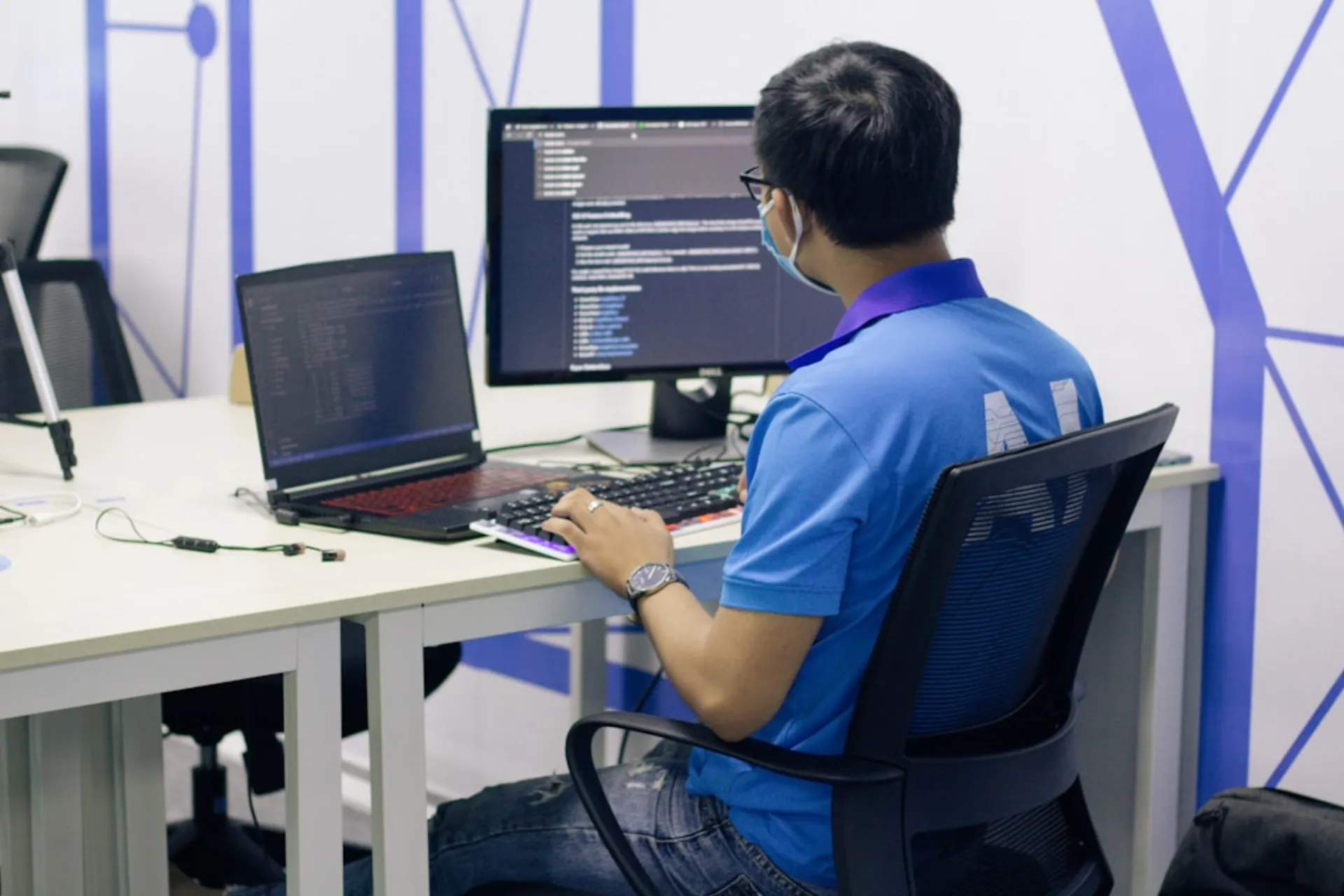
QA testing in San Francisco serves the city's technology ecosystem where software must scale rapidly, handle sensitive data securely and maintain reliability under global user loads. SaaS platforms cannot tolerate multi-tenant data leakage. Fintech applications must maintain financial calculation accuracy while meeting SOC 2 and regulatory requirements. Healthtech products face FDA and HIPAA compliance obligations. AI systems require testing for bias detection, safety boundaries and output reliability within the scope of the specific model and use case. ZTABS provides QA testing for San Francisco technology companies, remote-first by design with an office in Houston, Texas.
Our enterprise software services and DevOps capabilities support San Francisco's testing requirements.
San Francisco QA testing at a glance
| Sector | Testing need | Key requirement |
|---|
| SaaS platforms | Microservices, multi-tenant, API, webhook | SOC 2, data isolation |
| Fintech | Financial accuracy, compliance, security | PCI DSS, CCPA, SOC 2 |
| Healthtech | Clinical, HIPAA, FDA, EHR integration | Synthetic data, audit trail |
| AI/ML systems | Model validation, bias, data pipeline | Explainability, safety |
SaaS platform testing
Microservices testing validates distributed architectures where individual services are deployed independently. Contract testing between services verifies API compatibility against tested fixtures, catching incompatible service versions before deployment. Integration testing validates end-to-end workflows crossing multiple service boundaries. Service mesh testing validates routing, circuit breaking and retry behaviour. In architectures with dozens or hundreds of microservices, the interaction points between services are where most production defects originate.
Multi-tenant data isolation testing systematically verifies data isolation between tenants across tested access paths. Testing covers database queries (row-level security enforcement), API responses (authorisation filtering), background jobs (tenant context propagation), caching layers (cache key isolation), search indexes (index scoping), reports (data filtering) and file storage (access control). Data isolation testing generates multiple tenants with known data and validates that cross-tenant queries return zero results across the covered access paths. The specific paths tested depend on the application's architecture and data flow.
SSO and identity testing validates SAML and OIDC integration with corporate identity providers (Okta, Azure AD, Google Workspace). Testing covers authentication flows, session management, role mapping, just-in-time user provisioning and identity provider metadata handling. Multi-IDP scenarios test customers using different identity providers simultaneously.
Webhook reliability testing validates outbound webhook delivery including retry logic, failure handling, signature verification and event ordering. Testing simulates receiver failures, timeouts and network partitions to verify the webhook system handles edge cases; finite durable queues and retry logic reduce data loss risk but do not guarantee eventual delivery in all failure scenarios.
Feature flag testing validates flag configurations and their effects on user experience. Testing verifies that flag toggling produces the expected behaviour, that rollout percentages are statistically correct, and that flag combinations do not create unexpected interactions.
Need QA testing for your SF SaaS platform?
Share your microservices architecture, tenant model and compliance requirements. We scope testing based on your specific platform needs.
Fintech application testing
Financial calculation accuracy testing verifies representative financial computations against independently calculated expected values: interest calculations, fee computations, currency conversions, tax calculations and balance reconciliation. Edge cases cover rounding scenarios, floating-point precision, maximum and minimum values, concurrent transactions and boundary conditions. Test coverage is risk-based; exhaustive verification of every possible computation input is not feasible.
SOC 2 controls testing validates controls for SOC 2 Type II examination (SOC 2 is a CPA examination report, not a certification). Access control testing verifies role-based permissions, MFA enforcement and session management. Audit logging testing verifies that all access and modification events are captured with sufficient detail for investigation. Change management testing validates that deployment processes follow documented approval procedures. Evidence collection generates timestamped audit-ready documentation.
PCI DSS compliance testing validates cardholder data protection for entities handling payment card data. Testing scope depends on the entity's specific cardholder data environment, processing volume and applicable SAQ type or ROC requirements. Testing covers data encryption, access controls, network segmentation, vulnerability management and logging.
Security testing covers OWASP Top 10 assessment, API security validation, dependency vulnerability scanning and penetration testing. Fintech applications attract sophisticated attackers making security testing frequency and depth critical. Automated vulnerability scanning runs continuously while manual penetration testing executes quarterly or before major releases.
Healthtech product testing
FDA SaMD validation follows IEC 62304 software lifecycle processes for software qualifying as a medical device. Not all healthcare software is automatically a regulated medical device; classification depends on the software's intended use, risk class and applicable FDA guidance. Testing generates the documentation required for FDA submissions including test protocols, execution records and traceability matrices.
HIPAA compliance testing validates PHI protection across the application: access controls, audit logging, encryption at rest and in transit, session management, minimum necessary data access and breach notification capabilities. HIPAA applies to covered entities and business associates; specific obligations depend on the entity's role in PHI handling. Testing uses synthetic patient data, never production PHI.
Clinical accuracy testing validates clinical algorithms, decision support logic and clinical workflows. Drug interaction checking, dosage calculations, clinical guideline implementation and clinical alert logic require domain expertise to validate correctness. A test verifying an alert fires is insufficient; clinical expertise determines whether the alert fires correctly for the clinical scenario.
EHR interoperability testing validates data exchange through FHIR APIs with Epic, Cerner, Meditech and other EHR systems. Testing covers FHIR resource creation, querying, updating and subscriptions. Data mapping validation ensures clinical data translates correctly between the application and EHR systems.
AI and ML system testing
Model validation tests ML models for accuracy, precision, recall and F1 score against labelled evaluation datasets. Testing validates model performance across data segments and edge cases, not just aggregate metrics. Model regression testing detects accuracy degradation when models are retrained or data distributions shift.
Bias and fairness testing evaluates model outputs across protected attributes (gender, race, age, geography) to detect discriminatory patterns. Bias testing uses established fairness metrics appropriate for the specific use case. Bias can exist in training data, feature engineering or model architecture; testing identifies where bias manifests without necessarily diagnosing root cause.
Data pipeline testing validates the complete data path from ingestion through feature engineering to model input. Data quality testing detects schema violations, missing values, distribution drift and referential integrity issues. Pipeline testing ensures models receive clean, correctly transformed data.
Generative AI testing covers prompt injection defence, hallucination detection, output safety validation, content policy compliance and response quality evaluation. Testing evaluates guardrails through measured held-out and adversarial evaluation sets, validating detection, reduction and abstention rates for harmful, incorrect or off-brand content. Human review supplements automated testing for ambiguous outputs. Residual model risks remain; guardrail testing reduces rather than eliminates the probability of undesirable outputs. Automated testing frameworks execute thousands of adversarial prompts testing boundary conditions.
Illustrative Example
Hypothetical: SF B2B SaaS platform implementing comprehensive QA programme
A San Francisco B2B SaaS platform serving enterprise customers with multi-tenant architecture and SOC 2 requirements would implement a QA programme over 10 to 14 weeks. The build would include: contract testing between microservices using Pact to catch covered contract deviations during independent deployments. Multi-tenant data isolation test suite systematically validating cross-tenant isolation across database, API, cache, search and background job access paths. SOC 2 controls testing generating continuous audit evidence for access control, logging, encryption and change management. Performance testing simulating per-tenant load isolation verifying one tenant's traffic spike does not degrade other tenants. CCPA/CPRA compliance test suite validating data subject request processing within required timelines. CI/CD integration with automated quality gates blocking production deployment when critical tests fail. Security testing including automated vulnerability scanning integrated into deployment pipeline and quarterly manual penetration testing.
This is a hypothetical scenario for illustration. Actual scope, timeline and cost depend on your requirements.
Budget confirmed for your SF QA engagement?
Share your platform architecture, compliance requirements and testing gaps for a scoped estimate.
QA testing cost drivers
There is no published QA testing cost guide because QA engagements vary significantly by scope. These factors drive project-specific pricing:
| Cost driver | Impact | What affects it |
|---|
| Architecture complexity | High | Number of microservices, integration points, multi-tenancy |
| Compliance requirements | High | SOC 2, PCI DSS, HIPAA, FDA documentation scope |
| Security testing scope | Medium to high | Penetration testing depth, scanning frequency |
| AI/ML testing | Medium to high | Model validation complexity, bias testing scope |
| Test environments | Medium | Staging replication, data isolation, synthetic data |
| Automation framework | Medium | Initial build, contract testing, CI/CD integration |
| Ongoing maintenance | Low to medium | Test suite updates, new feature coverage, reporting |
Contact us for a proposal-specific estimate based on your testing needs.
Privacy compliance testing for California businesses
CCPA/CPRA applies to covered businesses meeting at least one of three thresholds: indexed annual gross revenue (currently $26.625 million from January 2025), buying, selling or sharing personal information of 100,000 or more California residents or households, or deriving 50 percent or more of annual revenue from selling or sharing consumers' personal information. Not all San Francisco businesses are covered; the specific obligations depend on the business's size and data handling activities.
Testing validates: Do Not Sell or Share links and functionality, Global Privacy Control signal detection and honoring, data subject access request processing within 45 calendar days, data deletion request processing with verification, data correction request handling, opt-out preference signals, privacy notice accuracy and accessibility, and service provider contractual compliance verification.
Automated privacy compliance tests run on every deployment validating that privacy controls remain functional as the application evolves. Manual testing covers scenarios requiring human judgment such as privacy notice completeness and opt-out UX clarity.
Test automation infrastructure
Playwright-based end-to-end testing provides cross-browser automated testing with parallel execution. Page Object Model architecture separates test logic from UI implementation enabling stable tests that survive UI changes. Visual regression testing detects unintended UI changes across deployments.
API testing validates REST and GraphQL endpoints for contract compliance, error handling, authentication and authorisation. Load testing with k6 simulates production traffic patterns. Chaos testing validates service resilience by injecting failures (network latency, service unavailability, database timeouts) during automated test execution.
Test observability integrates test results with monitoring and alerting. Test failure analysis correlates failures with deployment changes, infrastructure metrics and error rates. Flaky test detection and quarantine prevents unreliable tests from blocking deployments while flagging them for investigation.
How we deliver SF QA engagements
Discovery assesses the application architecture, identifies critical testing gaps, maps compliance requirements and plans the testing approach. For SaaS platforms, discovery maps microservices dependencies and multi-tenancy model. For fintech, discovery identifies SOC 2 control scope and financial calculation coverage needs. For healthtech, discovery maps PHI handling and applicable FDA classification. For AI/ML, discovery evaluates model testing needs and bias assessment scope.
ZTABS delivers from our Houston, Texas office, remote-first by design. Our cloud services and AI development services support testing infrastructure. ZTABS also builds custom white-label AI products that clients can brand and resell.
Choosing a QA testing partner for San Francisco
| Provider type | Strength | Tradeoff |
|---|
| ZTABS (remote-first, Houston office) | Full-stack QA, SaaS/fintech domain, automation | Remote-first by design |
| Offshore QA firm | Test execution volume capacity | Evaluate per-firm SaaS and fintech domain depth and total engagement cost |
| Security testing specialist (NCC, Bishop Fox) | Deep security assessment | Evaluate comprehensive QA programme scope per firm |
| QA automation vendor (Tricentis, Sauce Labs) | Test infrastructure platform | Evaluate strategic quality management per engagement |
Risks in SF QA engagements
Microservices testing complexity. As services multiply, the number of interaction points grows combinatorially. Testing every service in isolation does not guarantee the system works correctly when services interact. Contract testing and integration testing must cover the critical interaction paths while avoiding combinatorial explosion. Architectural documentation of service dependencies drives efficient test design.
Test environment fidelity. Staging environments that do not replicate production's multi-tenant isolation, service mesh configuration and data volume produce test results that do not predict production behaviour. Test environments should mirror production architecture even if at reduced scale. Cloud-native environments with infrastructure-as-code enable consistent staging provisioning.
SOC 2 evidence management. SOC 2 Type II examinations require evidence over the specified observation period, not a single point-in-time test pass. Testing must generate and preserve evidence continuously throughout the observation period. Test infrastructure must reliably capture and store evidence without gaps.
AI model testing evolution. ML models change with retraining, data drift and architecture updates. Test suites must evolve with models. Static test datasets become stale as data distributions shift. Monitoring in production supplements pre-deployment testing by detecting performance degradation on live data that test datasets did not anticipate.
CCPA threshold changes. CCPA/CPRA thresholds and requirements evolve through regulatory updates and California Privacy Protection Agency rulemaking. Compliance testing must track current requirements rather than relying on initial implementation. Regulatory monitoring ensures testing remains aligned with current obligations.
Testing methodology for SF enterprises
Shift-left testing embeds quality validation earlier in the development cycle. Developers write unit and integration tests alongside feature code. Code review includes test coverage review. Static analysis and linting catch common defect patterns before test execution. Design reviews evaluate testability ensuring features can be effectively validated before implementation begins.
Continuous testing runs automated tests at every stage of the deployment pipeline. Pre-commit hooks run linting and unit tests. Pull request checks run integration and contract tests. Staging deployment triggers end-to-end tests. Production deployment triggers smoke tests and synthetic monitoring. Each pipeline stage provides a quality gate preventing defective code from advancing.
Exploratory testing supplements automated testing with human investigation. Exploratory testing discovers defects that automated tests cannot: unexpected user flows, confusing UX patterns, edge cases not anticipated during test design, and issues emerging from complex system interactions. Structured exploratory testing uses charters directing investigation toward high-risk areas while allowing the tester to follow discoveries.
Performance engineering goes beyond load testing to understand system behaviour under production conditions. Profiling identifies specific bottlenecks at the code, query and infrastructure level. Capacity planning uses load test data to project infrastructure requirements for growth. Performance budgets set response time thresholds that automated tests enforce on every deployment.
When QA testing is not what you need
- You need a full SaaS build. QA validates existing software. For custom development, see our SaaS development services.
- You need SOC 2 audit preparation only. We test controls and generate evidence; the actual SOC 2 audit requires a licensed CPA firm.
- You need ML model development. We test models; building and training models is a separate engagement. See our AI development services.
See our DevOps services and cloud services for adjacent needs.
Ready to improve your SF software quality?
Whether you need SaaS platform testing, fintech compliance validation or AI system QA, we scope based on your specific requirements.