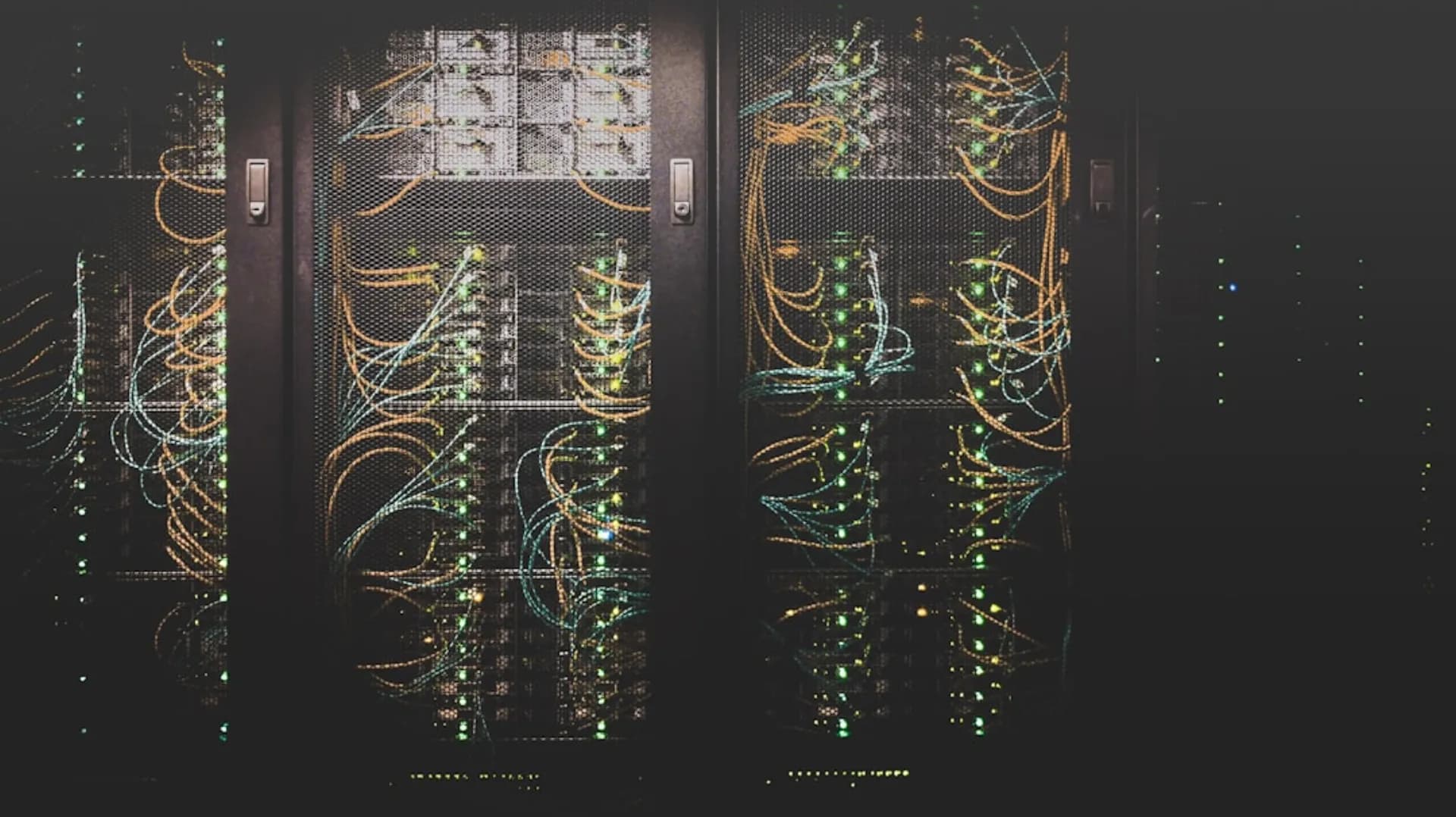
Our Chicago self-hosted AI methodology addresses infrastructure design, model deployment, performance optimisation, and operational management. Infrastructure design: GPU compute architecture. Hardware selection: GPU infrastructure matched to AI workload requirements — inference workloads (serving LLM responses to users) requiring different GPU configurations than training workloads (fine-tuning models on domain data). Inference GPUs: NVIDIA A100 (80GB) or H100 for large model serving, A10G or L4 for smaller models and high-throughput inference. The selection: balanced against budget — H100 providing 2-3x inference throughput vs. A100 but at 2x cost. Training GPUs: NVIDIA A100 or H100 with NVLink for multi-GPU training — fine-tuning requiring more GPU memory and inter-GPU communication bandwidth than inference. Deployment location: on-premise data centre (carrier or health system data centre — maximum data sovereignty but requiring facilities capability for GPU power and cooling), private cloud (dedicated GPU instances on AWS, Azure, or GCP — provider infrastructure but customer-exclusive, no shared tenancy), and co-location (GPU infrastructure in Equinix or CyrusOne Chicago data centres — the preferred deployment for trading firms already operating in these facilities). Networking: high-bandwidth, low-latency networking between GPU nodes and application servers — NVLink for intra-node GPU communication, InfiniBand or high-speed Ethernet for inter-node communication in multi-node deployments. Model deployment: optimised serving. Model selection: open-source models selected for self-hosted deployment — Llama 3.1 (70B for high-quality inference, 8B for high-throughput applications), Mistral (7B and Mixtral 8x7B for cost-effective serving), and specialised models (BioMistral for healthcare, FinGPT for financial applications). Model selection: evaluated against domain-specific benchmarks rather than general benchmarks — the model that performs best on insurance document extraction may not be the model that performs best on clinical note processing. Serving infrastructure: vLLM (high-throughput serving with continuous batching and PagedAttention), TGI (Hugging Face Text Generation Inference for simpler deployments), or TensorRT-LLM (NVIDIA-optimised serving for maximum throughput on NVIDIA GPUs). Serving optimisation: quantisation (reducing model precision from FP16 to INT8 or INT4 — reducing GPU memory requirements and increasing throughput with minimal quality loss), speculative decoding (using a smaller model to draft responses that the larger model validates — increasing throughput for autoregressive generation), and KV cache optimisation (PagedAttention managing GPU memory for concurrent requests — enabling more simultaneous users per GPU). Performance optimisation: maximising GPU utilisation. Benchmarking: measuring inference performance — tokens per second, time to first token, and concurrent user capacity — under realistic workload conditions. Optimisation targets: throughput (tokens per second per GPU — measuring cost efficiency), latency (time to first token and total response time — measuring user experience), and concurrency (simultaneous users supported — measuring platform capacity). Cost optimisation: self-hosted AI cost structure fundamentally different from API pricing — GPU infrastructure: fixed cost regardless of usage (amortised over 3-5 years). The economics: self-hosted becoming more cost-effective than API pricing at volumes exceeding approximately 10M tokens per day — the threshold varying with model size and GPU selection. Operational management: reliable AI operations. MLOps: operational practices for self-hosted AI — monitoring (GPU utilisation, inference latency, error rates, and model output quality tracked continuously), model versioning (model versions tracked with performance metrics — enabling rapid rollback if new versions underperform), scaling (auto-scaling inference replicas based on demand — ensuring adequate capacity during peak usage without over-provisioning during low usage), and security (GPU infrastructure secured within the organisation's security perimeter — access controls, audit logging, and network segmentation ensuring AI infrastructure meets the same security standards as other sensitive systems).