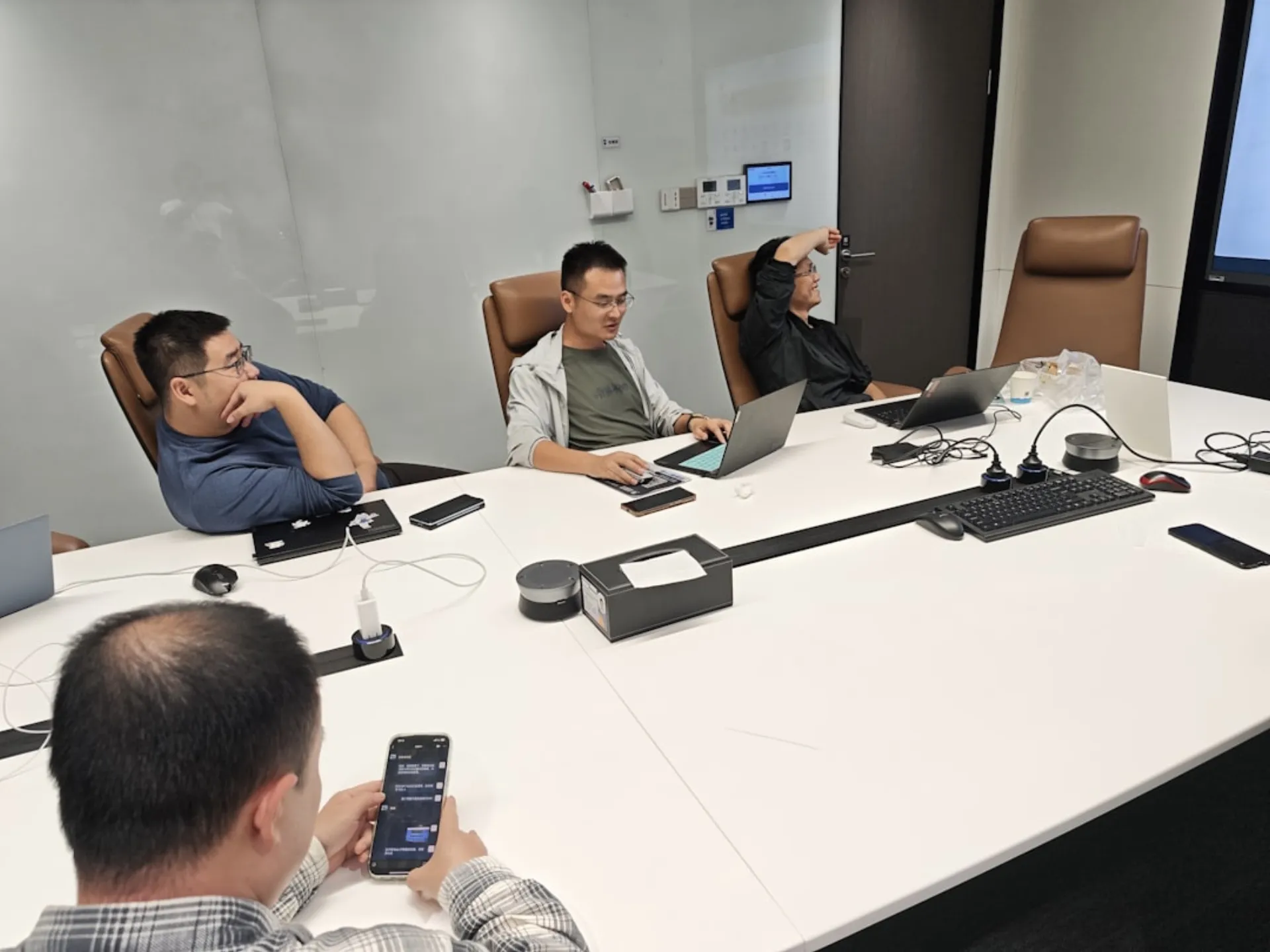
IT consulting in Toronto addresses technology leadership challenges across Canada's financial capital where federally regulated banks and insurers evaluate cloud migration strategies under OSFI oversight, credit unions plan merger technology integration, mining companies headquartered along Bay Street manage global operations technology, healthcare organisations navigate Ontario Health Teams technology requirements and enterprises modernise legacy technology estates accumulated over decades. Toronto's combination of regulatory sophistication and enterprise complexity creates demand for consultants who understand both Canadian regulatory frameworks and modern technology architecture. ZTABS provides IT consulting in Toronto, remote-first by design with an office in Houston, Texas.
Our AI development services and cloud services complement Toronto IT consulting engagements.
Toronto consulting at a glance
| Sector | Consulting need | Key requirement |
|---|
| Financial services | OSFI compliance, cloud strategy, core banking, M&A | B-10, Canadian data residency |
| Mining | Remote connectivity, OT/IT, SAP, global operations | Multi-site, safety-critical |
| Healthcare | EHR integration, Ontario Health Teams, telehealth | PHIPA, interoperability |
| Insurance | OSFI compliance, claims modernisation, underwriting | Policyholder portal |
| Enterprise | Cloud migration, ERP, cybersecurity, digital transformation | Bilingual, cross-border |
Financial services IT consulting
OSFI compliance architecture evaluating technology governance, cybersecurity posture and third-party risk management against OSFI expectations for federally regulated financial institutions. OSFI B-10 applies to all risk-proportionate third-party arrangements for federally regulated institutions, not an outsourcing exemption or requirement applying to every Toronto company. Assessment evaluates which OSFI requirements apply, identifies gaps and recommends architecture meeting applicable expectations. OSFI expects institutions to maintain technology governance, operational resilience and cybersecurity capability commensurate with their size and complexity.
Cloud strategy with Canadian data residency evaluating AWS ca-central-1 Montreal, Azure Canada Central Toronto and GCP northamerica-northeast1 Montreal for regulated workloads. Canadian data residency architecture for financial services, healthcare and government workloads. Disaster recovery using Canadian secondary regions including AWS ca-west-1 Calgary. OSFI-compliant cloud arrangements with documented risk assessments for third-party cloud providers. Cloud strategy evaluates which workloads can migrate to public cloud, which require private cloud and which must remain on-premises based on data classification and regulatory requirements.
Core banking modernisation evaluating migration options for institutions operating legacy core banking systems. Assessment of Fiserv, Temenos, FIS and other platforms against the specific institution's book complexity, product mix and growth trajectory. Migration approach evaluation including full replacement, incremental modernisation through API-enabling and hybrid approaches. Consumer-driven finance in Canada has specific participant permissions, supported data types and consent requirements that vary by role and current rollout stage. Architecture should accommodate evolving participation scope rather than assume universal bank readiness or blanket write access.
Credit union merger technology evaluating technology integration for merging credit unions. Core banking platform selection, digital banking consolidation, data migration planning and branch network integration. Provincially regulated Ontario credit unions are supervised by FSRA; OSFI applies to federally regulated financial institutions including federal credit unions. Regulatory documentation addresses the requirements of the actual supervising authority for the merging entities. Merger IT strategy covering technology landscape assessment, target architecture definition, integration roadmap and financial analysis. Each merger presents unique technology challenges depending on the systems, scale and member base of the merging institutions.
Mining and resources consulting
Remote site connectivity evaluating connectivity architecture for mine sites across diverse geographies. Satellite, private LTE/5G, microwave and hybrid connectivity options evaluated against bandwidth requirements, latency tolerance, reliability needs and cost. Mining operations at remote sites face connectivity challenges that affect every technology decision. Architecture must support edge computing and local data processing for sites with constrained connectivity.
OT/IT convergence technology strategy connecting mine site operational technology with enterprise IT. SCADA, PLCs, equipment sensors and safety systems integrating with analytics, ERP and business systems. Mining OT environments have unique safety-critical requirements. Assessment evaluates current convergence maturity and recommends architecture that enables data integration while maintaining safety boundaries.
SAP strategy evaluating SAP S/4HANA migration for mining companies. Assessment of custom development rationalisation, migration approach and timeline. Toronto mining companies often operate SAP estates deployed across multiple global operations with significant customisation accumulated over years.
Global operations technology standardising technology across mines in multiple countries. Assessment evaluates current technology landscape across sites, identifies standardisation opportunities and designs target architecture balancing global consistency with local operational requirements.
Need IT consulting for your Toronto organisation?
Share your current technology landscape, regulatory requirements and consulting priorities.
Healthcare IT consulting
Ontario Health Teams technology evaluating technology architecture supporting Ontario Health Teams integration. Clinical data sharing, referral management, population health analytics and coordinated care delivery across affiliated providers. Technology enabling the integrated care model that Ontario Health Teams require. Assessment evaluates current interoperability capability and recommends improvements.
EHR strategy evaluating electronic health record systems for Ontario healthcare organisations. Epic, Oracle Health and other platform assessment against the organisation's clinical operations, integration requirements and growth trajectory. PHIPA governs actual custodian, agent and health-data purposes in Ontario. IT consulting identifies which data handling activities fall under PHIPA scope and recommends technology controls meeting applicable requirements.
Telehealth infrastructure evaluating virtual care technology platforms, clinical workflow integration and patient experience. Telehealth strategy for Ontario healthcare organisations balancing clinical quality with accessibility. Assessment covers platform selection, clinical integration, regulatory compliance and patient adoption.
Clinical data analytics evaluating analytics infrastructure for population health management, quality improvement and clinical decision support. Data platform architecture connecting clinical data from multiple systems for analytics while maintaining privacy compliance. Our data analytics services complement healthcare data strategy consulting.
PIPEDA, provincial privacy and CASL
PIPEDA governs commercial activities at the federal level. Provincial substantially-similar statutes including Alberta PIPA, BC PIPA and Quebec Law 25 apply in their jurisdictions with specific consent, access and retention requirements. IT consulting identifies which privacy framework applies to each data processing activity and recommends technology architecture meeting applicable requirements. Quebec Law 25 is particularly stringent with mandatory privacy impact assessments.
CASL requires actual express or implied consent with specific conditions for commercial electronic messages. Published address is available only if no contrary statement and the message is relevant to the recipient's role. Implied consent from current contract lasts two years after expiry, inquiry six months, and membership expiry clock applies where applicable. Sender identification and a functioning unsubscribe mechanism must be present at sending, with unsubscribe links valid for at least 60 days after the message is sent. Unsubscribe requests must be honoured without delay and no later than 10 business days after receipt. IT consulting evaluates marketing technology systems against CASL requirements and recommends architecture supporting compliant commercial messaging.
HubSpot Canadian hosting exists through HubSpot's Montreal hosting option. Actual plan, tenant and full-stack processing, support, subprocessors and backup location may extend outside Canada depending on configuration. Canadian data residency claims require verification of the complete data processing chain, not just primary hosting location.
Illustrative Example
Hypothetical: Toronto credit union merger IT integration
Two Ontario credit unions considering a merger would engage IT consulting to develop the technology integration strategy. Provincially regulated Ontario credit unions are supervised by FSRA, so regulatory documentation would address FSRA requirements rather than OSFI. Assessment would evaluate both technology environments across core banking, digital banking, CRM, document management, network and infrastructure. Different core banking systems, different digital platforms and different infrastructure would need evaluation for target architecture selection. Assessment would classify each application pair by business value, technical condition and integration complexity. Core banking platform selection would evaluate options against the merged entity's specific operational requirements. A phased integration roadmap would sequence changes to avoid member disruption, with identity federation enabling collaboration before system consolidation. Integration roadmap would include cost analysis, risk assessment, timeline and fallback procedures for each phase with regulatory documentation appropriate to the supervising authority.
This is a hypothetical scenario for illustration. Actual scope, timeline and cost depend on your requirements.
Planning technology transformation in Toronto?
Tell us about your technology challenges, regulatory environment and consulting priorities.
Cost drivers for IT consulting
There is no dedicated published IT consulting cost guide. Consulting costs depend on engagement scope, regulatory complexity, institutional scale and deliverable depth. Key factors include the number of systems assessed, regulatory framework complexity including OSFI, PIPEDA, PHIPA and CASL, Canadian data residency requirements, bilingual considerations, whether implementation planning is included alongside advisory and the number of stakeholder sessions required.
For organisations moving from consulting into implementation, separate published build guides exist for specific technology domains including custom software, API development and cloud migration. Implementation costs are scoped separately from advisory. SR&ED tax credits may apply to qualifying technology development activities.
Enterprise consulting
Cloud migration strategy evaluating cloud platforms for Toronto enterprise workloads. Canadian data residency, cloud platform evaluation and migration roadmap with realistic cost projections. Migration sequencing based on workload risk, business priority and technical dependency. Cloud cost analysis based on actual usage patterns rather than vendor assumptions.
ERP strategy evaluating SAP, Oracle, Microsoft Dynamics and other platforms for Toronto mid-market and enterprise companies. Assessment covers functionality, integration, implementation complexity and total cost of ownership. Multi-entity, bilingual and cross-border requirements for companies operating across provinces and internationally.
Cybersecurity programme maturity assessment for Toronto organisations. Security strategy covering technical controls, processes, awareness and incident response. Assessment against applicable frameworks including OSFI cybersecurity expectations, Privacy Act requirements and industry-specific standards.
Digital transformation for Toronto enterprises modernising technology across operations, customer experience and data capabilities. Assessment covers all technology domains identifying the highest-impact modernisation opportunities while accounting for the organisation's capacity and budget. Bilingual technology requirements for organisations serving Canadian customers in English and French.
Choosing a partner
| Provider type | Strength | Evaluate for your engagement |
|---|
| ZTABS | Multi-sector, practitioner-led, regulatory-aware | Remote-first by design |
| Big Four advisory (Deloitte, PwC) | Board credibility, OSFI familiarity | Proposed team seniority, scope and commercial terms |
| Global SI (Accenture, IBM, TCS) | Scale, offshore delivery | Independence from vendor product lines, Canadian regulatory depth |
| Canadian IT consultancy | Local regulatory knowledge, bilingual | Cloud-native and multi-sector evidence in proposal |
| Credit union specialist | Cooperative financial services depth | Breadth of technology transformation experience |
When ZTABS is not the right fit
- You need staff augmentation filling contractor seats. Staff augmentation is scoped separately from consulting engagements.
- You need OSFI examination preparation or regulatory filing. We advise on technology, not regulatory representation.
- You need licensed legal, actuarial or audit services. Different professional requirements.
- You need SR&ED tax credit filing. We advise on technology, not tax compliance.
- You require full-time on-site staff in your Toronto office. ZTABS is remote-first by design.
Risks in Toronto IT consulting
OSFI scope. OSFI B-10 applies to federally regulated institutions with risk-proportionate third-party arrangements. Not every Toronto company falls under OSFI regulation. Consulting must correctly scope which OSFI requirements apply to the specific institution and its technology arrangements.
PIPEDA versus provincial. Different privacy frameworks apply depending on jurisdiction and data type. PHIPA governs health data in Ontario with specific custodian and agent definitions. The business-contact exception covers sole business communication, not all B2B data. Technology recommendations must correctly identify applicable privacy requirements.
Canadian data residency. Many regulated workloads require Canadian data residency, but cloud data residency verification requires examining the complete processing chain including backups, logs, support access and subprocessors, not just primary hosting region.
Consumer-driven finance. Canada's consumer-driven finance framework has specific participant permissions, data types and consent requirements that vary by role and current rollout stage. Architecture should verify applicable participant eligibility, supported data holders and permission scope rather than assume universal bank readiness. Implementation details continue evolving alongside government commitments.
Bilingual requirements. English and French language requirements depend on jurisdiction, contract terms, audience and agreed customer journeys rather than a blanket all-Canada mandate for every IT system. Federal services, Quebec operations and specific industry requirements may each impose different bilingual obligations. Bilingual capability where required includes locale-specific data handling and regulatory documentation, not just interface translation.
Ready for IT consulting in Toronto?
Share your technology landscape, regulatory requirements and consulting needs.
Additional consulting domains
M&A technology due diligence. For PE firms and corporate acquirers evaluating Toronto technology companies. Architecture assessment, technical debt quantification, team evaluation and integration planning.
Data strategy. Data governance, platform evaluation and analytics maturity assessment. Our data analytics services complement data strategy consulting.
AI readiness. Organisational readiness for AI adoption. Use case prioritisation, build versus buy analysis and governance framework. Our AI consulting services complement technology advisory.
Government IT. Federal and Ontario government technology consulting including cloud strategy aligned with Treasury Board direction, Protected B cloud hosting and ITSG-33 security controls.
Insurance technology. Claims modernisation, underwriting analytics, policyholder portals and regulatory reporting for Toronto insurance companies. Canada's insurance industry is concentrated in Toronto with specific regulatory technology requirements. Technology supporting both domestic operations and cross-border insurance products.
Pension and benefits technology. Technology strategy for pension administrators, benefits providers and insurance companies managing retirement products. Member portals, contribution processing, investment reporting and regulatory compliance technology for Toronto's concentrated financial services industry.
Legal technology. Practice management, document management, matter management and legal research technology for Toronto law firms. Technology modernisation for firms managing hybrid work environments and growing digital client expectations. Bilingual technology requirements for firms serving clients in English and French. Our web development services complement legal technology consulting.
Real estate technology. PropTech strategy, property management, brokerage technology and tenant services for Toronto real estate companies. Technology supporting both residential and commercial real estate operations across the Greater Toronto Area. CRM, listing platforms, virtual tour technology evaluation and tenant portal modernisation for property management companies with diverse residential and commercial portfolios across the Greater Toronto Area market.